Footprints And Chapters
Jhuma Kanungo

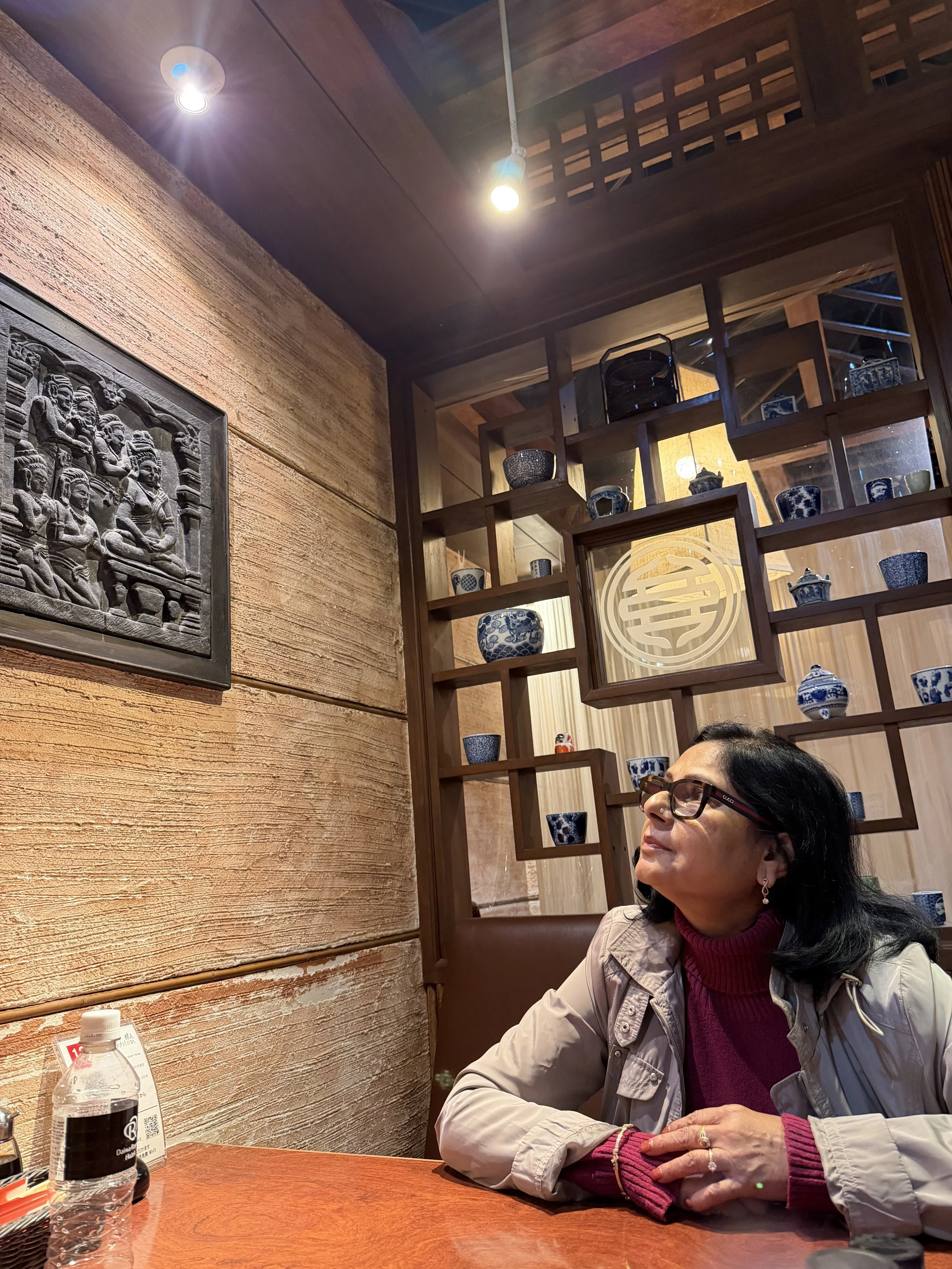
My first year as a Summer School Principal
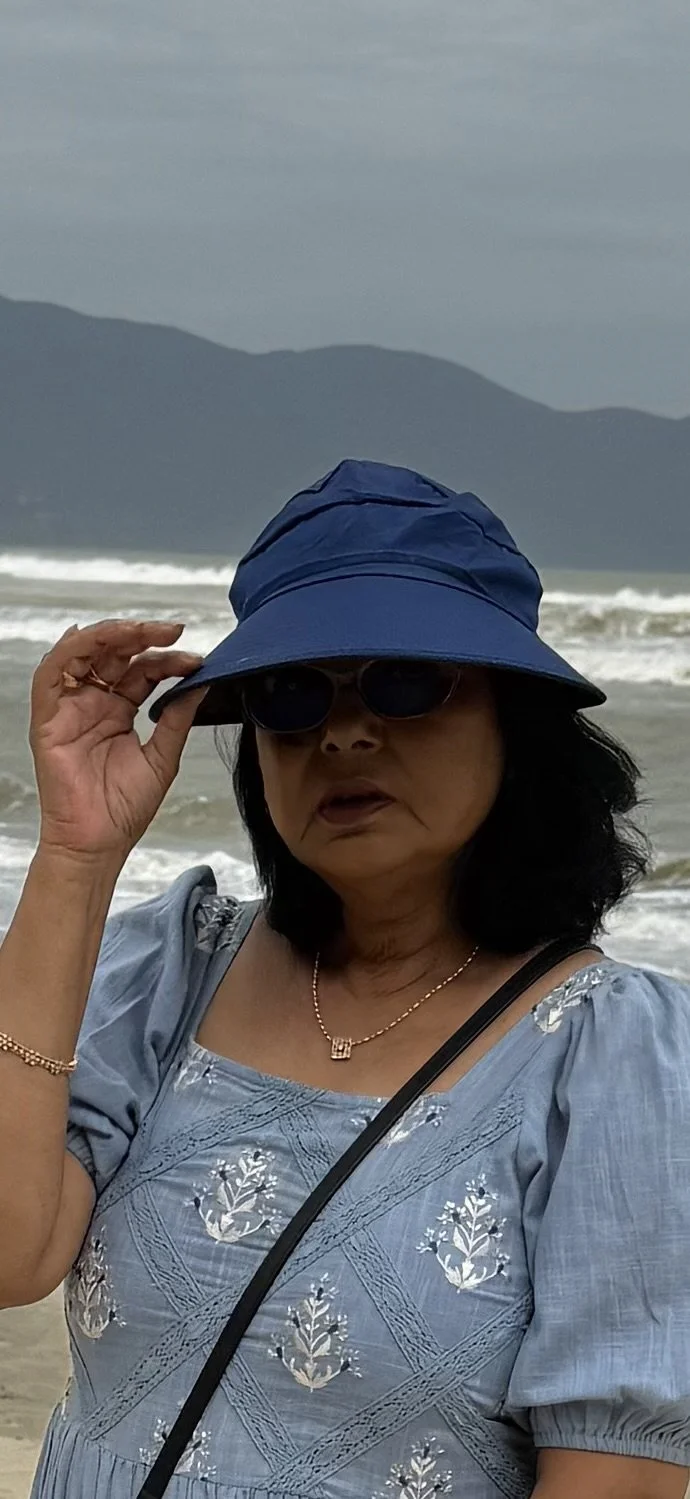
Danang Beach, Vietnam

In my classroom - first year of teaching!
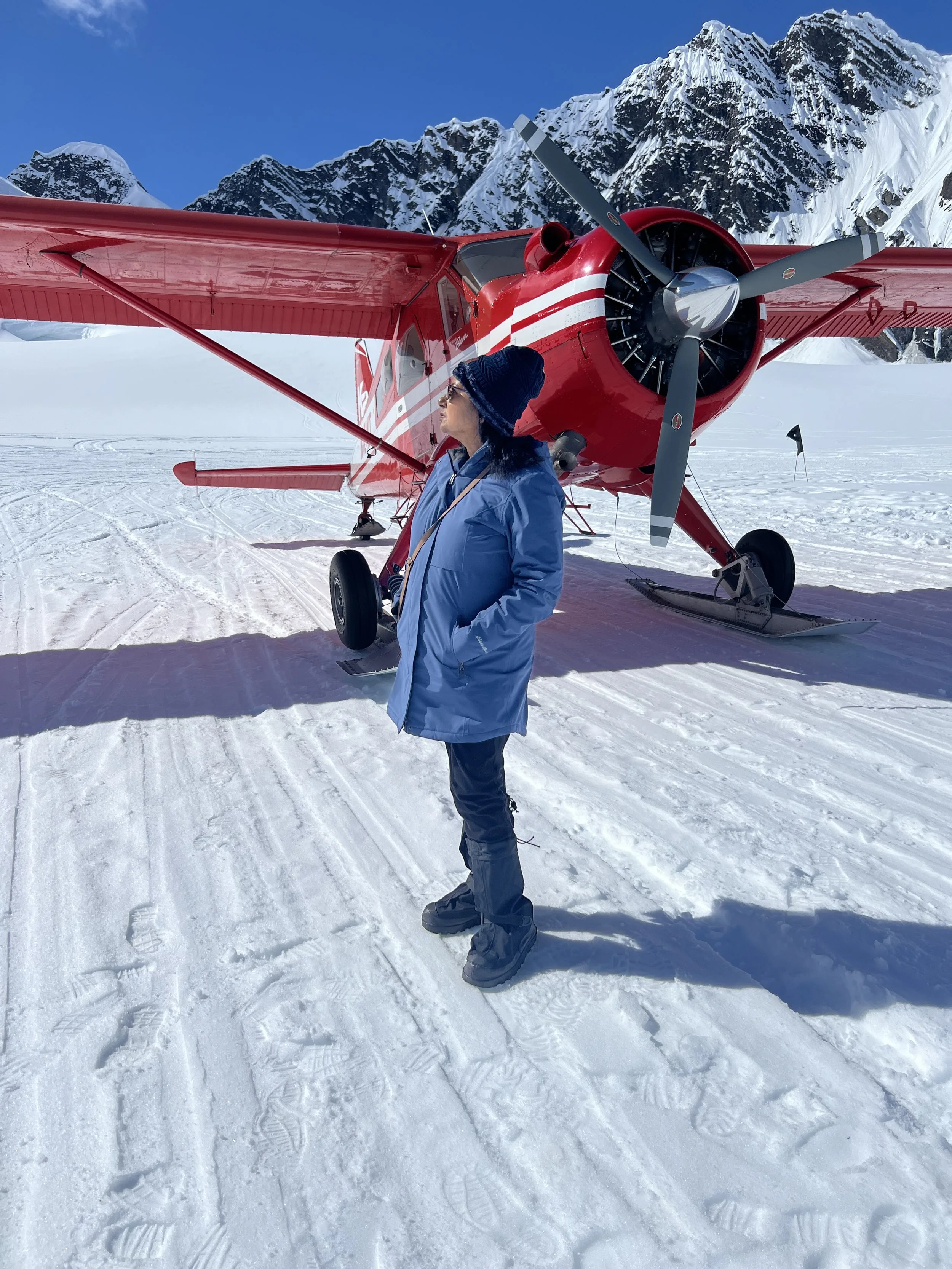
Plane ride and landing on the glacier in Alaska
What Inspired Me to Start this Blog?
Welcome Family and Friends!
Ever since I retired in July 2025, I’ve been thinking deeply about how to document this next chapter of my life. I have always loved to write, and between the natural adjustments of retirement, the unexpected curveballs life likes to throw, and my enduring passion for travel, I realized I needed a dedicated space to capture it all. I often wish I had started chronicling my earlier chapters—raising my son as a single mother, working as a teacher of children with special needs, an instructional coach, an administrator in education, and exploring beautiful countries around the world. But as the saying goes, better late than never! I am so excited to use this blog as a living journal to share my ongoing life experiences and travel adventures with my cherished friends and family.
Thank you for joining me on this journey!
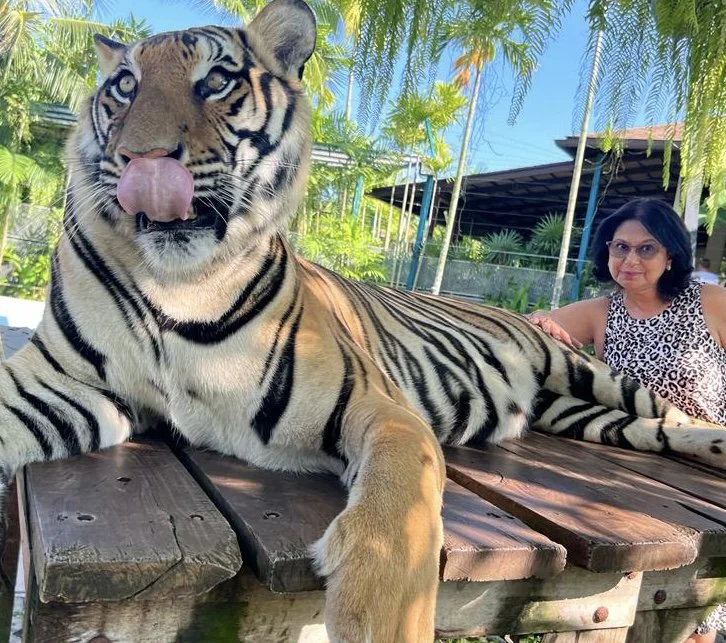
With a friendly tiger in Thailand
Oh! What a charming snake!
Mekong Delta,Vietnam
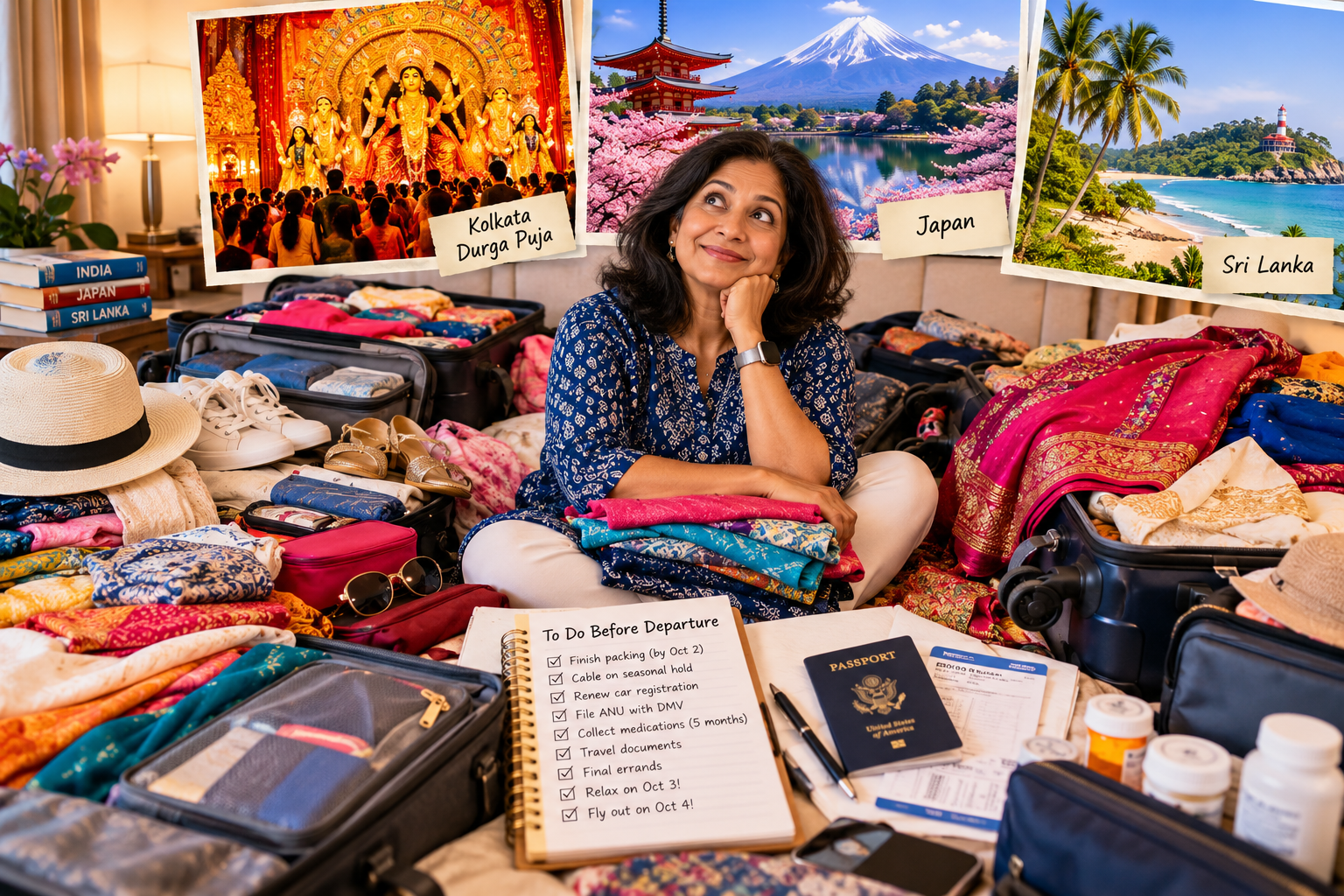
Packing for traveling to India for five months!

Nope! Mine doesn’t look like this at all!
Preparing for five months of travel sounds glamorous—until the packing begins! As I get ready to leave the United States for an extended stay in India, with additional trips planned to Japan and Sri Lanka, I find myself in a constant battle between excitement and airline baggage allowances. Every item seems essential. Which clothes are absolute must-haves? Which shoes are versatile enough for sightseeing yet elegant enough for social gatherings? I need outfits for high school reunions, family get-togethers, and festive celebrations, including the magnificent Durga Puja in Kolkata—a UNESCO-recognized cultural heritage celebration that deserves beautiful traditional attire. Then there are comfortable travel clothes for changing climates, from the warmth of Sri Lanka to the cooler autumn weather in Japan. Each time I think I have packed everything perfectly, I discover that my carefully selected wardrobe simply won't fit into the suitcases! Out comes everything again, followed by another round of unpacking, reorganizing, and repacking, hoping that somehow the laws of physics will change overnight. And packing is only part of the challenge. Before I can even think about boarding my flight, I have a never-ending checklist to complete: placing my cable service on seasonal hold, renewing my car registration, filing the ANU with the DMV, collecting all my prescription medications for five months, organizing travel documents, and taking care of countless other last-minute errands. The list seems to grow longer every day. I absolutely love to travel, but packing for a five-month journey through countries with different climates and occasions is undeniably stressful. My goal is to have every suitcase zipped shut by October 2, giving myself the luxury of a little relaxation on October 3 before I fly out on October 4. Once the suitcases are checked in and the plane takes off, all the stress will melt away, replaced by the anticipation of new experiences, cherished reunions, unforgettable festivals, and the countless adventures that await. After all, the memories I'll bring home will be far more valuable than anything I manage to squeeze into my luggage.
My Travel: San Francisco to Kolkata
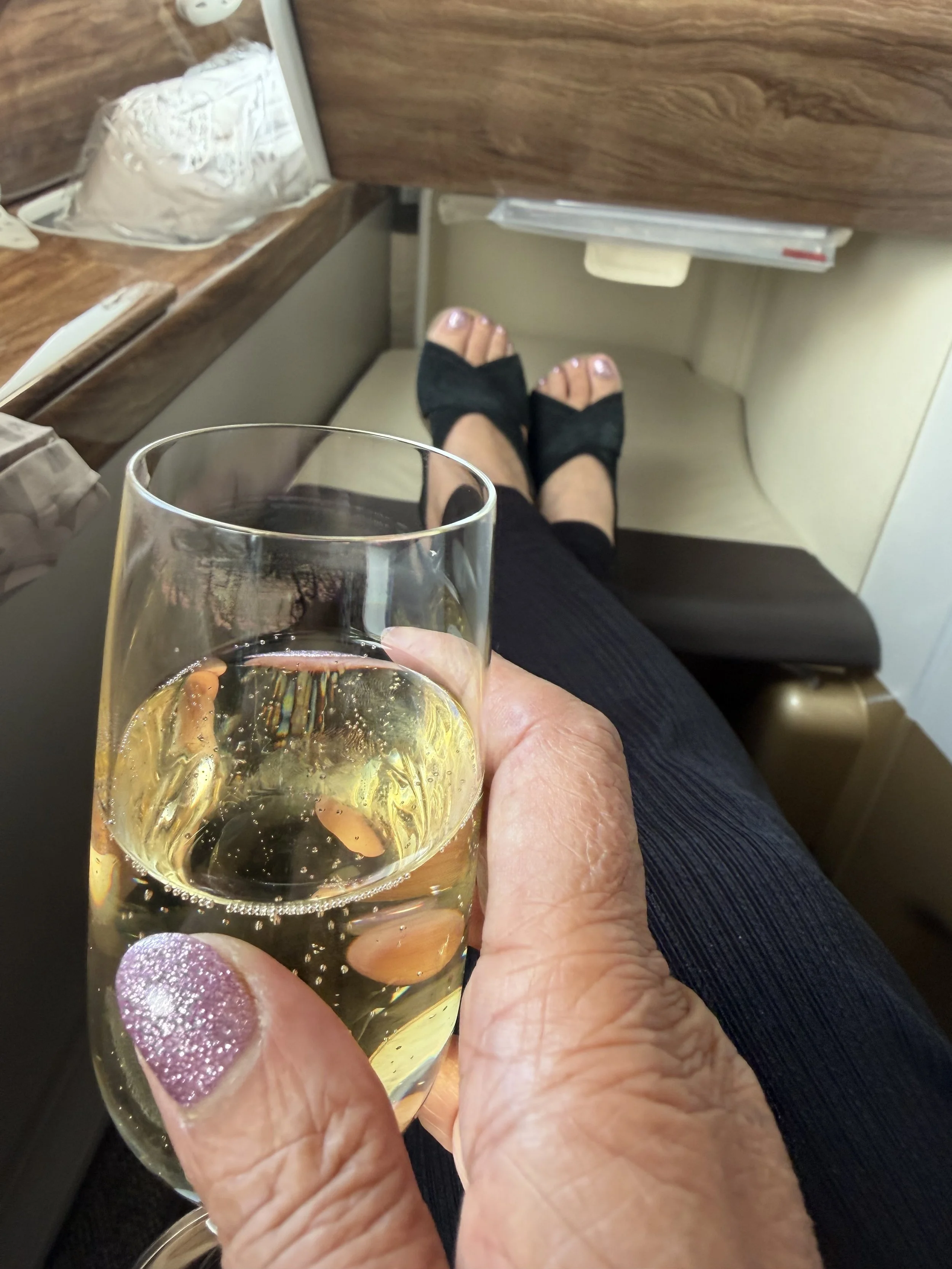
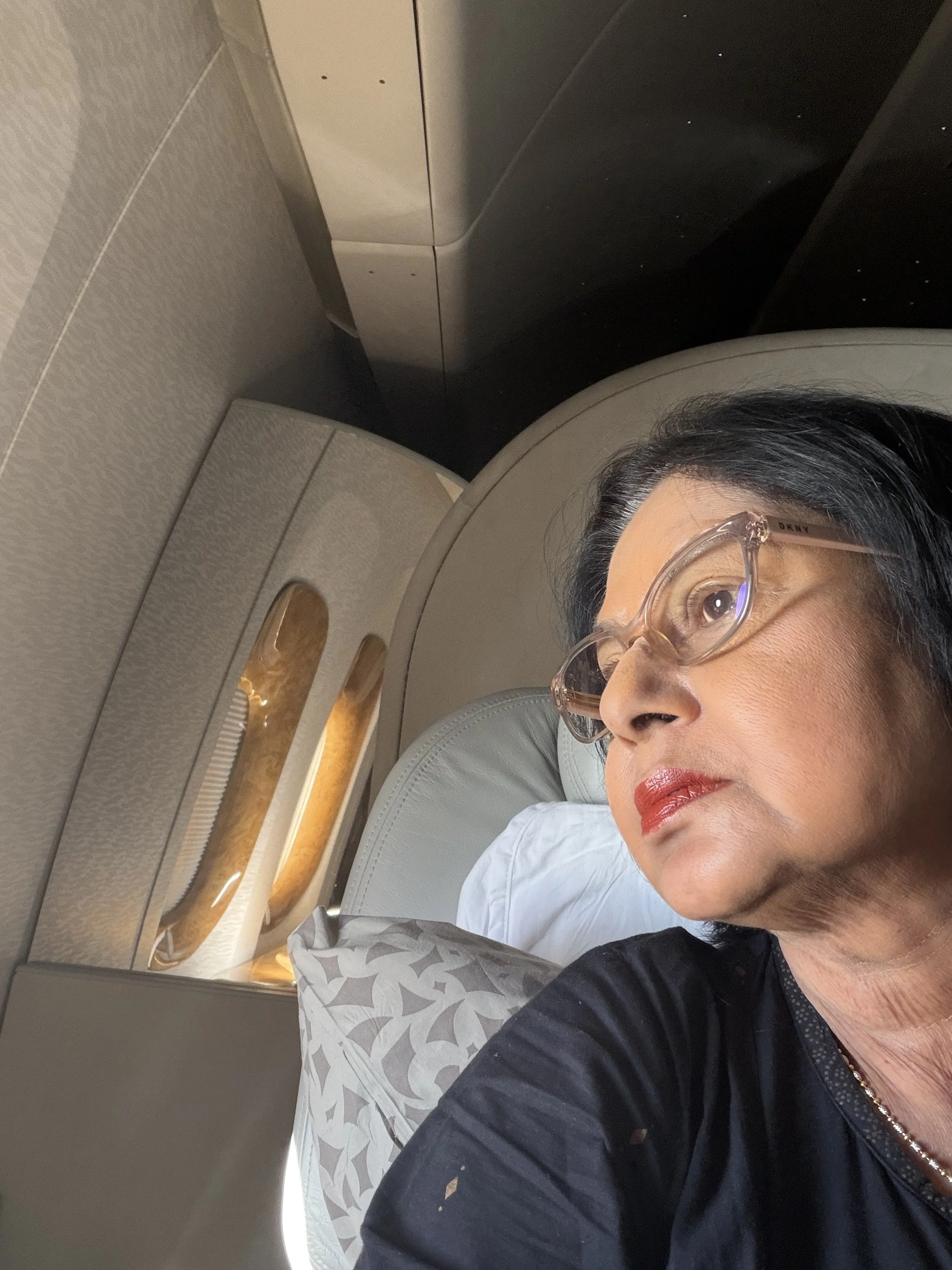
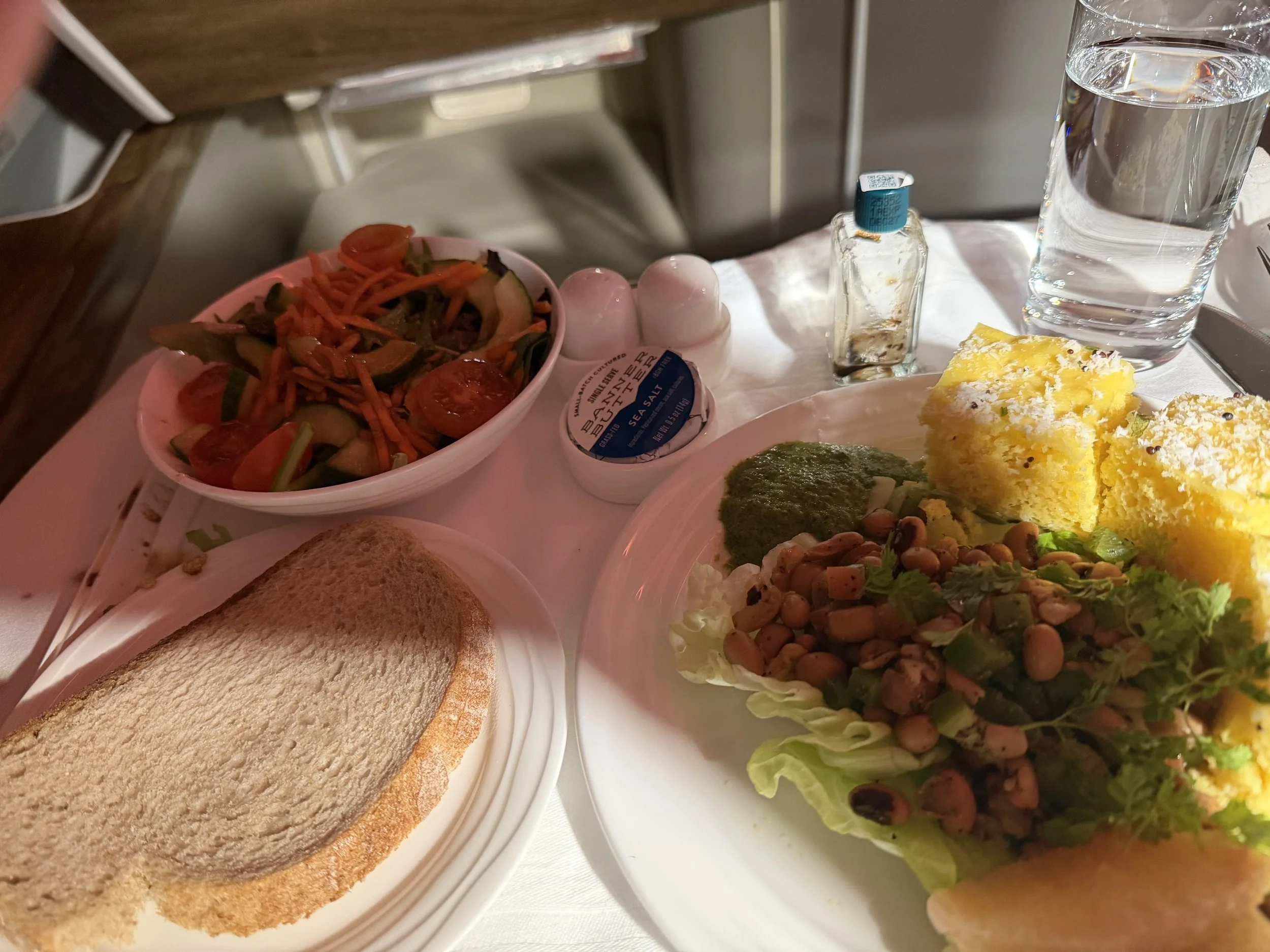
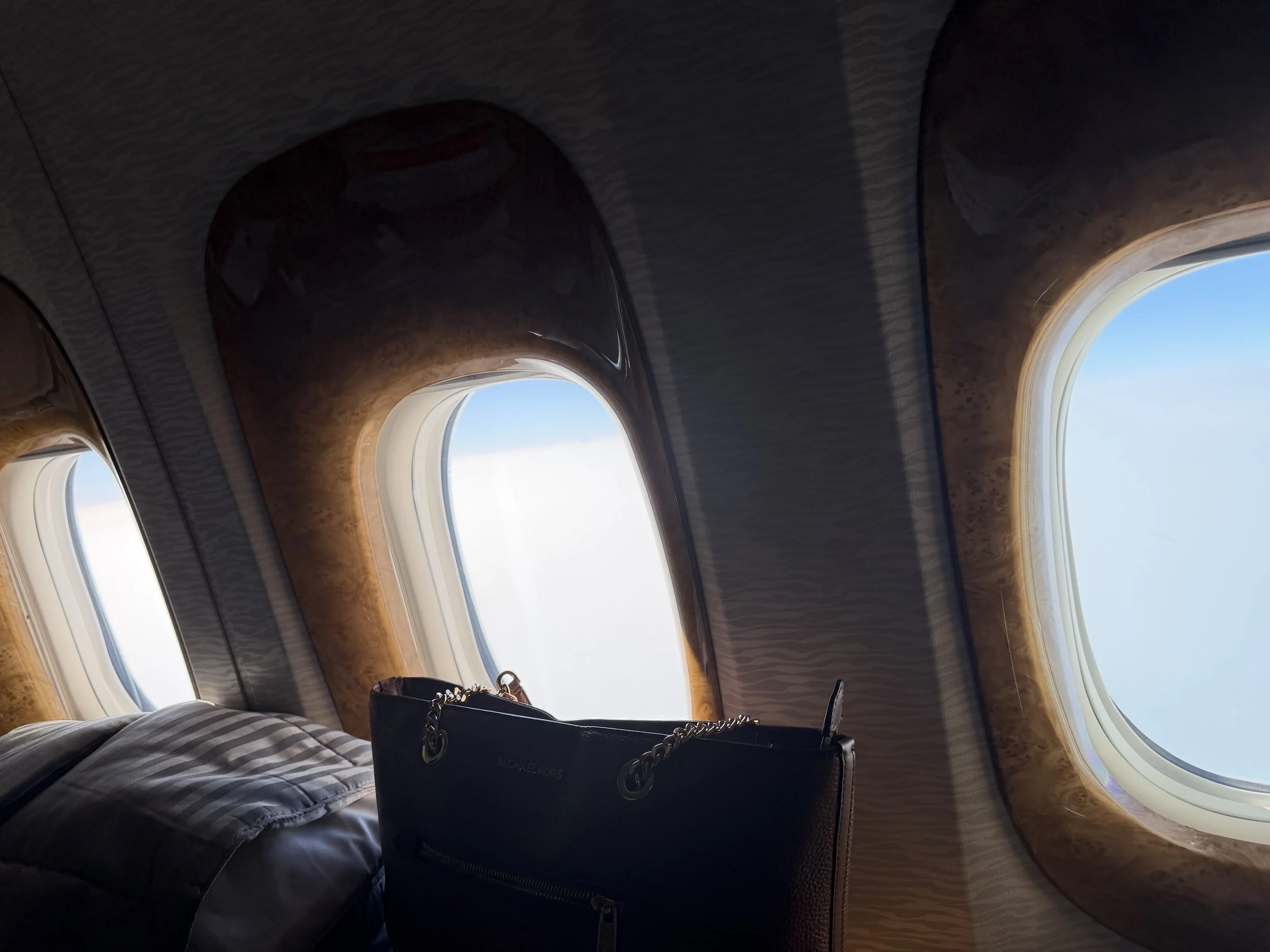

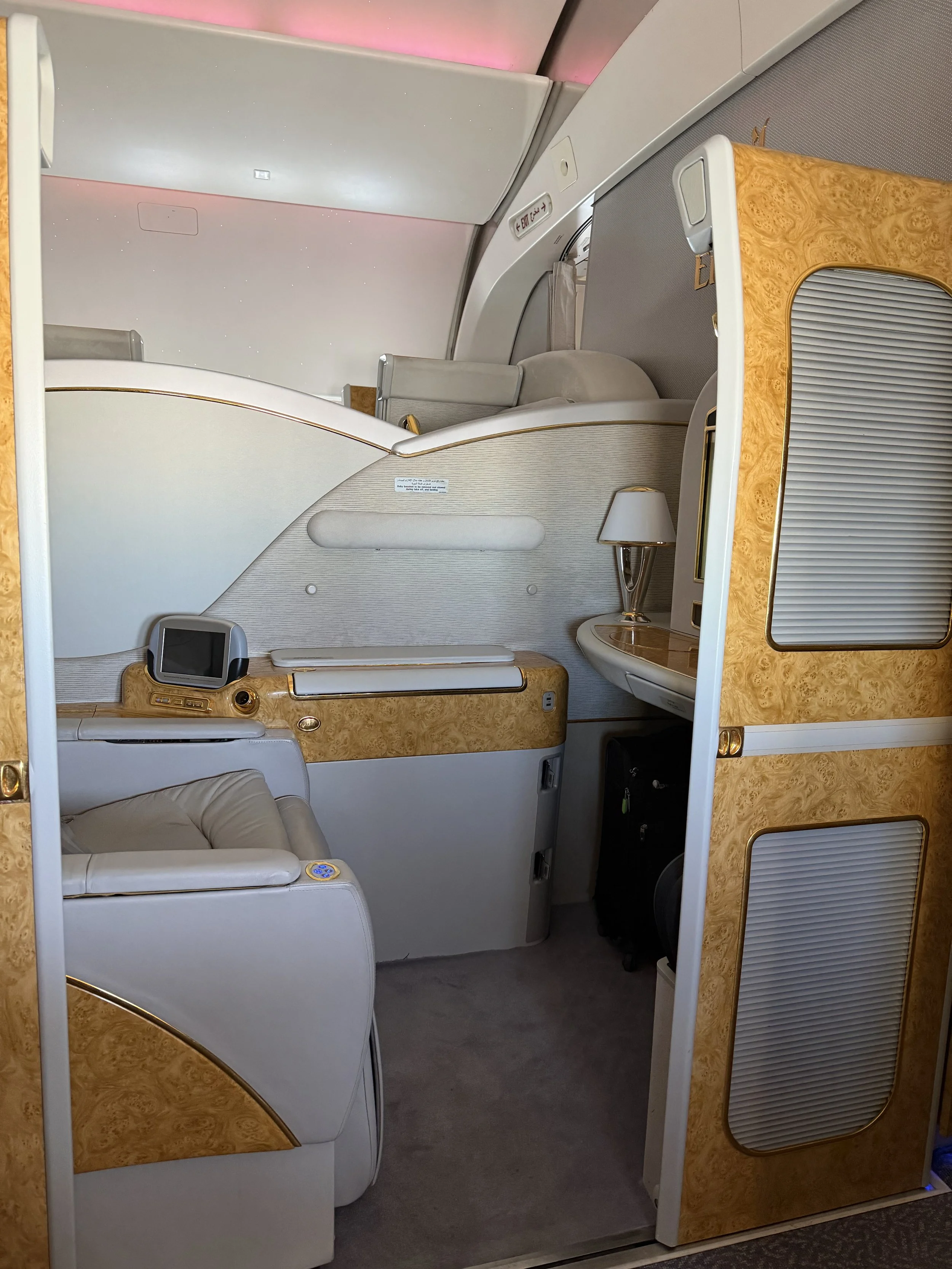
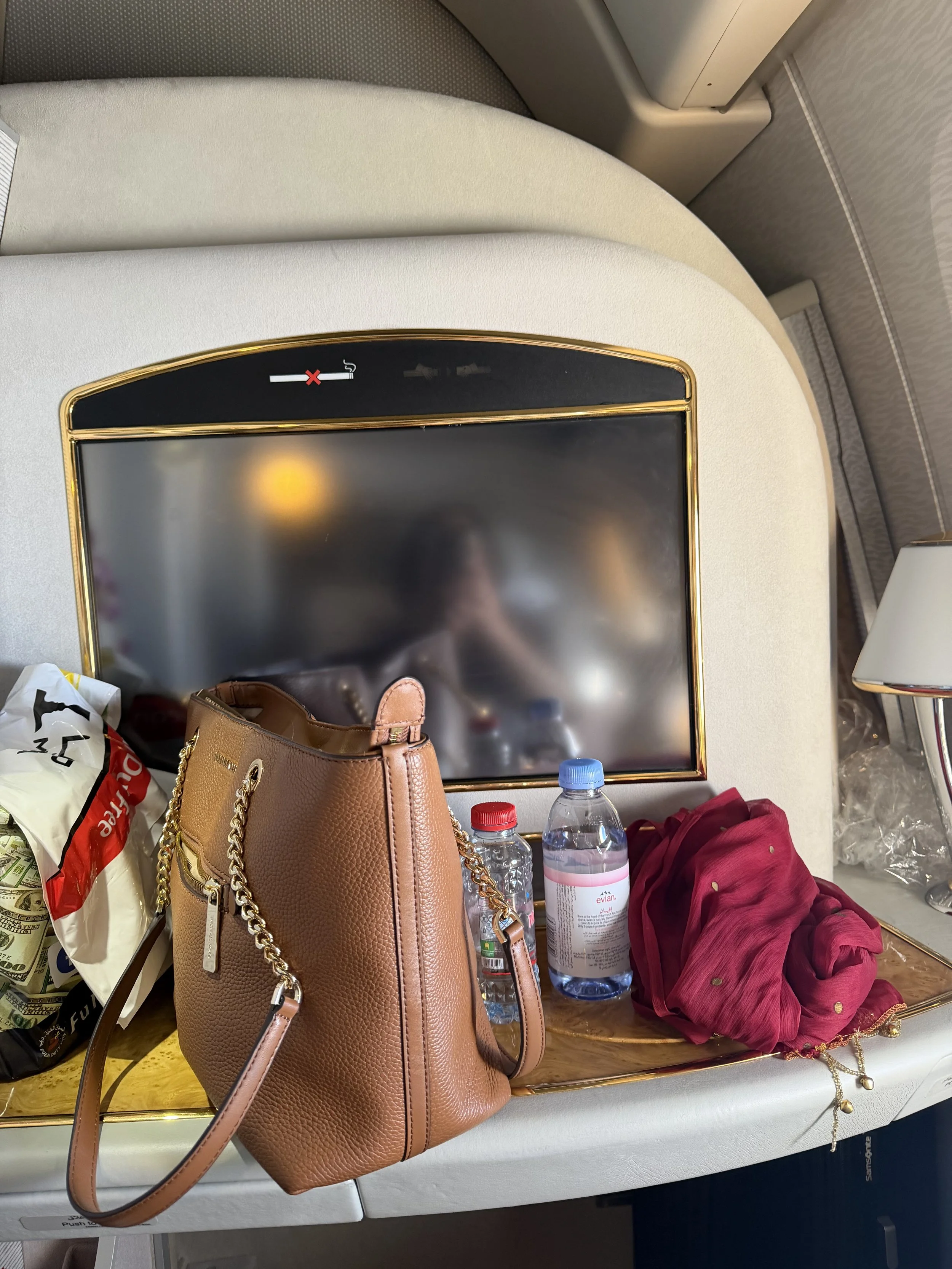
Oh! Spoilt by the First Class Suite!
The journey from San Francisco to Kolkata began on a wonderfully positive note. My Emirates flight from San Francisco to Dubai was smooth and comfortable, making the sixteen-hour journey seem surprisingly effortless. Even before I reached the airport, I had the pleasure of meeting an extraordinary young man who drove me from my home to San Francisco International Airport. Originally from Serbia, he had emigrated to California four years ago with his brother in search of better opportunities. During our drive, we had a thoughtful conversation about his life, his parents who still live in Serbia, and the sacrifices he has made to build a future for his family. He spoke candidly about his concerns over the ongoing war in Ukraine, expressing criticism rather than support for the conflict. What impressed me most was his unwavering dedication to providing a better life for his two young sons through hard work and education. He has not returned home to visit his parents since moving to the United States and now worries that if he leaves, there is no guarantee he will be allowed to re-enter the country. His story was both inspiring and sobering—a reminder of the uncertainty and sacrifices that so many immigrants endure in pursuit of a brighter future.
My transit in Dubai was equally memorable. Emirates whisked me between the airport and the magnificent JW Marriott in chauffeur-driven comfort, making the brief stopover feel wonderfully luxurious. What fascinated me, however, was discovering that neither of my drivers was from Dubai. One was from Bangladesh and the other from Pakistan, both working in the United Arab Emirates to support families who remained in their home countries. I was delighted to discover that my Bangladeshi driver spoke Bengali, and the moment I greeted him in our shared language, his face lit up with joy. For those few minutes, we were no longer driver and passenger but two Bengalis sharing stories far away from home. My Pakistani driver was equally warm and engaging, and our conversation offered another glimpse into the lives of the countless expatriate workers who leave behind their wives, children, and aging parents to earn a livelihood abroad. Listening to their stories was deeply moving and reminded me of the human sacrifices that often lie behind the prosperity of great cities.
The highlight of my journey was undoubtedly receiving an unexpected upgrade to First Class on the Dubai-to-Kolkata flight—my first and, so far, only First Class experience! It was every bit as wonderful as one imagines. The spacious suite transformed effortlessly into a remarkably comfortable bed, and I slept like a log, waking only as the aircraft began its descent into Kolkata. It was the most restful flight I have ever experienced and a delightful surprise that made the journey even more special.
Waiting for me at the airport was my sister, whose warm embrace instantly reminded me that her home has always been my home whenever I return to Kolkata. True to a tradition I have followed for years, we drove straight from the airport to the temple before heading home. That ritual grounds me and marks the beginning of every visit. As we drove through the familiar streets, my emotions were much the same as they always are—a profound sense of joy at returning to the city where I was born and raised, despite having lived outside India for more than forty years. Kolkata welcomes me each time with its familiar sights, sounds, and energy. It is a city that lives not only on the map but also in my heart, a place where memories and the present coexist beautifully, reminding me that no matter how far life has taken me, a part of me will always belong here.
Already a week in Kolkata!
It has now been a week since I arrived in Kolkata, and my body is still negotiating with the thirteen-and-a-half-hour time difference! Conquering jet lag while acclimatizing to Kolkata's heat and humidity remains a work in progress. Thankfully, my sister's home is equipped with air conditioners in every room, making life indoors wonderfully comfortable. Unlike most homes in the United States, however, homes here generally don't have central air conditioning. Step outside, though, and life continues in air-conditioned cars, shopping malls, restaurants, and stores, offering welcome relief from the tropical weather. Little by little, my body is adjusting, and each day feels a bit more like home.
One aspect of life here that I could become accustomed to very quickly is the incredible luxury of not having to lift a finger! Back home in California, my days are filled with grocery shopping, cooking, washing dishes, driving, and taking care of countless household chores. Here, the household staff takes care of everything. Meals magically appear at the table, dishes disappear just as quickly, and someone else is behind the wheel whenever we venture out. It feels wonderfully indulgent to simply enjoy a meal without thinking about what comes next. I have to admit, luxury is surprisingly easy to get used to!
Of course, returning to Kolkata also means readjusting to the realities of a bustling metropolis. The roads are perpetually teeming with people, traffic follows its own unique rhythm, and the constant symphony of honking horns is simply part of the city's soundtrack. Equally striking are the homeless families living on the streets and the piles of trash that accumulate on street corners. One of the first things visitors notice is the absence of public trash cans. These are significant challenges for a city with such an enormous population, and while efforts are undoubtedly being made, it often feels as though the state government struggles to keep pace with the demands of one of the world's most densely populated urban areas. Yet, despite these visible shortcomings, Kolkata possesses an energy, resilience, and warmth that continue to draw me back year after year.
The greatest joy of this visit has undoubtedly been spending precious time with my niece and her family, who are visiting from San Jose. The undisputed star of the show is my energetic 21-month-old grand-nephew, whose boundless curiosity and infectious laughter keep the entire family entertained from morning until night. Watching him discover the world around him is pure delight. My sister also hosted a wonderful welcome and meet-and-greet party in his honor, inviting many of our longtime friends. It was a joyful evening filled with laughter, conversation, and warm reunions. My niece plans to visit our extended family individually over the coming days so she can spend meaningful time with each of them, rather than limiting conversations to hurried two-minute exchanges at a large gathering.
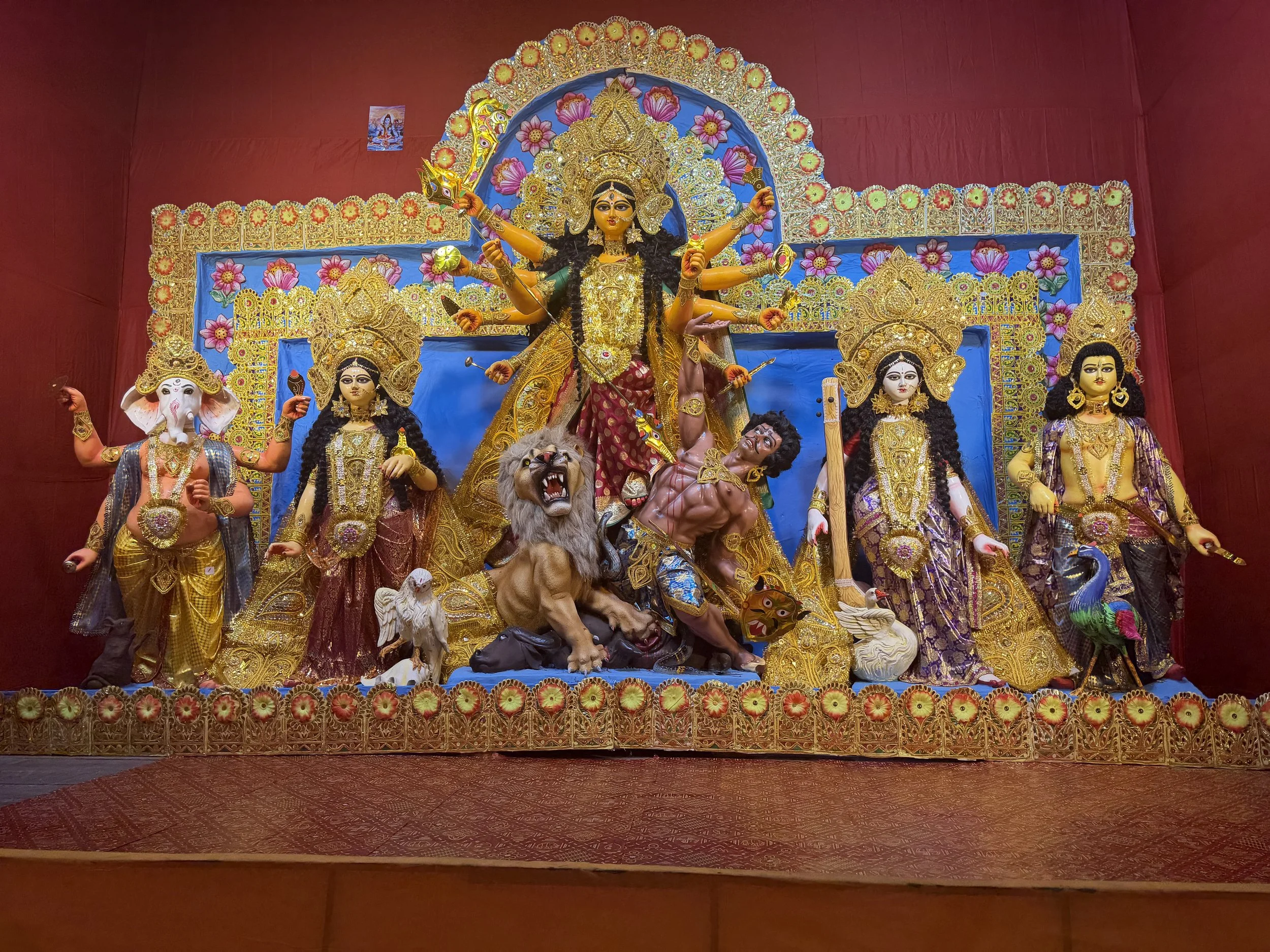
Now the excitement is building for what is unquestionably the biggest celebration of the year in Kolkata—Durga Puja. From October 16 through October 21, millions of people, dressed in beautiful new clothes, will pour into the streets, visiting one spectacularly decorated pandal after another. Each pandal houses magnificent images of Goddess Durga and her four children, and together they transform the city into an open-air festival unlike anything else in the world. There is music, art, food, devotion, and an unmistakable sense of community that unites people across every walk of life. It is no surprise that on December 15, 2021, Durga Puja in Kolkata was inscribed on UNESCO's Representative List of the Intangible Cultural Heritage of Humanity, becoming the first festival from Asia to receive this prestigious recognition. I can hardly wait to immerse myself once again in the joy, artistry, spirituality, and sheer exuberance of these five unforgettable days—but that deserves a blog entry all of its own.
Durga Puja in Kolkata: A Spectacle of Art, Devotion, and Unforgettable Emotions
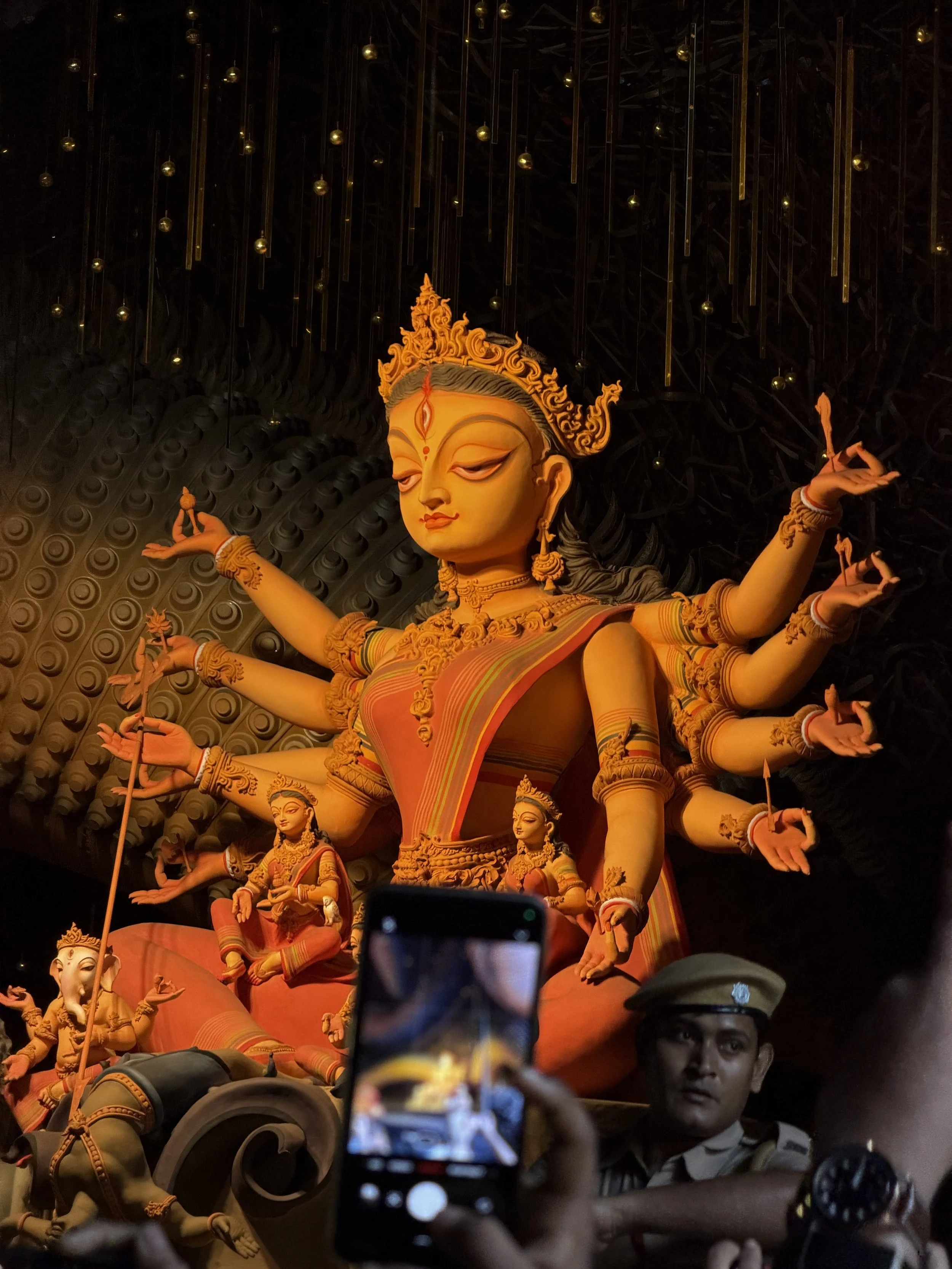
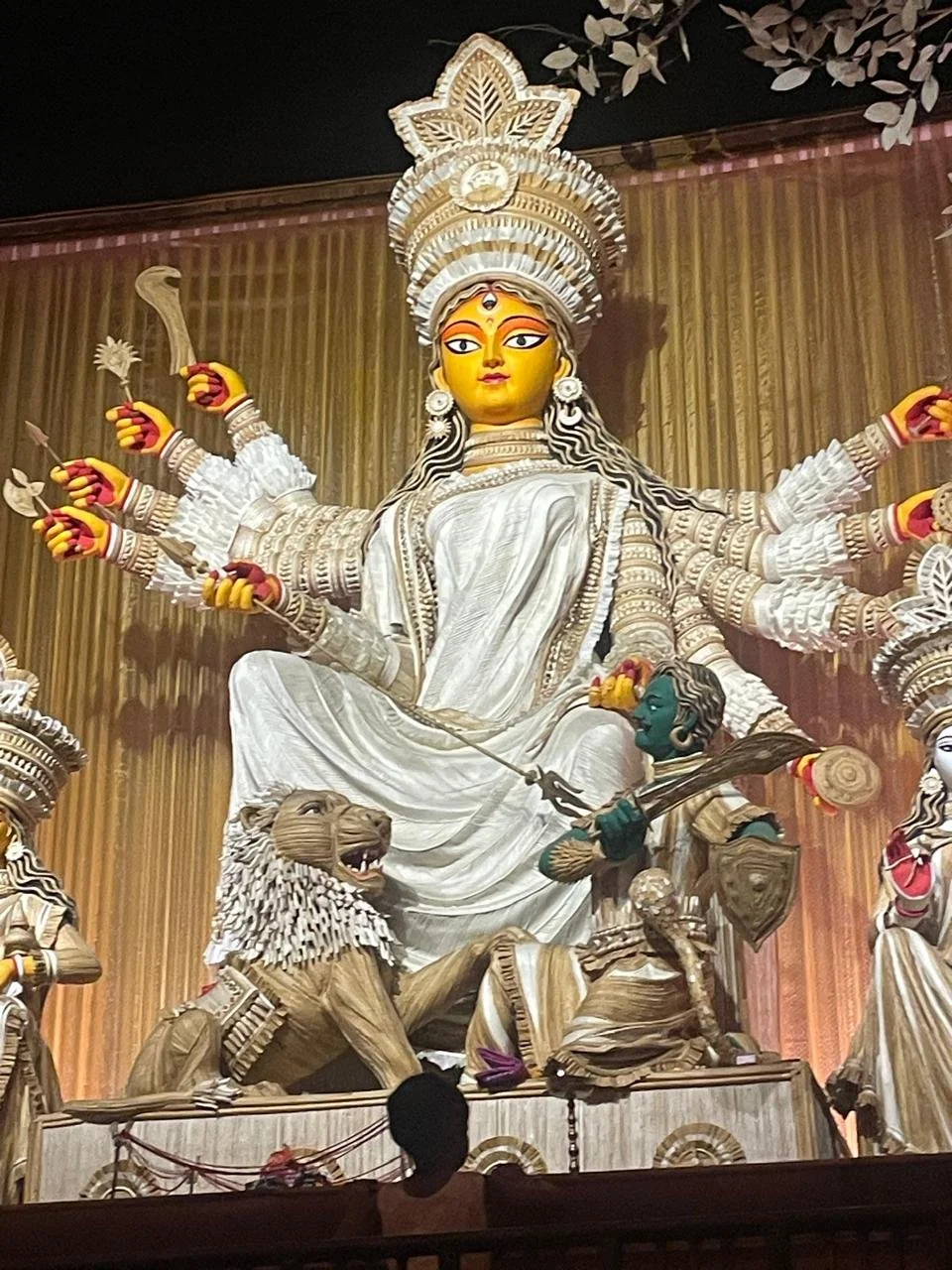
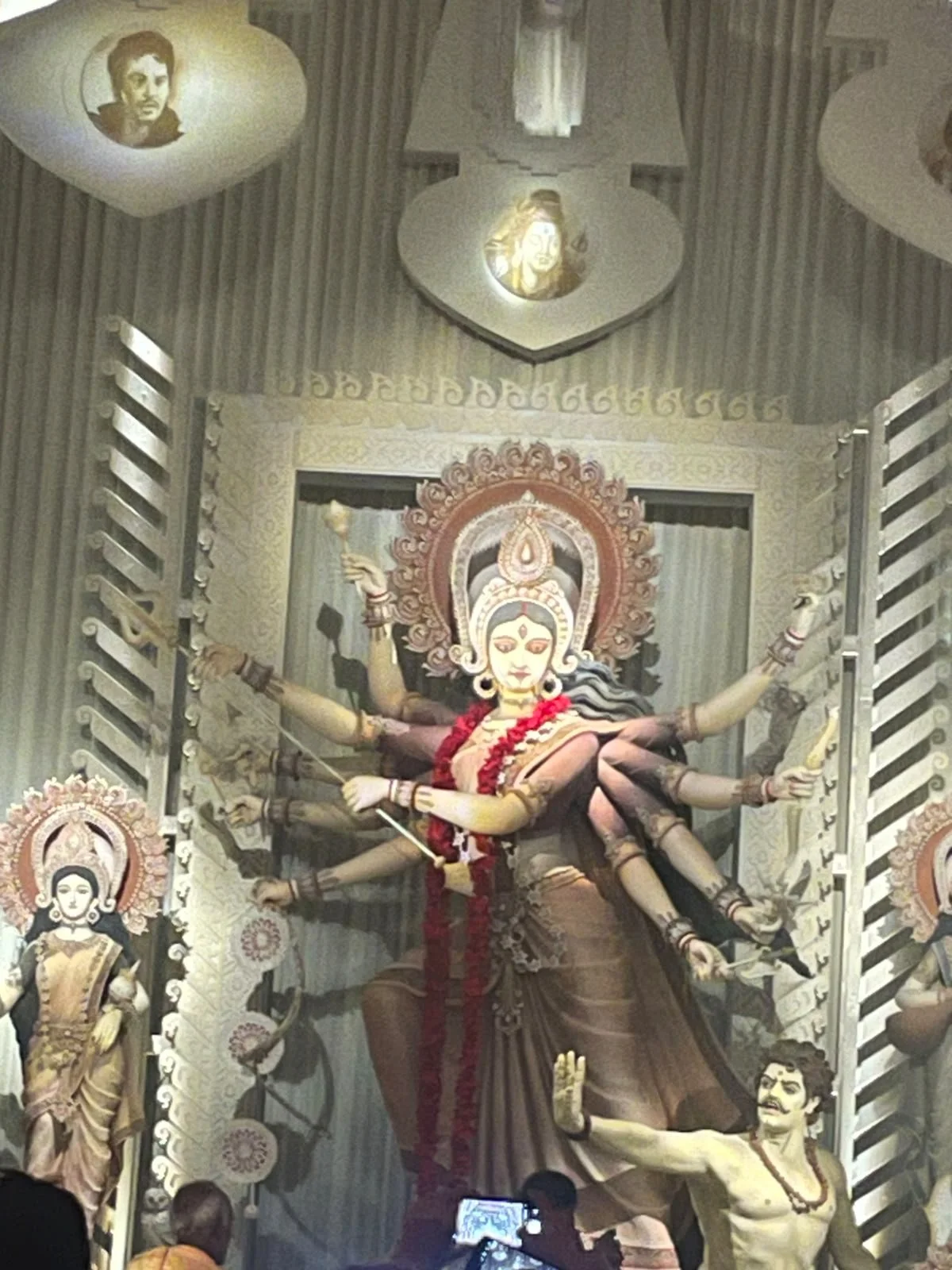
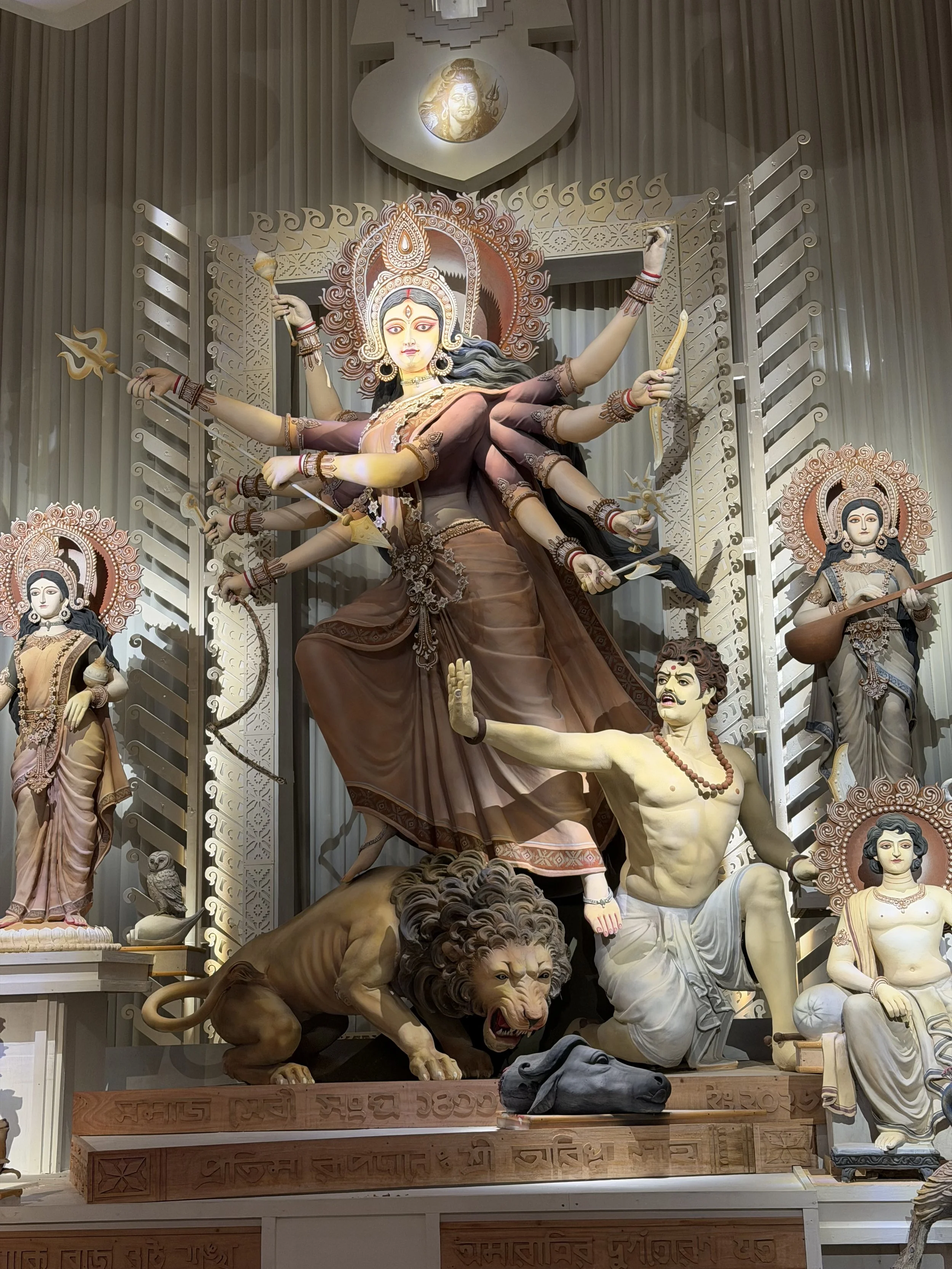
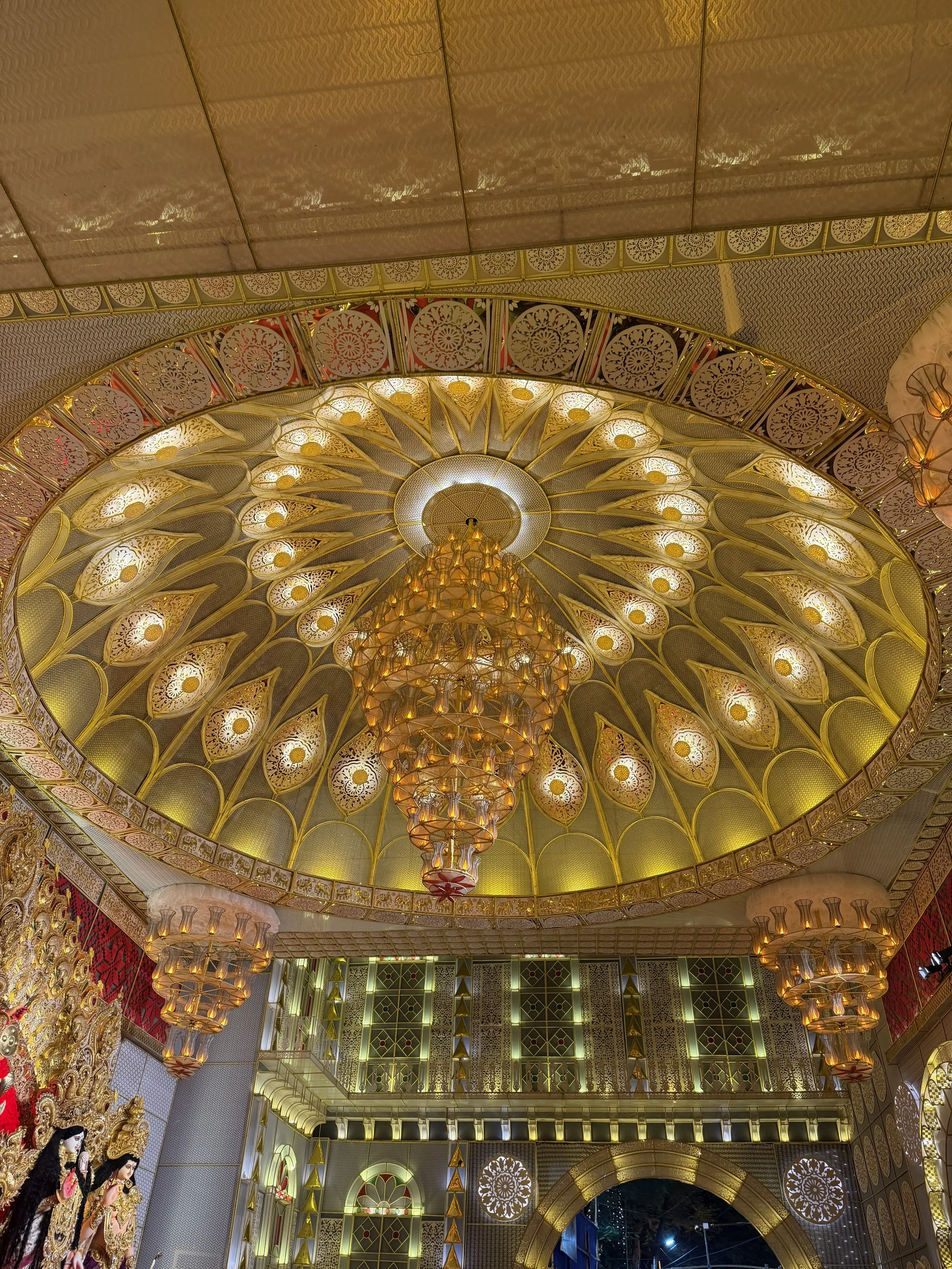
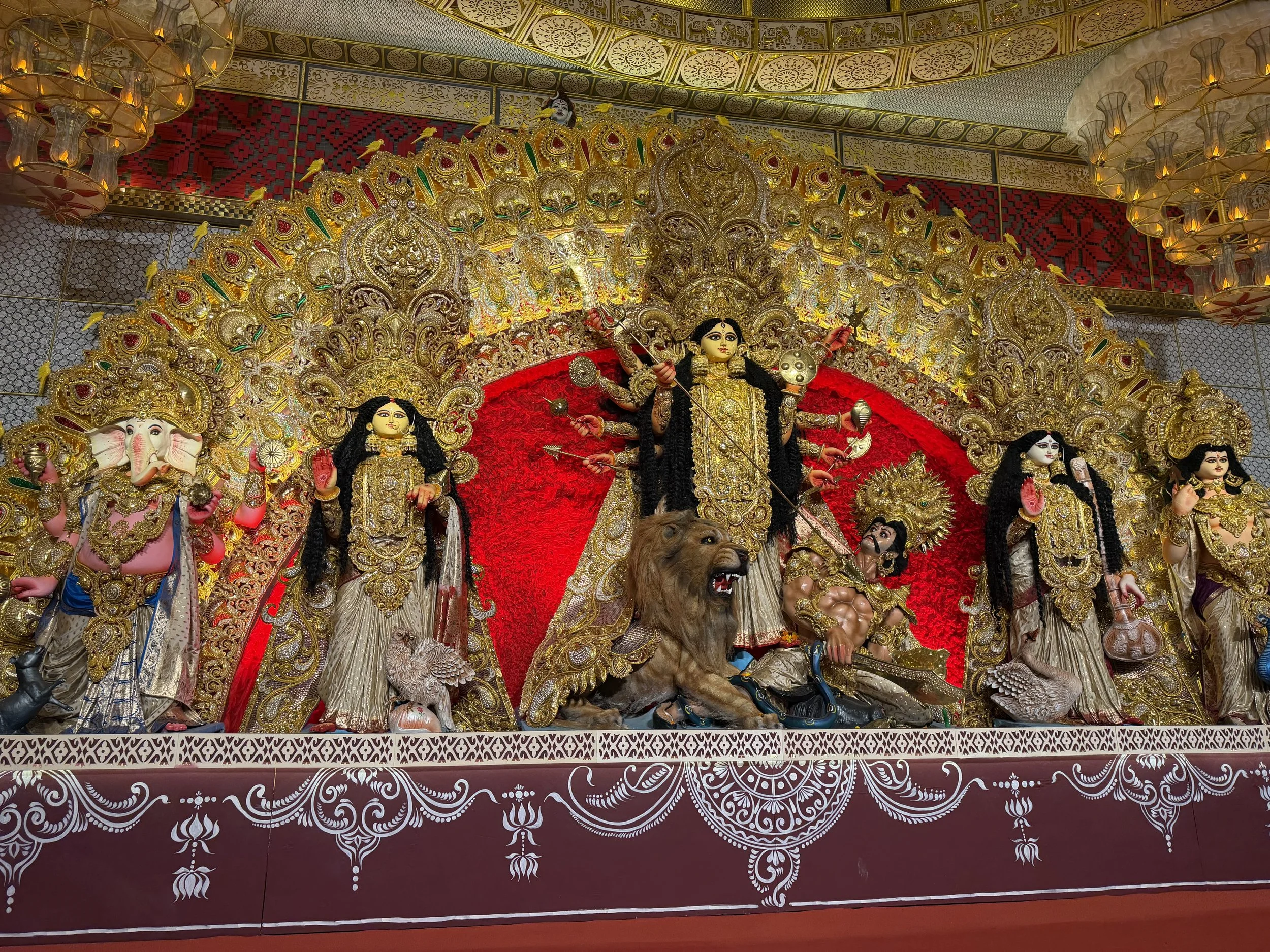
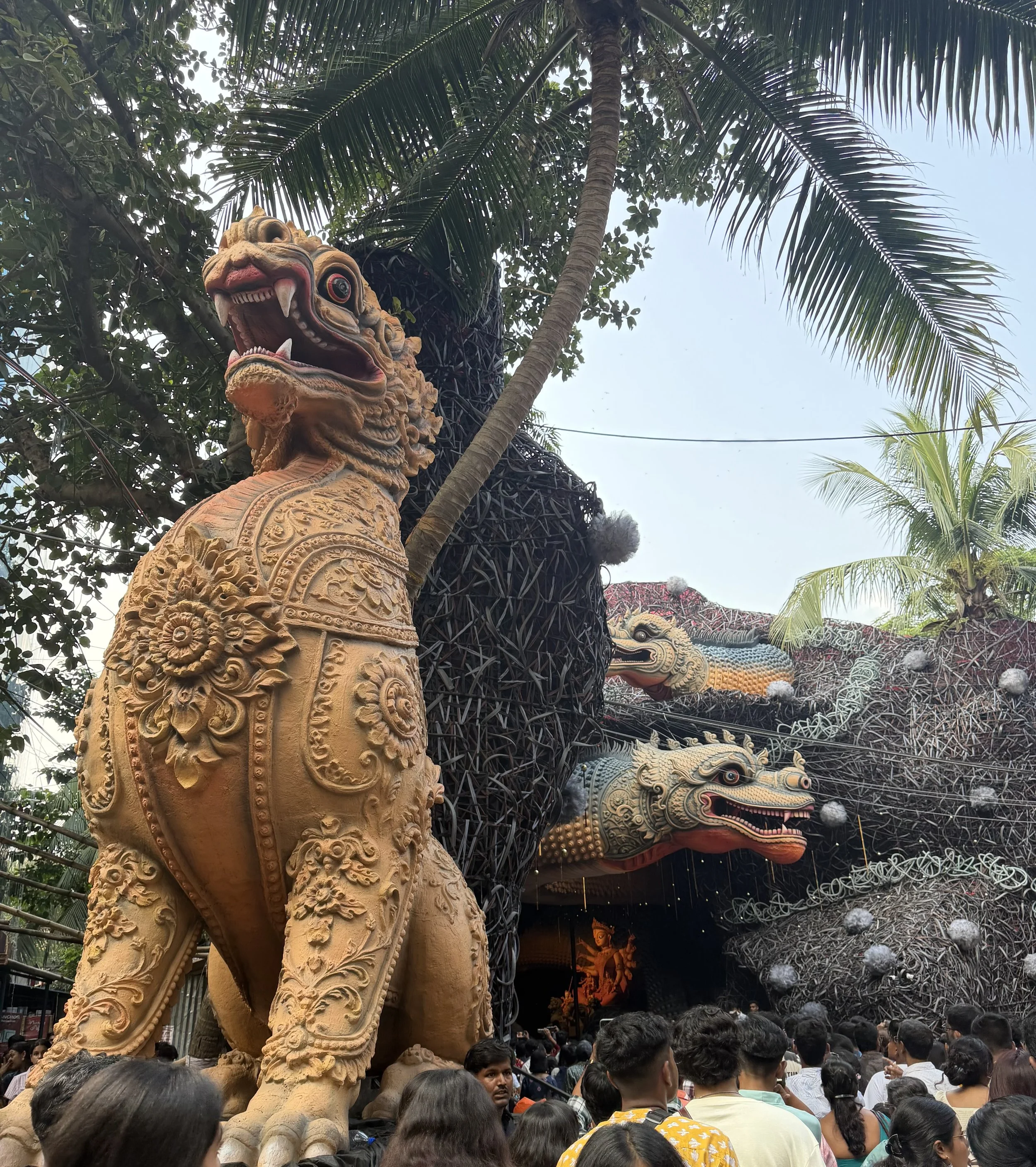
There is nothing quite like Durga Puja in Kolkata! Every autumn, the city transforms into a magnificent celebration of art, culture, faith, and community as millions of people take to the streets to welcome Goddess Durga and her four children—Lakshmi, Saraswati, Ganesha, and Kartikeya. According to Hindu tradition, this is the time when the goddess visits Earth, her 'baaperbari', or parental home, bringing with her the triumph of good over evil and the promise of hope and renewal. The celebrations are centered around elaborately constructed pandals—temporary structures that house the images of the goddess and her children. These are far more than places of worship; they are extraordinary works of art, painstakingly handcrafted by talented artisans who transform bamboo, cloth, wood, clay, and an astonishing variety of other materials into architectural wonders. Each pandal tells a story, inspired by mythology, historical monuments, contemporary themes, or imaginative artistic concepts. The images of Devi Durga herself are breathtaking, adorned in exquisite clothing, intricate jewelry, and elaborate ornaments, with her ten arms raised in the symbolic battle against the demon Mahishasura. The creativity and craftsmanship are simply extraordinary. Millions of dollars collectively go into the construction, decoration, lighting, and artistic installations of Kolkata's many community pujas, with some of the grandest productions commanding substantial individual budgets. According to a Times of India report published on October 14, 2026, Kolkata has approximately 3,319 Durga Puja pandals this year, a record number encompassing both community and private celebrations. The city comes alive after dark, with spectacular lighting displays illuminating streets, buildings, and pandals. Each seems determined to outdo the others, creating an open-air art exhibition on an almost unimaginable scale. More than four million people are reported to take to the streets during the festivities, and Kolkata barely sleeps as crowds embark on pandal hopping, moving from one dazzling display to another throughout the night.
For me, however, Durga Puja is as much about childhood memories and the emotions of returning home as it is about the spectacle. I awoke to the familiar, rhythmic beats of the dhaak, the traditional Bengali drums whose deep, resonant sounds are inseparable from the festival. Those beats transported me straight back to my childhood, when the sounds of the dhaak announced the sacred moments of the celebrations. At designated times, priests perform aarti—a devotional ritual in which a flame, often held in a lamp, is offered before the deity while prayers, bells, and sacred music express reverence and devotion. Another deeply cherished ritual is anjali, the offering of flowers to the goddess while devotees recite prayers and seek her blessings. These traditions give the festival its spiritual heart, even amid the dazzling decorations and enormous crowds. On October 16, during Maha Shashthi, which marks the ceremonial beginning of the main Durga Puja festivities, my niece, her husband, and I decided to visit the enormous pandal at Deshapriya Park, conveniently located near my sister's home. What should have been a relatively straightforward walk of about 1.5 miles turned into an exhausting ordeal. Road closures imposed by Kolkata Police and crowd-management personnel forced us onto a circuitous route of approximately 4.5 miles, and the journey took us nearly an hour and a half amid tightly packed, jostling crowds. At times, the sheer density of people was frightening. We worried that a stampede could break out at any moment, and the experience was a sobering reminder of how quickly the joy of a celebration can turn dangerous when crowds become overwhelming. We eventually made it home safely, utterly exhausted but relieved.
Tragically, our fears were reinforced the following day when news emerged of a deadly stampede at the Chorbagan Puja in North Kolkata. Reports indicated that 25 people had died, with many others injured. It was absolutely shocking and heartbreaking. How devastating that a festival celebrated with such devotion, enthusiasm, and collective joy could also bring such profound loss to families and the community. The tragedy cast a shadow over the festivities and highlighted the enormous challenges of managing millions of people in a city whose streets and public spaces can become impossibly crowded. We continued to visit a few pandals during the daytime, when the crowds felt more manageable, and I was able to appreciate the extraordinary craftsmanship and artistic imagination without quite the same anxiety. Despite the tragedy, I feel incredibly fortunate to be in Kolkata during this special time. Durga Puja is not simply a religious festival; it is an expression of Bengali identity, creativity, hospitality, and the deep bonds of family and community. Five days filled with magnificent art, the enchanting sounds of the dhaak, special festive meals, reunions with loved ones, and the infectious excitement of the city create memories that remain long after the lights come down and the pandals are dismantled. I am sharing a few photographs of the magnificent images of Devi Durga and her children, the extraordinary handcrafted decorations, and the spectacular lighting that make this celebration so unique. Every photograph captures only a fraction of the magic, but I hope they convey something of the beauty, talent, devotion, and sheer exuberance of Durga Puja in Kolkata. Despite its challenges and heartbreaks, being here to experience this extraordinary celebration once again has been a gift.
A Little Travel Drama: Two Phone Scares and One Very Forgetful Traveler!


Life is never without its little surprises, and apparently, my journey to Tokyo was determined to provide more than its fair share! On our flight via Singapore, I experienced something that had never happened to me before. We were traveling economy, and the gentleman seated next to me in the aisle seat apparently had other plans besides enjoying his flight. While I had stepped away to use the washroom, he was rummaging through my seat pocket, apparently searching for my phone. Fortunately, my sister caught him in the act! When I returned and she told me what had happened, I immediately alerted the flight attendant, who promptly arranged to have him moved to another seat. In the process, the gentleman had managed to dislodge my eyeglasses and eye mask, which he apparently dropped on the floor. The flight attendant retrieved both, thankfully intact. My phone, however, was safe because I hadn't left it in the seat pocket. What an introduction to our journey! In all my years of traveling, I've encountered delays, lost luggage, and the occasional travel mishap, but a fellow passenger attempting to help himself to my belongings was definitely a first!
You'd think that was enough excitement for one journey, but apparently not! On boarding our connecting flight from Singapore to Tokyo, I managed to create the next little drama entirely on my own. I left my phone on the seat in the waiting area, collected all my carry-on belongings, and merrily walked away, completely oblivious to the fact that I'd abandoned one of my most important possessions. I was just about to enter the gate leading to the skywalk when a gentleman tapped me on the back and handed me my phone. I was stunned! I thanked him profusely and couldn't believe my own carelessness. This had never happened to me before. Perhaps it was jet lag, perhaps the excitement of traveling, or perhaps I'm finally reaching the stage in life when I need to keep a closer eye on my belongings—and possibly on myself! Thankfully, the remainder of the journey to Tokyo was entirely uneventful. Two phone-related near-disasters in one trip were quite enough excitement for me. I arrived with my phone, my glasses, my eye mask, and, most importantly, my dignity more or less intact. Here's hoping the adventures in Japan will be a little less eventful!
Tokyo: A Chauffeur, a Translator, Tiny Hotel Rooms, and a Kimono Adventure!
Booking a chauffeur-driven car for the entire duration of our Japan trip was probably one of the wisest decisions I made—although it did cost a pretty penny! My son and daughter-in-law, who have visited Japan three times, had wisely warned me about the language barrier and recommended downloading a translator app. Taking their advice one step further, I decided to splurge on an English-speaking chauffeur and a comfortable car. We were picked up at Haneda Airport and whisked off to our hotel in Ginza. Imagine our surprise when our supposedly English-speaking chauffeur communicated almost entirely through a translator app! So much for my extra investment! I'm usually quite good at providing immediate feedback, and the booking agent received an earful from me before we had even settled in. Things didn't improve much at the hotel. After paying what seemed like a small fortune for our accommodation, we walked into the room and our jaws dropped. Was this really what I had paid for? At those prices, I could probably have booked a full-fledged suite back home in the United States! We were amazed at the ingenuity of Japanese architects and designers, who seem capable of fitting an entire hotel room into a space that would barely accommodate a walk-in closet in California. Every inch had a purpose, and efficiency clearly trumped elbow room. On the other hand, the Japanese style white cotton ironed night suit was impressive! I spent much of the evening communicating my disappointment to the booking agent. Eventually, exhaustion won, and sleep seemed a far better investment of my remaining energy. Dinner was a quick stop at the ubiquitous 7-Eleven, which deserves a special mention. These convenience stores are everywhere in Tokyo and offer an amazing selection of freshly prepared, delicious, and inexpensive meals that can simply be microwaved. Cheap, convenient, and surprisingly good—now that's a combination I can wholeheartedly endorse!
Before moving on, I must mention two things that absolutely fascinated me about Japan: the toilets and the cleanliness! Japanese toilets are in a league of their own, with heated seats and an astonishing assortment of automated washing and cleaning functions. They are everywhere—from hotels and restaurants to highway rest stops and public restrooms. Once you've experienced a heated toilet seat, it's rather difficult to go back to ordinary plumbing! Equally impressive is the immaculate condition of everything: streets, sidewalks, public restrooms, shops, and even the busiest public spaces. Not a scrap of rubbish in sight. Japan certainly knows how to get the basics right!
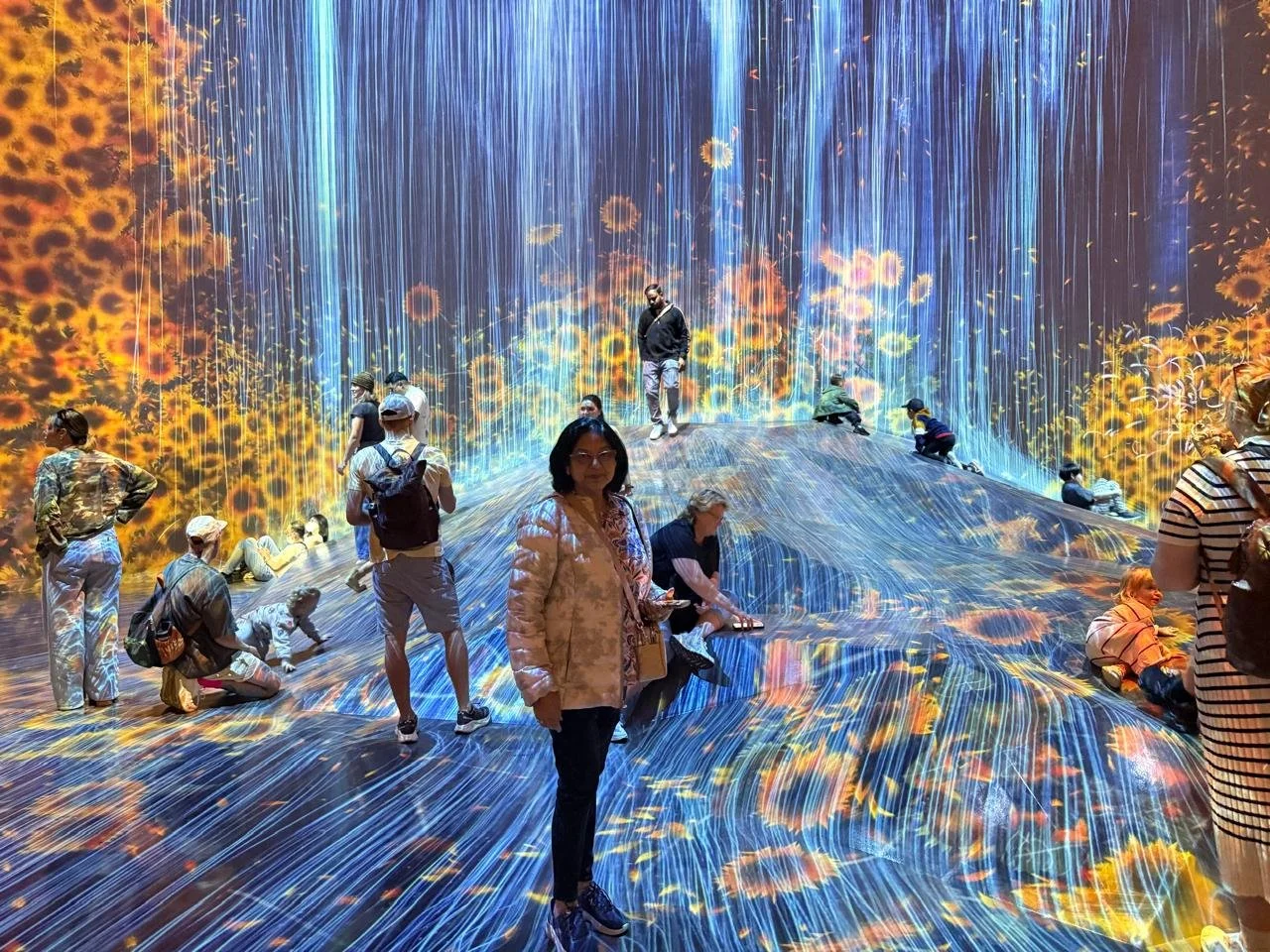
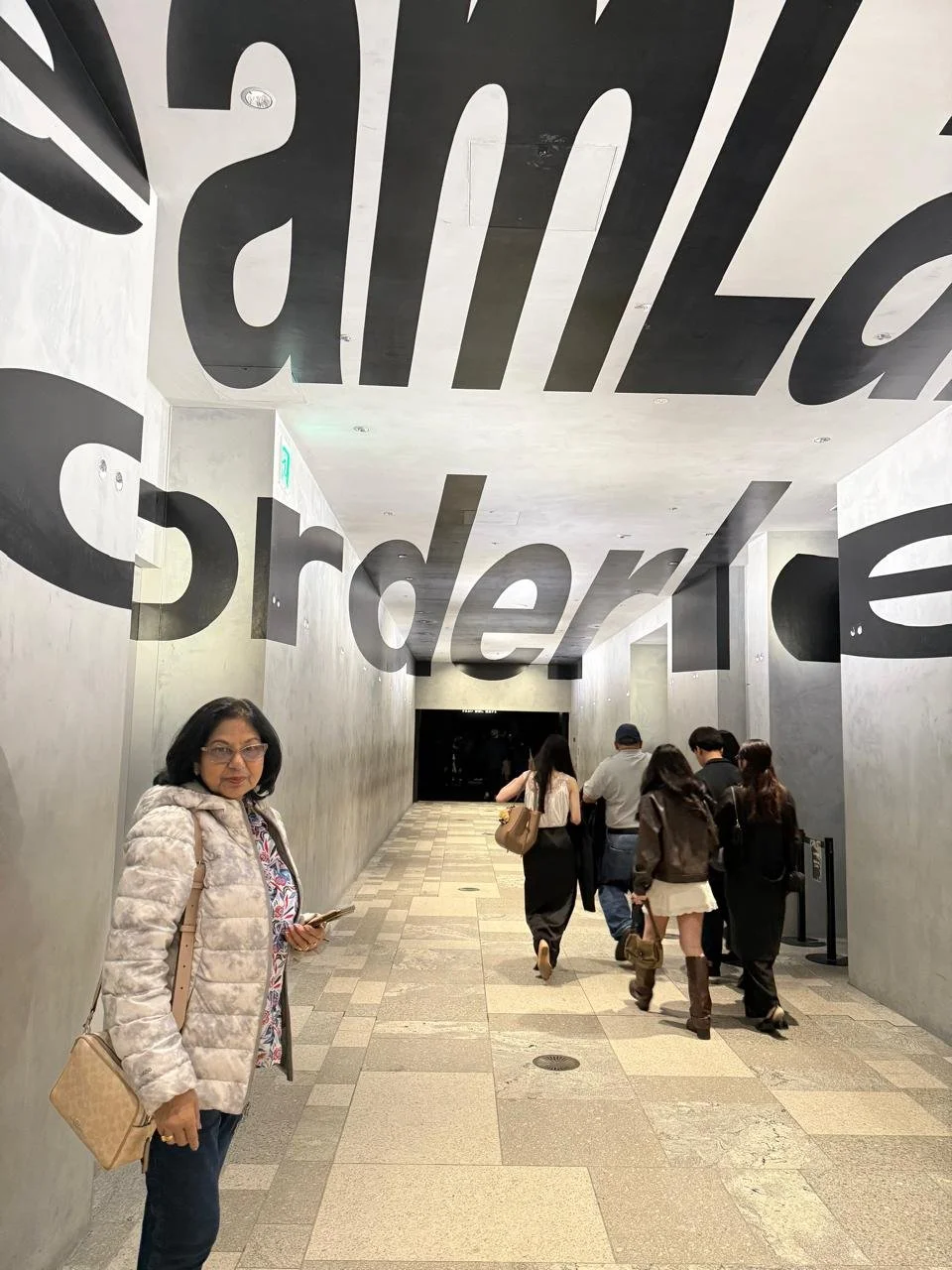
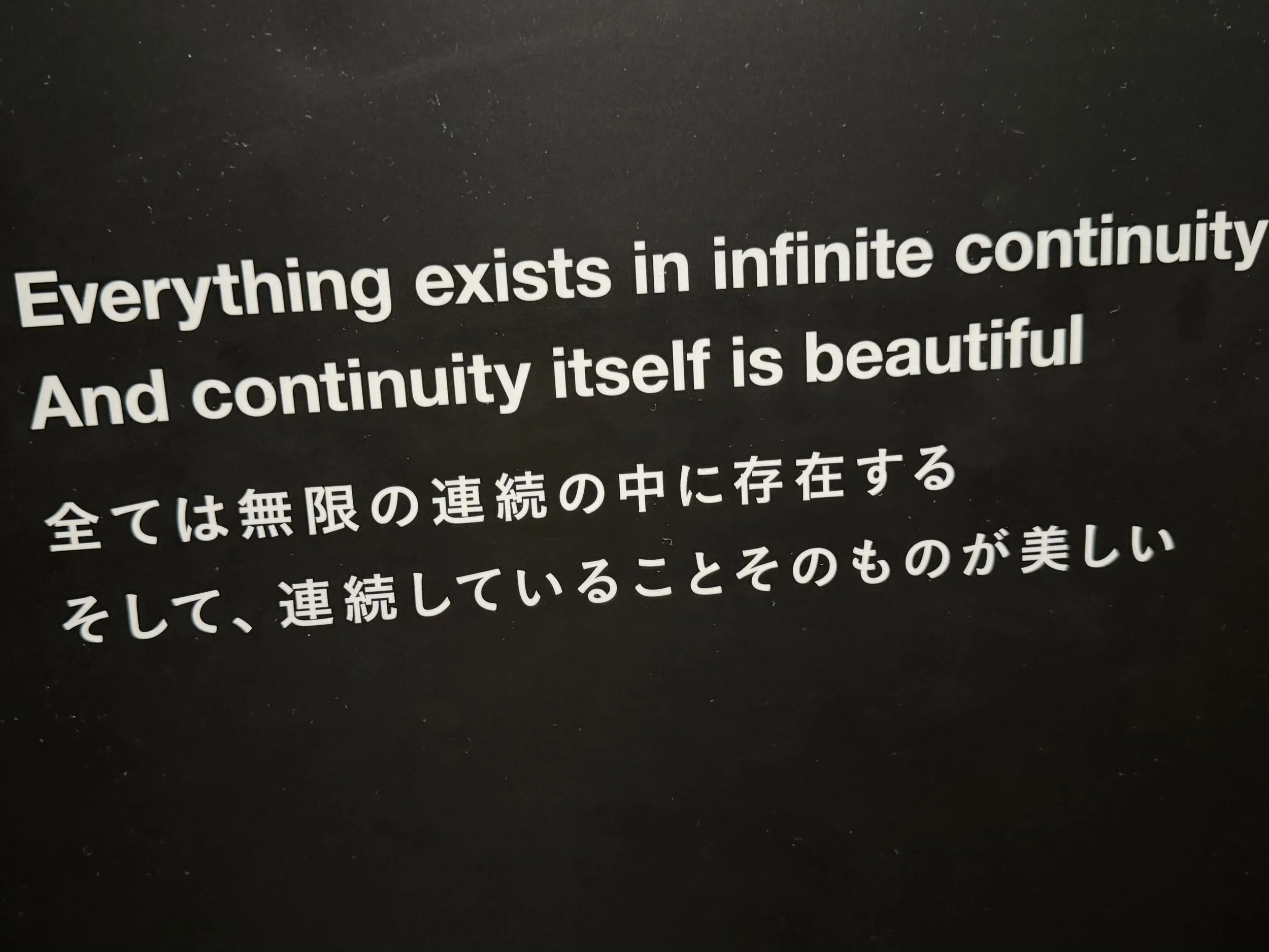
The following morning brought a change of chauffeur, a new Toyota Alphard, and a new driver named Roy. A welcome change, although Roy, too, relied heavily on the ChatGPT translator app to communicate with us. By now, I had accepted defeat and decided to fight technology with technology. I whipped out my own translator app and began using it to decipher conversations, menus, food labels, and practically every sign we encountered. Between the two of us and our respective apps, we managed to communicate reasonably well—although I occasionally wondered whether the apps were having a more meaningful conversation with each other than we were! Our first major stop was Borderless teamLab, an extraordinary digital art experience that is simply impossible to describe adequately. WOW! What a feast for the eyes! Immersive rooms filled with spectacular projections, flowing lights, colors, and constantly changing images transported us into another world. We walked through one breathtaking installation after another, completely mesmerized. Even after leaving, we found ourselves mentally replaying the visuals, wishing we could step back inside.
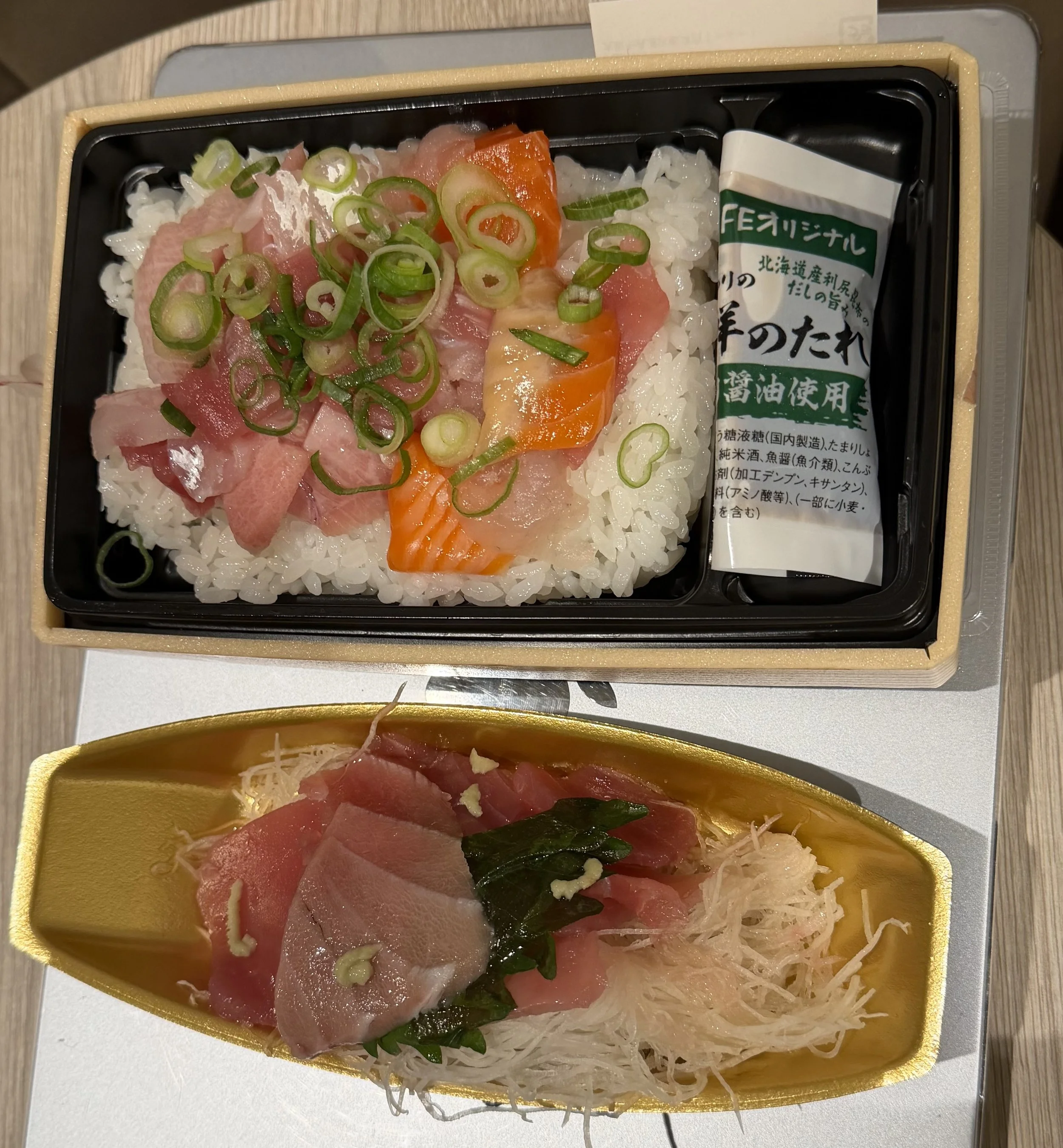
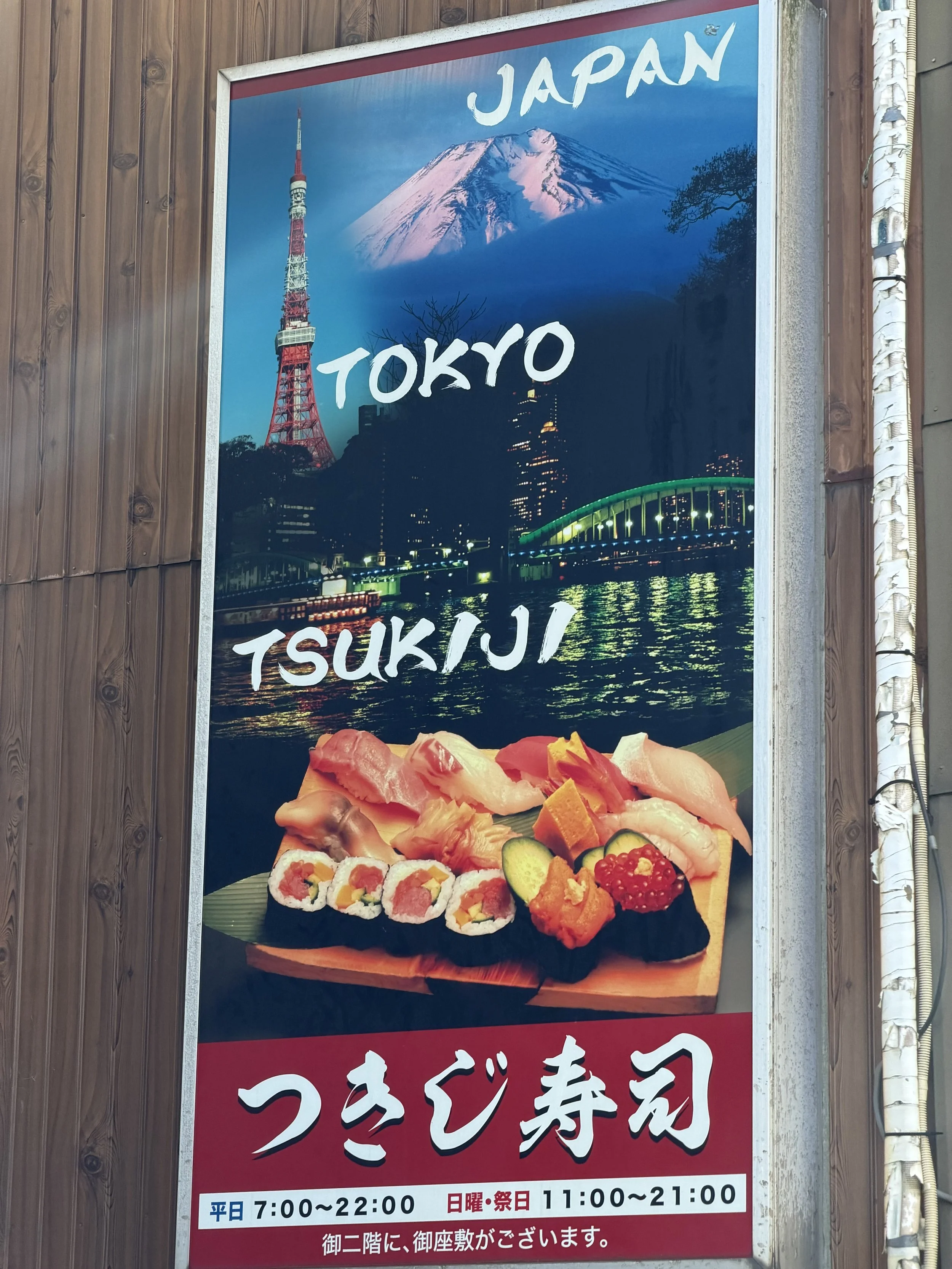
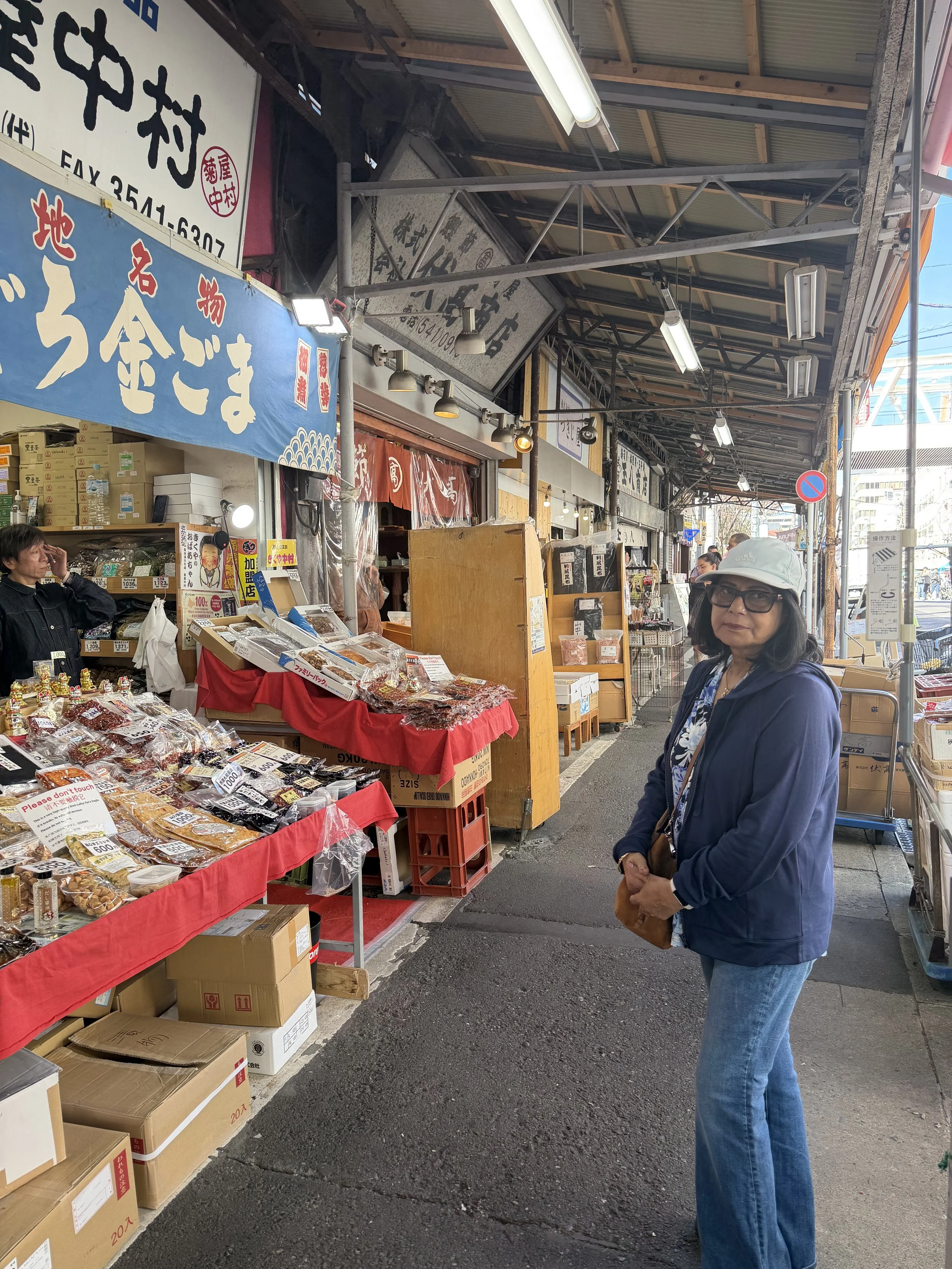
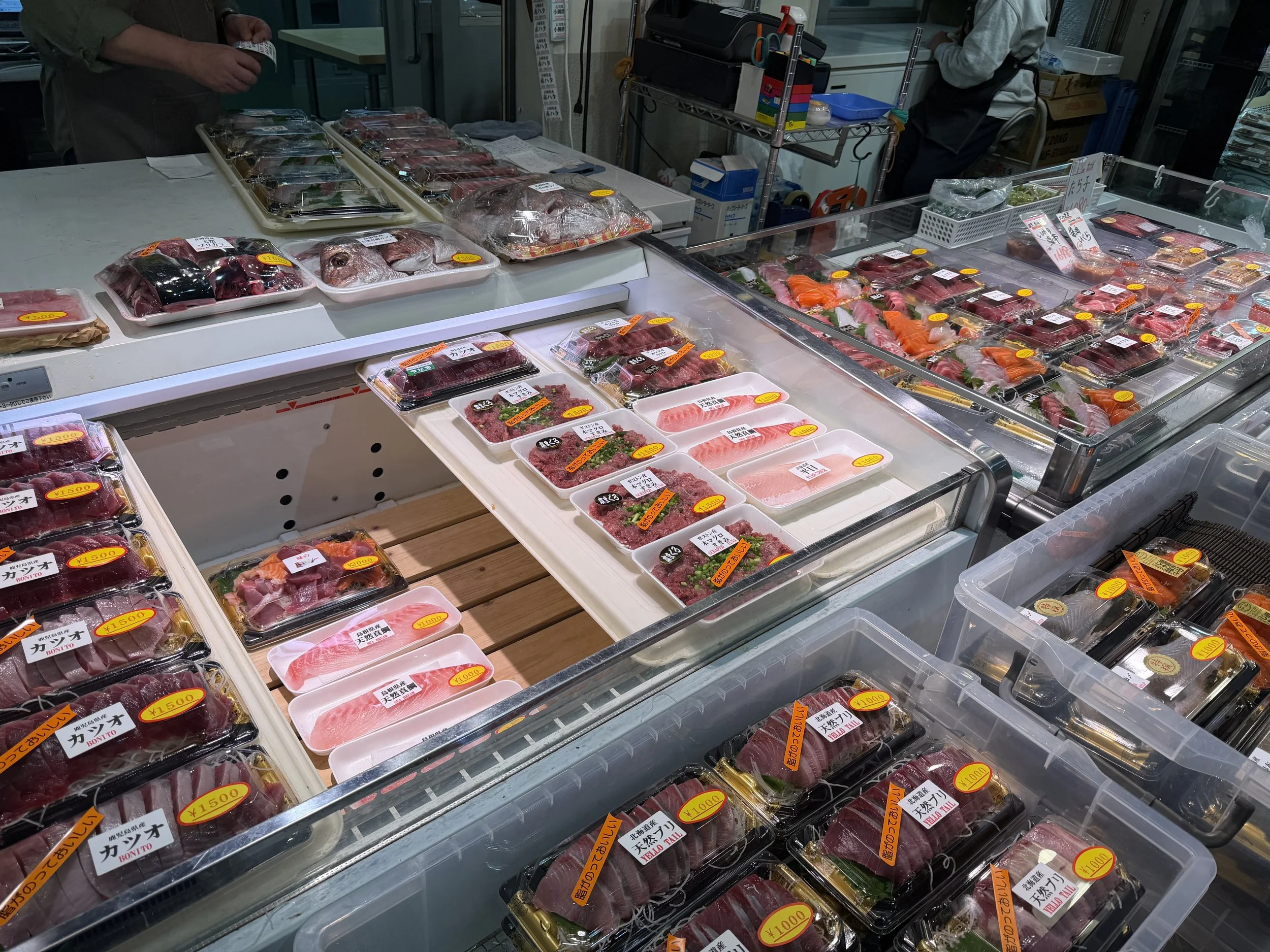
One more stop worth mentioning was the famous Tsukiji Outer Fish Market—and for a sushi and sashimi lover like me, this was practically heaven on earth! The moment we arrived, my mouth was watering. Everywhere I looked, there were stalls displaying the freshest seafood, beautifully sliced sashimi, and an incredible variety of Japanese delicacies. I could hardly contain my excitement and wasted no time indulging in some absolutely delicious salmon and tuna sashimi. My twin, unfortunately, isn't quite as enthusiastic about raw fish as I am, but being the good sport that she is, she happily strolled around the market while I pursued my culinary adventure. We had clearly divided our responsibilities: she was there for the sightseeing, and I was there for the eating! Needless to say, I considered this a very successful stop—and one that I would happily repeat, preferably with an empty stomach and no time constraints!
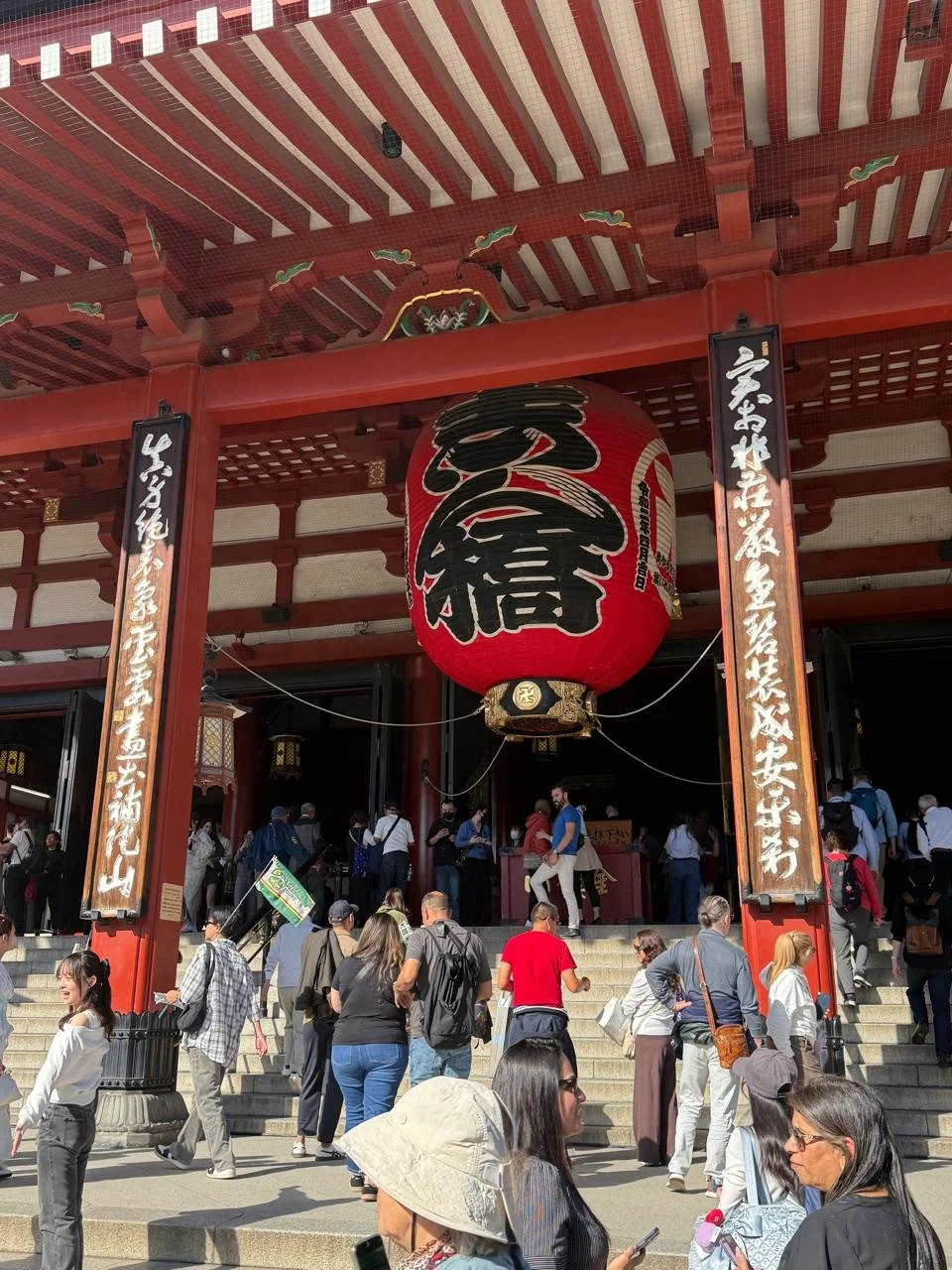
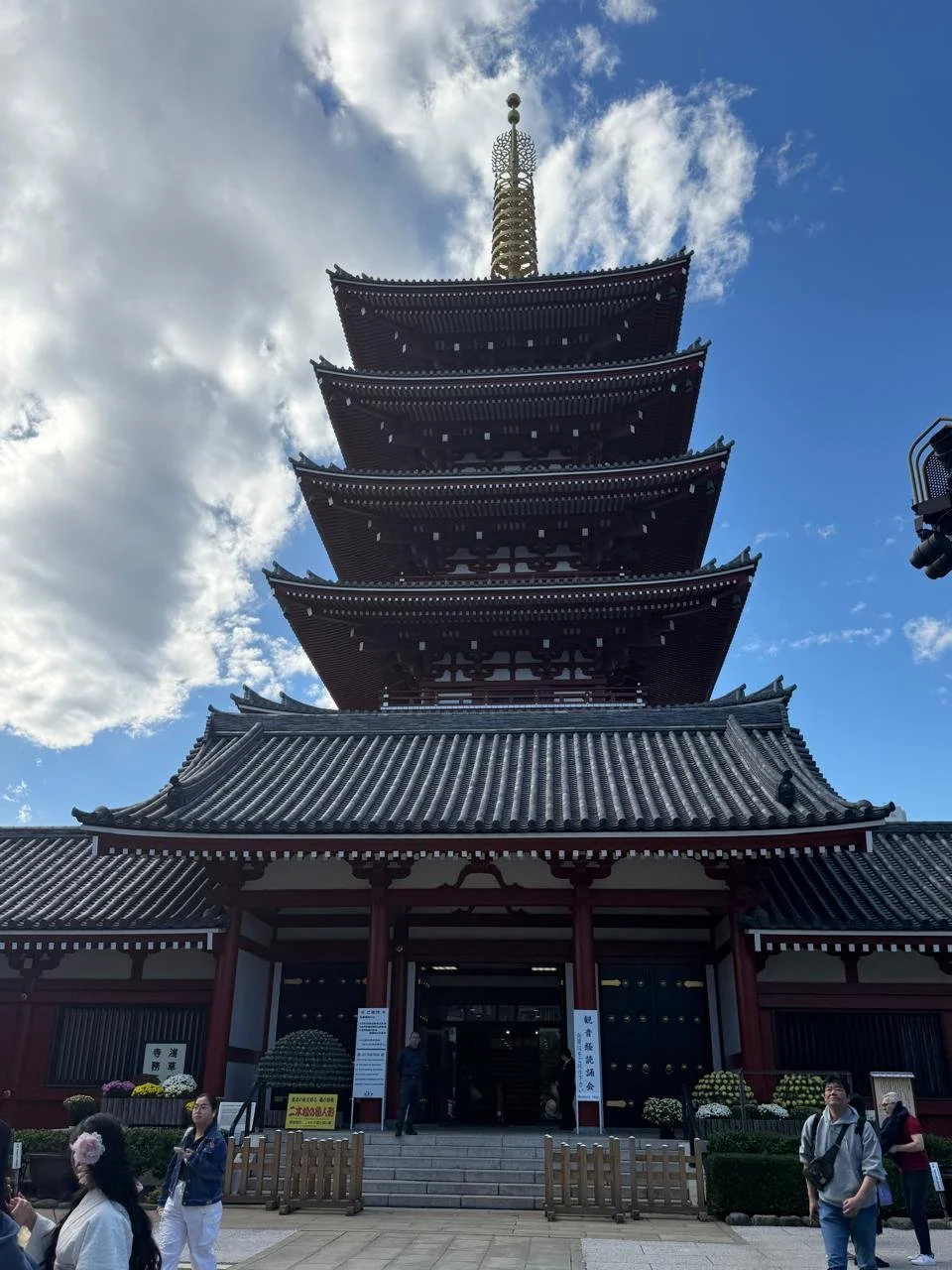
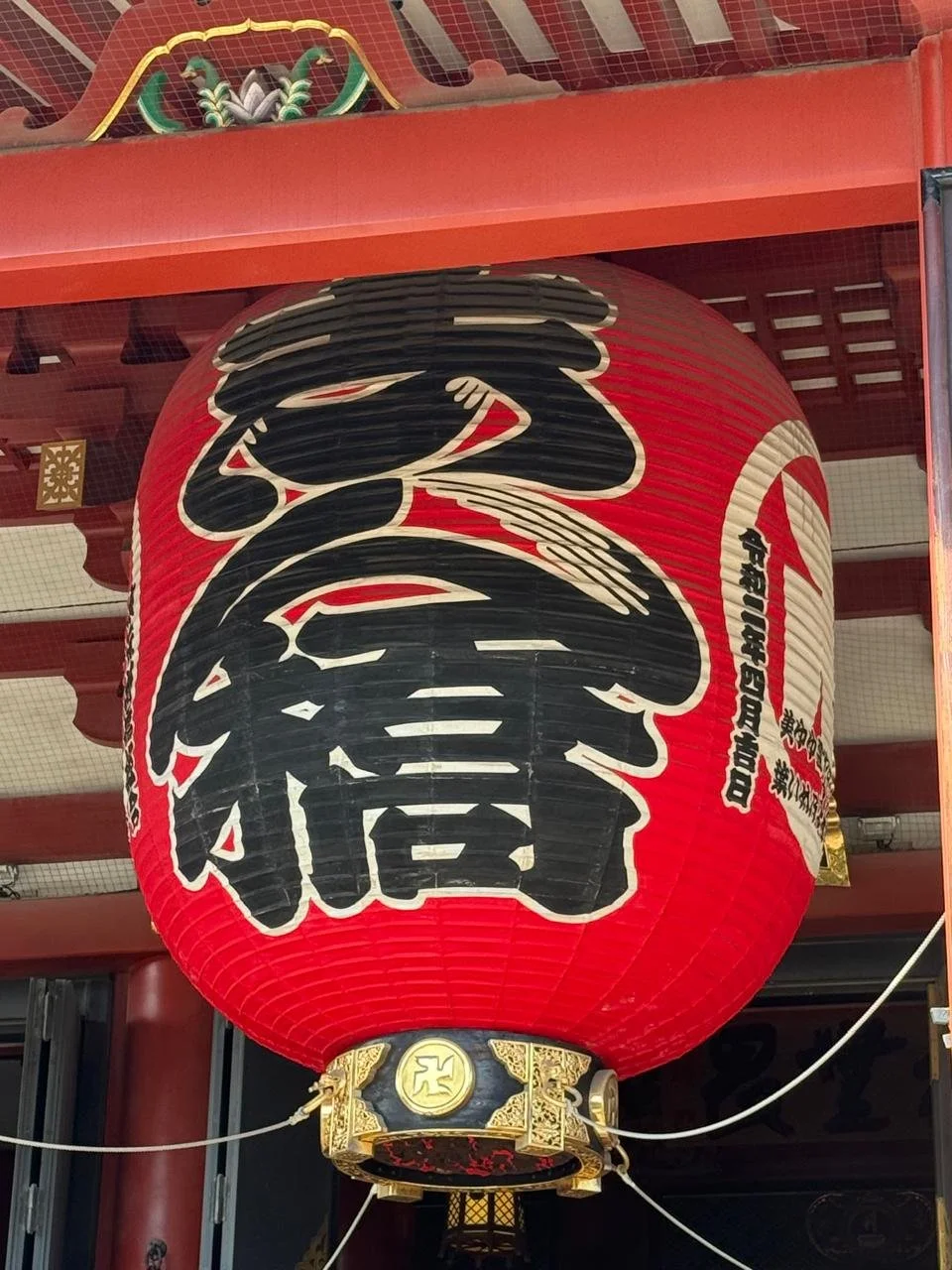
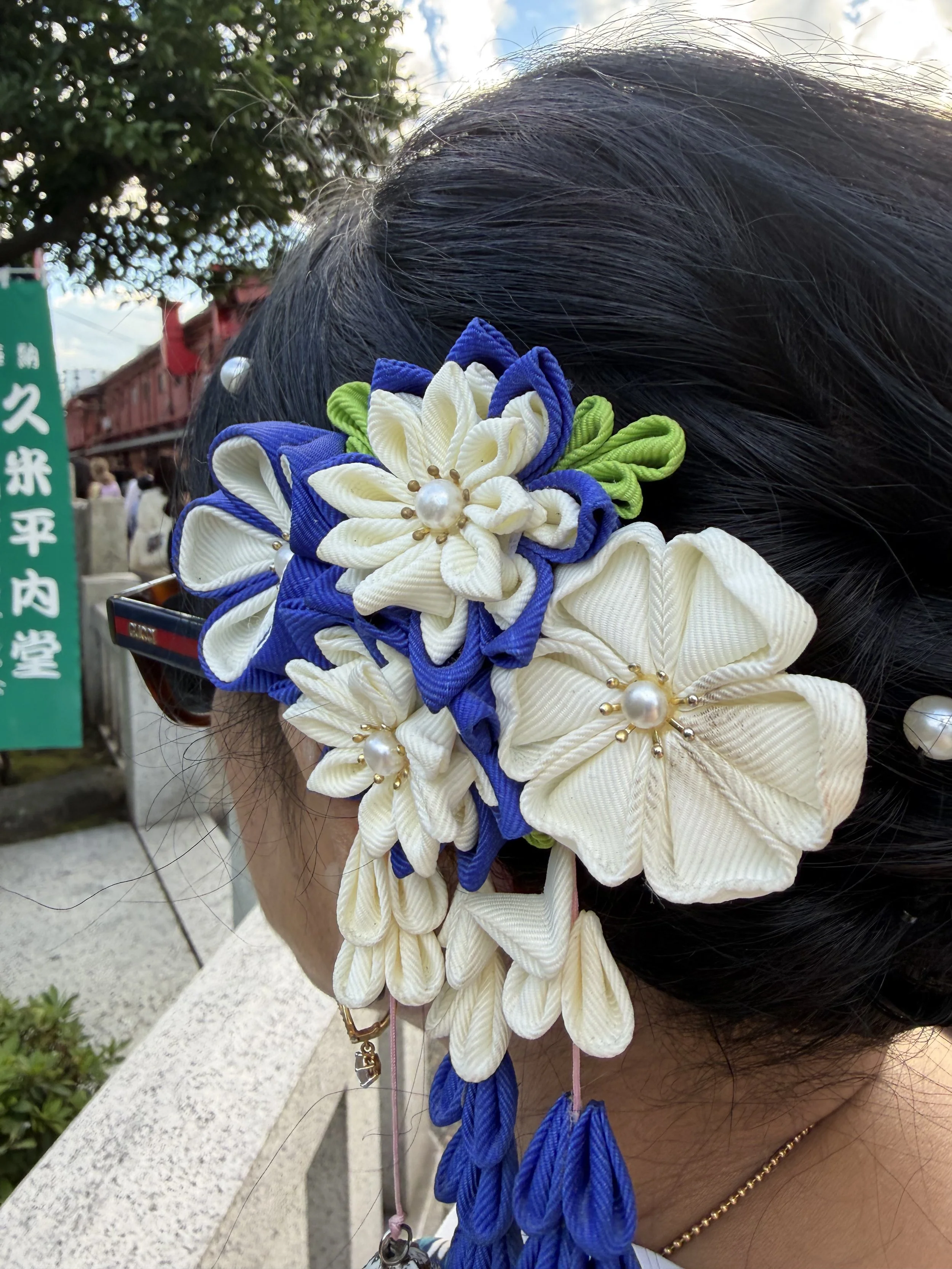
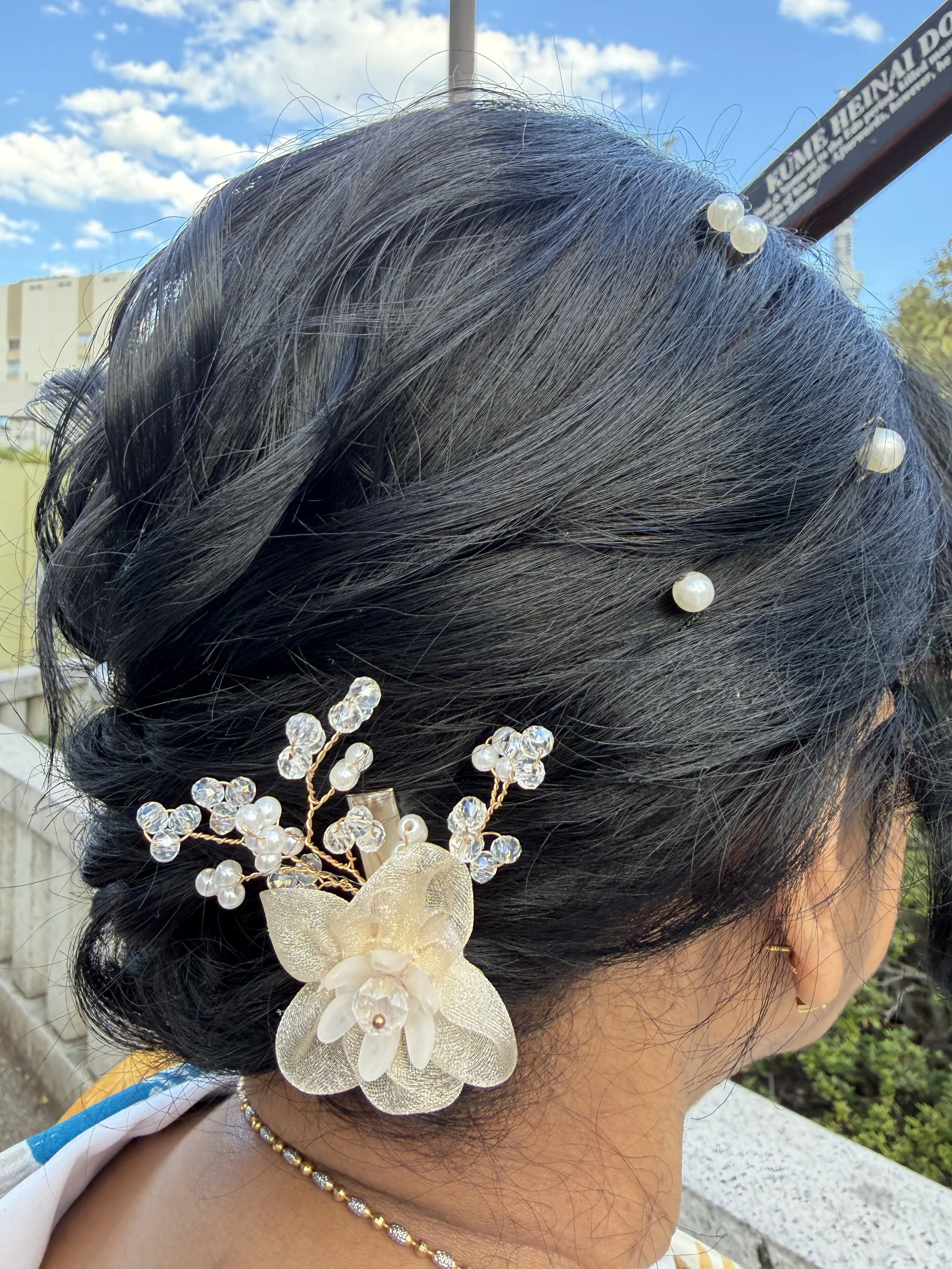
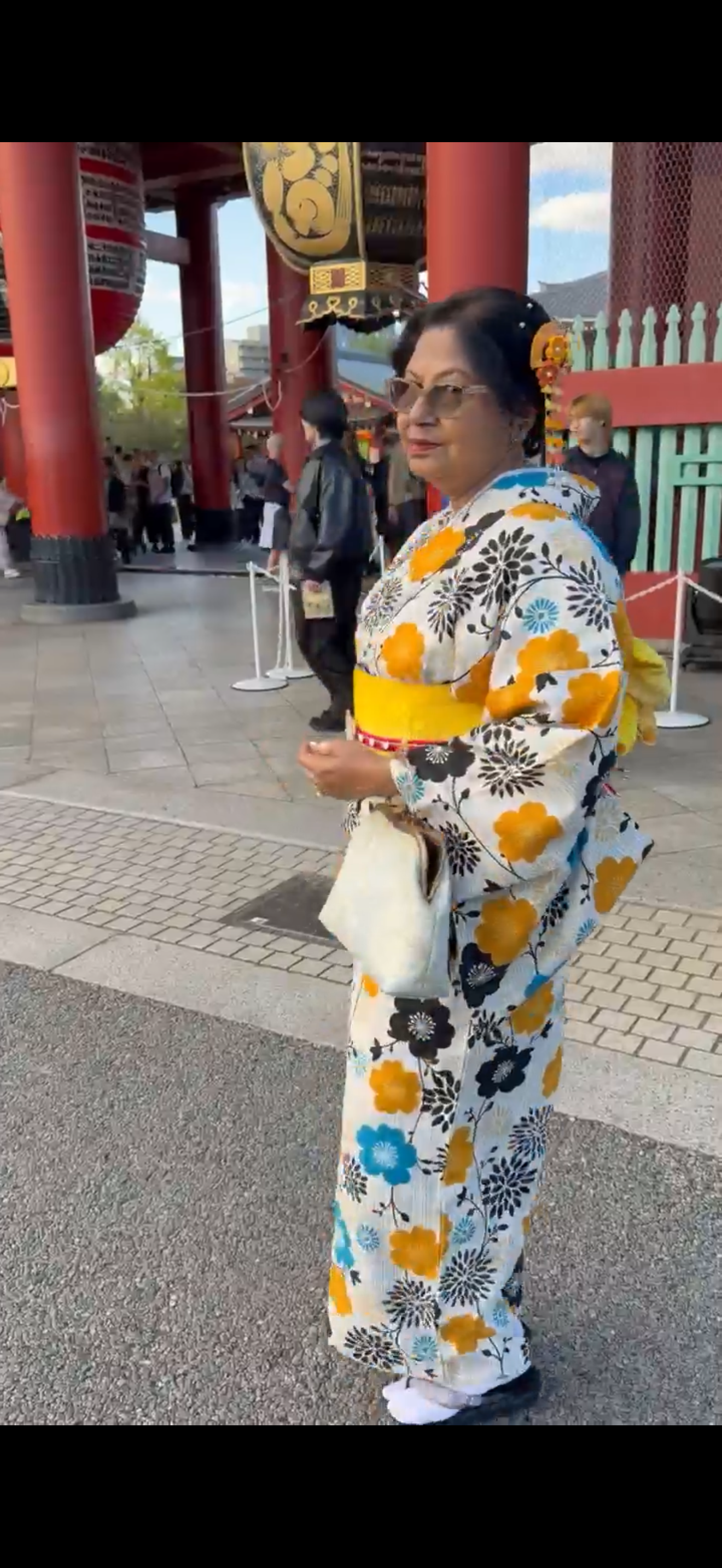
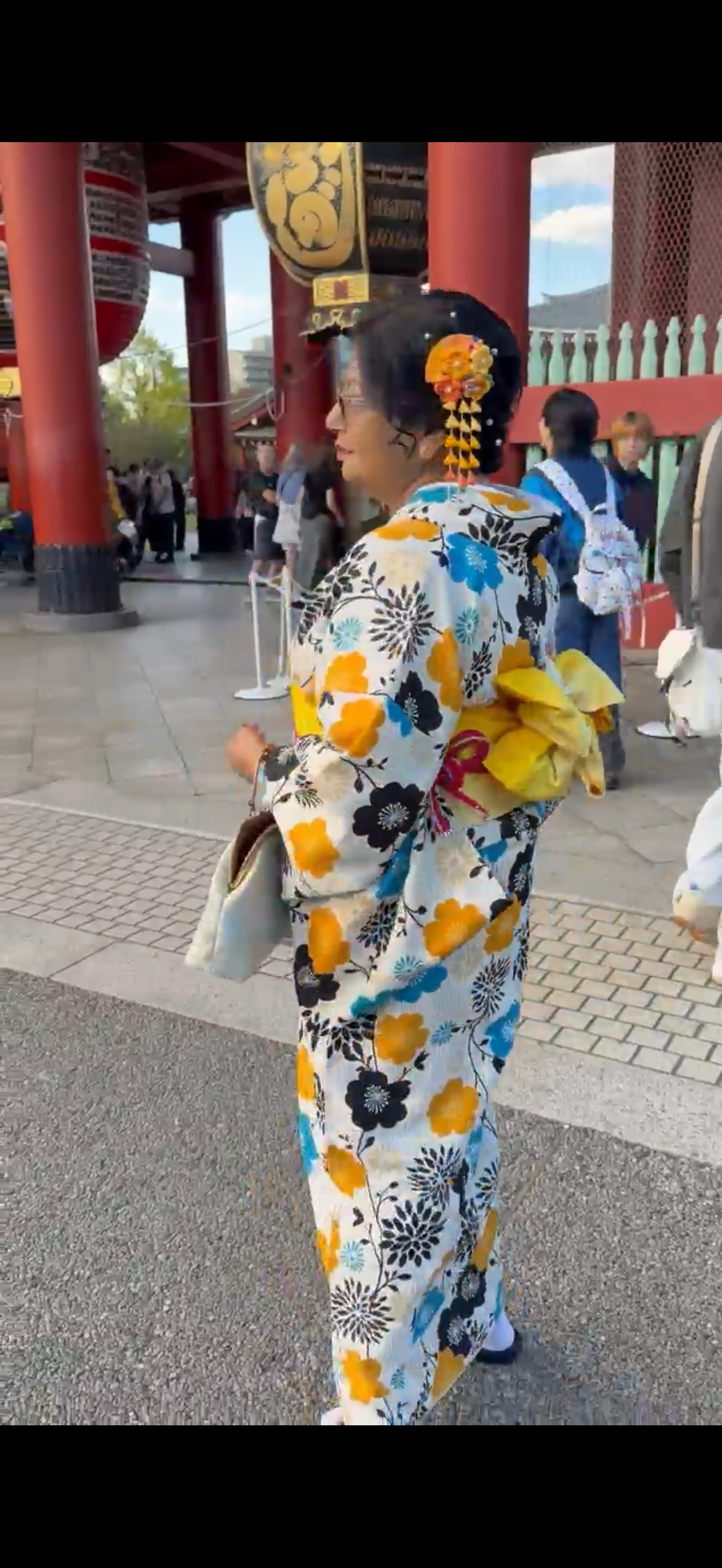
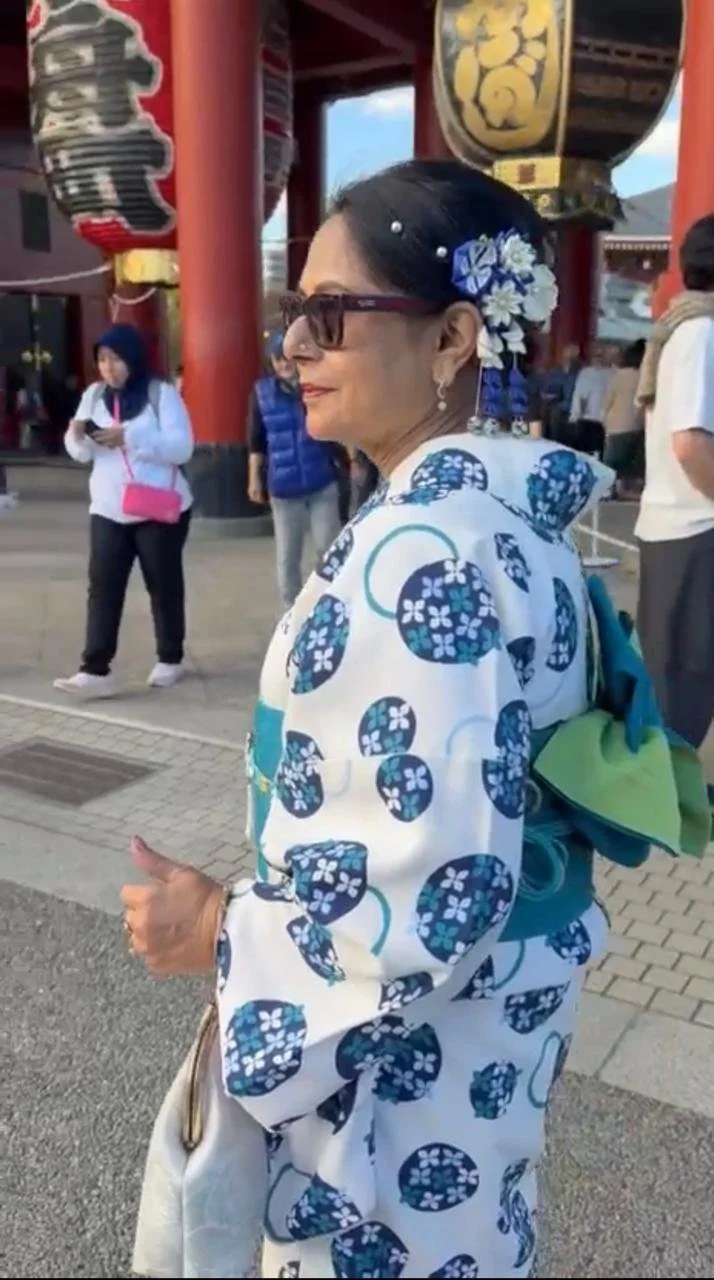
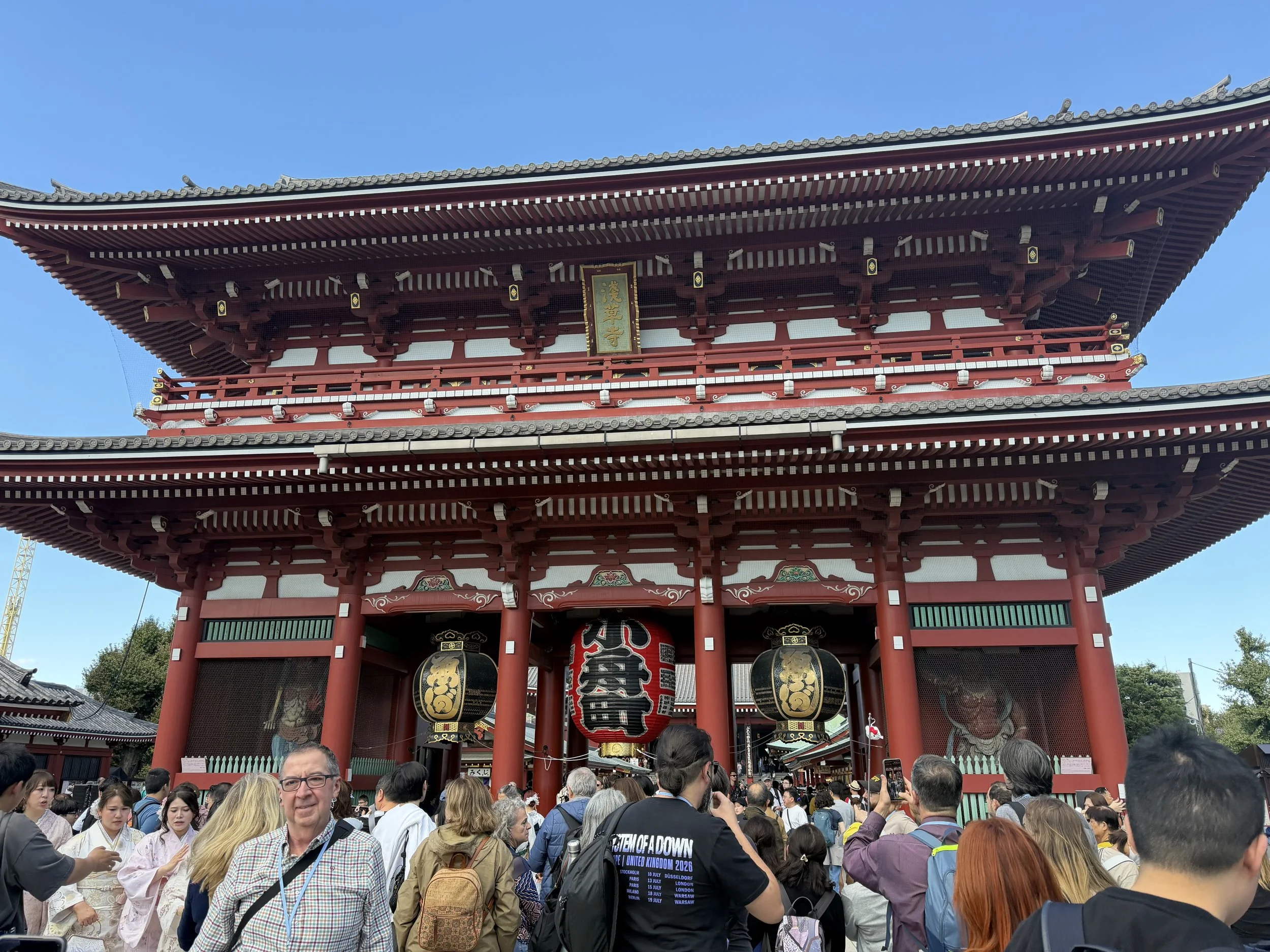
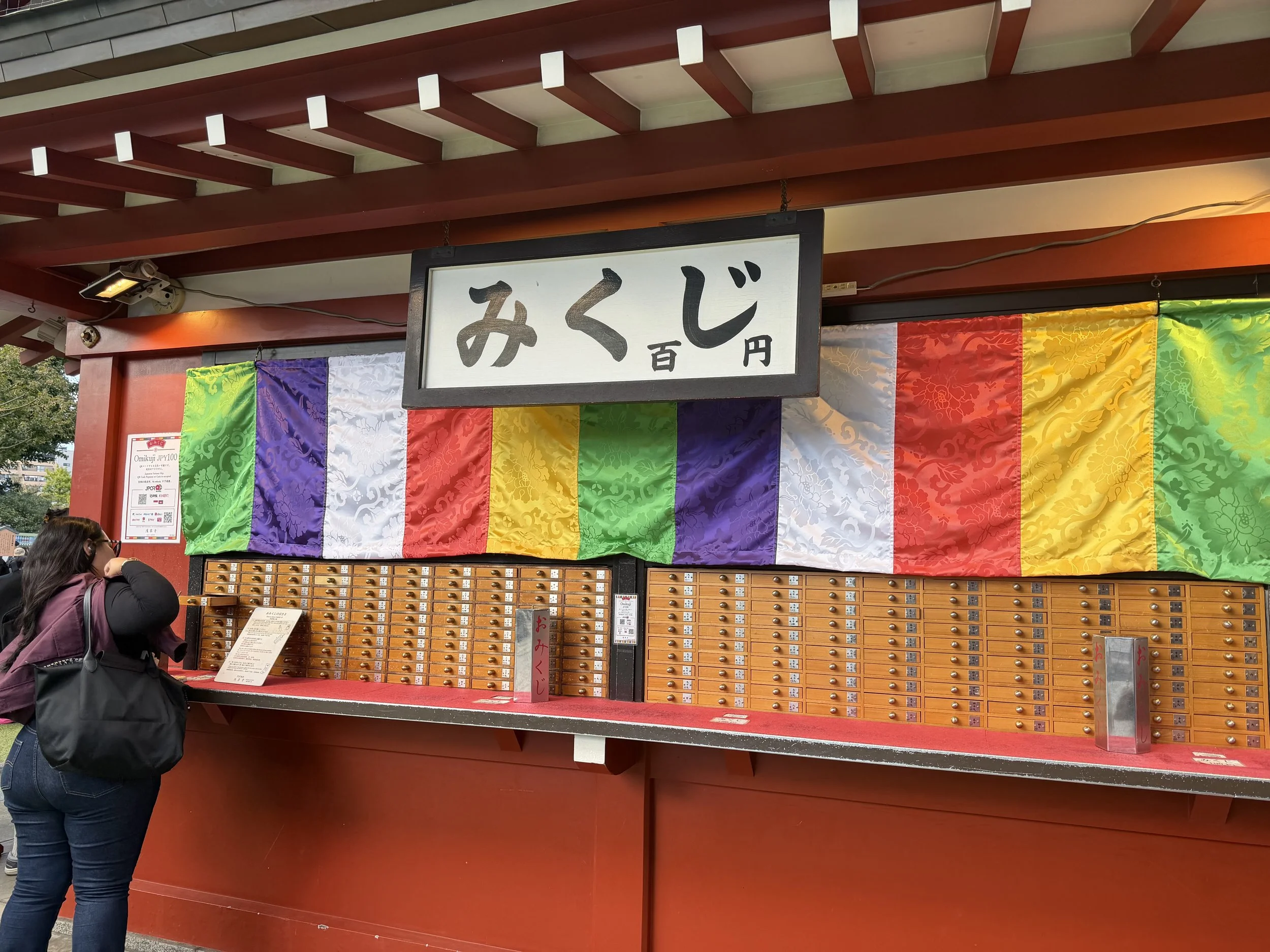
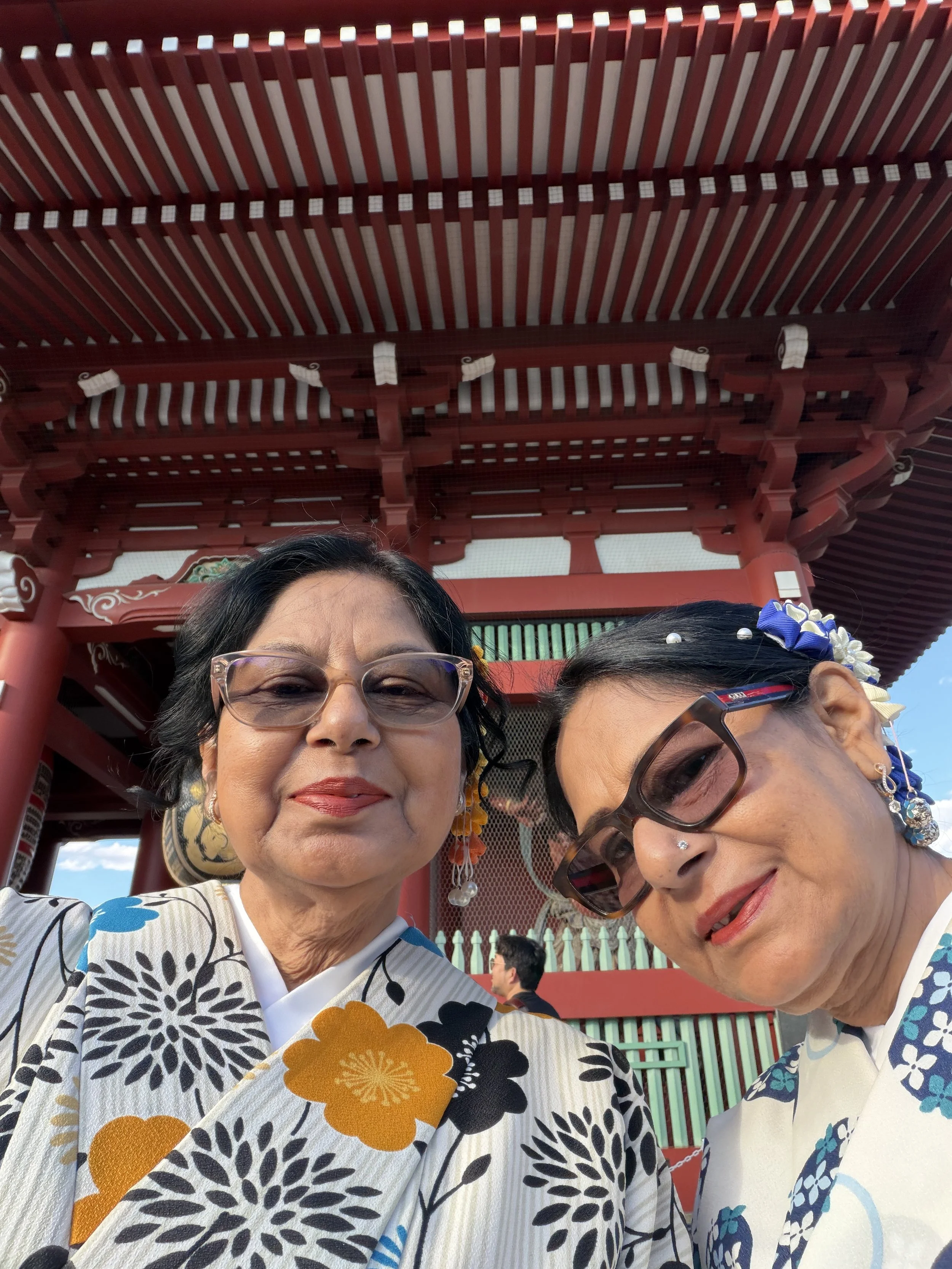
Next came Senso-ji Temple, one of Tokyo's most beautiful and historic Shinto temples. Here we received an impromptu education in Japanese temple etiquette: washing our hands at the purification fountain, bowing before entering, clapping twice, offering prayers, and bowing again as we left. I was particularly keen on experiencing something quintessentially Japanese, and suggested that we wear traditional kimonos for our temple visit. My sister, as usual, needed a little persuasion. Convincing her to participate in my adventures is often a full-time job, but persistence finally paid off! We were whisked away to have our hair styled in traditional Japanese fashion and then carefully dressed in beautiful kimonos. Oh boy, what an experience! Walking in those gorgeous outfits and traditional Japanese footwear was quite another matter. Looking elegant is one thing; navigating the streets without tripping over your own feet is quite another! The enormous, striking red lantern at the temple entrance was a sight to behold, and naturally, we had to pose for photographs. Roy obligingly became our photographer and, after examining the results, remarked that my sister and I didn't look like twins at all! Ha! Some observations are best left unmade, Roy!
Our final stop for the day was Akihabara, Tokyo's famous electronic and anime district, with its dazzling array of electronics stores, colorful signs, and bustling streets. By then, we had accumulated enough photographs, cultural experiences, and walking miles to last us several days. We returned to the hotel completely exhausted and, without much discussion, headed straight for another 7-Eleven dinner. Why complicate life when a perfectly good microwave meal is waiting downstairs?
Despite the language challenges, the ridiculously small hotel room, and our ongoing negotiations with technology, it had been a wonderful day filled with unforgettable experiences. And I must say, we had been extraordinarily lucky with the weather. It was sunny and pleasantly warm, making our sightseeing much more enjoyable. We kept our fingers crossed, said a little prayer, and hoped that the weather gods would continue to smile upon us. After all, there was still so much of Japan to explore—and I was beginning to suspect that my translator app, chauffeur, and I were going to become very good friends!
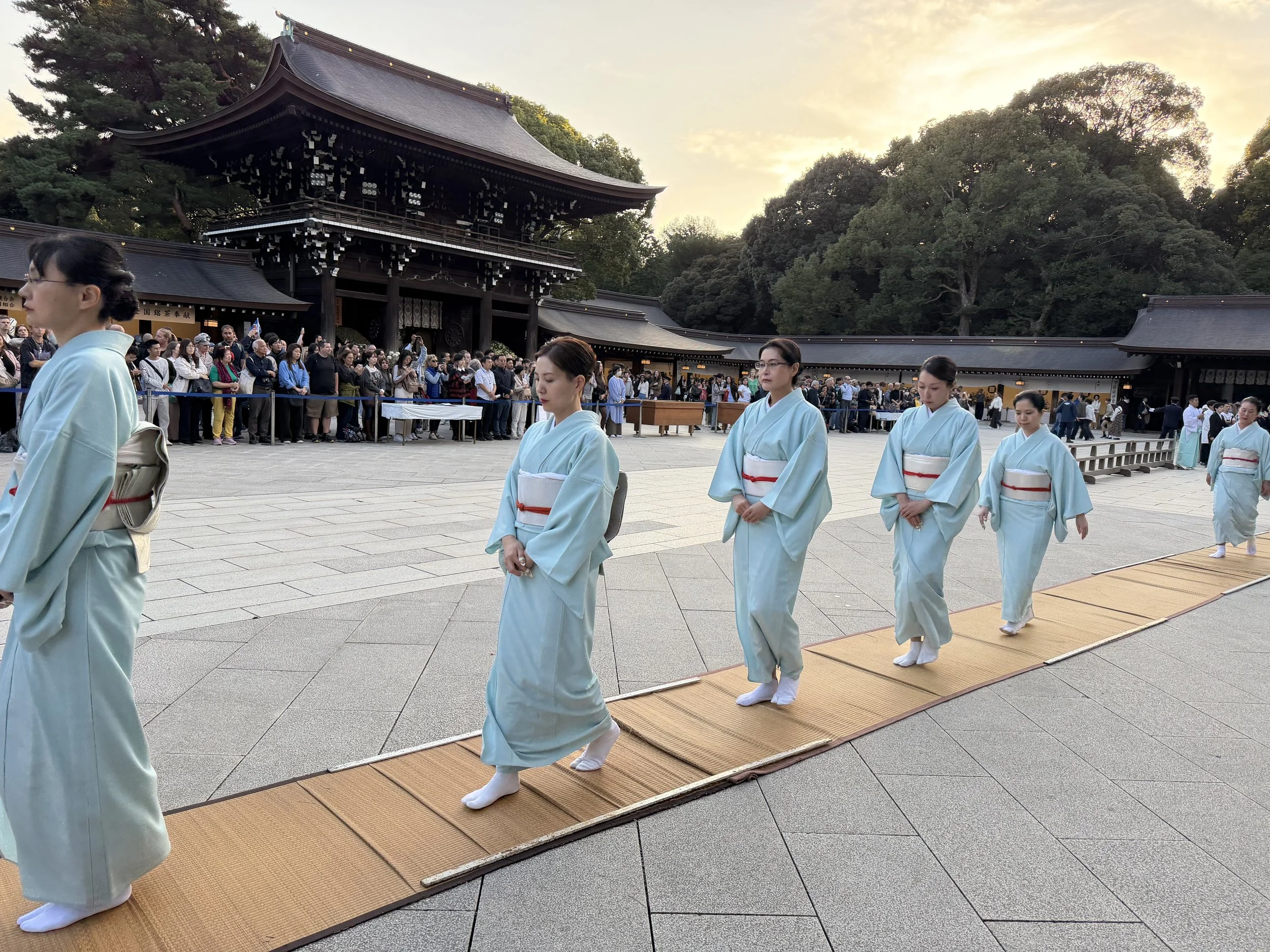
The Kimono Ladies!
Tsujiki Fish Market
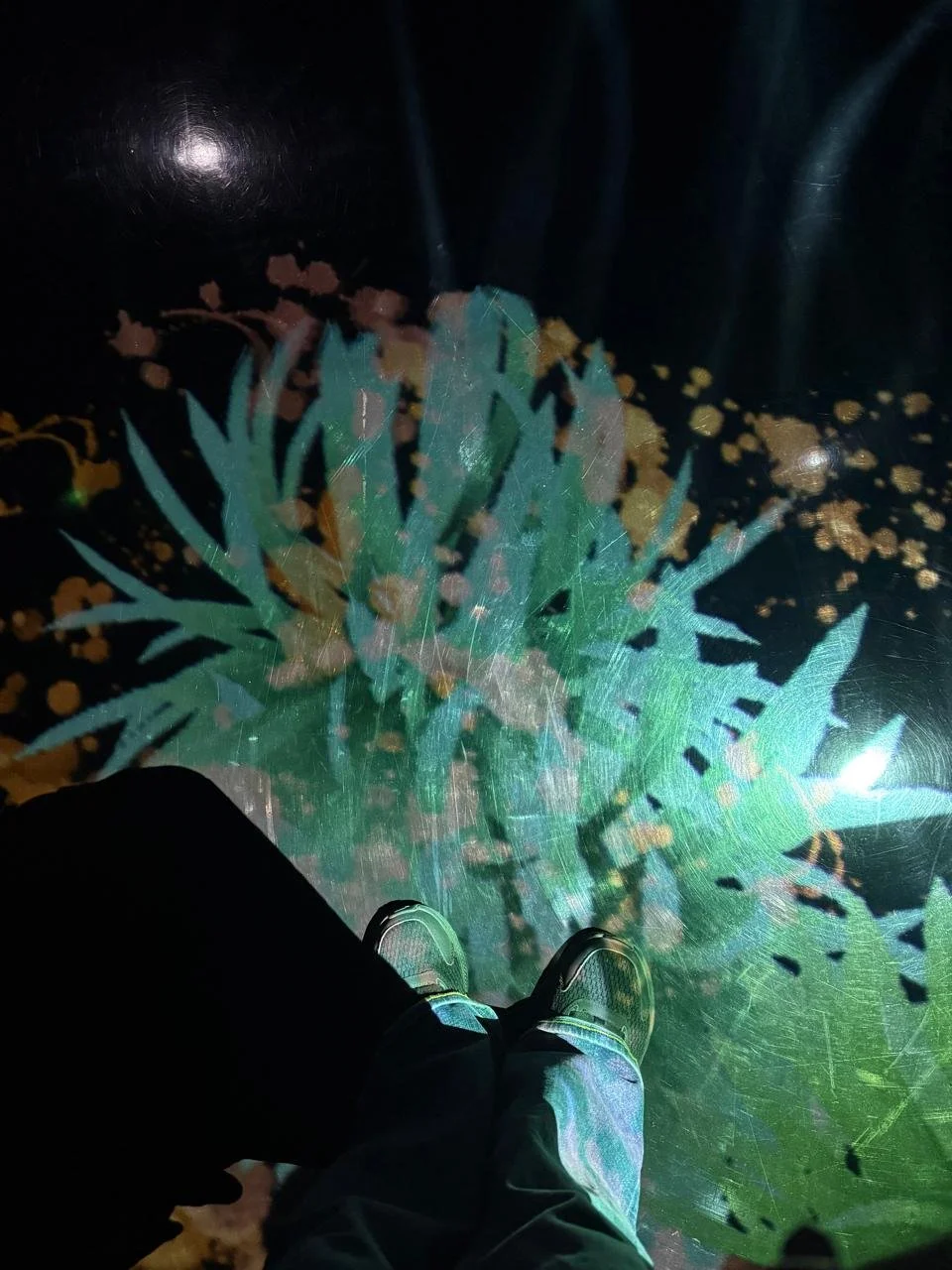
Borderless TeamLab
Senso-ji temple
Tokyo: A Ticketing Disaster, Beef Sukiyaki, and a Sky-High Happy Ending!
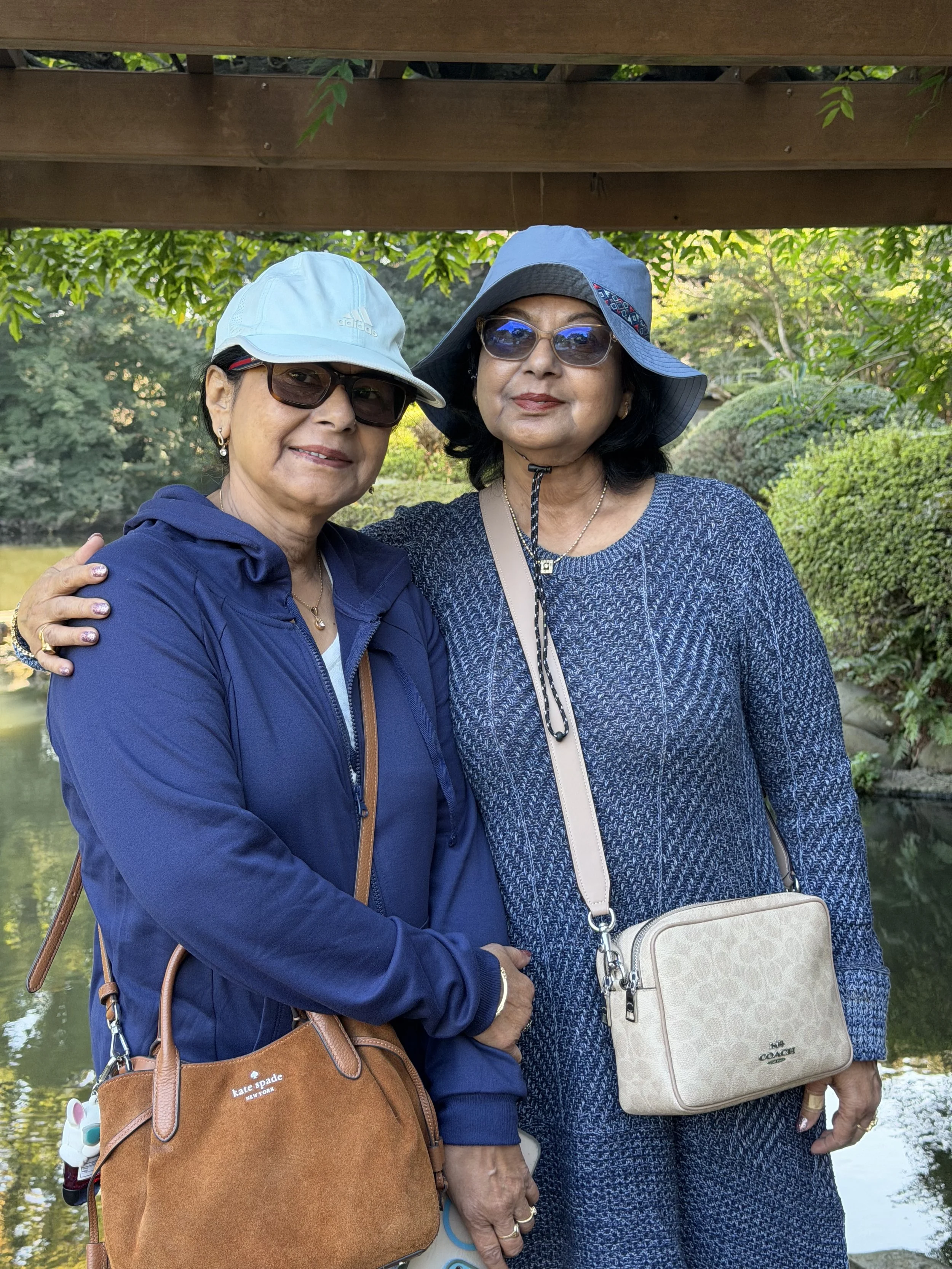
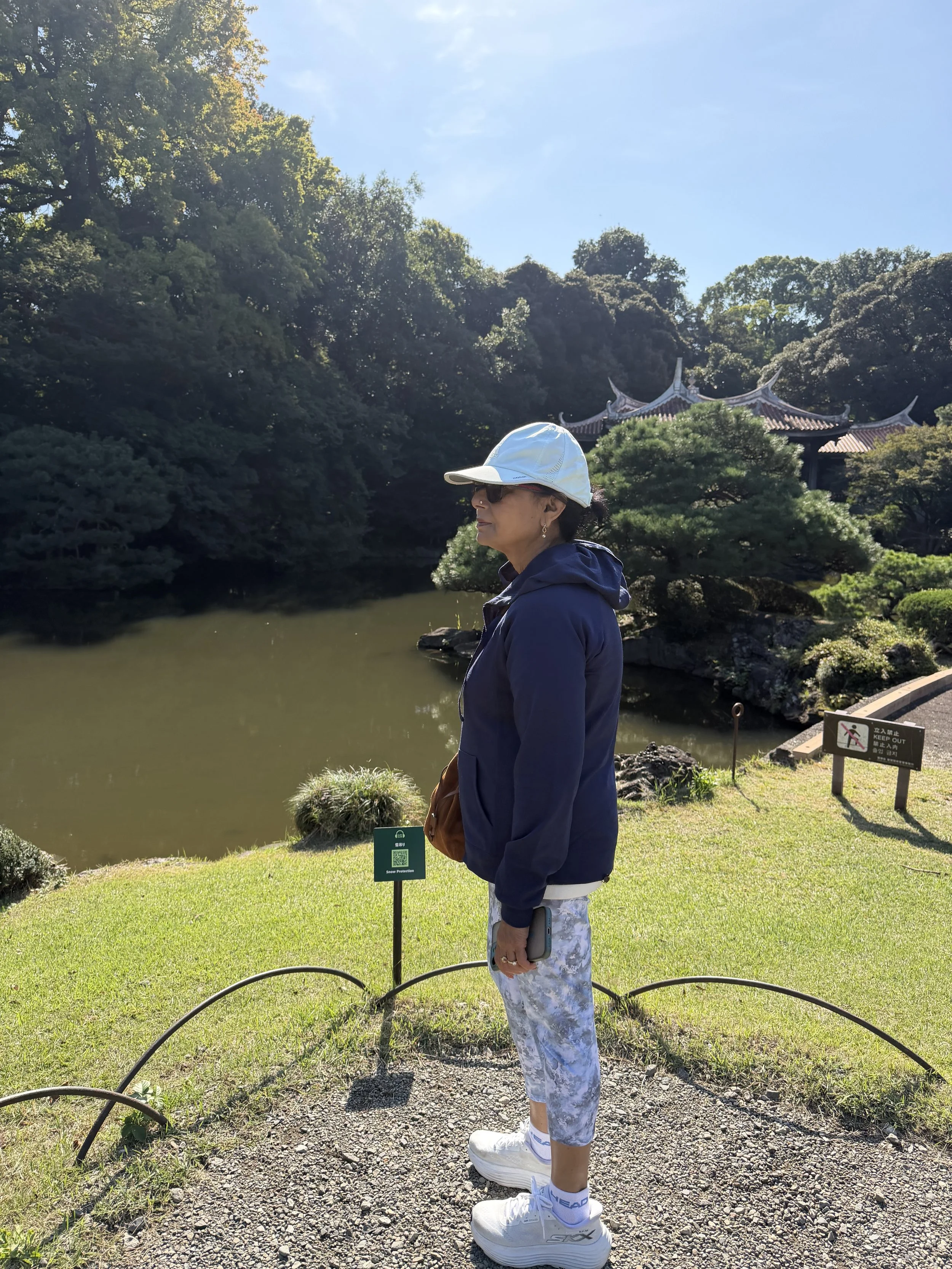
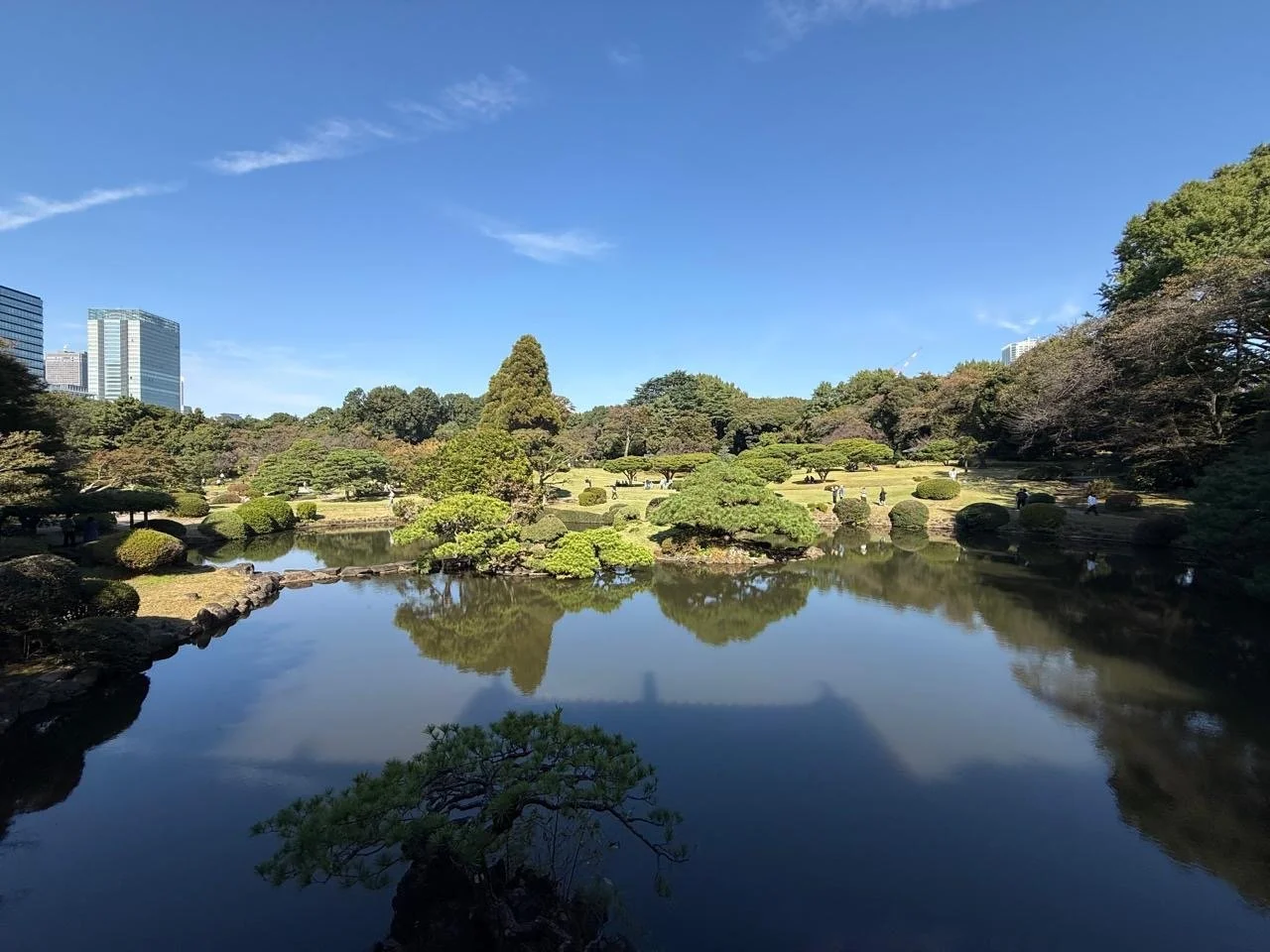
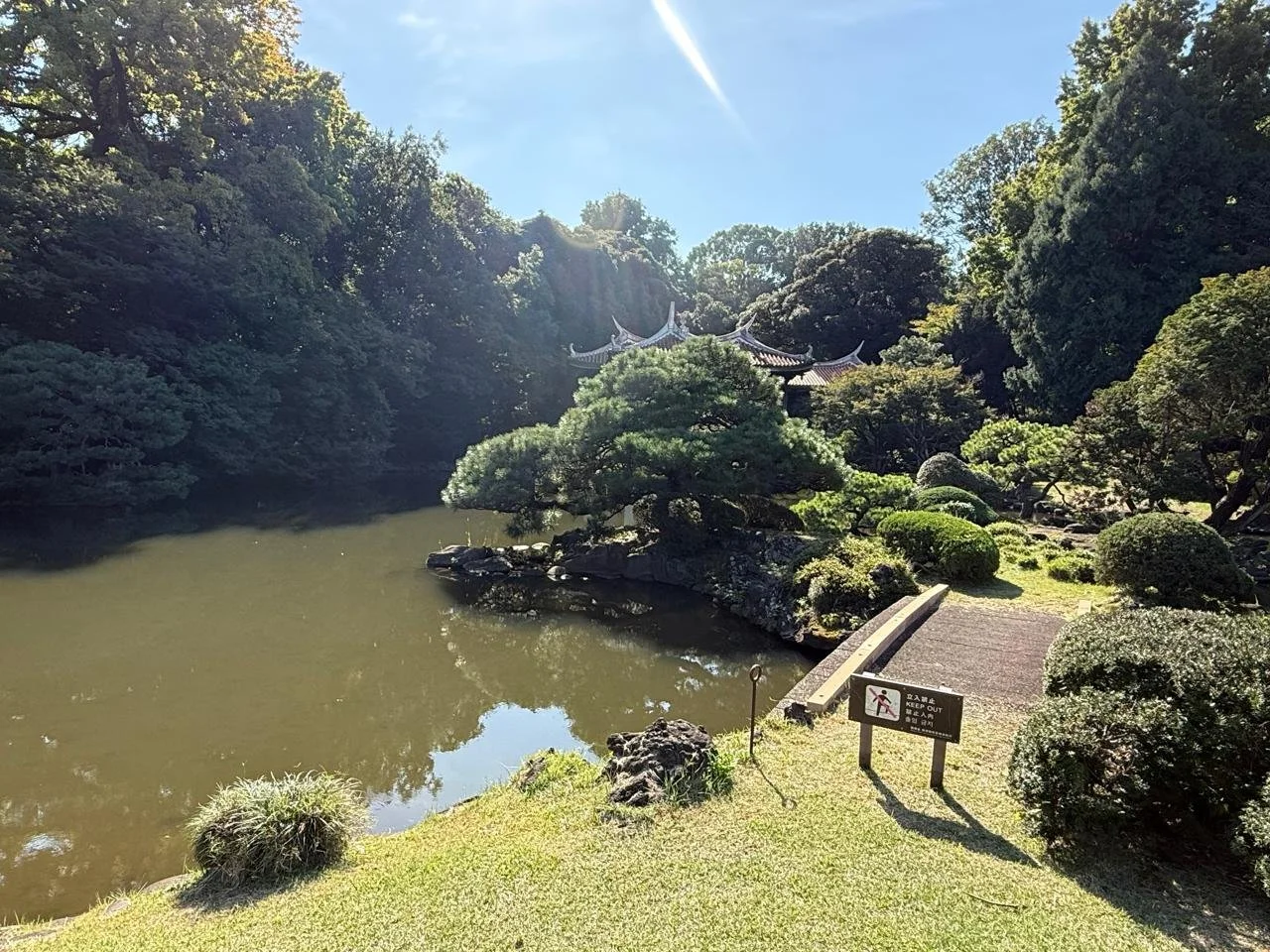
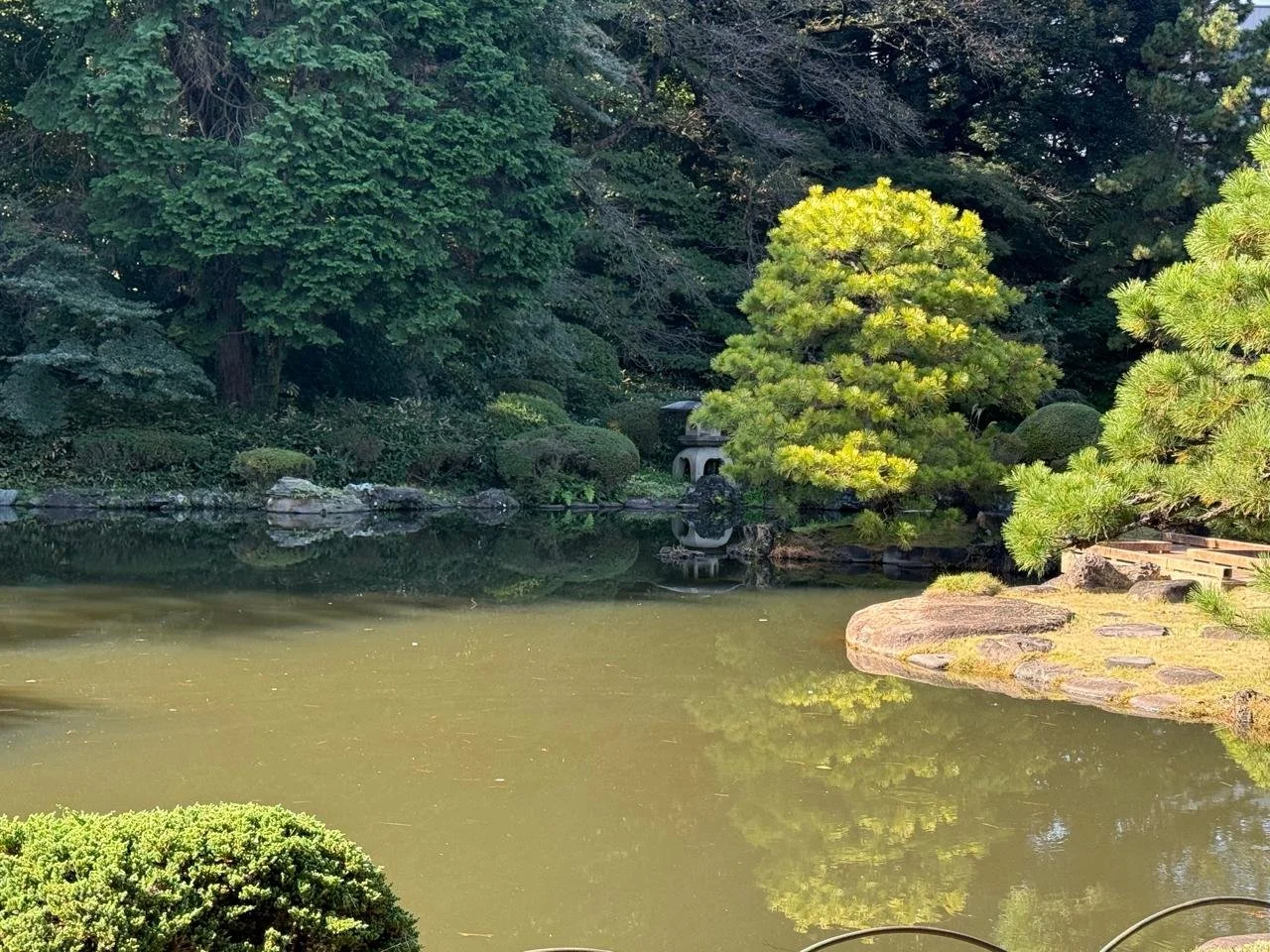
The weather gods were clearly on our side the following day! We had planned a full day of outdoor sightseeing, and the skies remained beautifully clear, with pleasant temperatures and not a drop of rain. Our first stop was the magnificent Shinjuku Gyoen National Garden, a tranquil oasis in the middle of one of the world's busiest cities. What a treasure!
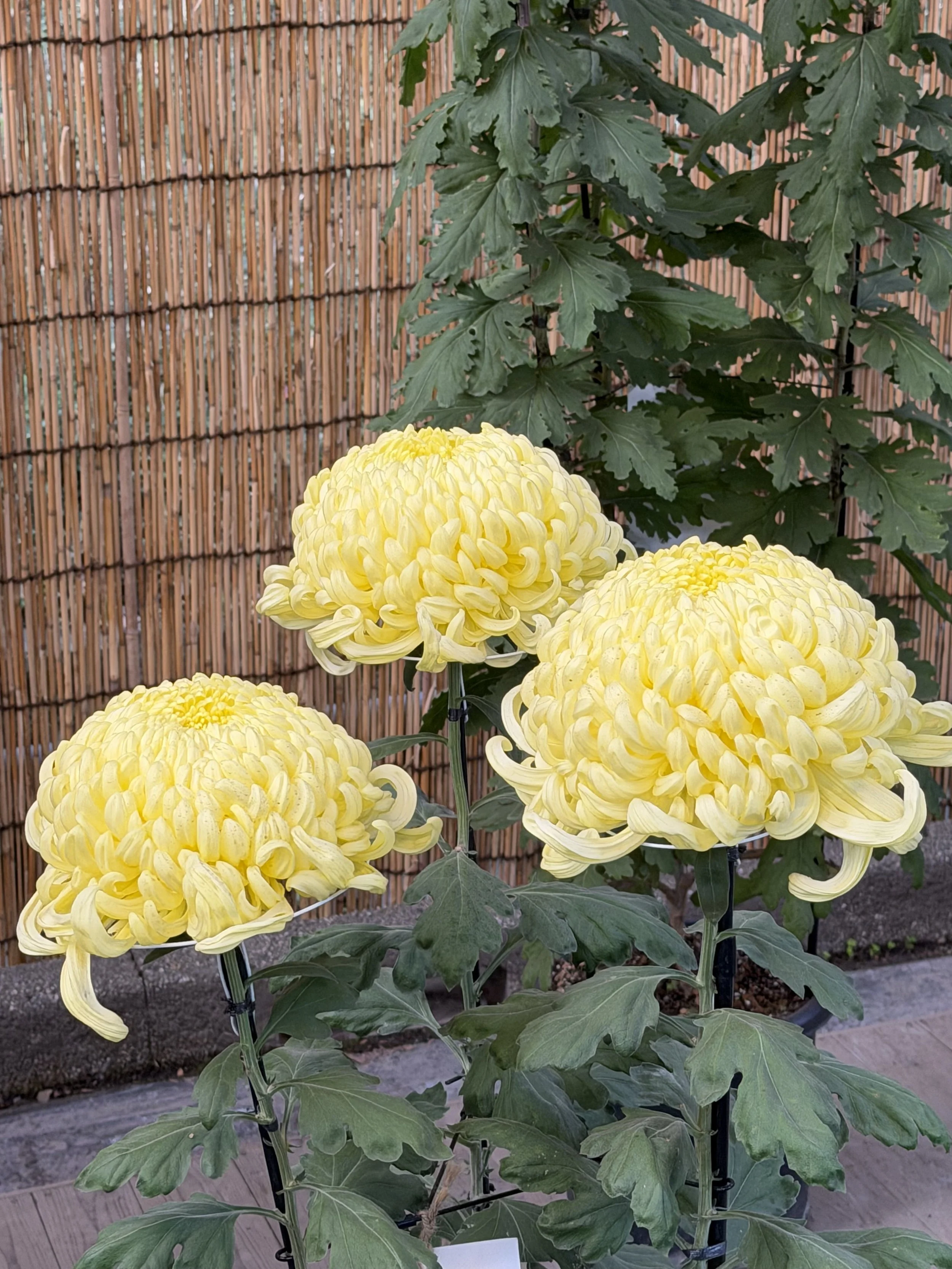
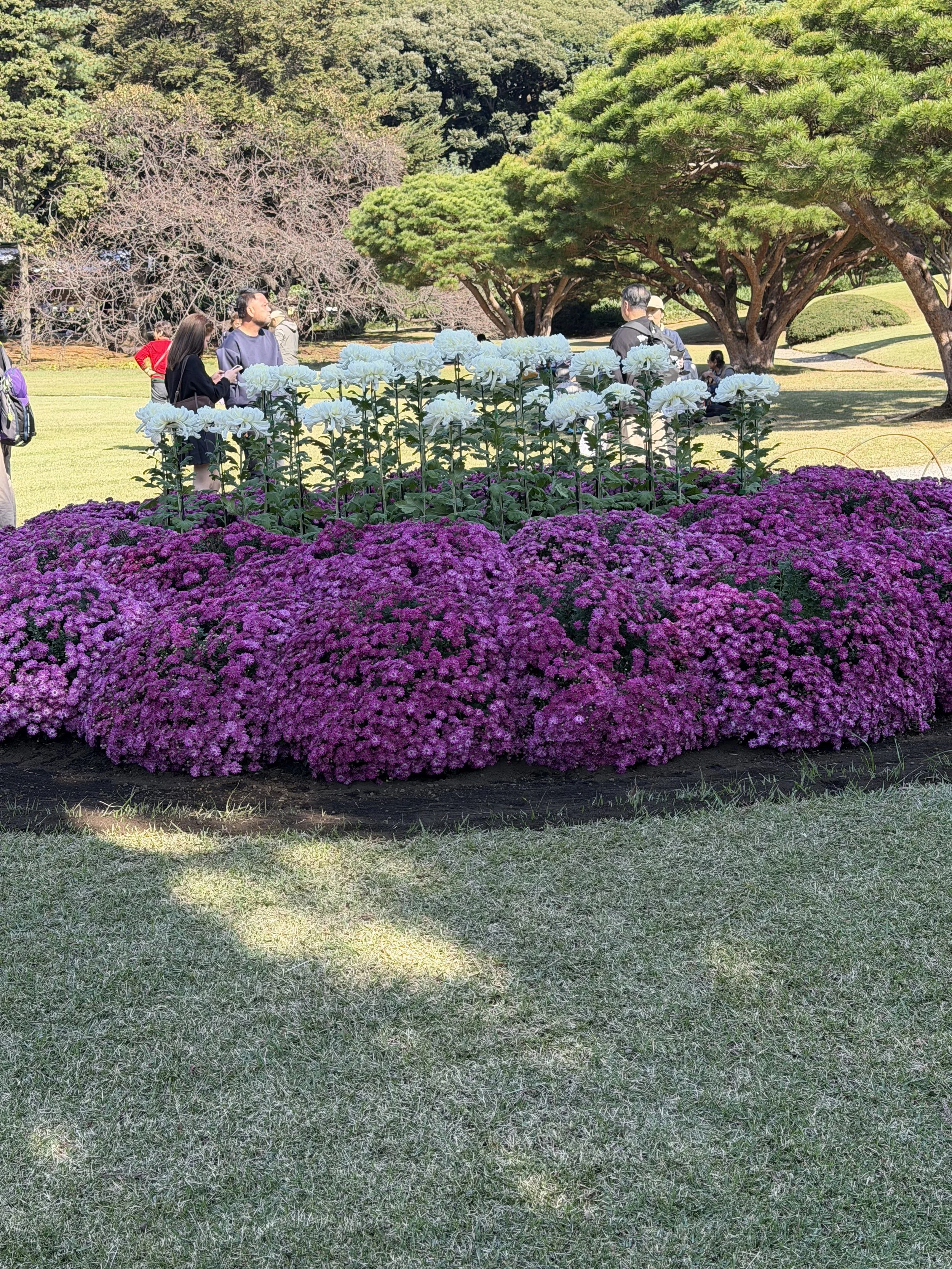
The garden features beautifully landscaped grounds, a historic tea house, an iris garden famous for its spectacular June blooms, and the fascinating Kiyomasa's Well. Even in November, the flowers were lovely, and we were fortunate to catch the chrysanthemum exhibition in all its glory. We strolled along winding pathways, breathing in the fresh air, watching ducks paddle lazily in the little ponds, and admiring families enjoying picnics with their children.
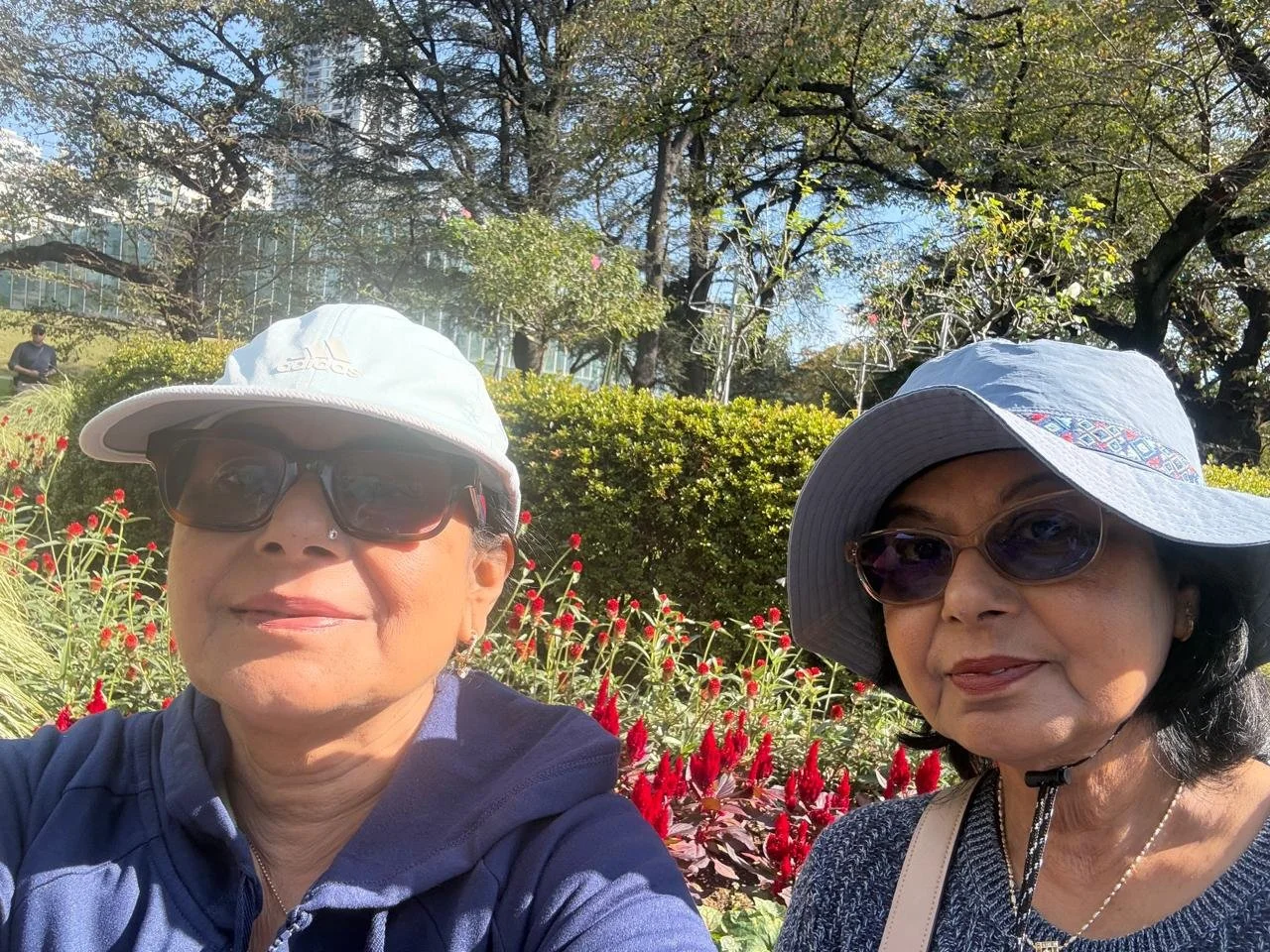
We found ourselves lingering near the flower beds, soaking in the beauty of the blooms and the peaceful surroundings. It was hard to believe that this enormous green sanctuary existed in the middle of such a bustling metropolis. We were so enchanted by the gardens that we completely lost track of time—and, more importantly, lost our way back to the car! After wandering around rather aimlessly, we eventually found our way out. No harm done; we simply added a few unplanned miles to our daily step count. Who needs a gym membership when sightseeing in Tokyo provides such excellent exercise?
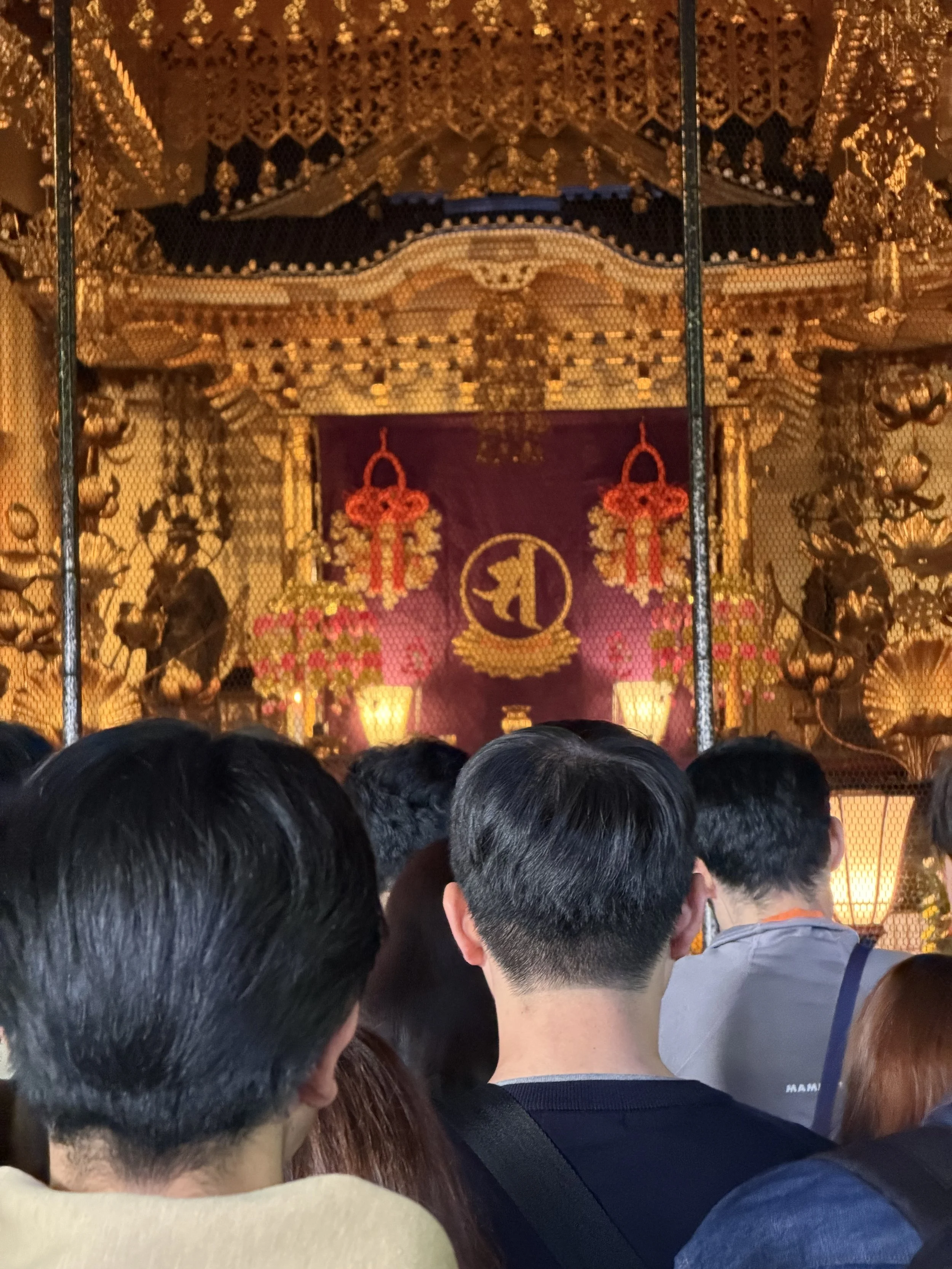
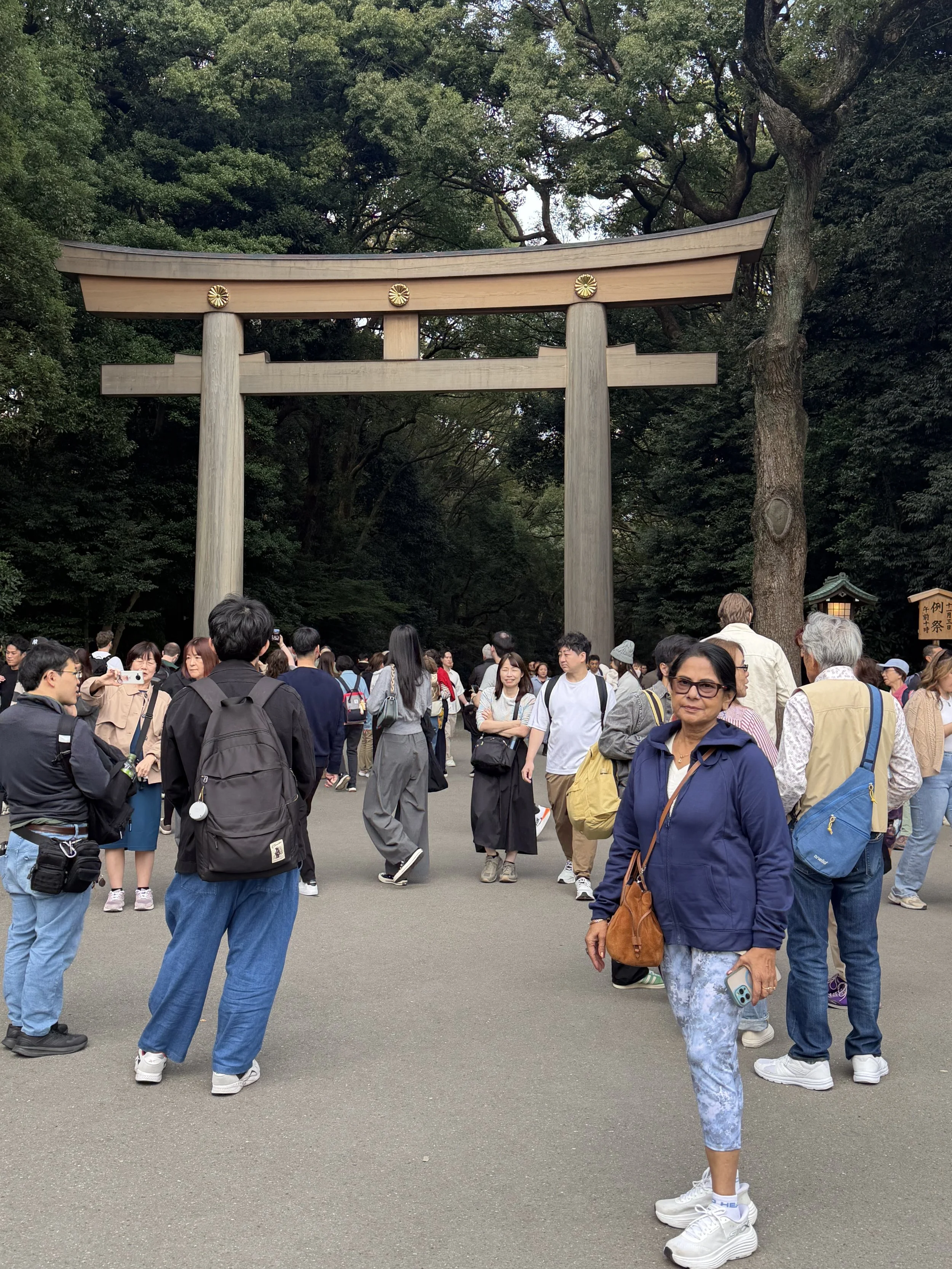
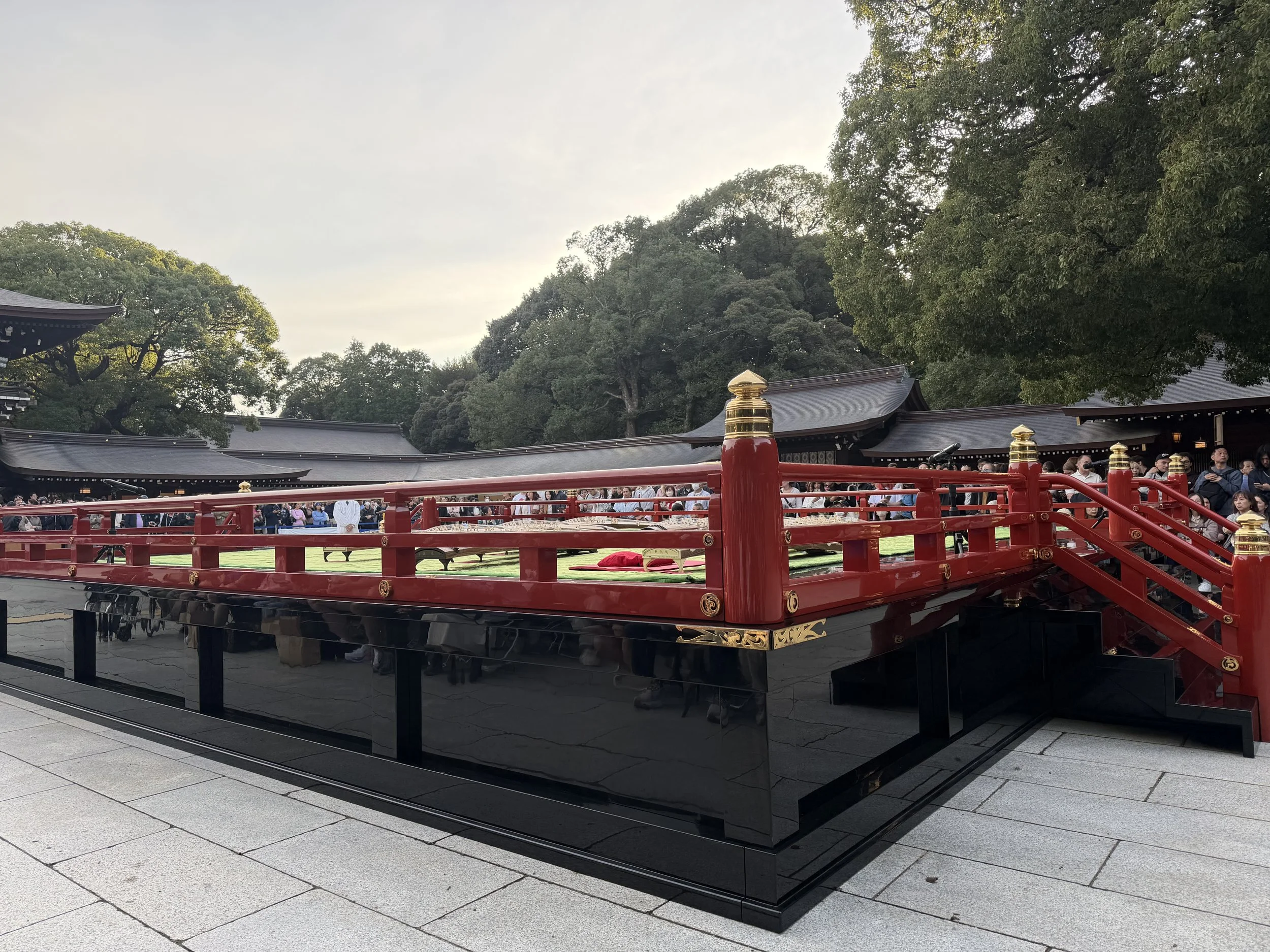
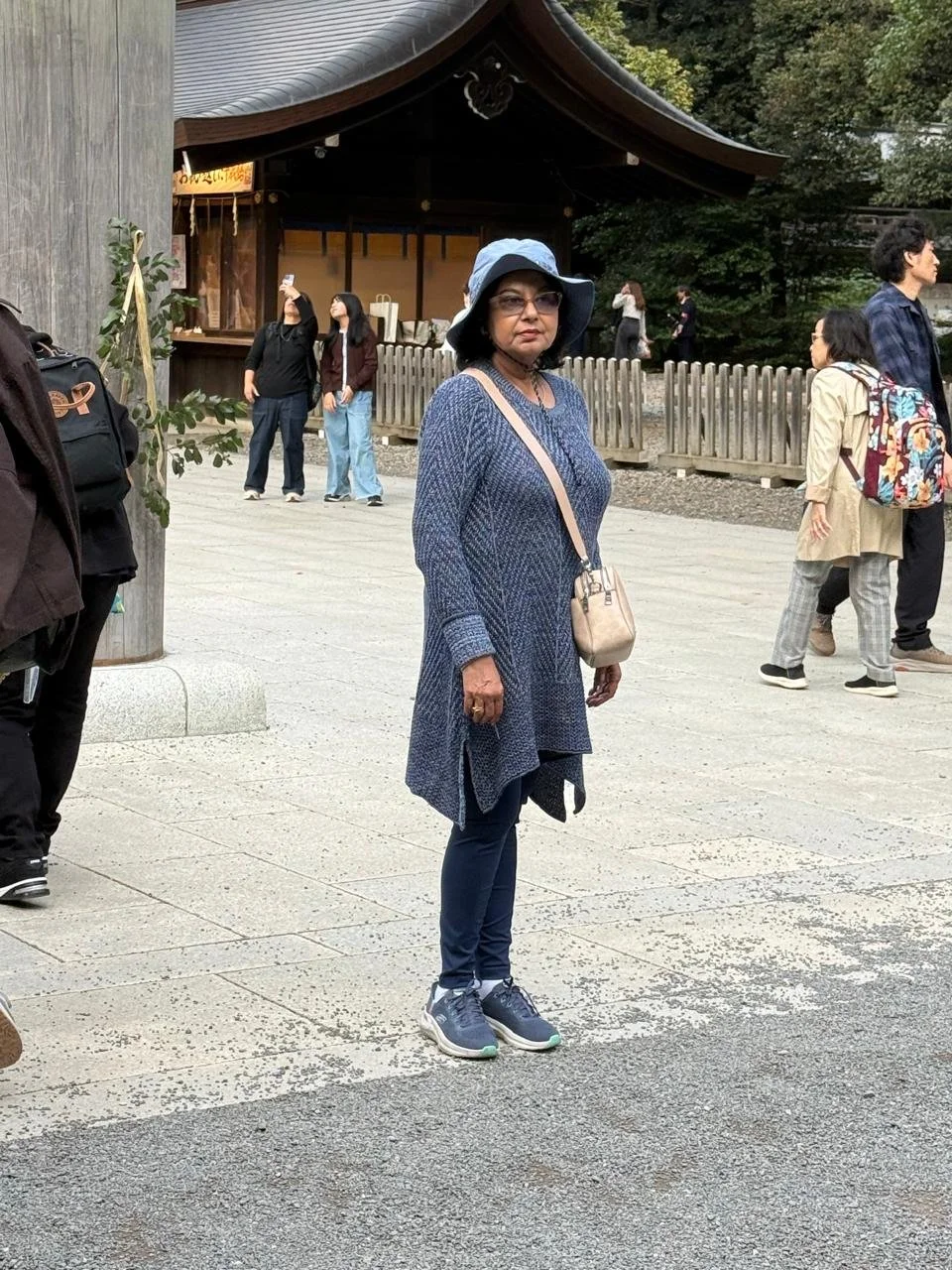
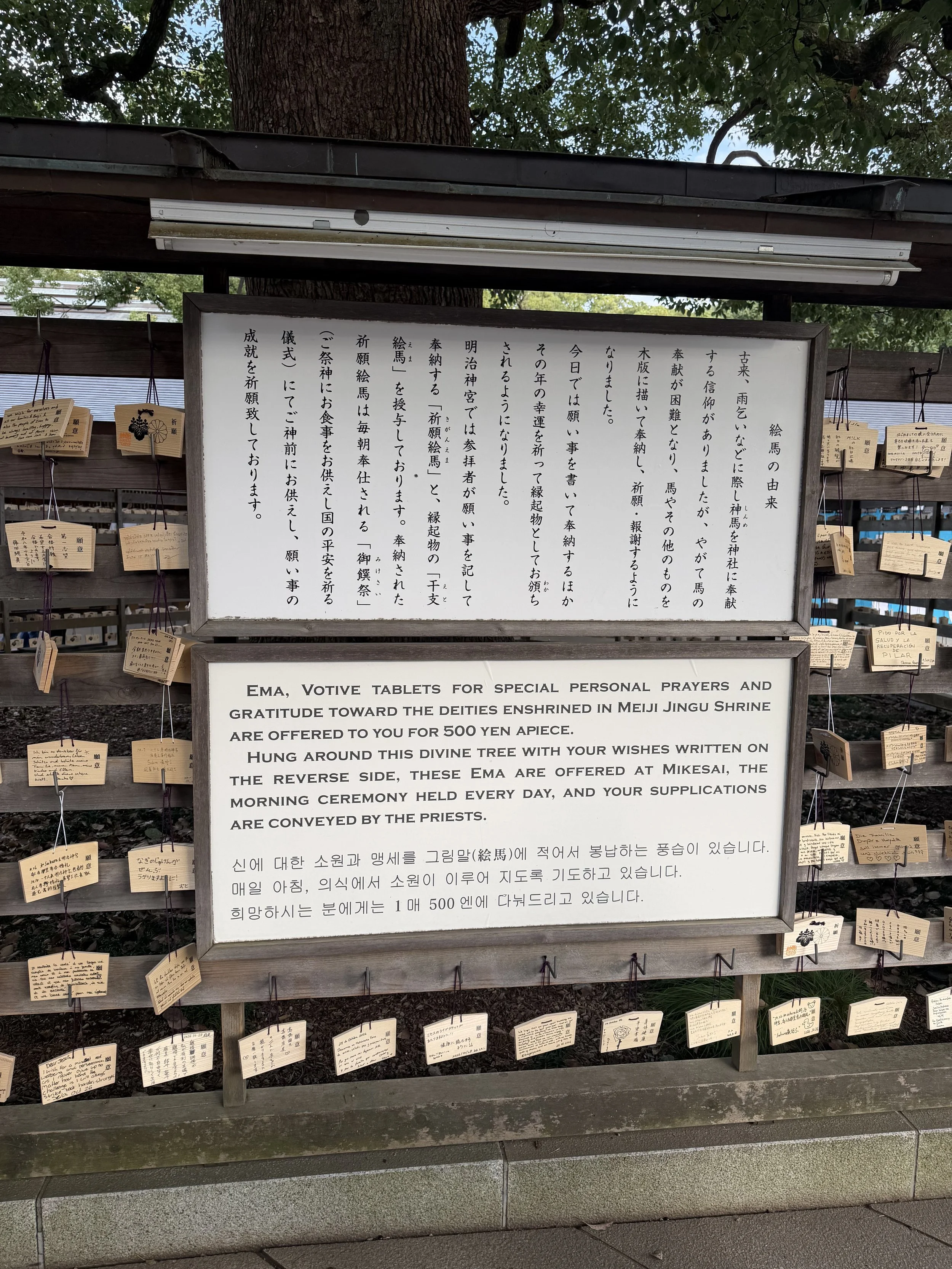
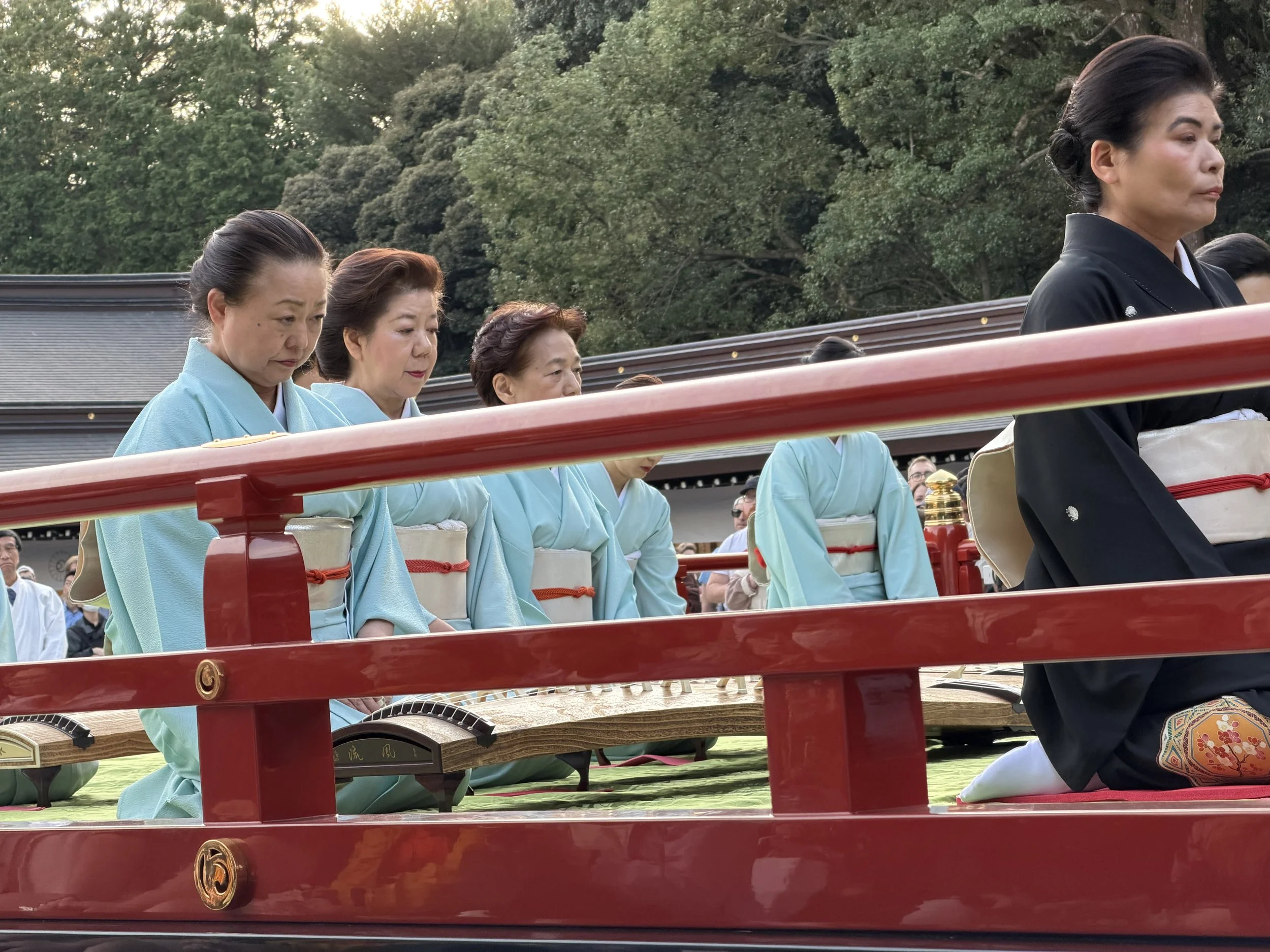
Our next stop was Meiji Jingu Shrine, one of Tokyo's most important Shinto shrines, dedicated to Emperor Meiji and Empress Shōken, who played pivotal roles in Japan's modernization during the late nineteenth and early twentieth centuries. The approach itself is an experience, with enormous wooden torii gates marking the transition from the everyday world into sacred space. The magnificent Otorii, standing approximately 12 meters tall, is particularly impressive. Reconstructed in 1975 using Taiwanese cypress wood from trees estimated to be more than 1,500 years old, it is considered the largest wooden Myojin-style torii gate in Japan.
Walking beneath these monumental gates and through the peaceful forest pathways gives you a sense of the reverence and harmony with nature that are central to Japanese spiritual traditions. The shrine's main buildings, including the Honden (main sanctuary), reflect traditional Japanese architecture and are dedicated to the spirits of the Emperor and Empress. We also learned a little about the customs expected of visitors. One should bow respectfully before passing through the gates and avoid stepping directly on the raised wooden thresholds when entering buildings. At the main offering box, the traditional prayer ritual is two bows, two claps, and one final bow—a lovely expression of respect and gratitude. We followed the instructions as best we could, hoping that the gods would appreciate our enthusiasm even if our technique wasn't quite perfect!
Despite being in the heart of Tokyo, the forest paths and sacred grounds felt worlds away from the city's hustle and bustle. It was another memorable day of discovering Japan's extraordinary ability to combine modern urban life with centuries-old traditions. What struck me most was the contrast between the grandeur of the shrine and the serenity of its surroundings. Despite being in the heart of Tokyo, the forest paths and sacred grounds felt worlds away from the city's hustle and bustle. By this point, our feet were beginning to wonder whether we had come to Japan for a holiday or signed up for a walking marathon! But we soldiered on, cameras in hand, smiles intact, and our trusty chauffeur waiting somewhere nearby. After all, there was still so much more to see, and we weren't about to let a few thousand extra steps get in the way of a good adventure!
Our next adventure was supposed to take us to Shibuya Sky, one of Tokyo's most popular observation decks, offering spectacular panoramic views of the city. The travel agent had booked our tickets, and we arrived promptly at the designated time, feeling rather pleased with our punctuality. Unfortunately, our enthusiasm was short-lived! We were promptly denied admission because the tickets had been booked through a third party. We tried explaining that we had confirmed reservations and had arrived at the correct time, but no amount of reasoning, pleading, or diplomatic negotiation could persuade the staff to let us in. Rules were rules, apparently, and there was absolutely no room for discussion. I immediately called our travel agent and explained the fiasco. She assured us that her company would take up the matter and, to her credit, quickly arranged complimentary tickets for us to visit Tokyo Skytree later that afternoon. Well, if one observation deck didn't want our company, we would happily take our business—and our cameras—somewhere else!
We decided that the best way to recover from this rather disastrous experience was to have a leisurely lunch. And what a brilliant decision that turned out to be! We settled down to a delicious beef sukiyaki meal accompanied by a refreshing glass of beer. The tender beef, wonderful flavors, and relaxed atmosphere worked wonders on our moods. Nothing like good food and a little beer to restore one's faith in humanity—and travel agents! By the time lunch was over, the Shibuya Sky incident was becoming a distant memory.
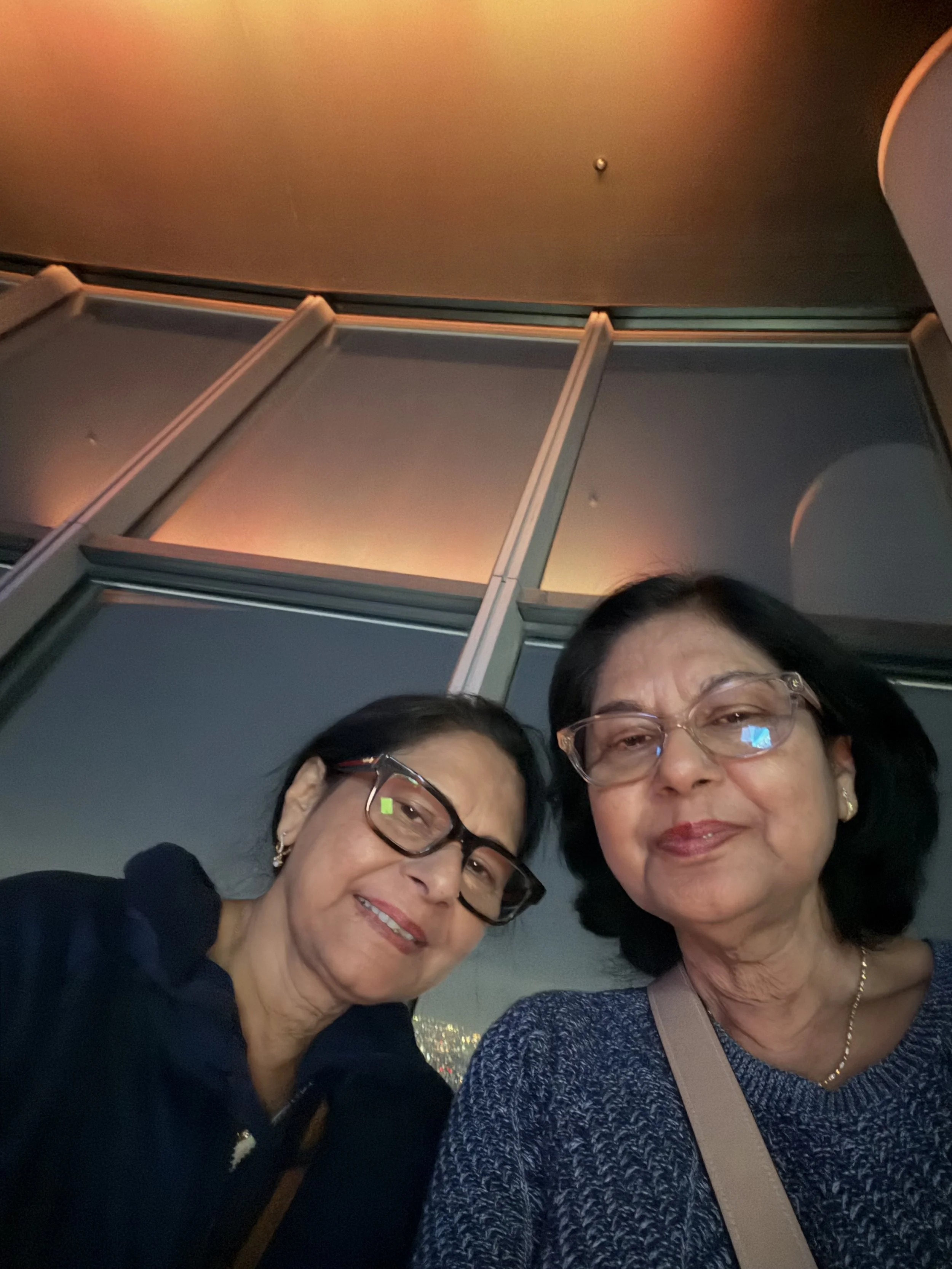
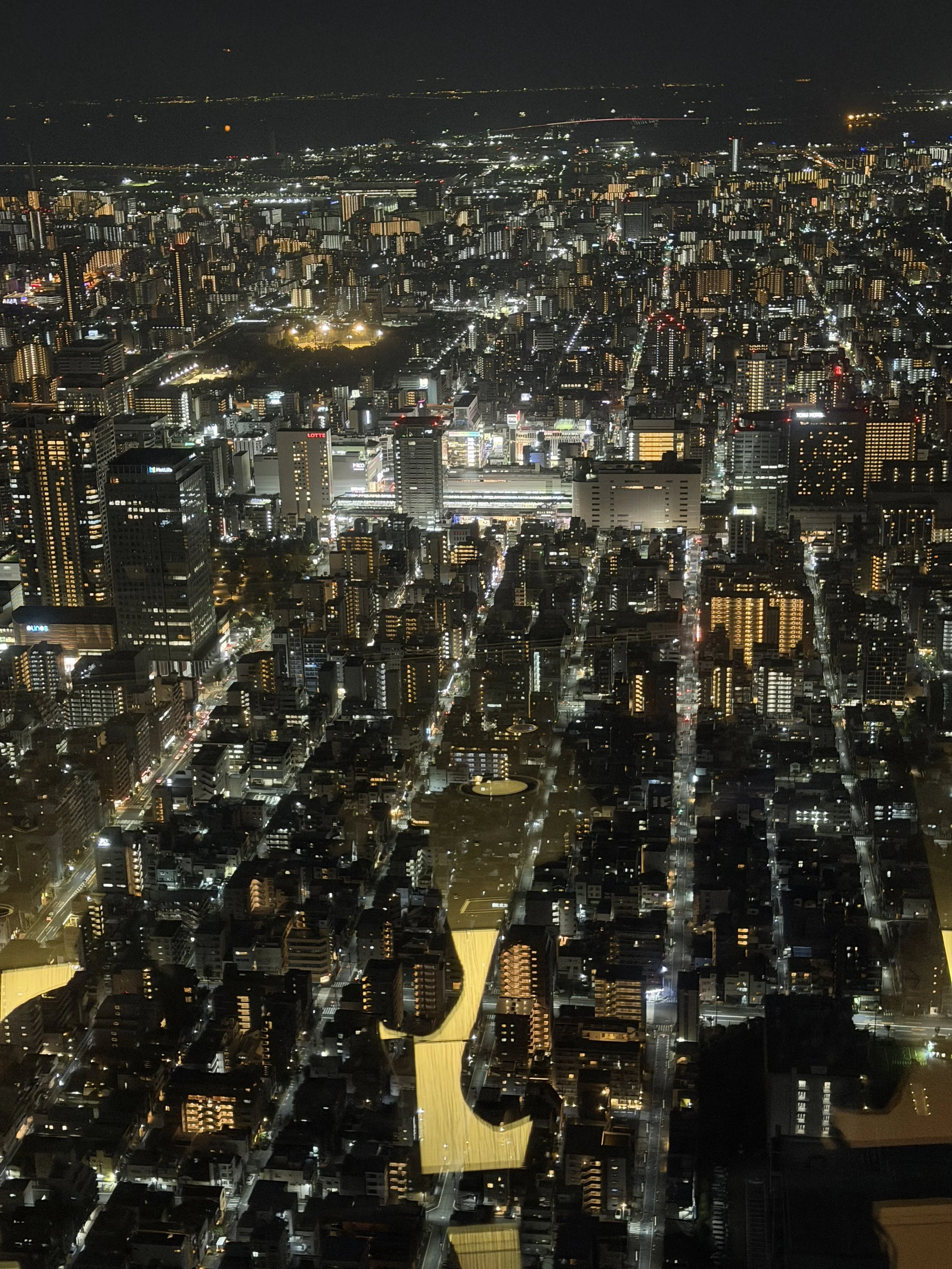
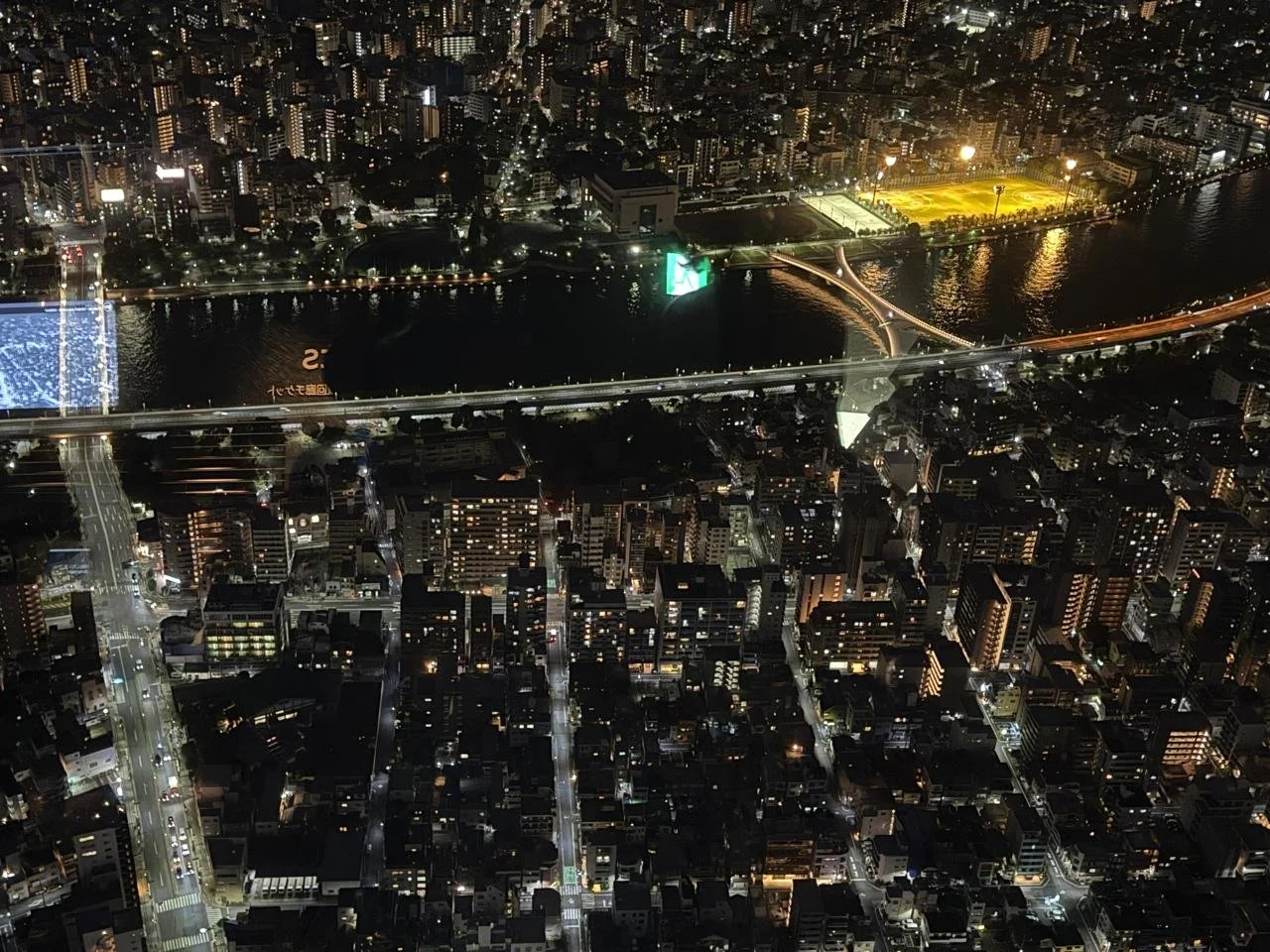
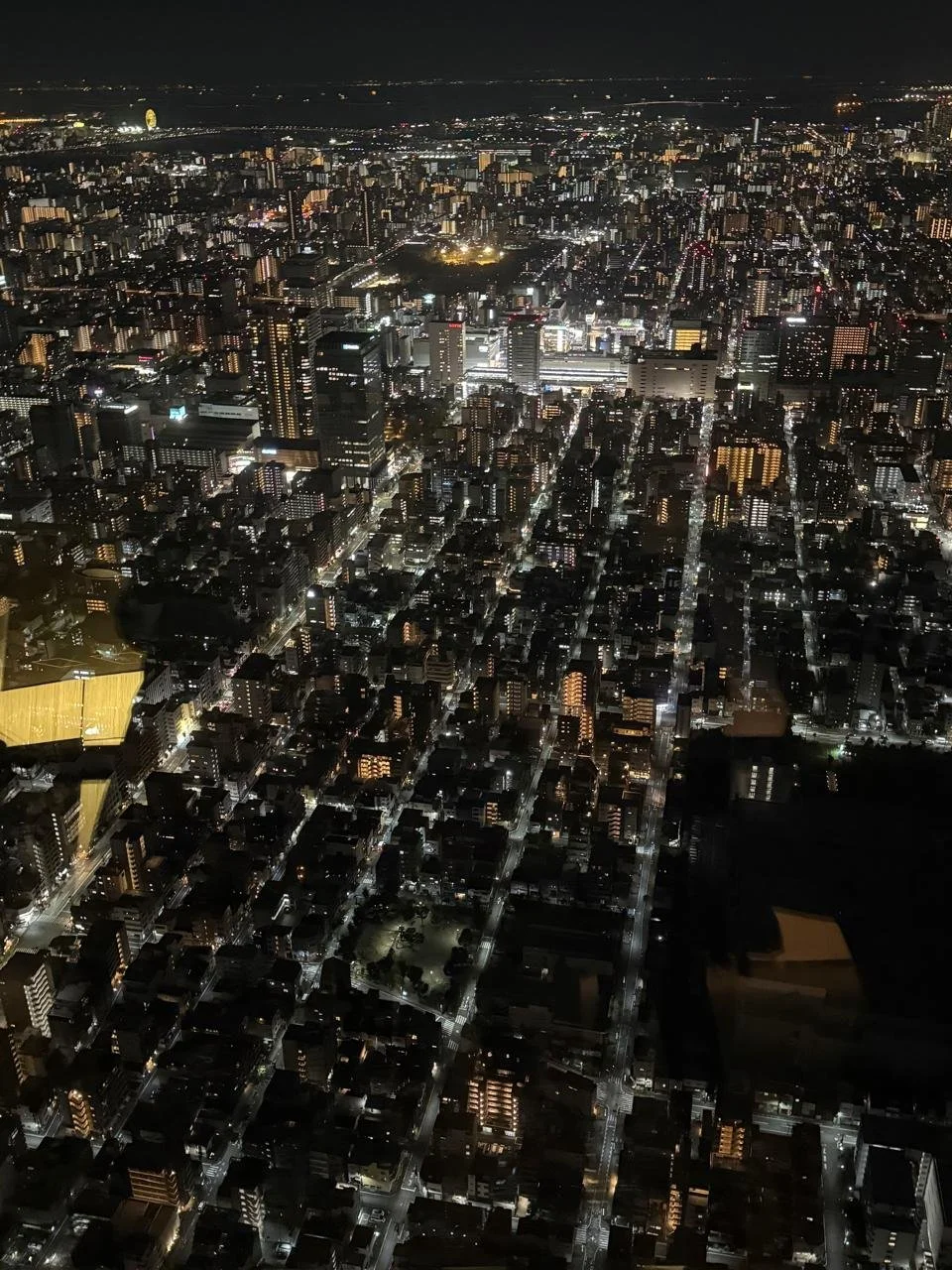
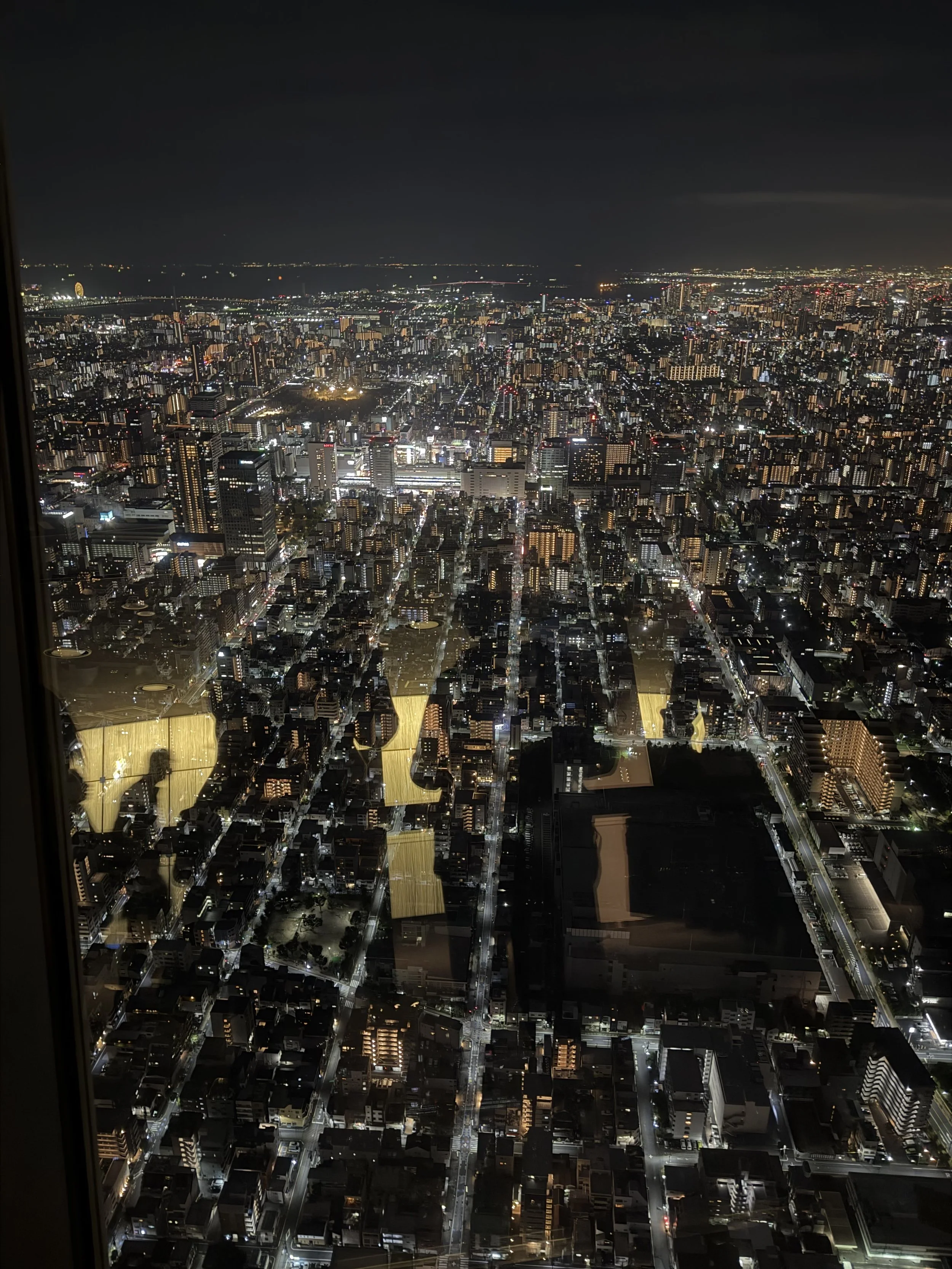
Our consolation prize turned out to be quite spectacular! Later in the afternoon, we made our way to Tokyo Skytree, an extraordinary 634-meter (2,080-foot) broadcasting and observation tower in Sumida City. Opened in 2012, it is the tallest tower in Japan and the tallest tower in the world. Besides being a major broadcasting hub for the greater Tokyo region, its engineering is fascinating. Its central reinforced-concrete pillar, known as the shinbashira, draws inspiration from traditional Japanese pagoda architecture and helps absorb seismic shocks. Clearly, the Japanese have thought of everything—even making sure their towers know how to keep their balance during an earthquake! The Skytree has two observation decks, and we went up to enjoy the breathtaking views. And what a sight awaited us! As evening descended, Tokyo gradually transformed into a dazzling sea of lights. The city sparkled in every direction, stretching as far as the eye could see. We were absolutely mesmerized, taking in the spectacular panorama and trying to capture as much of it as possible in photographs. The disappointment of Shibuya Sky was completely forgotten. In fact, I think we got the better deal! Sometimes a travel mishap turns into an unexpected blessing, provided someone else pays for the replacement tickets!
After such a full day of sightseeing, culinary therapy, and spectacular city views, it was time to call it a day. The weather forecast for the following day wasn't particularly encouraging, so we headed back to the hotel with our fingers crossed and a solemn prayer to the weather gods. By now, they had been doing a fairly decent job of cooperating with our sightseeing schedule, and we hoped they wouldn't decide to take a day off just when we needed them most. After all, we had come all this way to explore Japan—not to spend our precious holiday staring at raindrops on a hotel window!
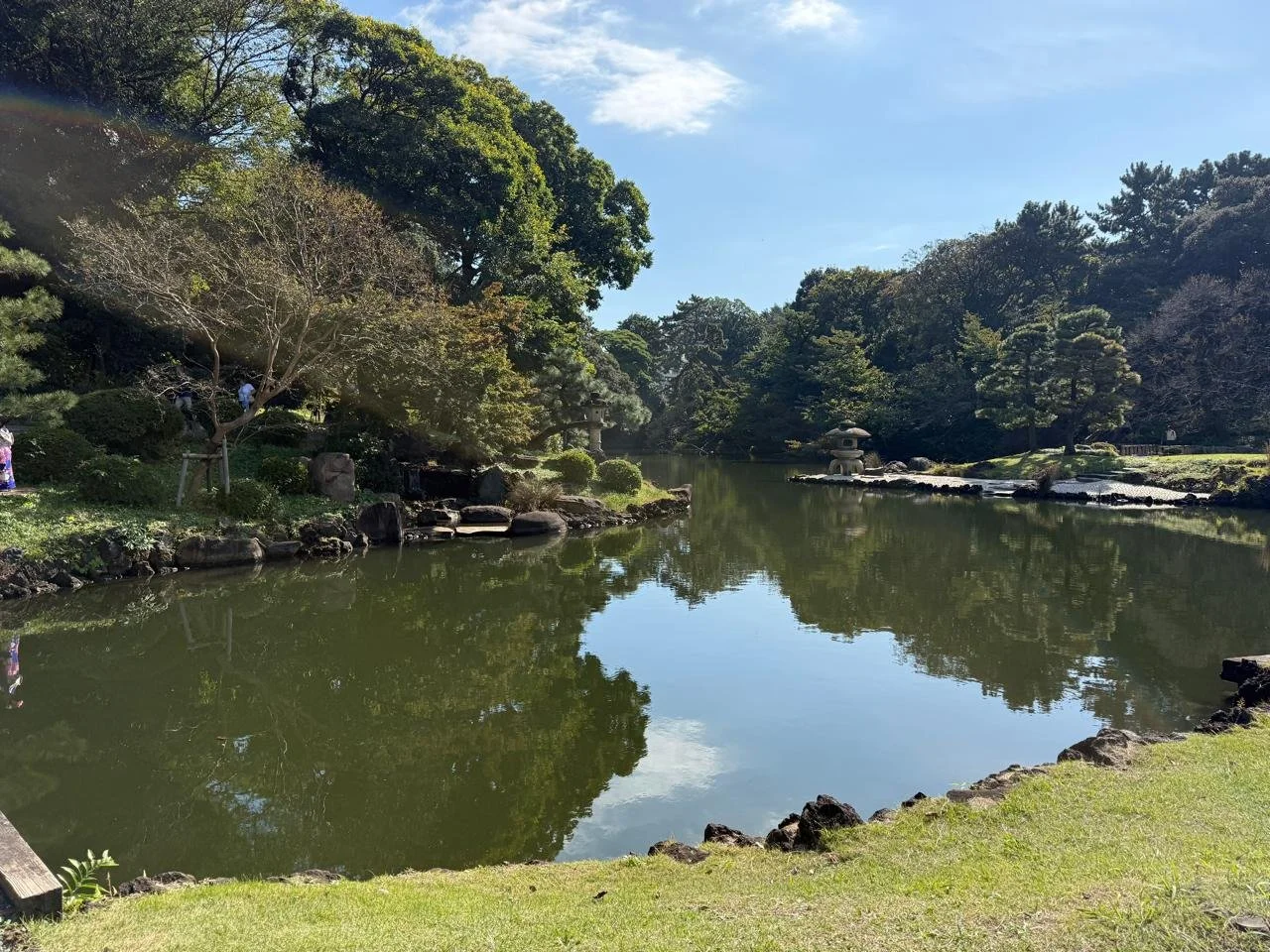
Meiji Jingu Shrine
Shibuya Sky and Tokyo Skytree
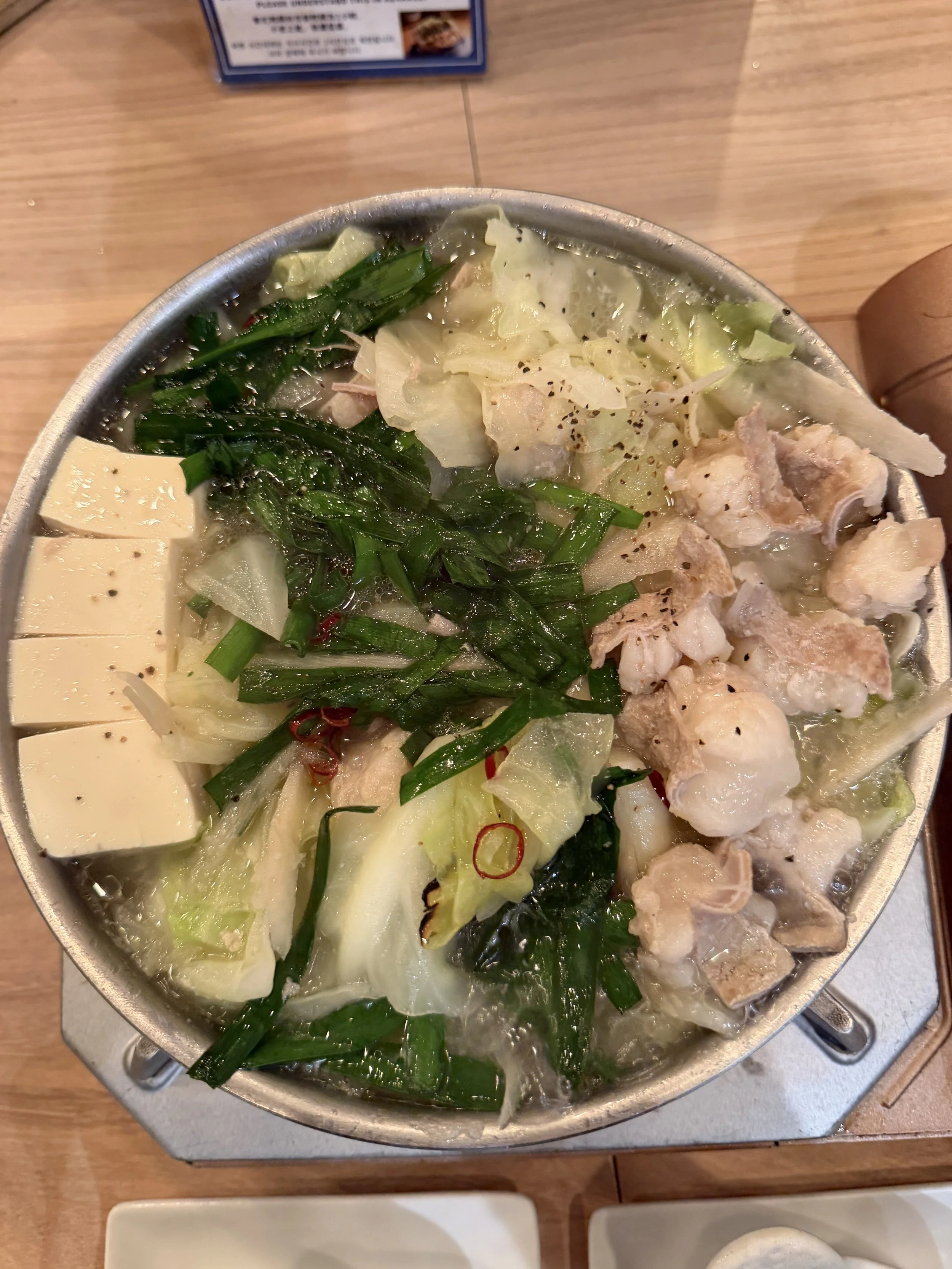
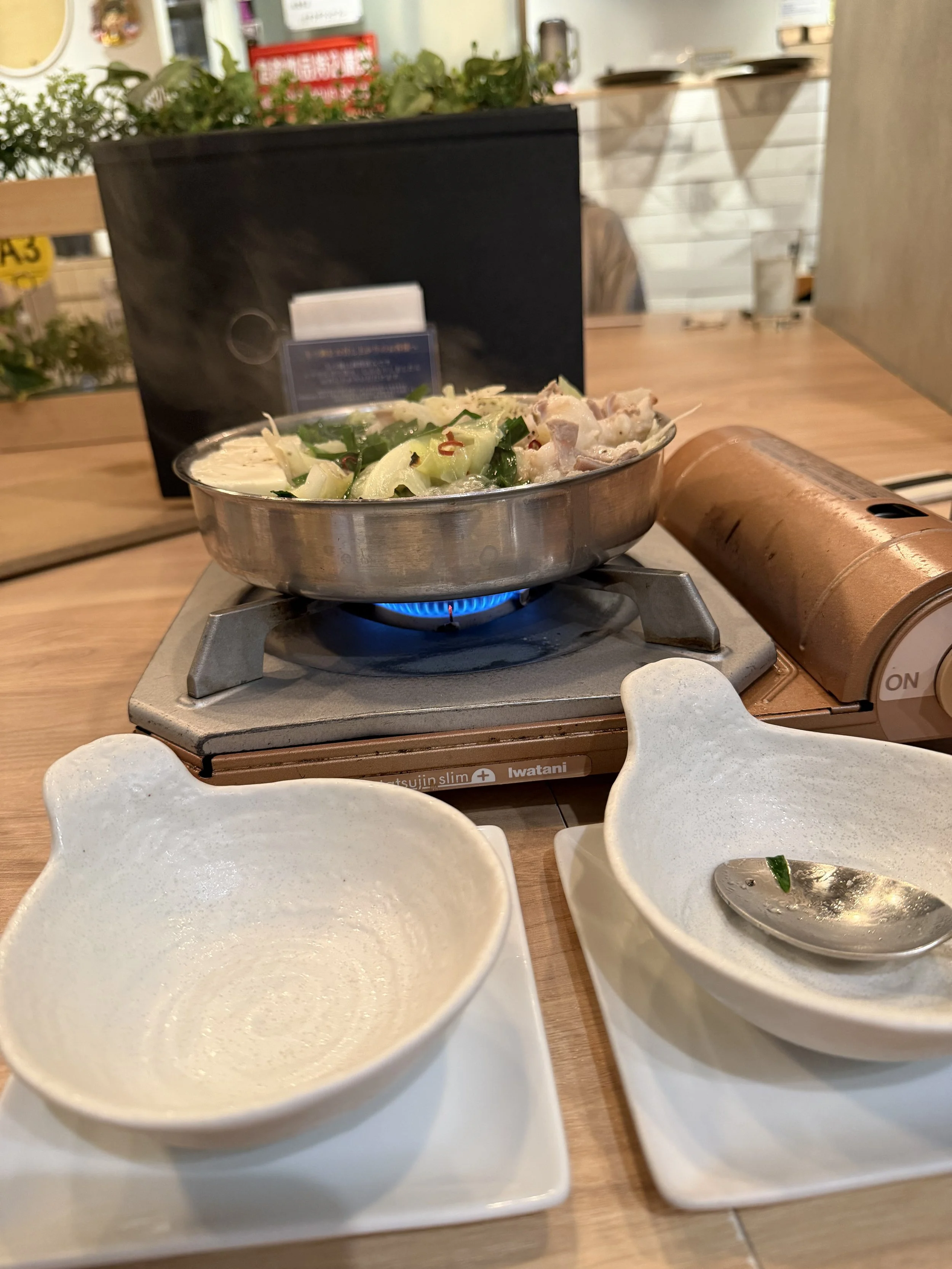
The delicious Sukiyaki lunch in Shibuya
Tokyo Skytree
A Few More from the National Garden

Hakone: The Weather Gods Decide to Take a Day Off!
Pirateship, Volcanoes, and a Very Wet Adventure!
Our journey to Hakone was a gentle reminder that perhaps we hadn't been praying hard enough to the weather gods after all! The morning greeted us with a drizzle as our chauffeur, Roy, picked us up from the hotel, and the forecast for Hakone wasn't particularly encouraging. Undeterred, we set off, hoping the weather would improve along the way. It took us a little over an hour to reach our destination, and one thing that struck me once again was how wonderful Japan's highway system is. The roads are excellent, traffic flows smoothly, and Japanese drivers are remarkably disciplined and courteous. They follow traffic rules, maintain their lanes, and seem to have a collective understanding that driving is not a competitive sport! Coming from the San Francisco Bay Area, where being cut off without so much as an indicator is practically a daily occurrence, this was a refreshing change. I almost wanted to ask Roy whether Japanese drivers attend special classes in patience and good manners before receiving their licenses! We made a brief stop at a highway rest area, which gave me yet another opportunity to admire something that has apparently become one of my favorite subjects in Japan—the restrooms! I know, I know, I seem to be writing an awful lot about Japanese toilets in this travelogue, but please bear with me. They really are extraordinary! Even at highway rest stops, the public facilities are immaculate, beautifully maintained, and equipped with the same sophisticated, multi-functional toilets found in hotels, shopping malls, and restaurants. Heated seats, automated washing functions, and spotless surroundings—what more could one ask for? Japan has certainly spoiled me. I may need a period of adjustment when I return home and have to resume using ordinary American toilets!
Our first planned stop was Hakone Shrine, an ancient Shinto shrine nestled in a beautiful cedar forest, famous for its magnificent bright-red torii gate standing directly in the waters of Lake Ashi. It is one of those iconic Japanese sights that you see in travel photographs and immediately want to experience yourself. Unfortunately, Mother Nature had other plans! By the time we arrived, it was raining cats and dogs. The thought of navigating slippery steps and walking through the forest in torrential rain was hardly appealing, so we reluctantly abandoned the shrine visit. Instead, we decided to make the best of things and boarded the famous Hakone Pirate Ship Cruise from Hakone Pier. Yes, you read that correctly—a pirate ship! These beautifully themed vessels offer a scenic ride across Lake Ashi, with spectacular views of the surrounding mountains and, on clear days, the majestic Mount Fuji. We were, of course, out of luck on the Fuji front. The rain and thick clouds had swallowed everything in sight. Not a mountain, not a Fuji, not even a decent horizon! But we weren't going to let that spoil our adventure. We enjoyed the comfortable First Class cabin and a lovely hot cup of coffee while pretending that the spectacular scenery was simply hiding behind the clouds. Sometimes one must learn to appreciate what one can see—or, in this case, what one cannot!
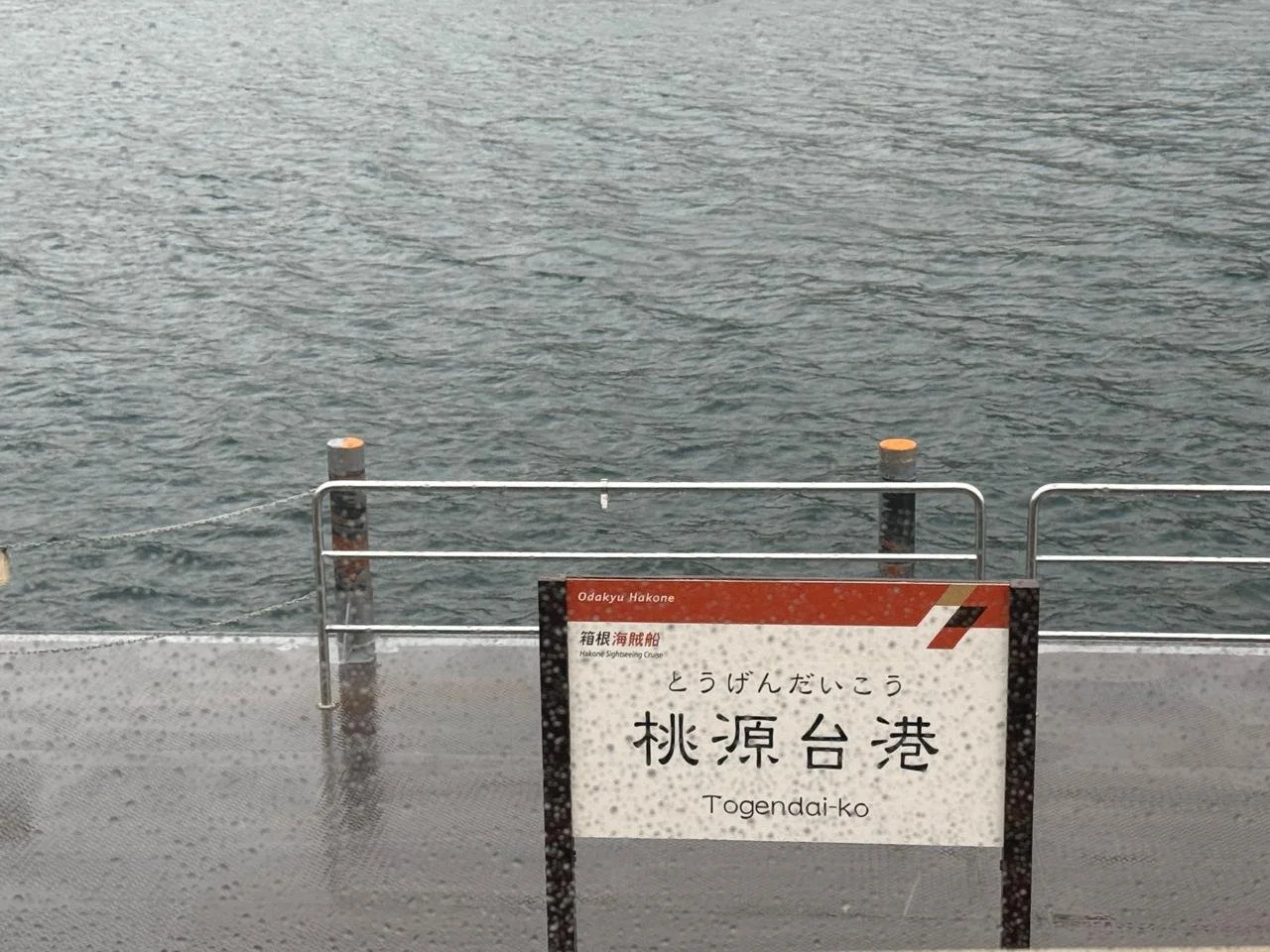
We disembarked at Togendai Port, where we discovered that the entrance to the Hakone Ropeway was conveniently located within the very same building complex as the cruise terminal. What a brilliant arrangement! No running through the rain or searching for connecting transportation. We simply walked across and boarded the gondola. The approximately 30-minute ropeway journey took us over forested mountain slopes, and despite the gloomy weather, the autumn foliage was absolutely beautiful. The changing shades of red, orange, and gold were a real treat. On a clear day, sitting on the right side of the gondola offers magnificent views of Lake Ashi behind you and an unobstructed view of Mount Fuji to the west.
Sadly, our Mount Fuji sightings remained firmly on the wish list! As we approached Owakudani, however, the scenery changed dramatically. The lush green forests gave way to a rather eerie, otherworldly volcanic landscape. Owakudani, meaning Great Boiling Valley, is an active volcanic zone formed approximately 3,000 years ago during an eruption of Mount Hakone. Sulfurous steam rises from vents in the earth, creating a dramatic landscape that reminds you that Japan sits on some very active geological real estate! The area is also famous for its kuro-tamago—black eggs boiled in the natural hot springs, whose shells turn black because of the sulfur in the water. Local folklore says eating one adds seven years to your life. I was tempted, naturally, but given the weather, I wasn't sure whether the extra seven years came with a guarantee!
I ventured out to the observation deck to take a few photographs, battling pelting rain and ferocious winds. The resulting pictures are rather foggy and indistinct, but they do capture the atmospheric conditions—or at least prove that I was actually there! After another gondola ride back towards Togendai, we met Roy, who had come to collect us. By then, we were quite thoroughly soaked. Our enthusiasm for further exploration had evaporated along with the volcanic steam, and we unanimously agreed that it was time to retreat to the warmth and comfort of our Tokyo hotel. A delicious dinner of hot soup was exactly what the doctor ordered. We retired for the night, warm, fed, and thoroughly exhausted, with yet another fervent prayer to the weather gods. Surely, after all that rain, they owed us one beautiful day of sunshine! After all, we still had Japan to explore, and we were not about to let a little thing like the weather—or a very wet pirate adventure—defeat us!
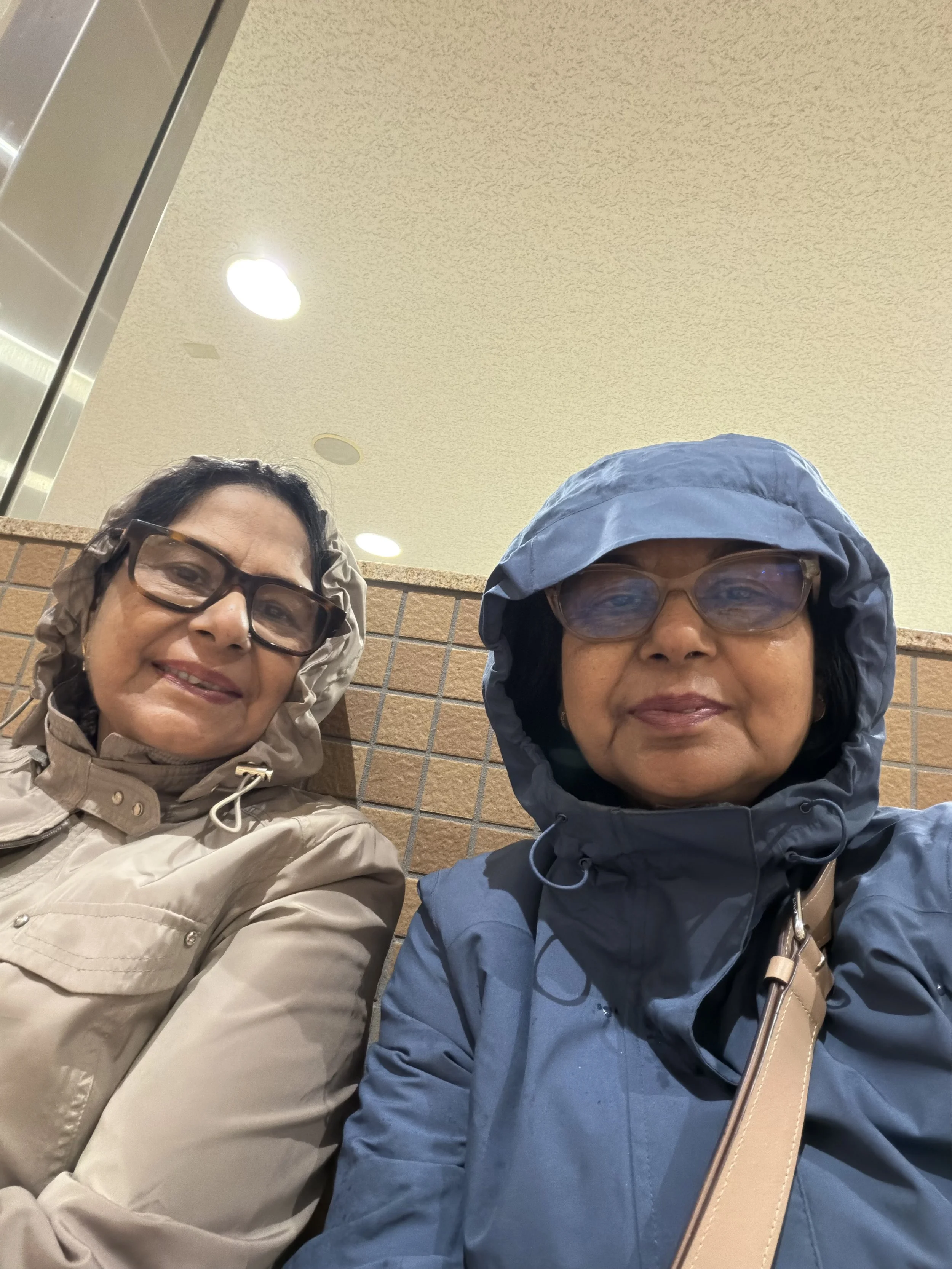
Cold and Soaked!
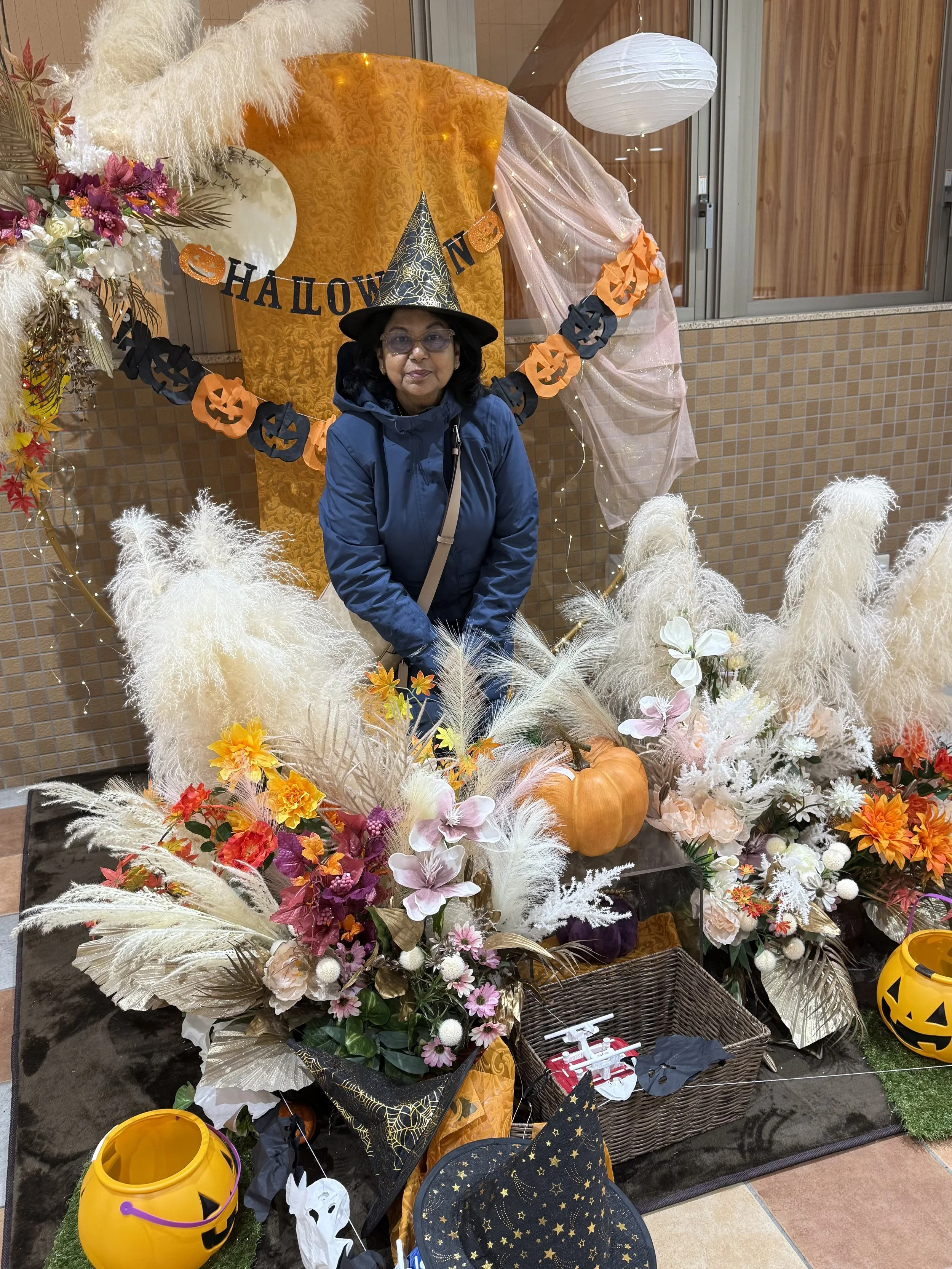
Happy Halloween!
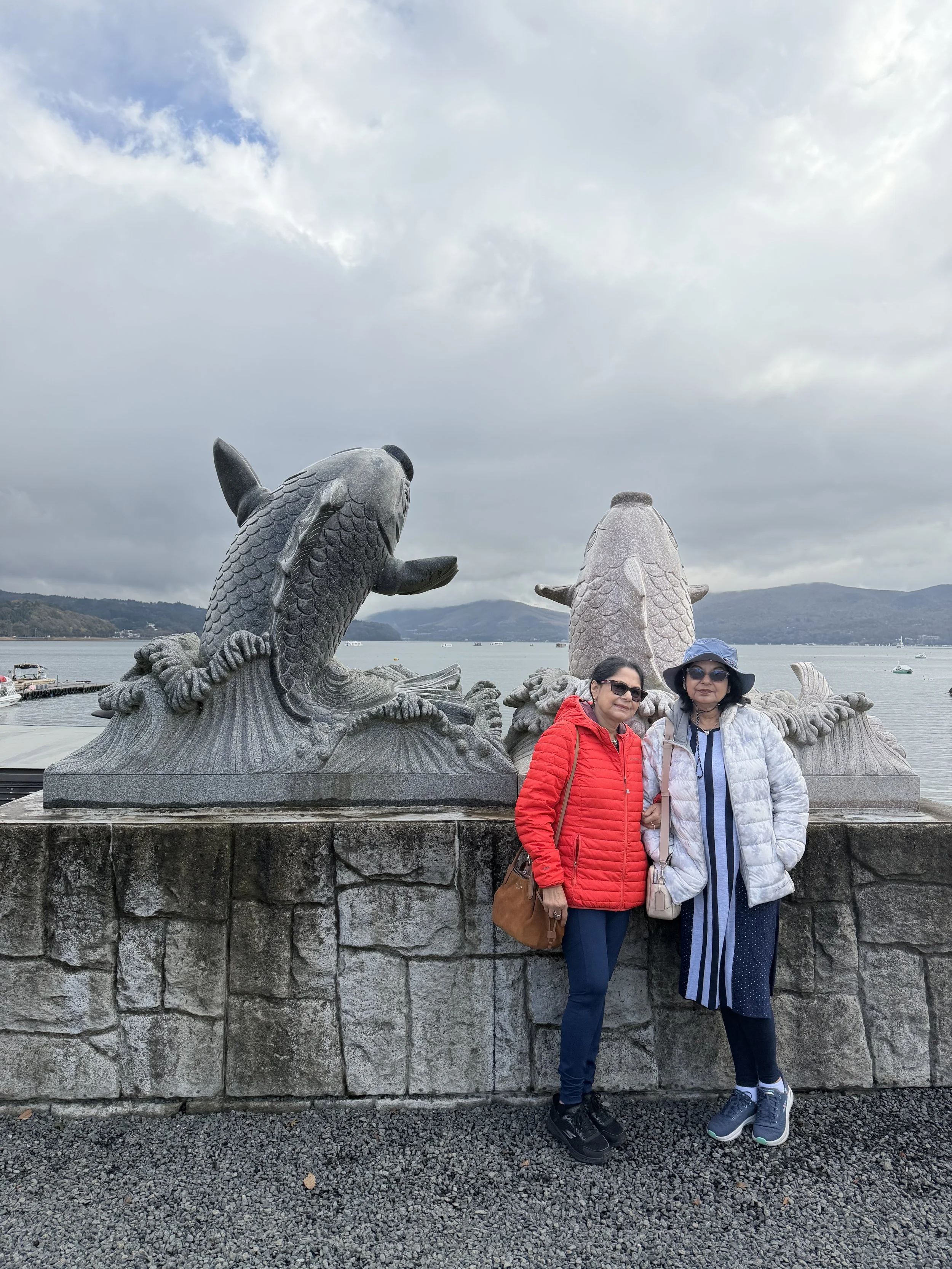
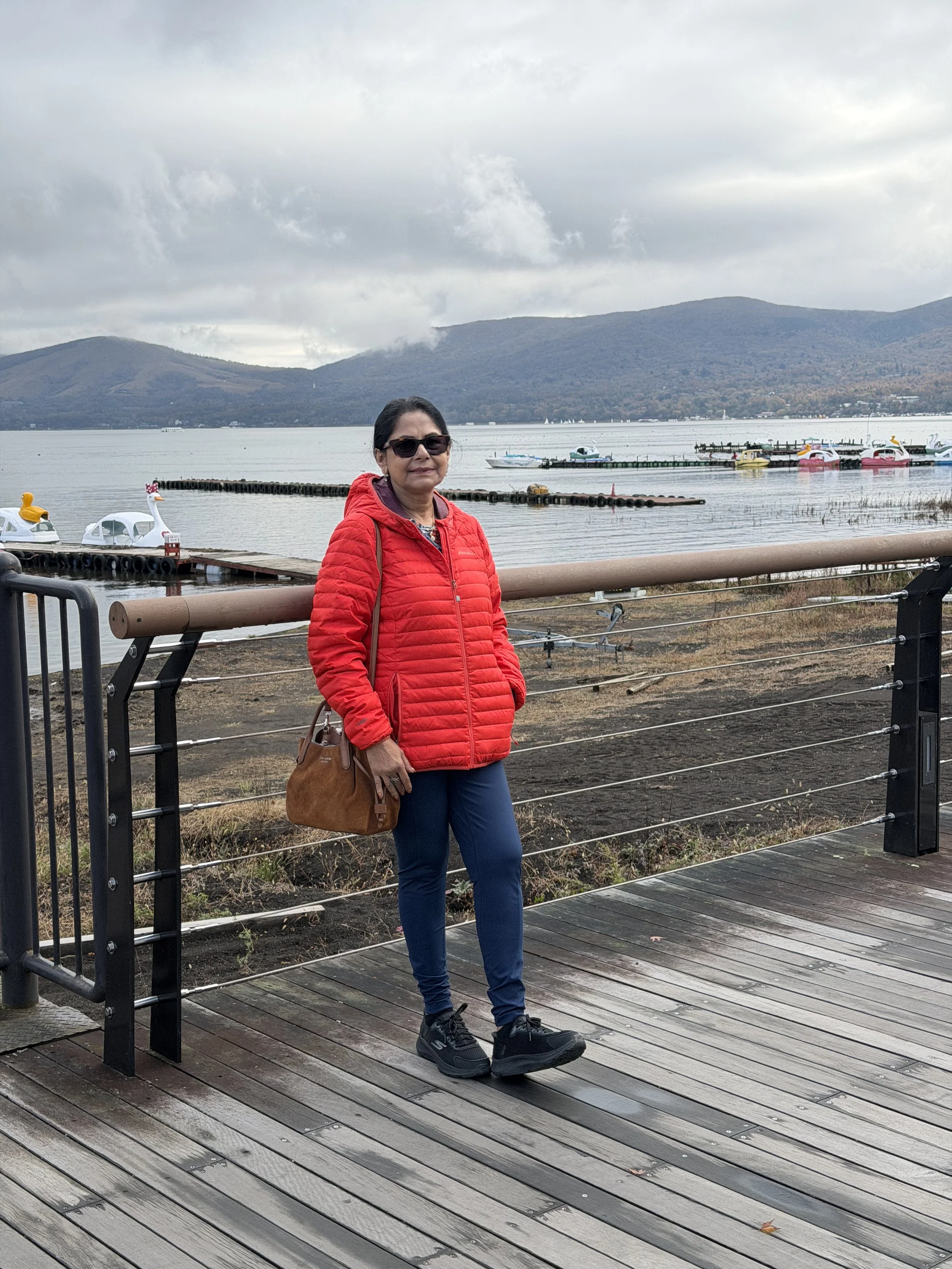
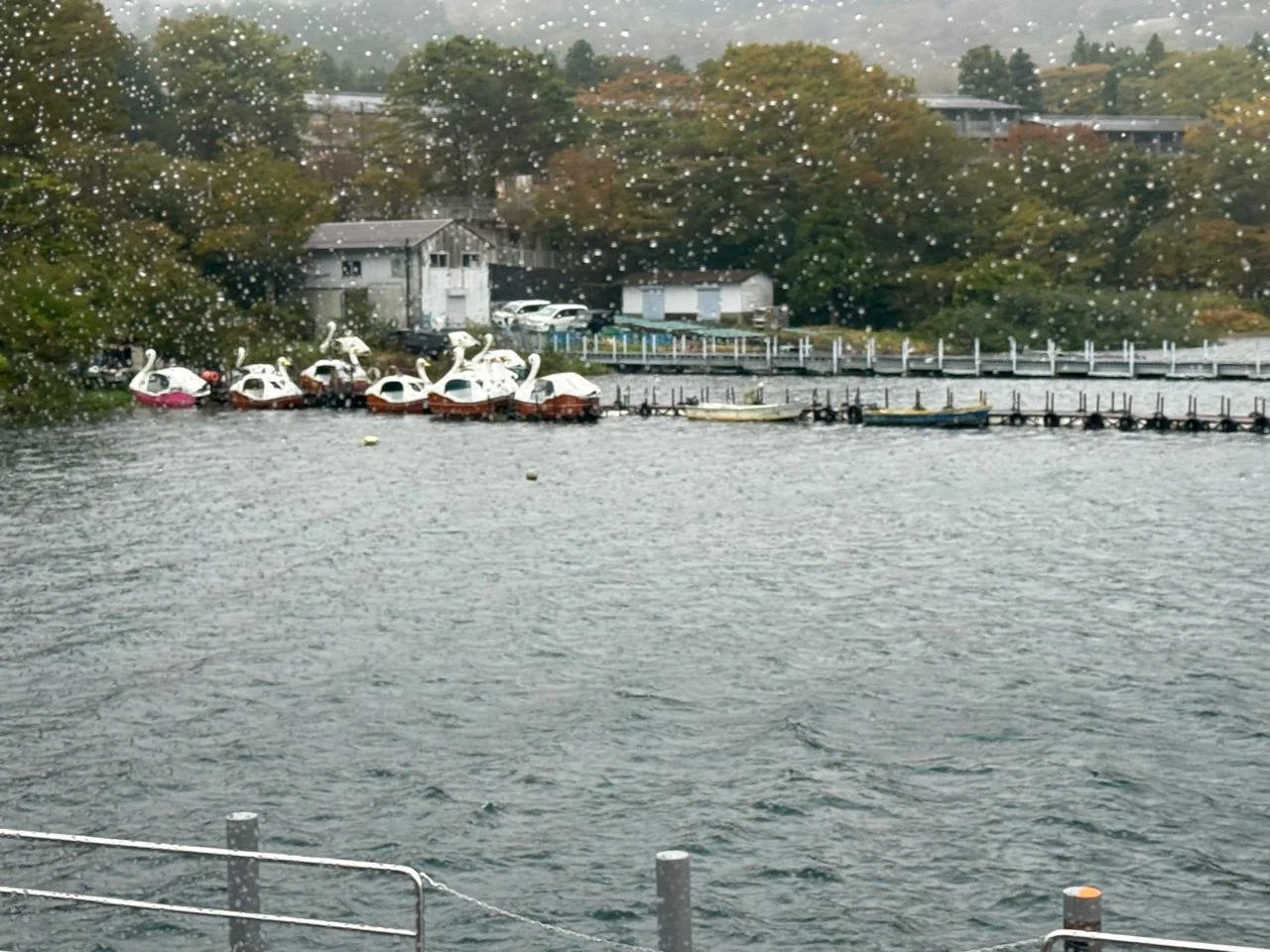
Lake Ashi
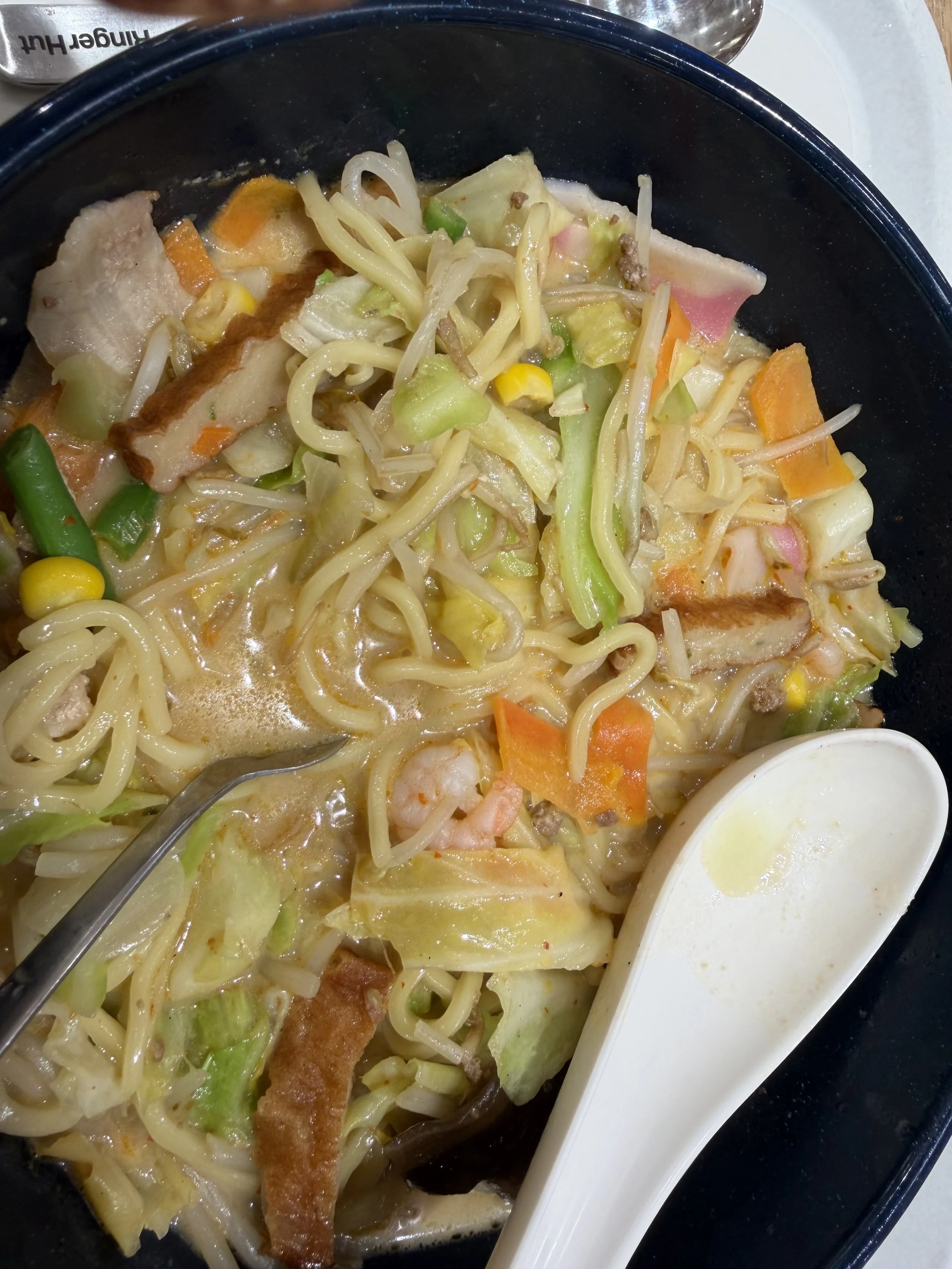
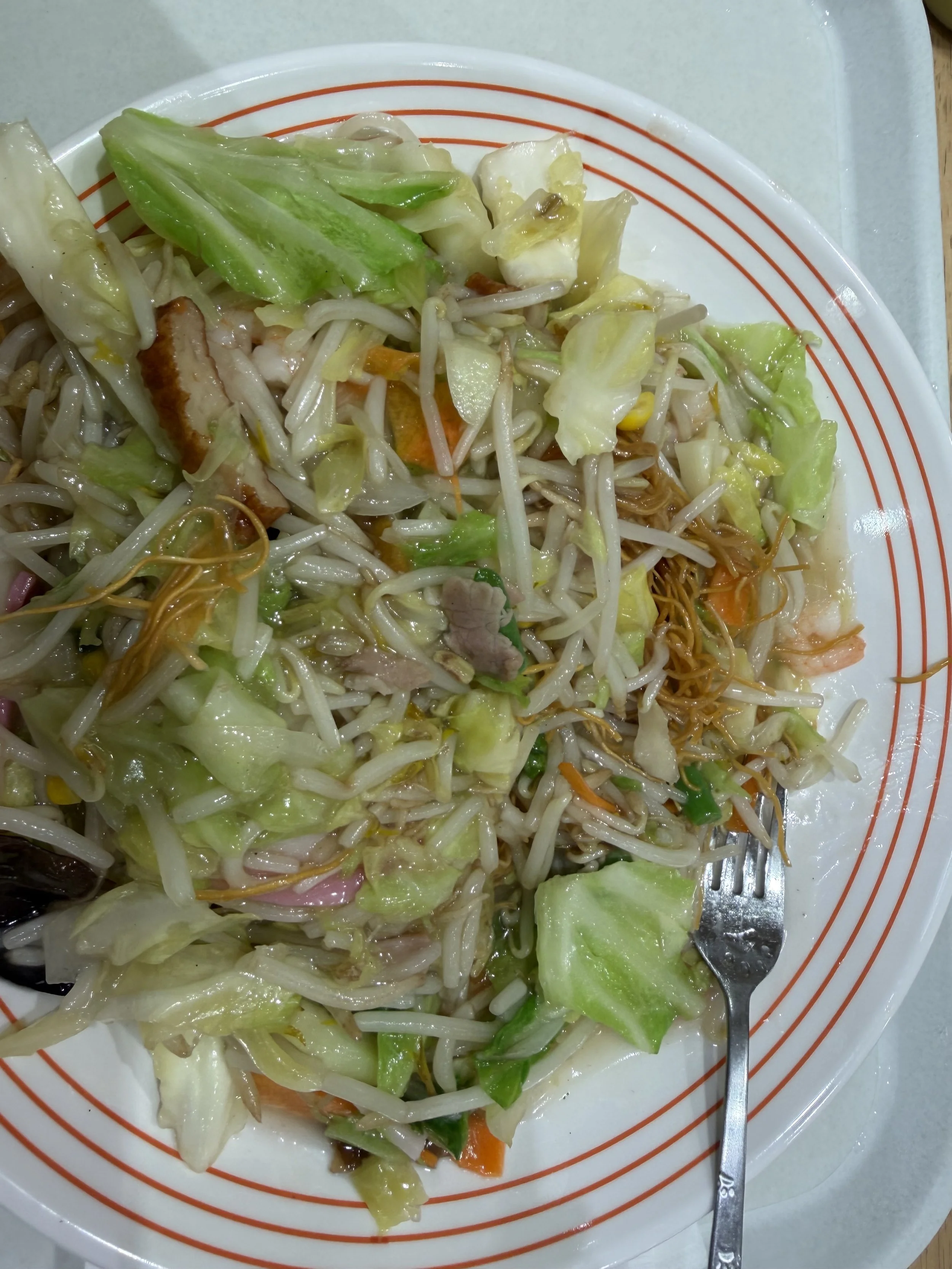
Delicious hot lunch on a Rainy Day!

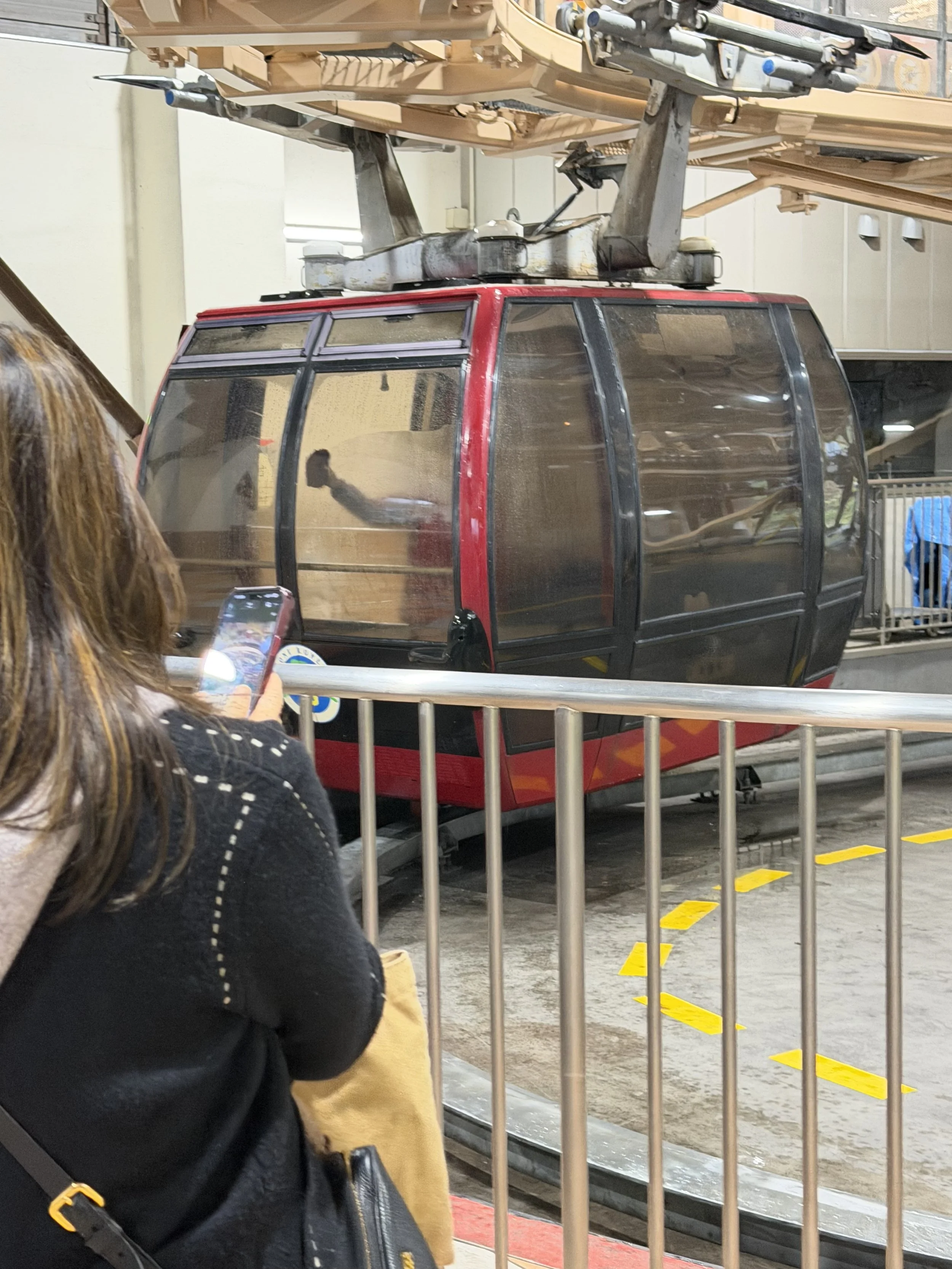
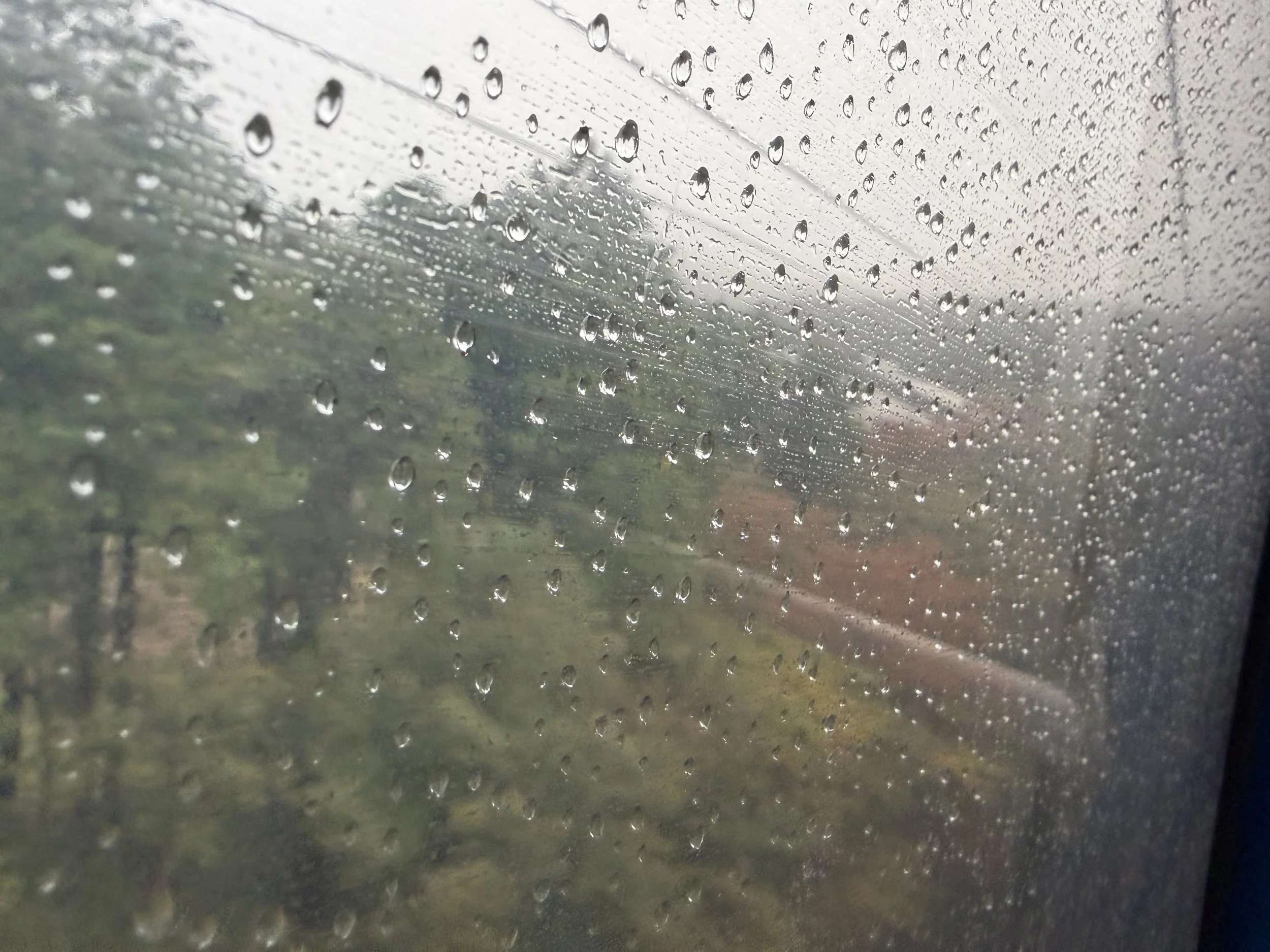
The Volcano in Owakudani
A Day with Mount Fuji: 400 Steps, Crystal-Clear Ponds, and an AI Miracle!
The following morning, the weather gods finally decided to listen to our prayers! We woke up to glorious sunshine, and our gratitude knew no bounds. We practically wanted to send them thank-you notes for finally cooperating! After the previous day's soaking in Hakone, this was a most welcome change. Our journey to Mount Fuji took approximately an hour and a half, and the drive was delightful, with winding roads, beautiful countryside, and charming scenery along the way. We were hoping for that elusive, postcard-perfect view of Mount Fuji, although we had been warned that seeing the mountain clearly is a matter of considerable luck. Apparently, even the weather gods have their limitations! Our first stop was Chureito Pagoda, located within Arakurayama Sengen Park, overlooking Fujiyoshida City. Roy informed us that we should allow at least a couple of hours to explore the area. Woo-hoo! That was music to our ears, especially after losing out on our walking adventures the previous day. The pagoda is a beautiful five-storied structure built in 1963 as a peace memorial, forming part of the Arakura Sengen Shrine complex. It sits high on the mountainside, overlooking the city, and reaching it requires climbing nearly 400 steps from the shrine's main building. Four hundred steps! My sister and I looked at each other, took a deep breath, and decided that we were certainly not going to be defeated by a staircase! Up we went, step after step, occasionally wondering whether we had underestimated our fitness levels. But we made it! At the top, we patted each other on the back, feeling rather proud of our achievement. The views of Mount Fuji framed by the beautiful red pagoda are spectacular on a perfectly clear day, particularly during cherry blossom season in April and the autumn foliage season in early November. Unfortunately, although the sun was shining, clouds were hovering around Mount Fuji, playing an elaborate game of hide-and-seek. We could only imagine how magnificent the view would have been. Still, we had conquered 400 steps, and nobody was going to take that achievement away from us!
Our next stop was Oshino Hakkai, a picturesque village in the Fuji Five Lakes region, famous for its eight crystal-clear ponds. These ponds are fed by snowmelt from Mount Fuji, which filters through layers of porous volcanic rock for more than 80 years before emerging as remarkably pure spring water. The ponds are quite deep, with fascinating aquatic plants and large fish swimming in the crystal-clear water. Visitors can even drink the water directly from a designated spring-water source. The place has an interesting history, as the ponds occupy the site of a former lake that dried up several hundred years ago. Although the area has become quite a tourist attraction, with souvenir shops, restaurants, and plenty of visitors, it retains a charming atmosphere. Roy enthusiastically informed us that the air around Mount Fuji is among the freshest in Japan and encouraged us to take several deep breaths. We obediently followed instructions, inhaling deeply as though we were being administered some very expensive natural oxygen therapy! He also told us that both the spring water and the fresh air are sold in cans and even exported. Really? Canned air? I must investigate this further! Imagine bringing home a can of Mount Fuji air as a souvenir—although I suspect airport security might have a few questions! The area was bustling with tourists, and naturally, the souvenir shops were impossible to ignore. I had to remind my sister, an enthusiastic shopper, that we were buying only a few small things and only for family. Keeping her shopping enthusiasm under control is practically another full-time job for me! Meanwhile, Mount Fuji, standing majestically at 3,776 meters (12,389 feet), continued to evade us. Japan's highest mountain is an active volcano, last erupting in 1707, and its almost perfectly symmetrical shape has made it a sacred mountain and an object of reverence for centuries. We were beginning to wonder whether the mountain was deliberately avoiding us!
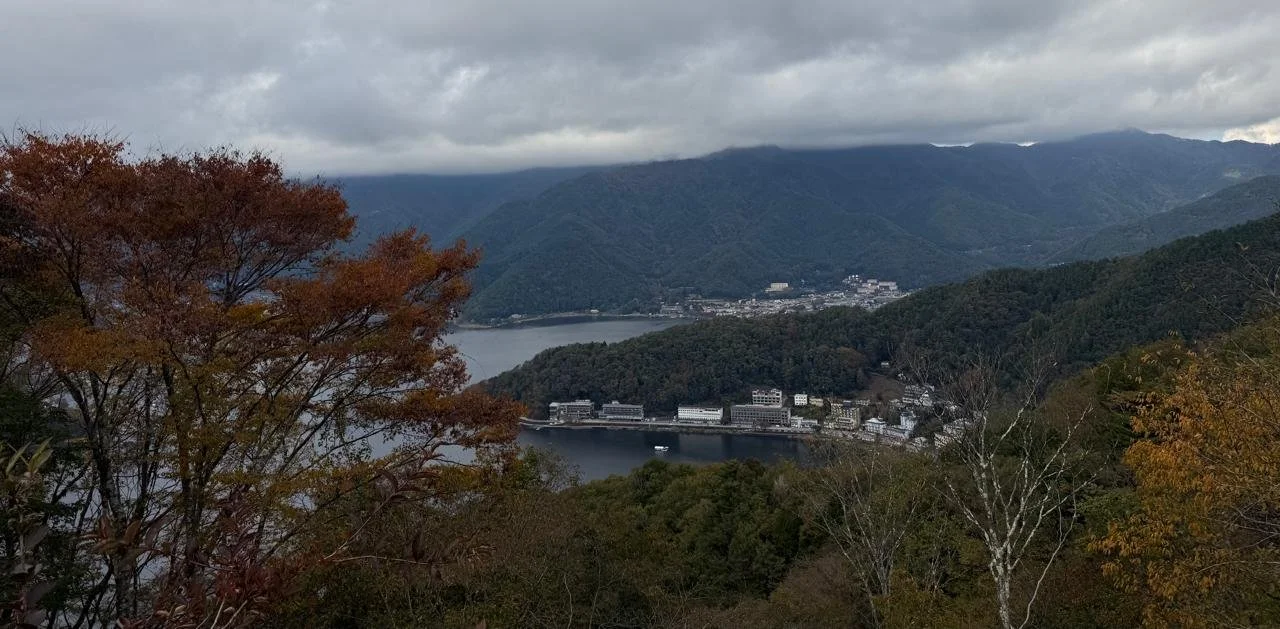
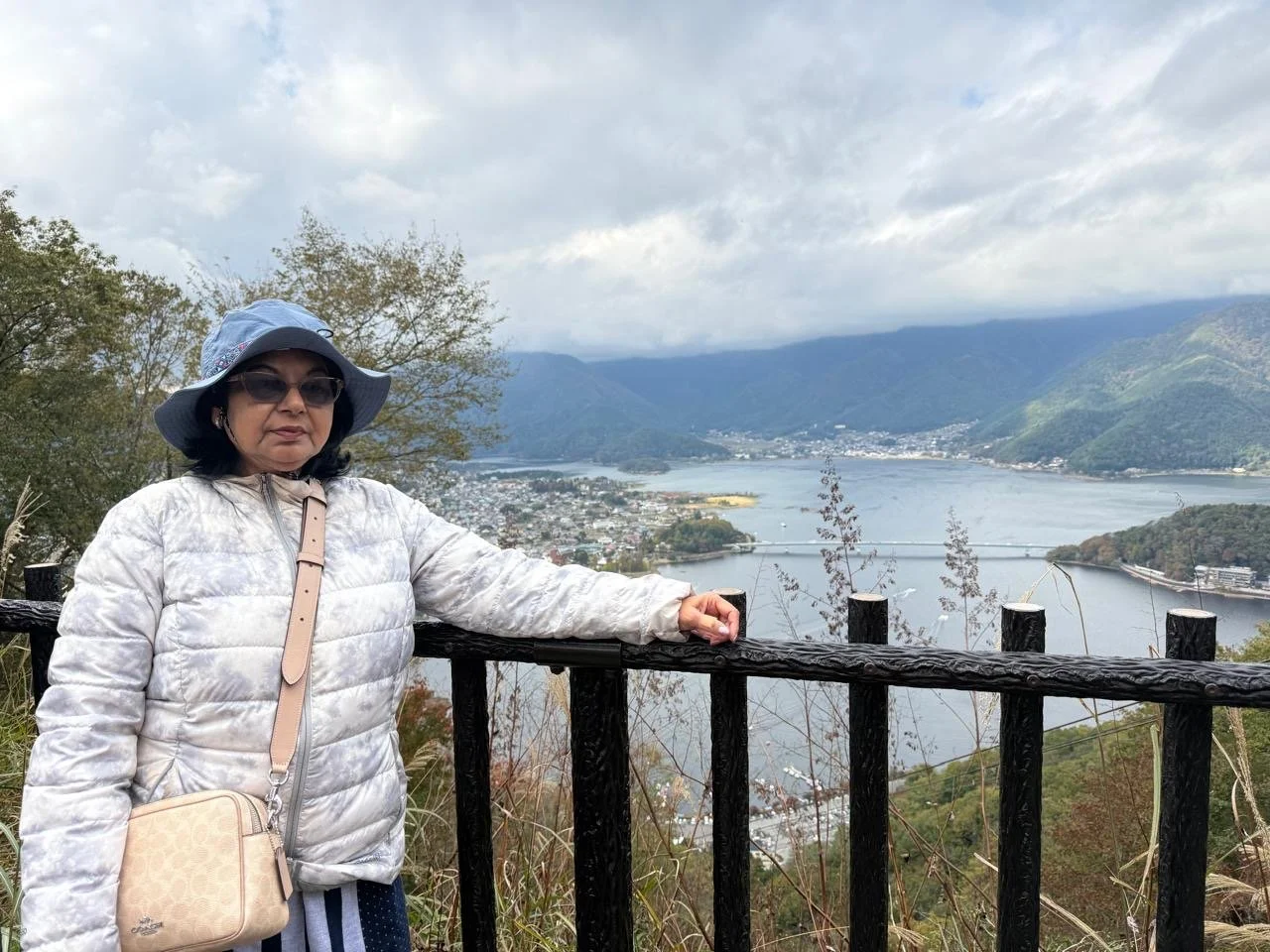
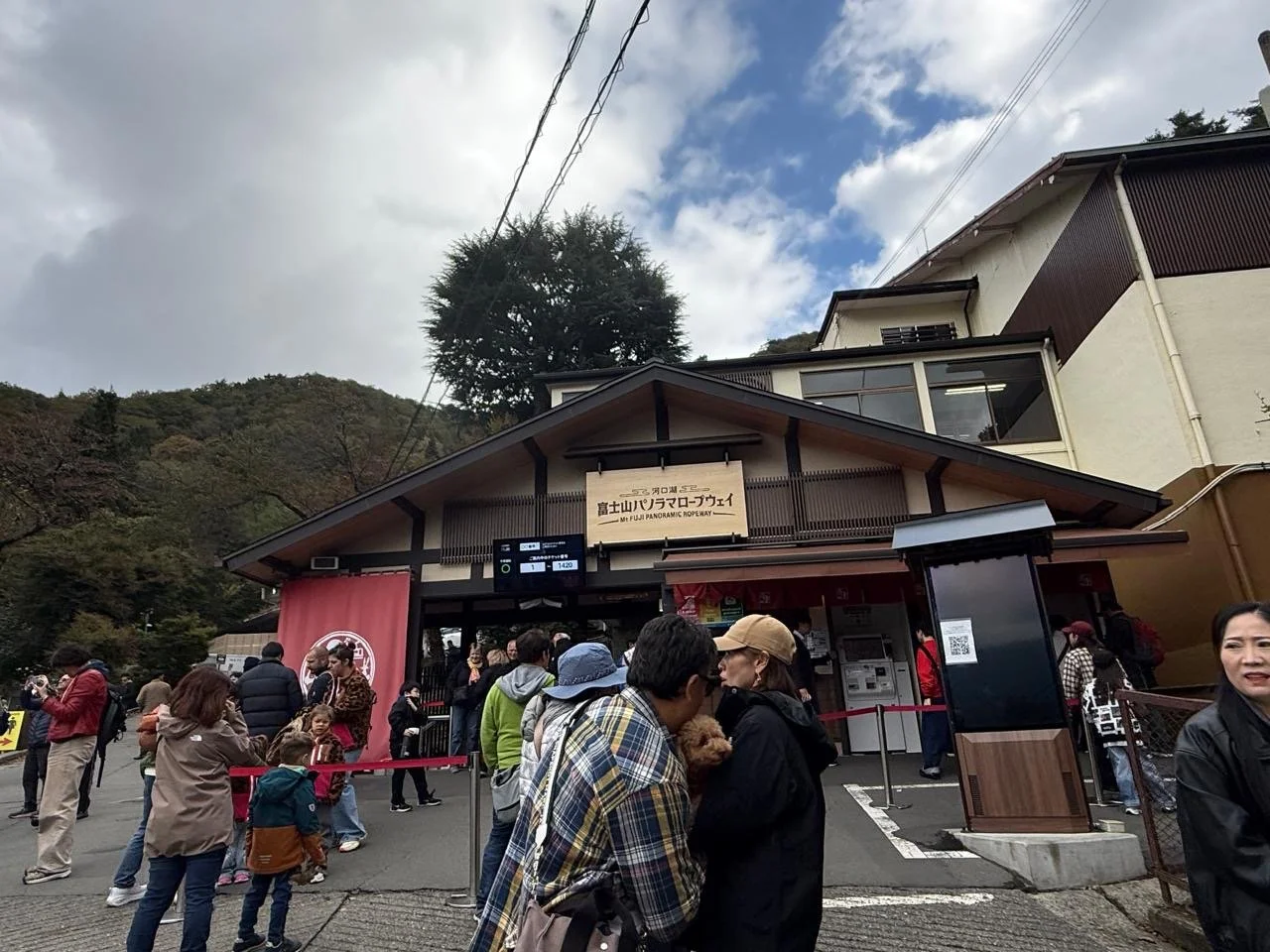
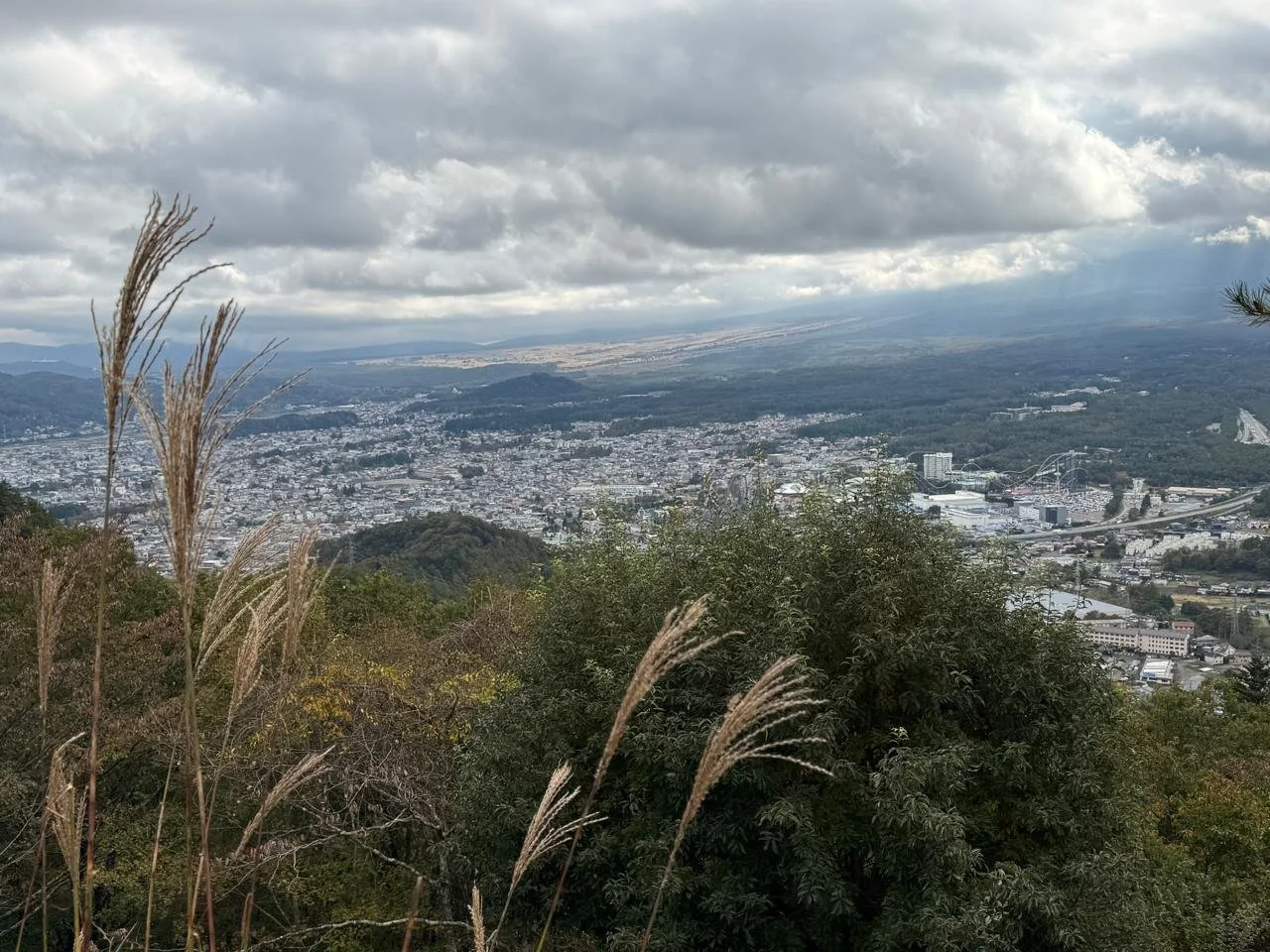
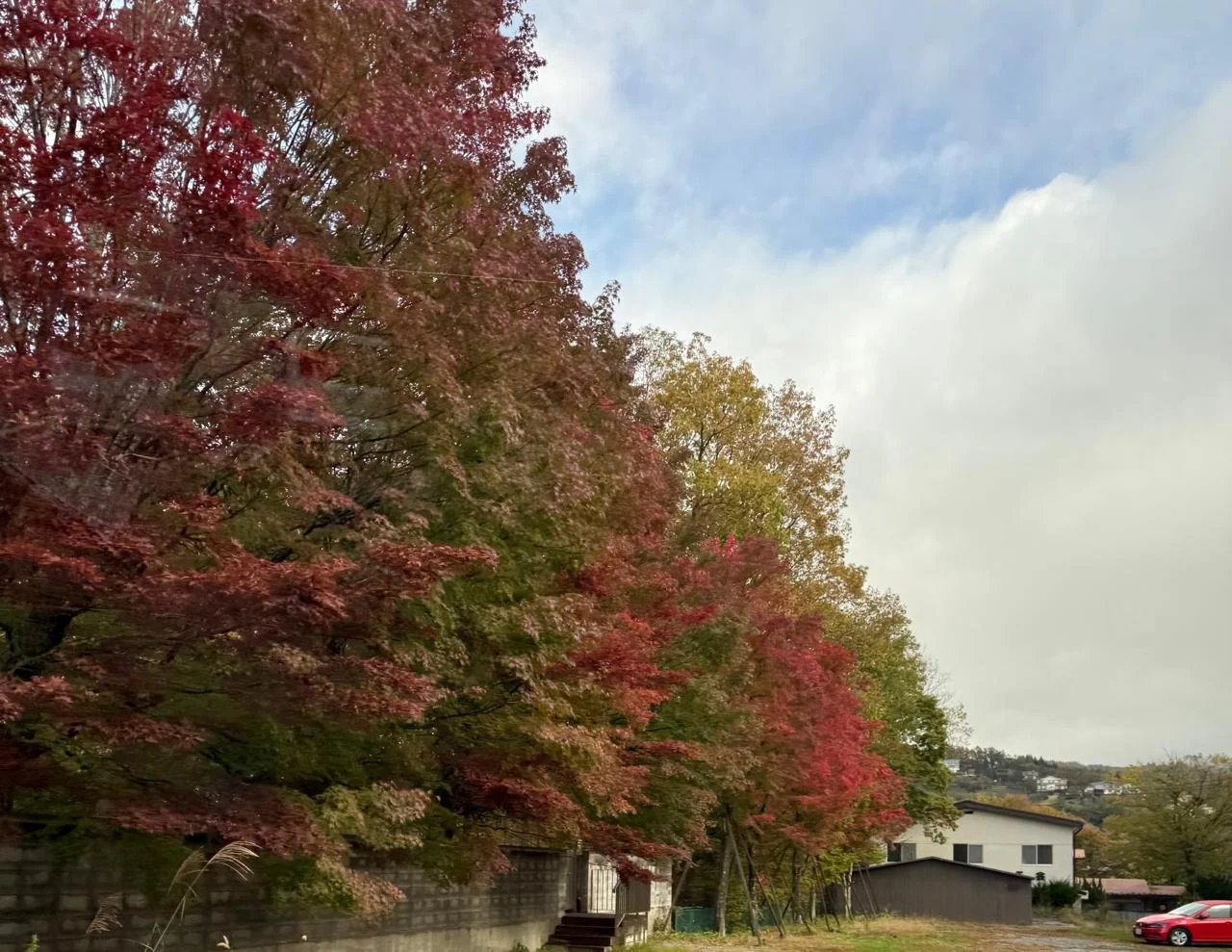
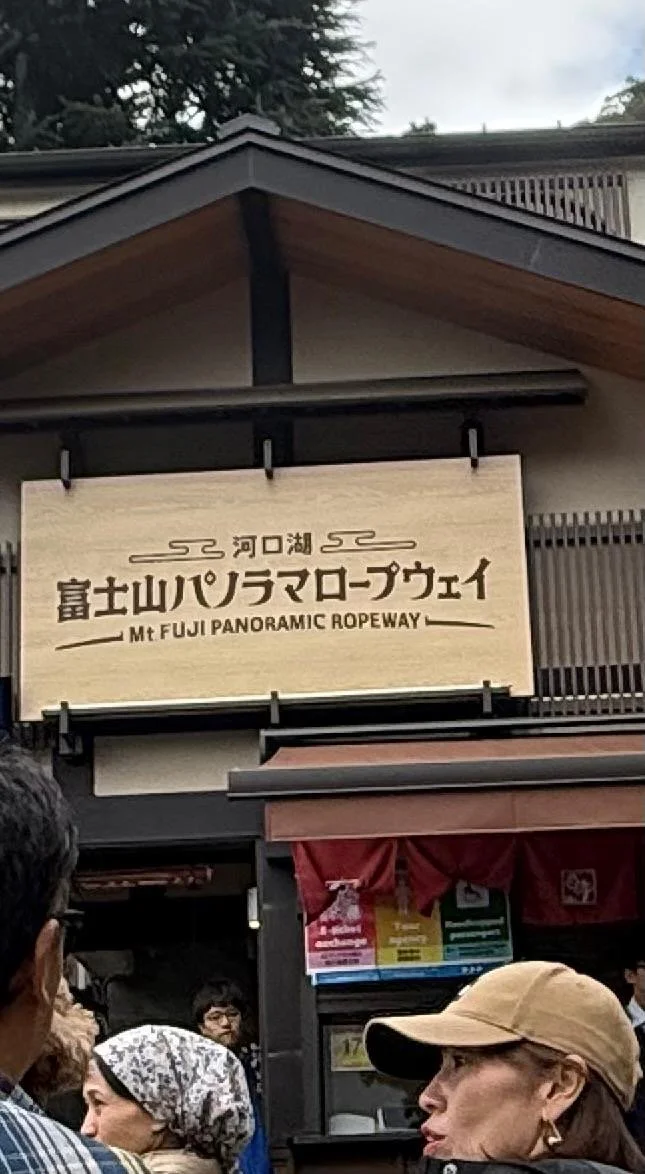
Roy next took us along the beautiful Momiji Corridor, a scenic drive lined with spectacular autumn foliage, before reaching Lake Kawaguchiko. What a beautiful stretch of countryside! The sun was shining, the lake was lovely, and the fall colors were enchanting. Everything was picture-perfect—except, of course, for the one attraction we had come all this way to see! Mount Fuji remained shrouded in clouds. We decided to stop for lunch in the town of Oishi, but our culinary options were rather limited. There wasn't much beyond Japanese food and the familiar combination of hot dogs and fries. Given our time constraints, we reluctantly settled for the latter. For someone who had been looking forward to sushi and sashimi, this was quite a disappointment. Hot dogs in Japan were not exactly what I had envisioned for my Mount Fuji adventure! After lunch, we headed to the Mount Fuji Panoramic Ropeway, also known as the Kachi Kachi Ropeway. This short, approximately three-minute aerial ride takes visitors from the eastern shore of Lake Kawaguchiko to an observation deck near the summit of Mount Tenjo. This was our final attempt to catch a glimpse of the elusive mountain. We rode up with great anticipation, hoping that the clouds might finally part and reveal the magnificent Fuji. But no such luck! The weather gods had given us sunshine but apparently decided that Mount Fuji itself was not included in the package. We could either sulk or find another solution. And then came the cleverest travel trick of the day—one made possible by the wonders of artificial intelligence! At the observation deck, a lady was selling photographs with Mount Fuji in the background. She took a picture of the two of us and, using AI, magically inserted the mountain behind us. Brilliant! There we were, looking absolutely delighted, with Mount Fuji standing majestically in the background. Who needs clear skies when technology can come to the rescue? We finally had our Mount Fuji photograph, even if the mountain had never actually shown up for the appointment!
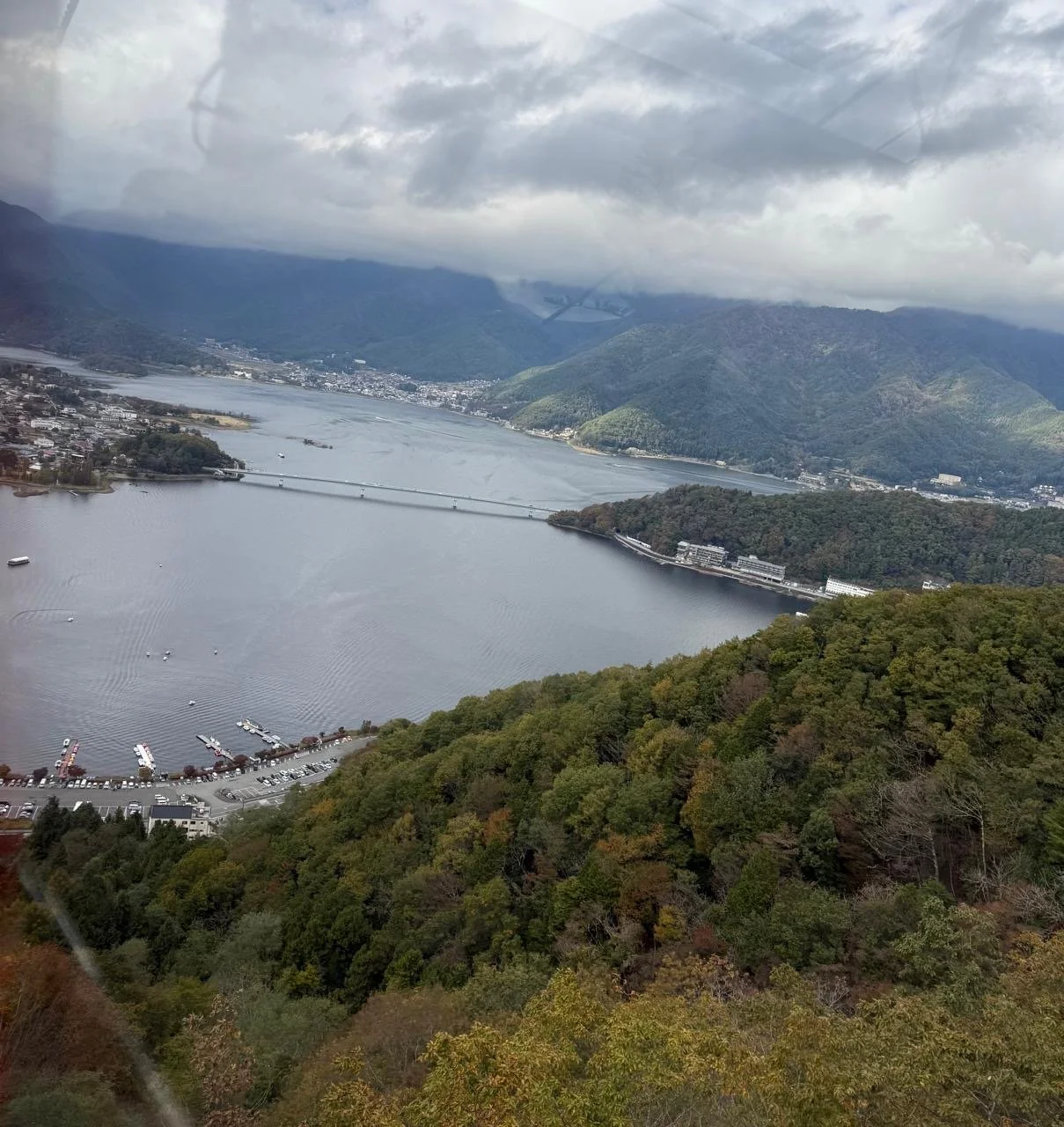
Lake Kawaguchiko
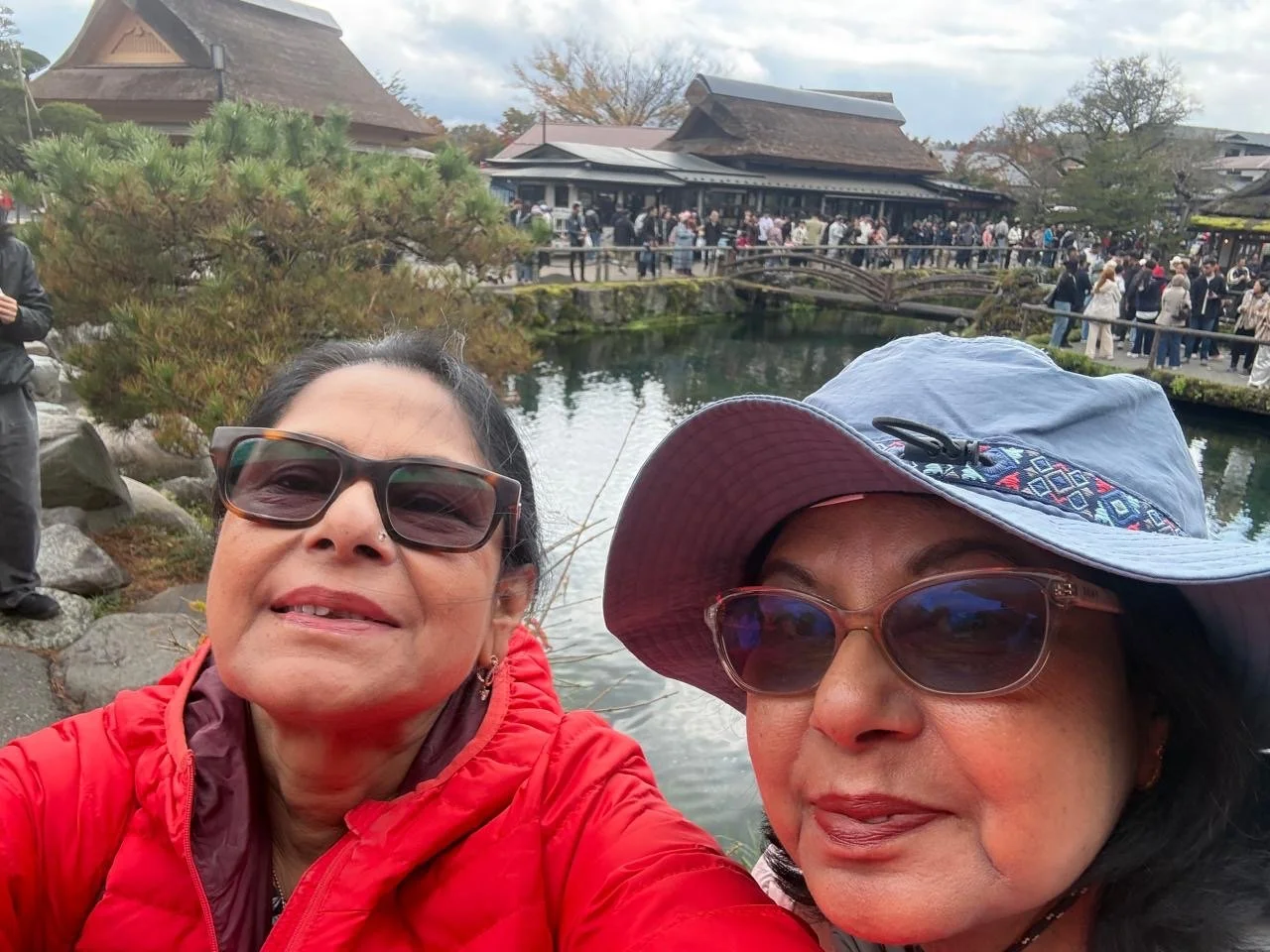
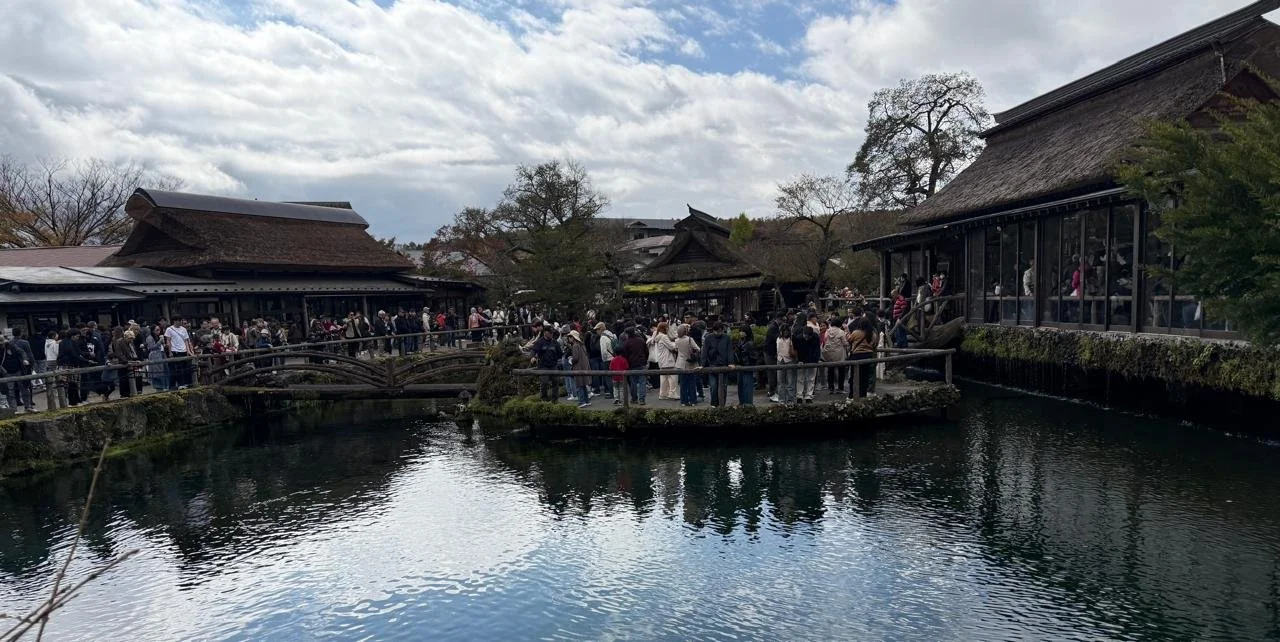
Oshino Hakkai
Momiji Corridor
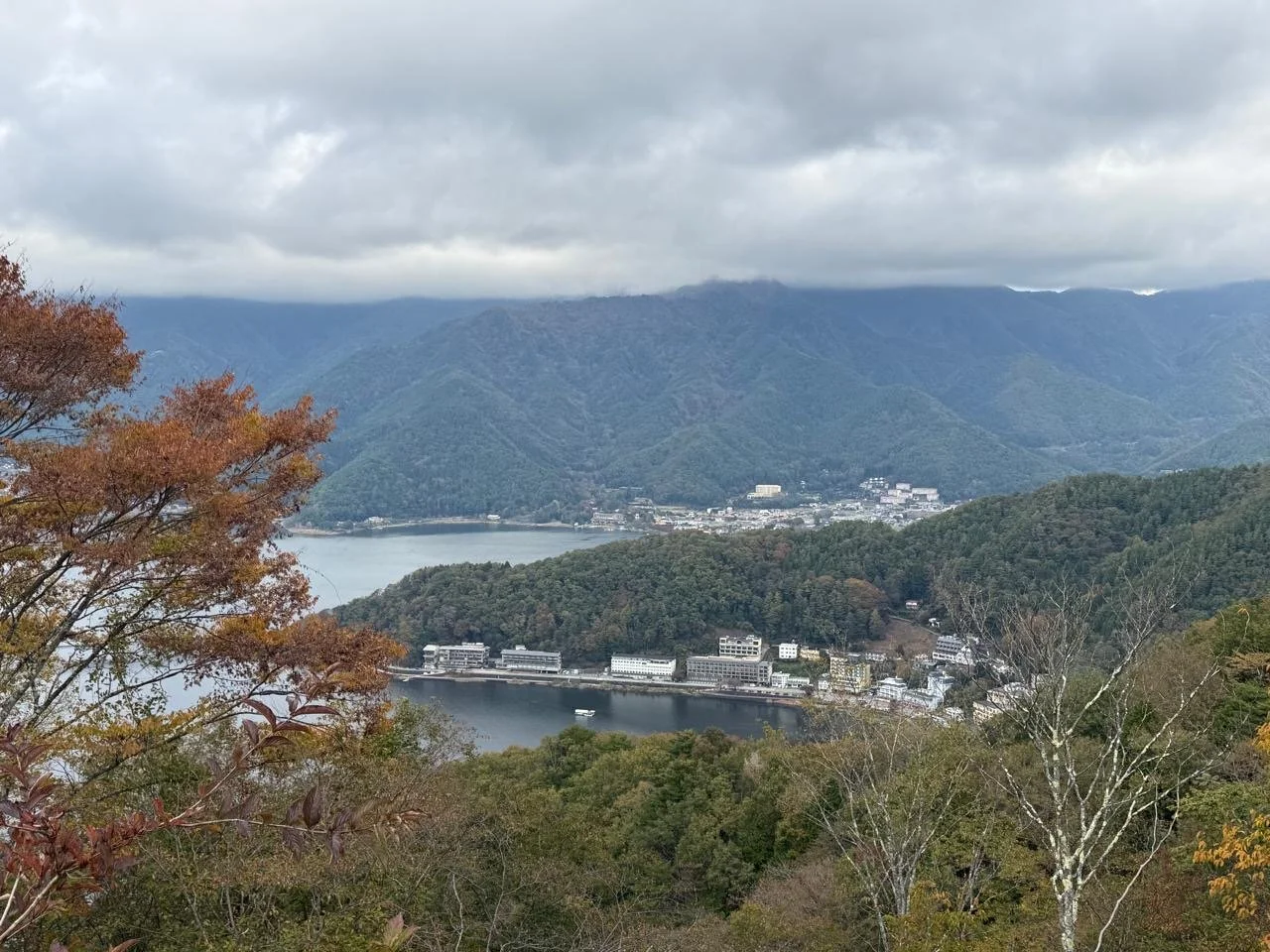
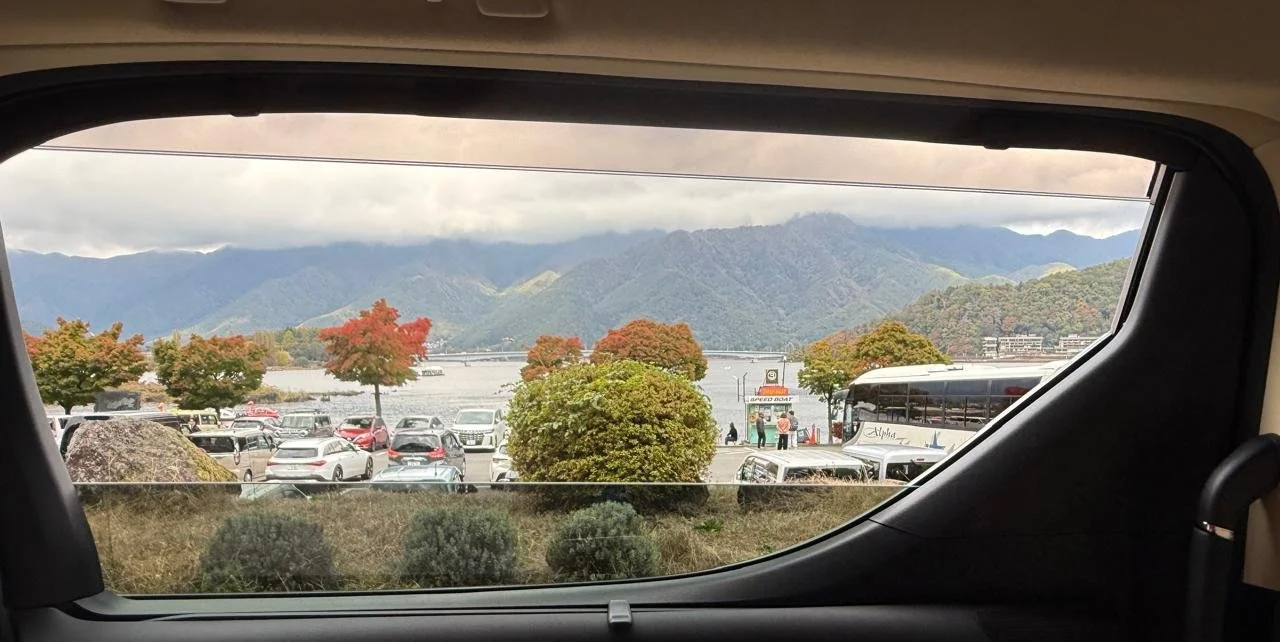
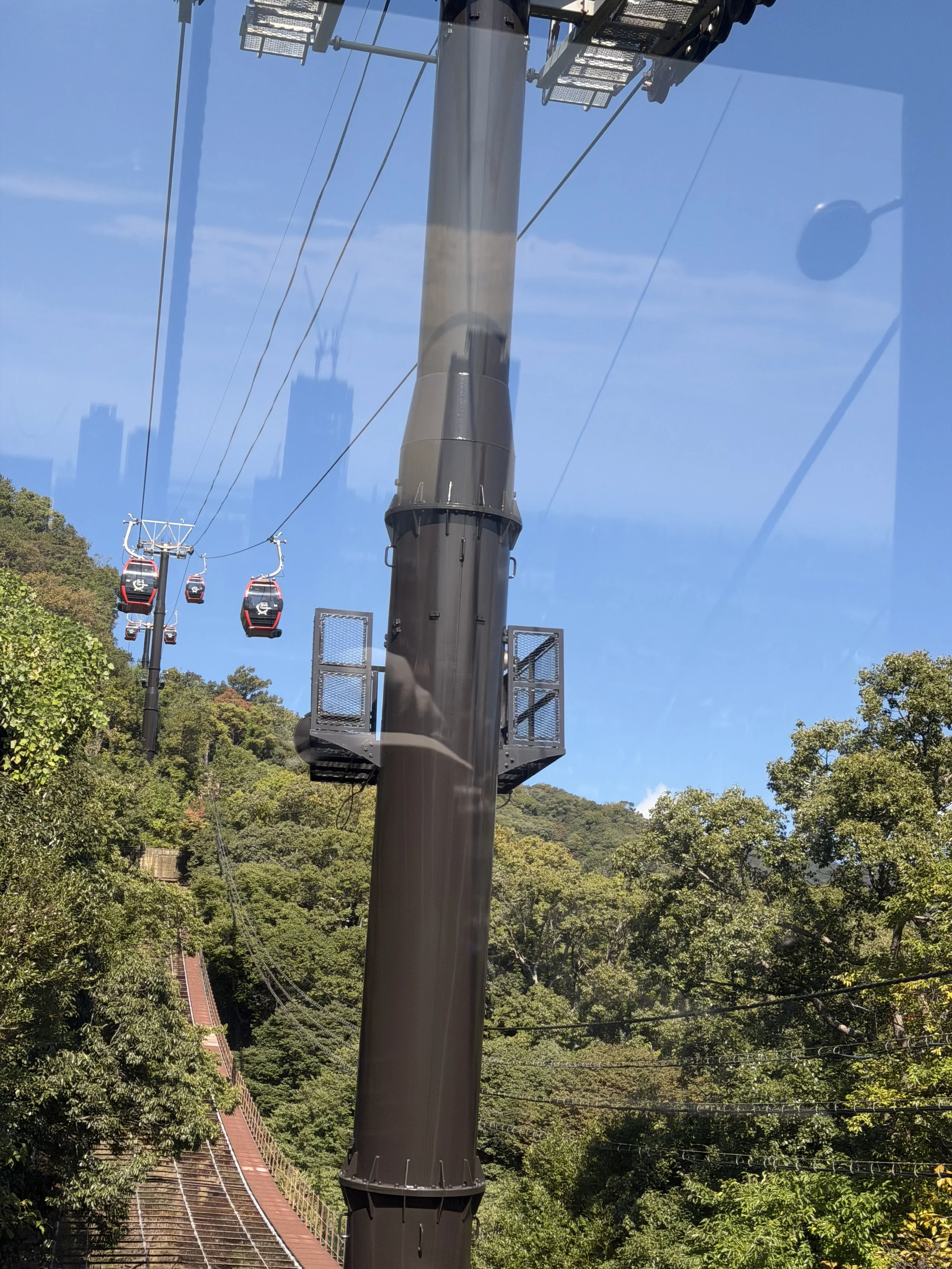
Mount Fuji Panoramic Ropeway
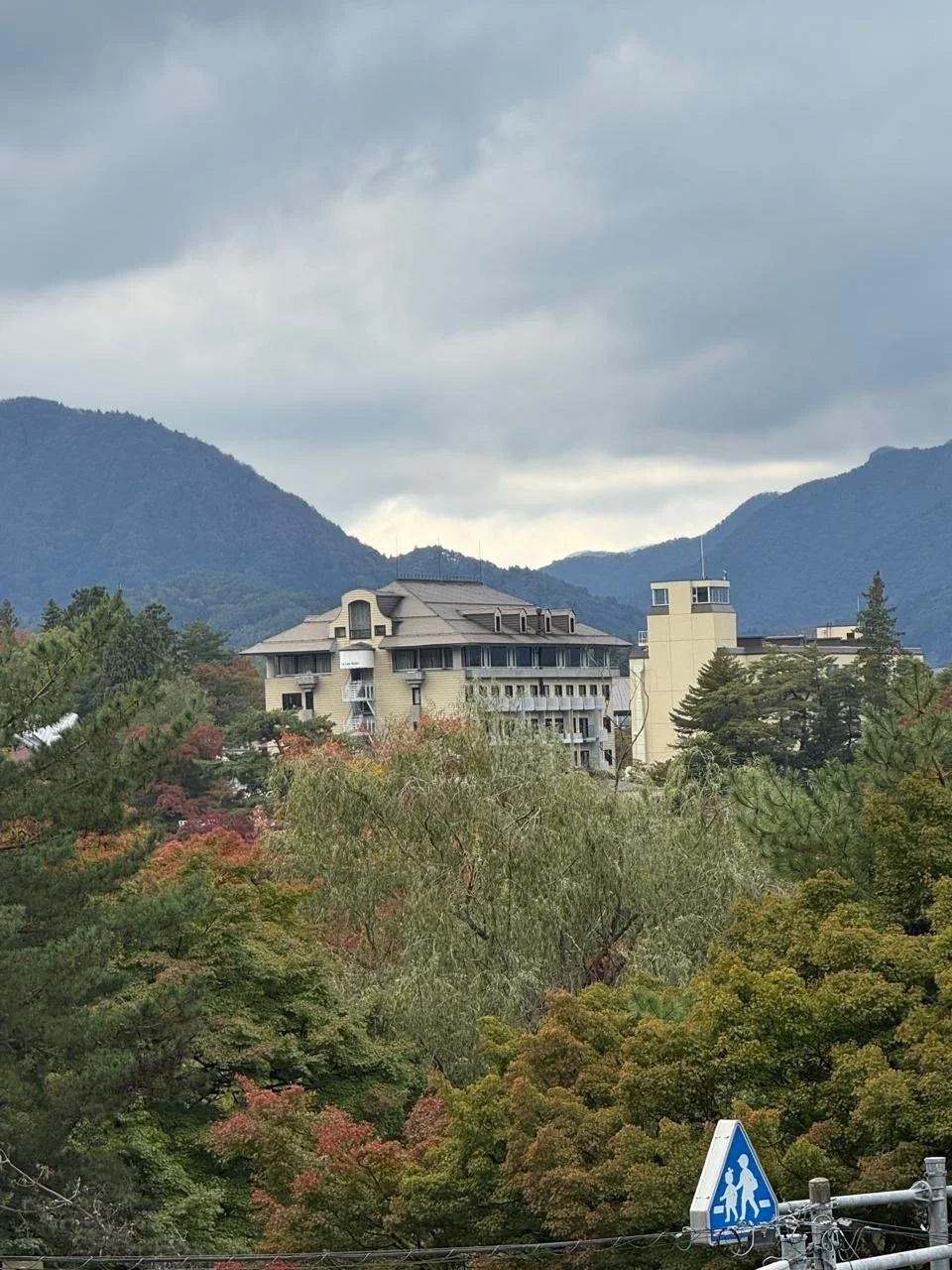
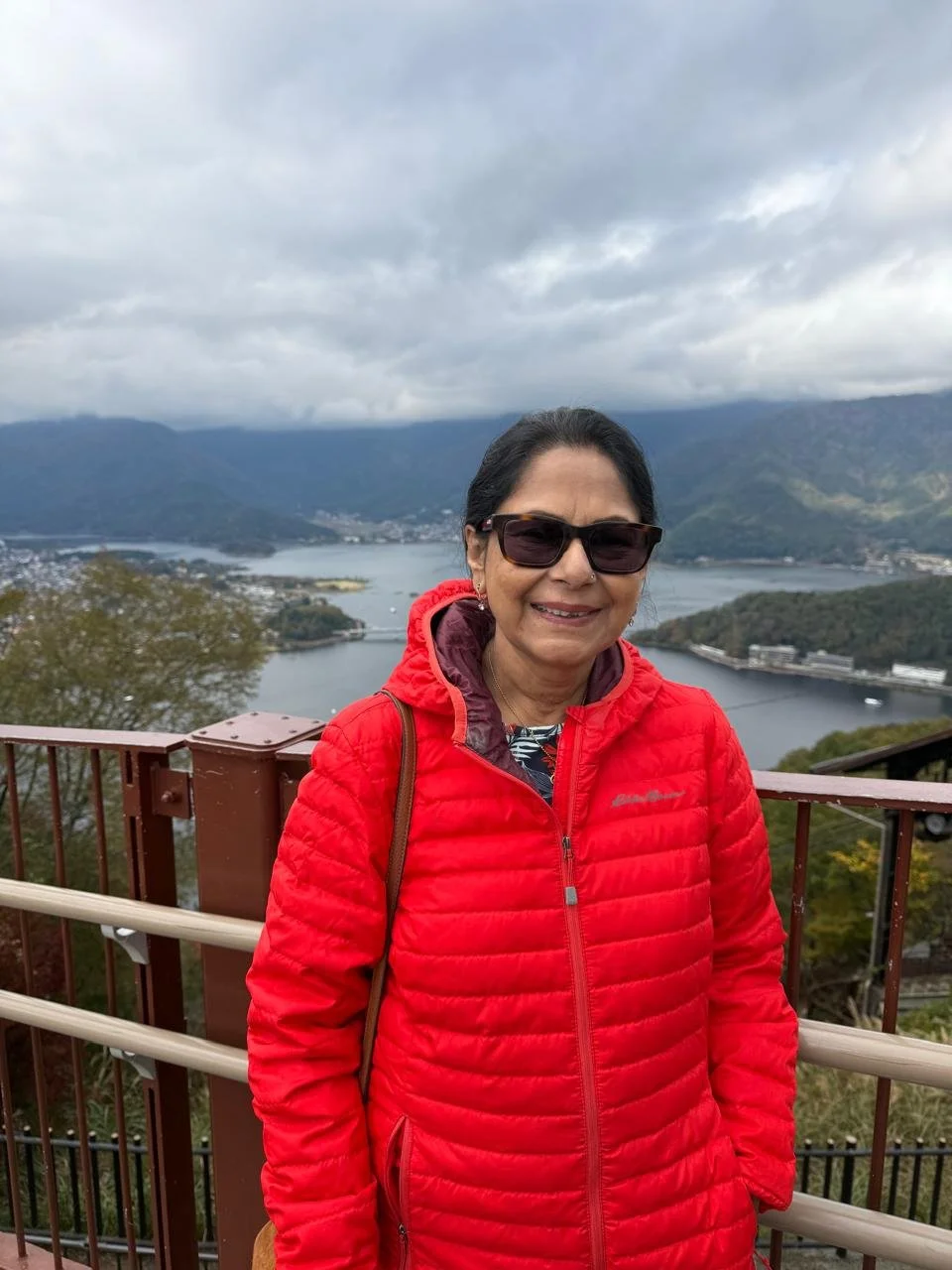
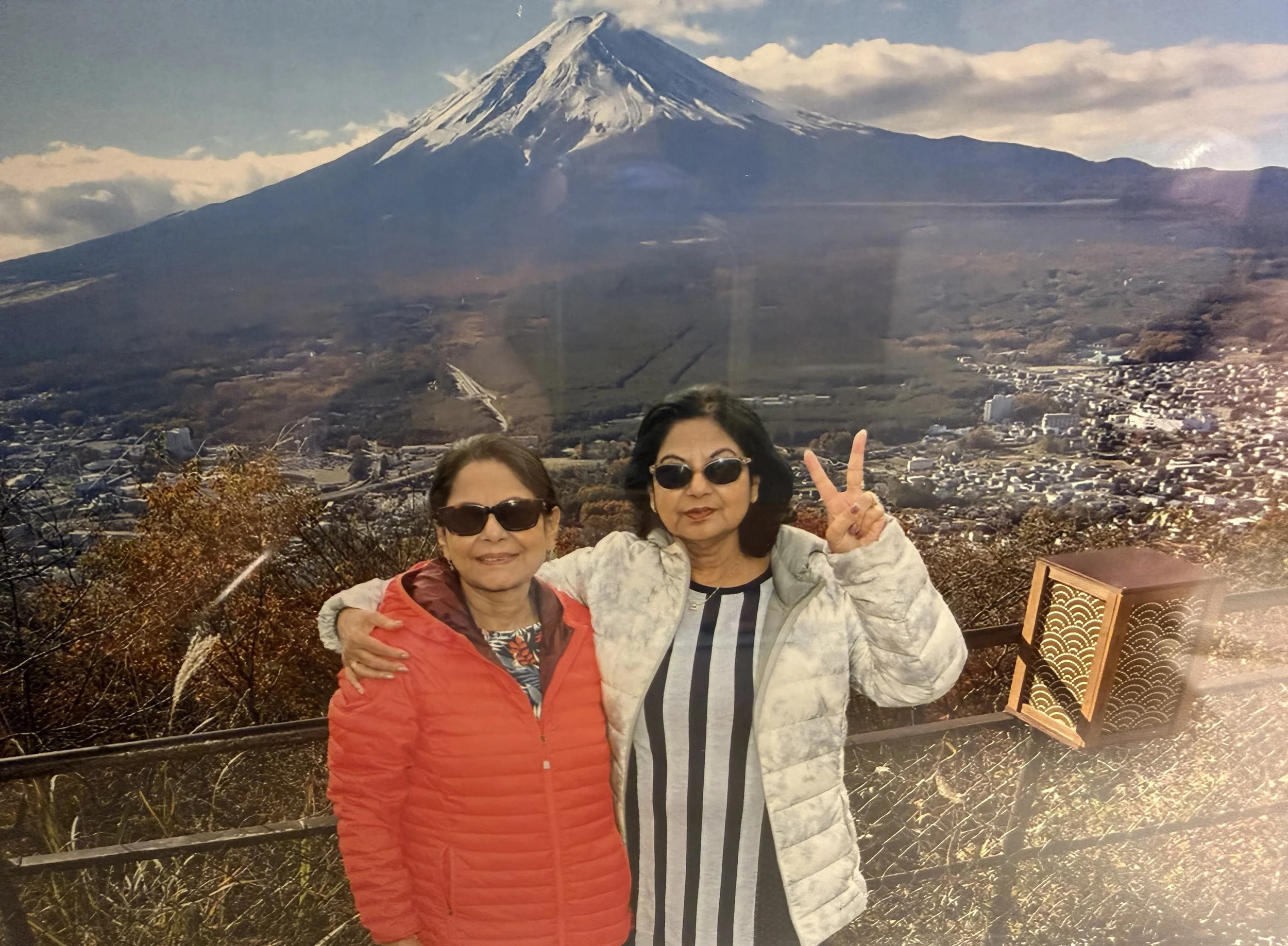
The Magic of AI
Osaka: Bullet Trains, Castles, Beef Skewers, and a City That Never Sleeps!
Our journey to Osaka began with our very first ride on Japan's famous Shinkansen, the legendary bullet train! We were quite excited about this experience, although getting ourselves organized at Tokyo Station was an adventure in itself. Calling the station busy would be a serious understatement! There were people rushing in every direction, trains arriving and departing, and we had to figure out how to scan our QR codes, locate the correct platform, and identify our coach and reserved seats. Thankfully, the tickets clearly indicated the coach and seat numbers, and once we got the hang of it, everything fell into place. What struck me most was the extraordinary organization and efficiency of Japan's railway system. Despite the enormous crowds, everything seemed to work like clockwork. Japan's extensive rail network, combining the high-speed Shinkansen with regional, local, and urban trains, is truly impressive. Our journey took approximately two and a half hours, and the experience was wonderful. The train was quite full, but the seats were comfortable, there was plenty of legroom, and, as usual, I was fascinated by the immaculate cleanliness. I really must stop writing about Japanese cleanliness, but honestly, they deserve every bit of praise!
We arrived in Osaka and were met by our driver, Mr. Gao, a pleasant young man whose English was rather limited. Naturally, our old friend—the translator app—made another appearance. By now, I was beginning to think that our translator deserved a seat in the car and perhaps even a share of the travel expenses!
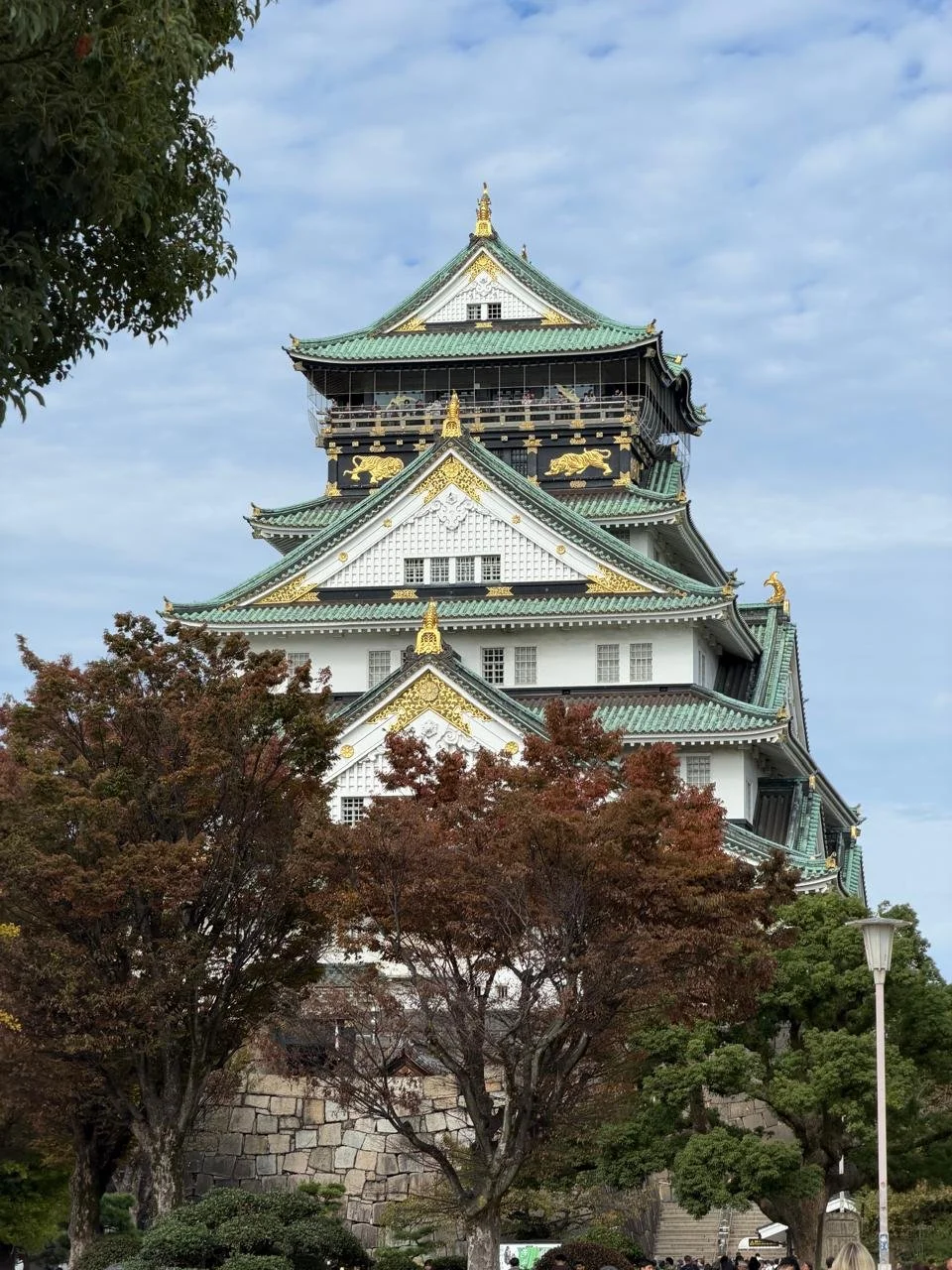
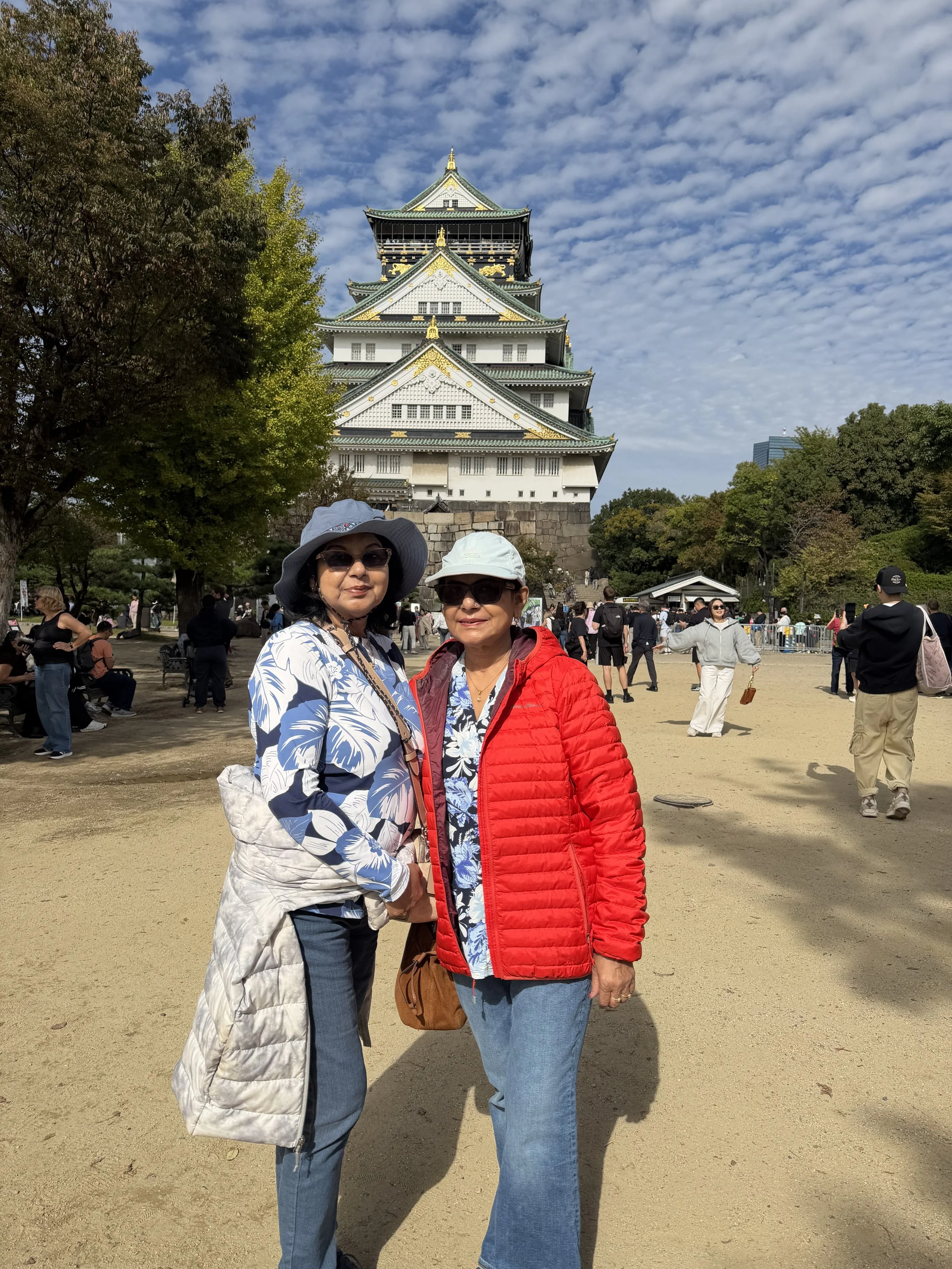
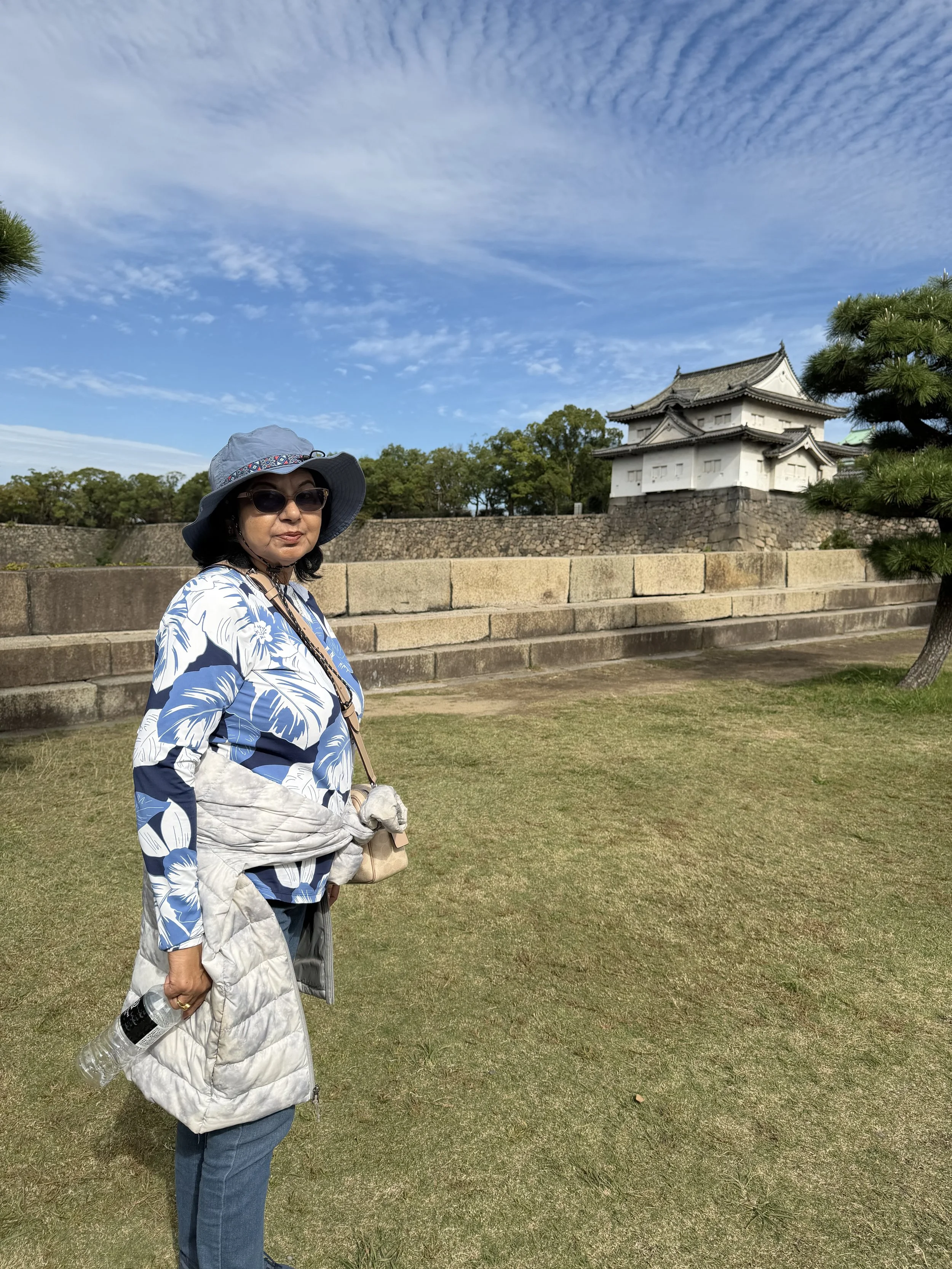
Our first stop was Osaka Castle, one of Japan's most historically significant landmarks. Built by Toyotomi Hideyoshi beginning in 1593, the castle played a pivotal role in the unification of Japan during the sixteenth century. The original structure was an extraordinary five-story tower adorned with gold leaf, reflecting Hideyoshi's immense power and ambition. Following his death, the castle was besieged by Tokugawa Ieyasu's forces, and the Toyotomi clan was eventually defeated in 1615. The Tokugawa shogunate rebuilt and expanded the castle, adding imposing stone walls and deep moats to demonstrate its dominance. The main tower was subsequently destroyed by lightning in 1665 and remained unrestored for centuries. The present tower, constructed in reinforced concrete in 1931 through public donations, miraculously survived the World War II air raids and was extensively renovated in 1997. Today, it houses a modern historical museum complete with an elevator—thank goodness for that! The castle grounds are enormous, with magnificent stone fortifications, impressive gates, and a deep moat surrounding the complex. We explored the castle and managed to climb to the fifth floor, but the prospect of continuing to the eighth-floor observation deck was simply too much. We decided that history could wait and our knees deserved some consideration! Besides, there were more important culinary priorities awaiting us. Just outside the castle grounds, we treated ourselves to delicious Wagyu beef skewers and a refreshing glass of beer. What a combination! The weather was warm and beautiful, and once again the weather gods were smiling upon us.
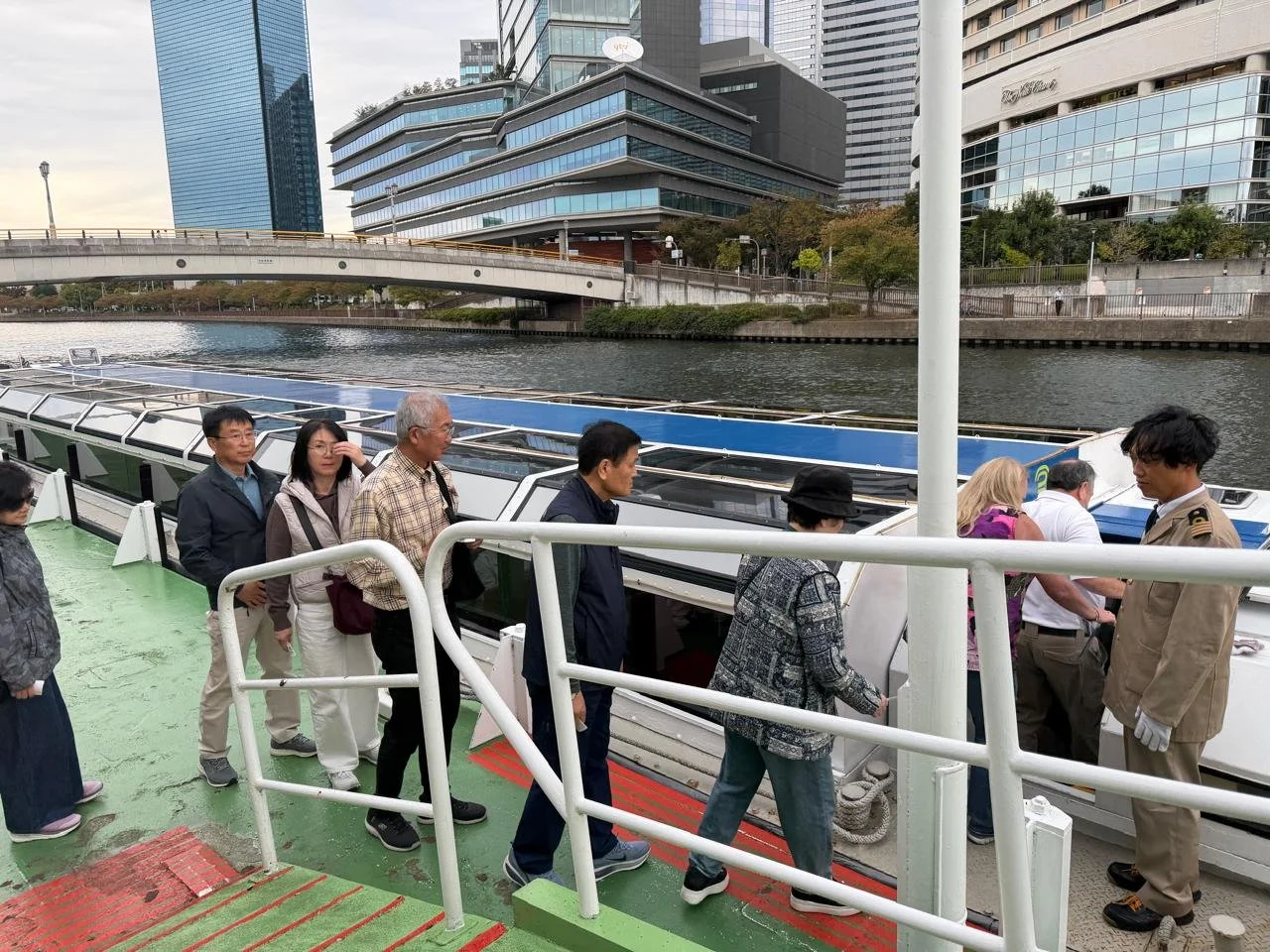
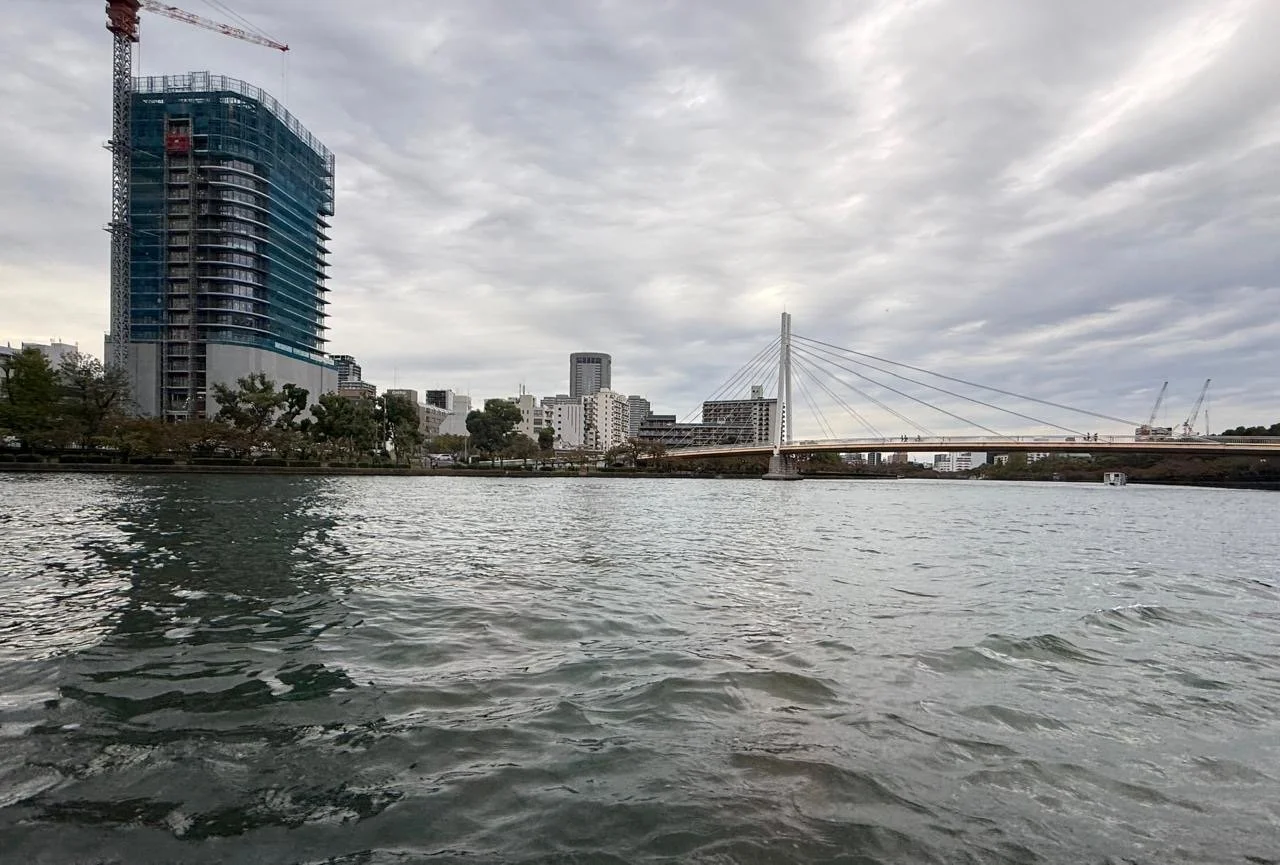
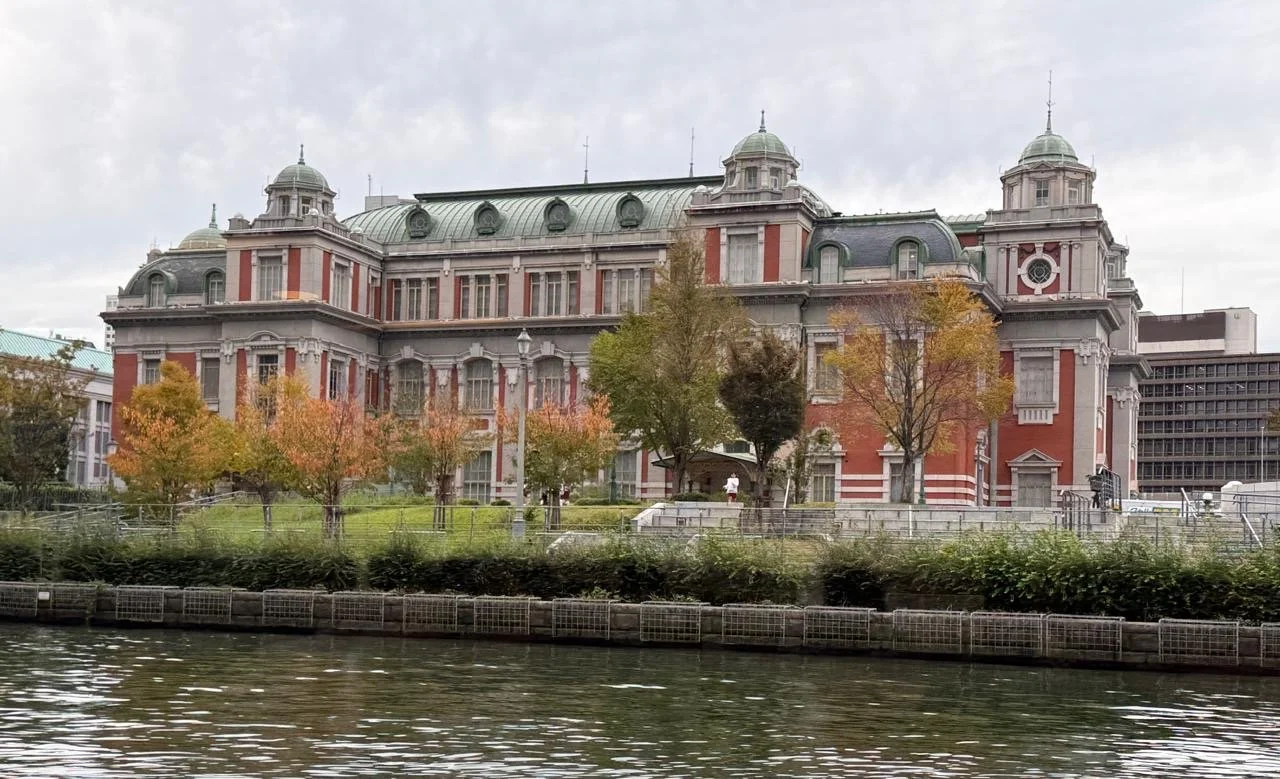
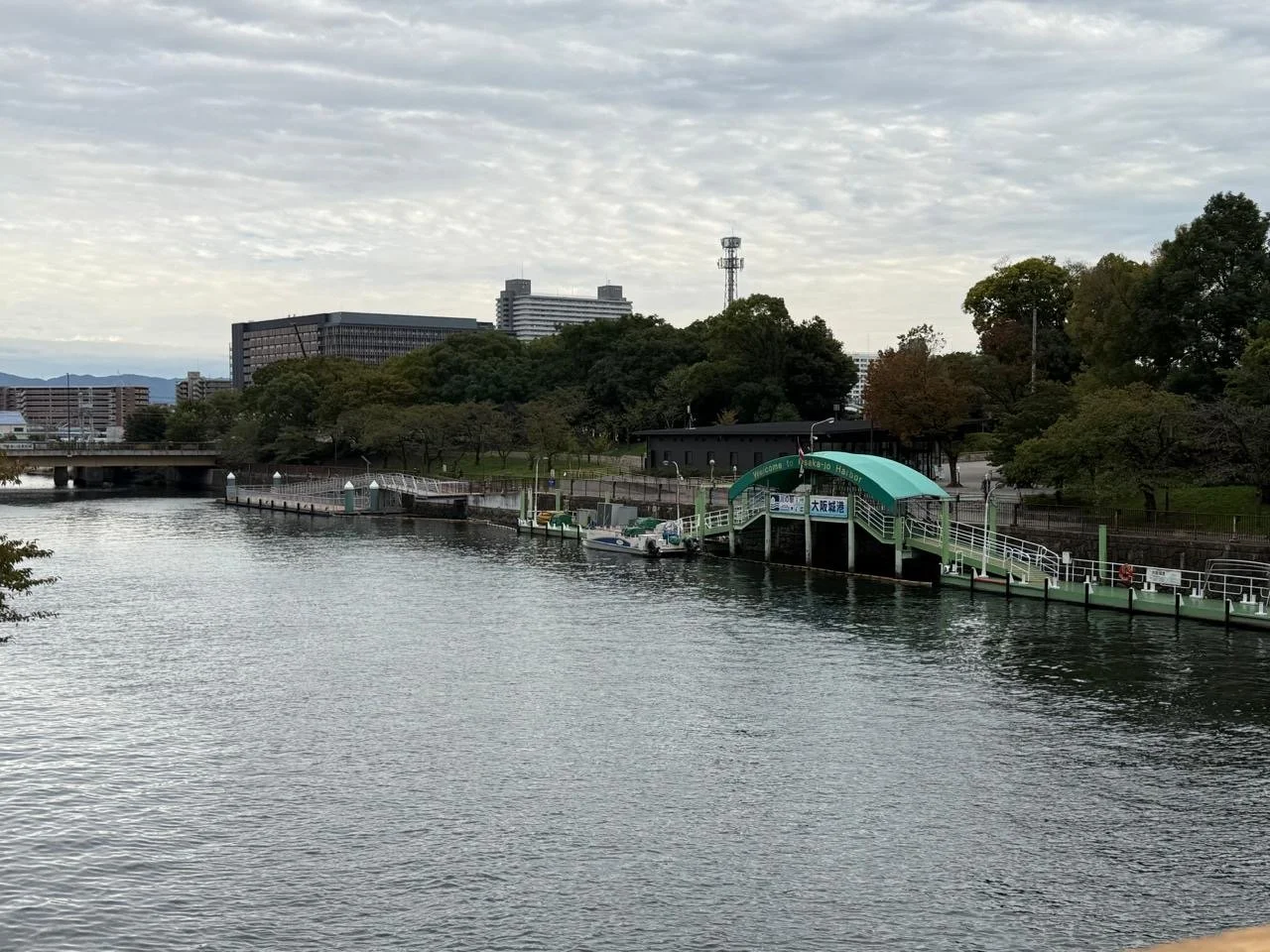
Before heading back to the hotel, we decided to enjoy a relaxing boat cruise along the Tombori River Walk, a lovely waterside promenade along the Dotonbori River in Osaka's lively Minami entertainment district. It was a delightful change of pace after all the walking around the castle grounds. As we glided along the river, we admired the beautiful buildings, bridges, and lively surroundings lining the waterfront. What caught our attention, though, were the numerous cherry blossom trees lining the promenade. We couldn't help imagining how spectacular this entire stretch must look in spring when the trees burst into bloom, creating a canopy of delicate pink and white blossoms along the river. I immediately added that to my mental list of places to revisit—apparently, one trip to Japan is never enough! For now, we were content to enjoy the pleasant weather, the gentle boat ride, and a little well-deserved rest for our feet. Even enthusiastic sightseers need to give their legs a break occasionall We decided to return to the hotel, check in, recharge our batteries, and venture out again in the early evening.
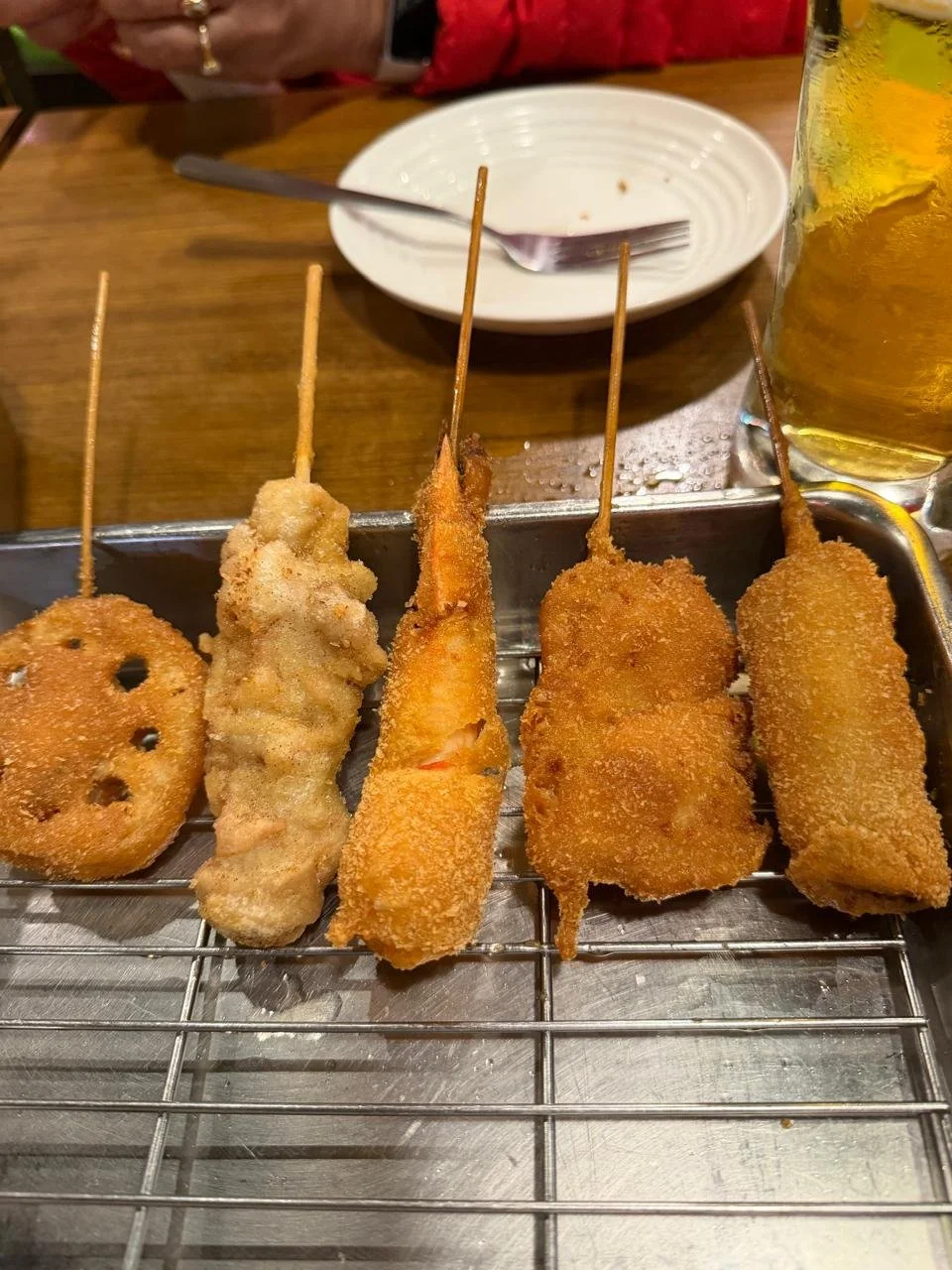
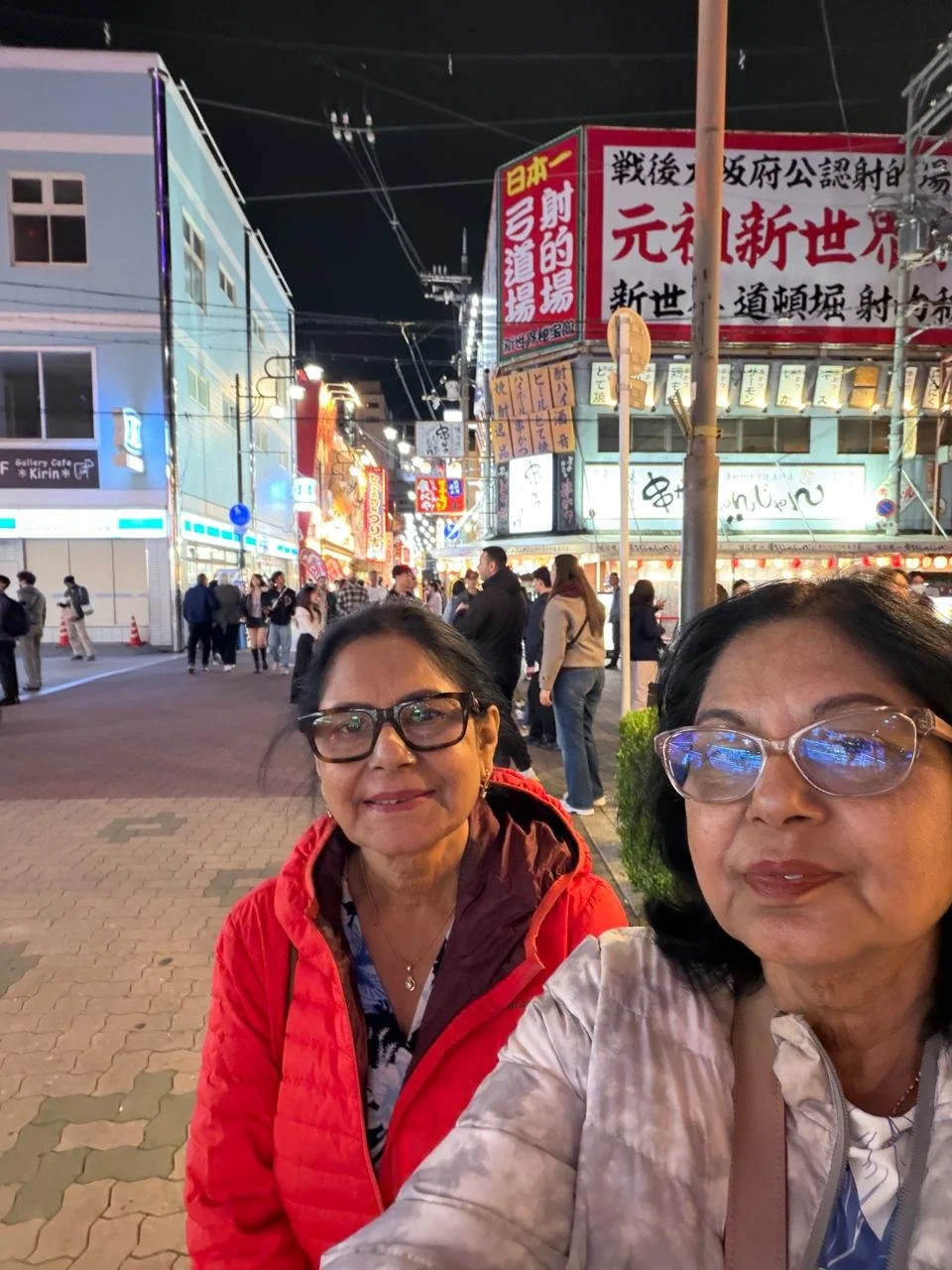
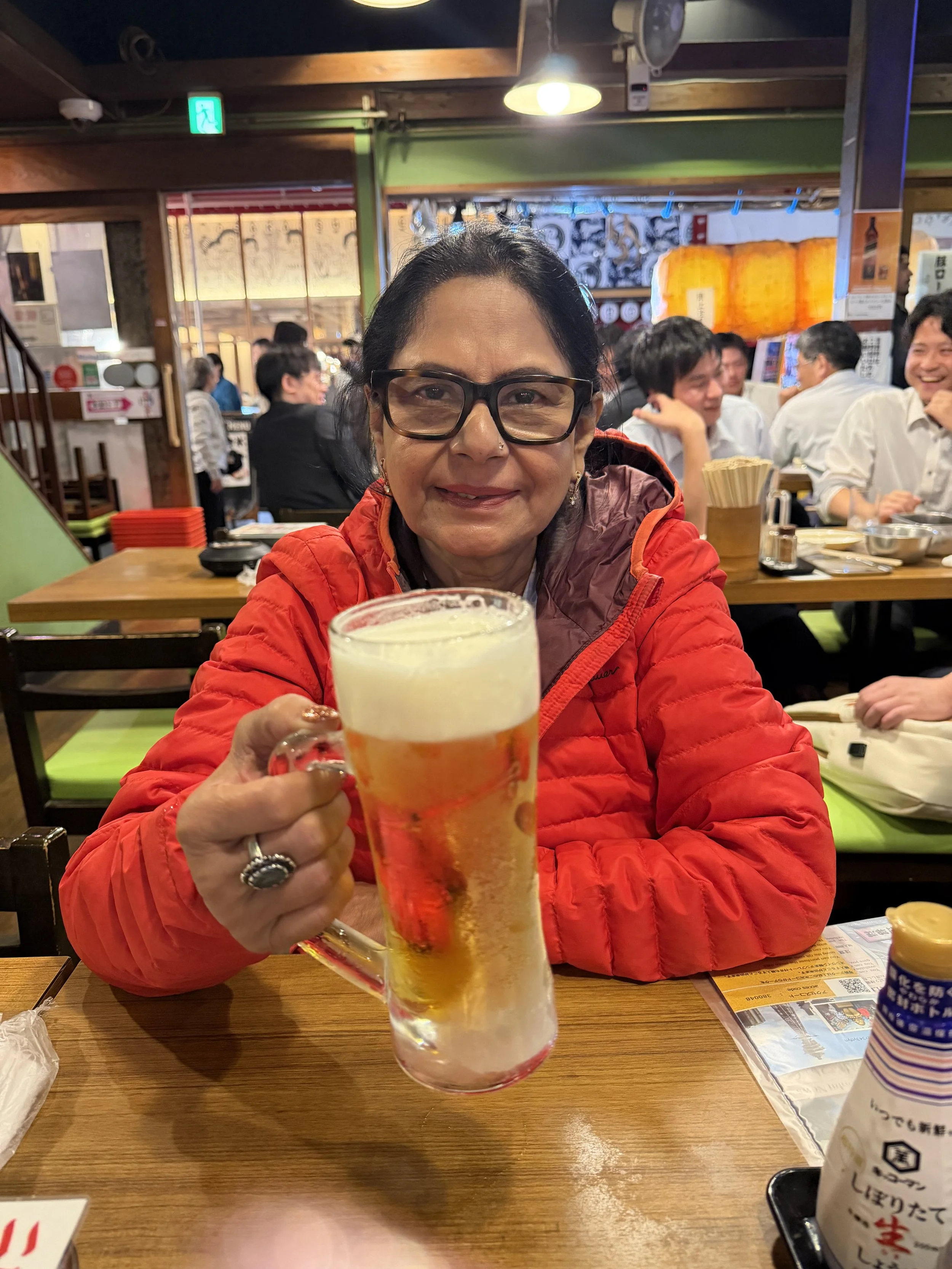
Our evening adventures took us to Shinsekai, a wonderfully lively neighborhood famous for its traditional atmosphere and street food. And what a treat it was! We discovered kushikatsu—delicious meat, seafood, and vegetables coated in batter, deep-fried on skewers, and served piping hot. We absolutely loved them! The best way to enjoy this neighborhood is to hop from one food establishment to another, sampling different delicacies along the way. For two enthusiastic food lovers, this was practically paradise.
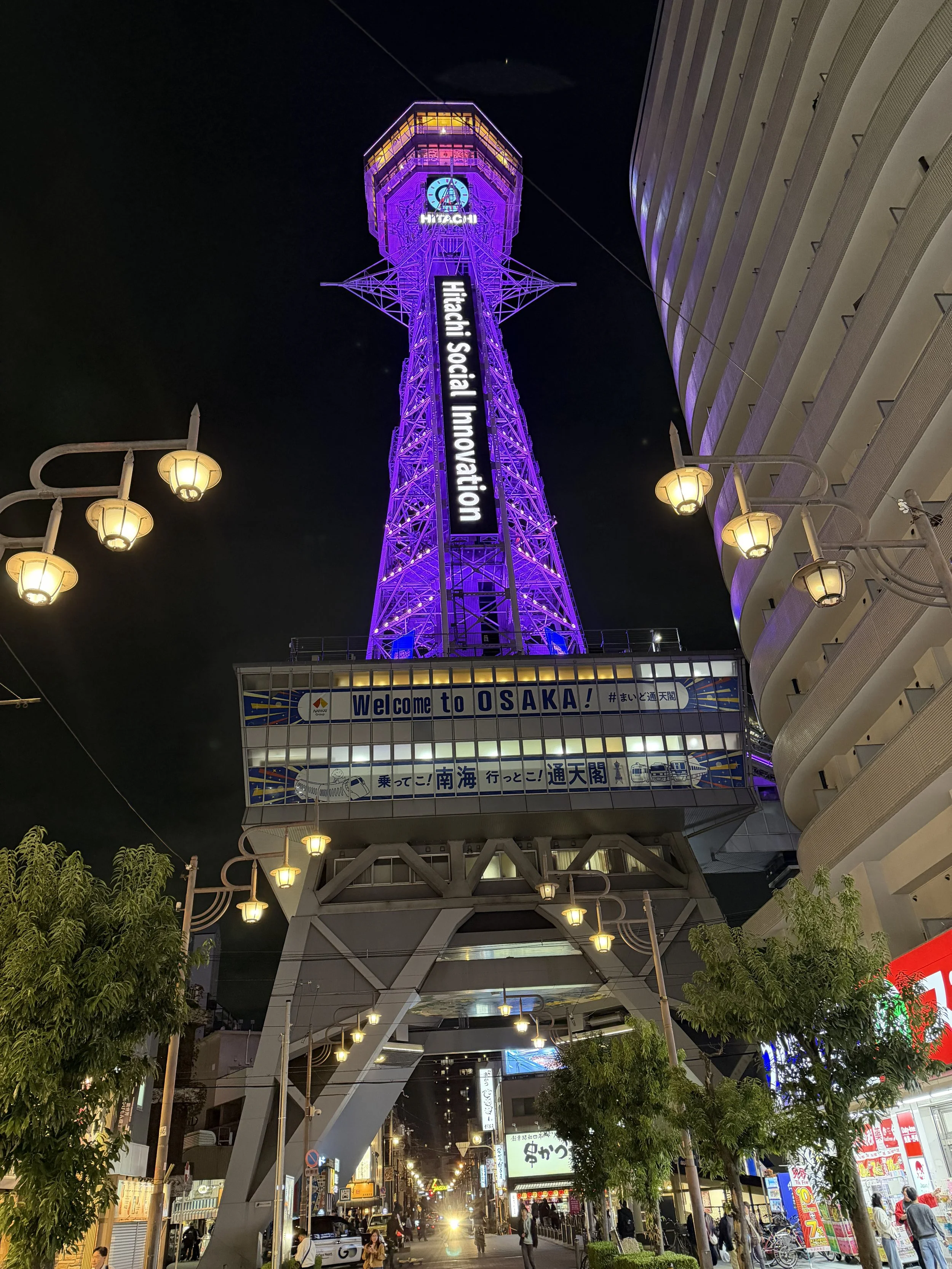
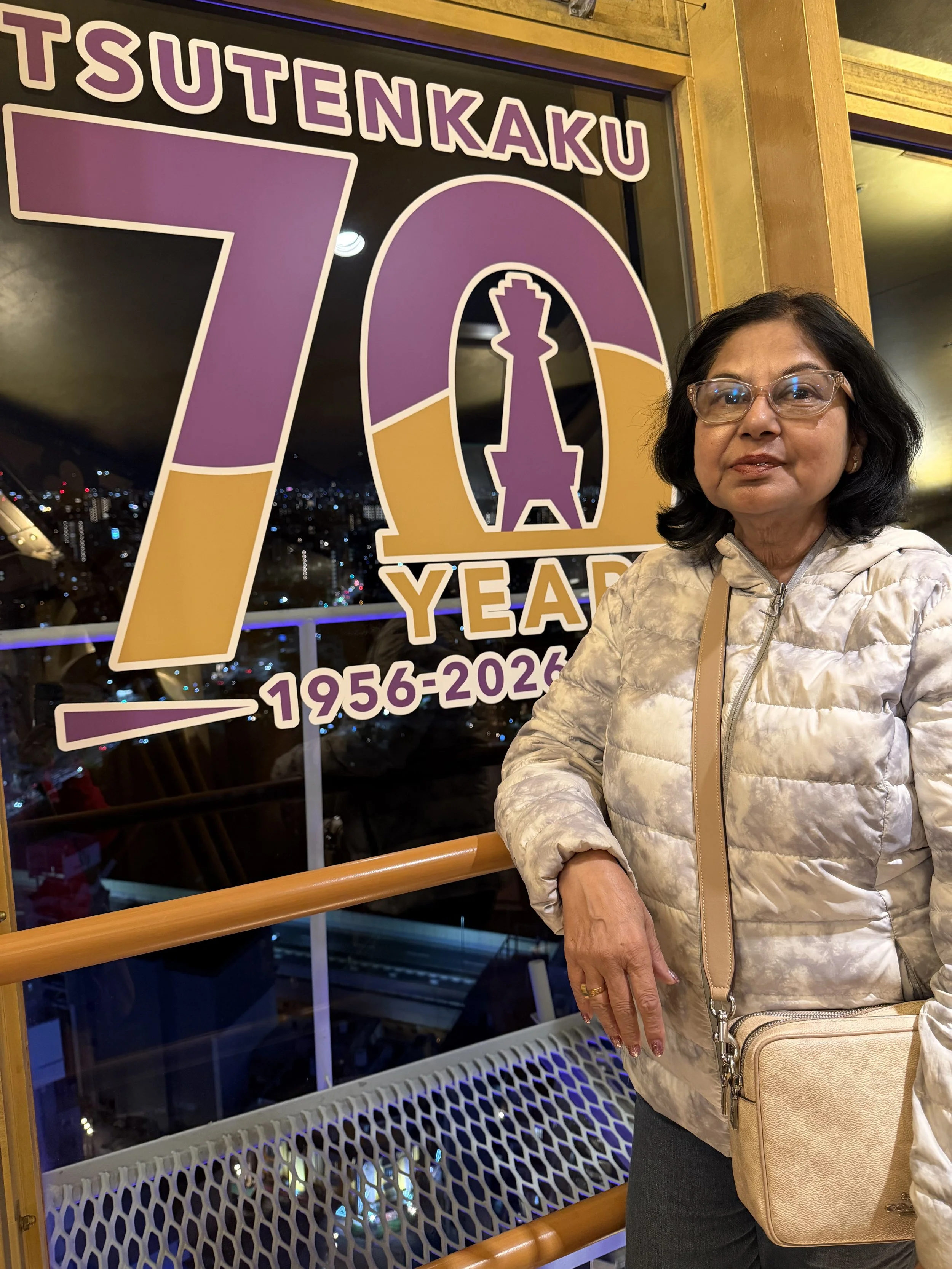
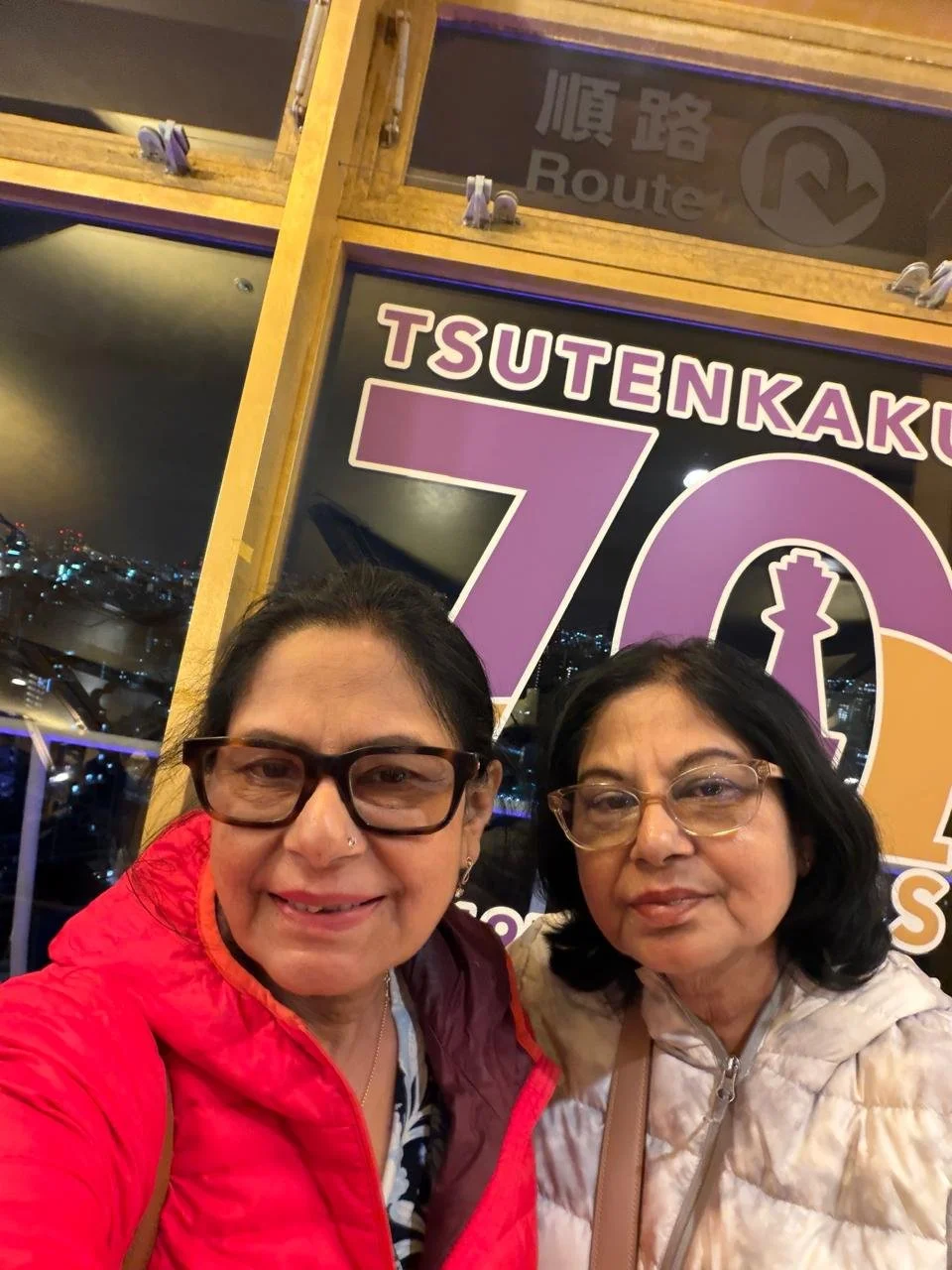
From there, we headed to Tsutenkaku Tower, the iconic landmark of Shinsekai, and went up to admire the spectacular nighttime views. Osaka sparkled beneath us, with an endless sea of illuminated buildings and streets. It was quite a sight! Our next destination was Dotonbori, famous for its extraordinary street food, deep-fried skewers, shopping, and larger-than-life storefront displays. By this time, however, our feet were beginning to protest, so instead of exploring everything on foot, we asked Mr. Gao to drive us around Dotonbori and the nearby Kuromon Market. The streets were bursting with people, restaurants, and shoppers, while giant mechanical displays and enormous illuminated signs competed for attention. Every major international brand seemed to have a presence here. I also noticed the number of very young women soliciting customers in the entertainment districts, which was rather disconcerting. It made me wonder about the changing face of traditional Japanese entertainment culture and whether the old Geisha traditions are gradually losing their place in modern urban Japan.
We also drove through and explored Shinsaibashisuji on foot, another enormous covered shopping street, bustling with shoppers and activity. What amazed me most was the energy of the people. It was already around 9:00 pm, yet the streets were packed, shops were open, restaurants were buzzing, and everyone seemed to be going about their business with incredible enthusiasm. I couldn't help wondering how these people manage to return to work at 8:00 the next morning! In the United States, many of us would have been comfortably settled at home by then, possibly in our pajamas! The Japanese seem to have an entirely different relationship with time and energy.
By the time our evening came to an end, we had eaten our way through several neighborhoods, taken in enough neon lights to illuminate a small city, and accumulated another impressive number of walking and sightseeing miles. Our bellies were full, our eyes and ears were still buzzing with the sights and sounds of Osaka, and our feet were begging for mercy. We finally retired to the hotel, happy and thoroughly exhausted. Tomorrow promised another exciting adventure—a visit to Kobe! And after all the Wagyu beef and delicious street food in Osaka, our expectations for Kobe's famous beef were understandably very high. Some things in life are simply worth traveling for!
Osaka Castle
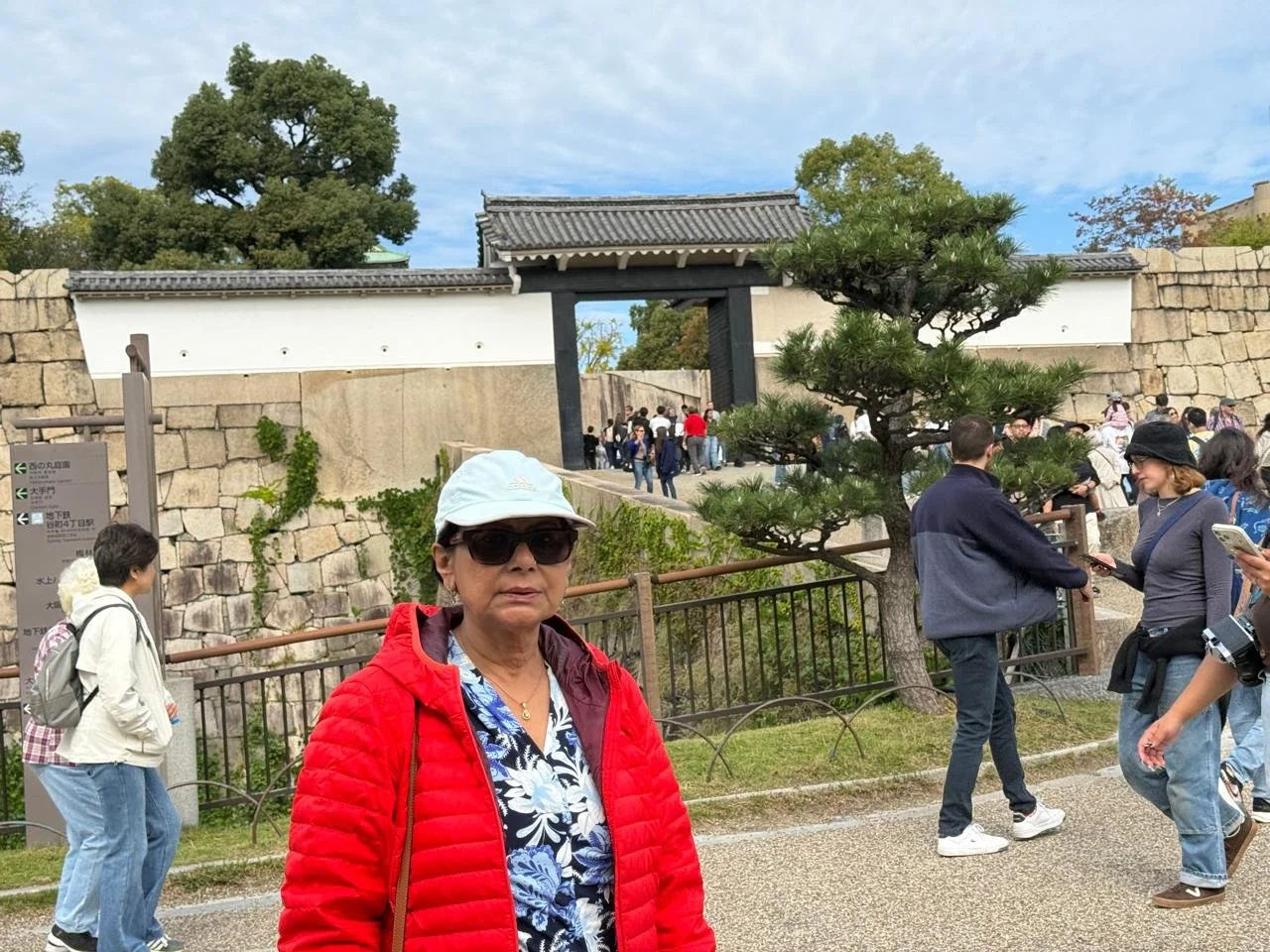
Tombori River Walk and Boat Cruise

Tsutenkaku
Shinsekai
Kobe: A Little Nostalgia, Beautiful Gardens, Chinese Food, and a Driver Who Was a Treasure!
Our day trip to Kobe began with a little apprehension. Our driver from the previous day had called in sick, and naturally, we wondered whether we would be next! After all, we had spent several hours together in the confined space of a car the previous day. Had we been exposed to whatever he had? I was beginning to think that sightseeing in Japan required not just comfortable shoes and a camera but also a good immune system! Fingers crossed, we set off in the morning with our new driver, a young man named Mr. Miao. What a delightful surprise! Not only was he perfectly healthy (a very important qualification at this point!), but he spoke excellent English. No translator app, no typing messages back and forth, no waiting for technology to interpret our conversations. We could actually TALK! What a luxury! Over the next few days, we got to know him quite well, and he turned out to be an absolute treasure—knowledgeable, courteous, and full of fascinating stories about the places we visited.
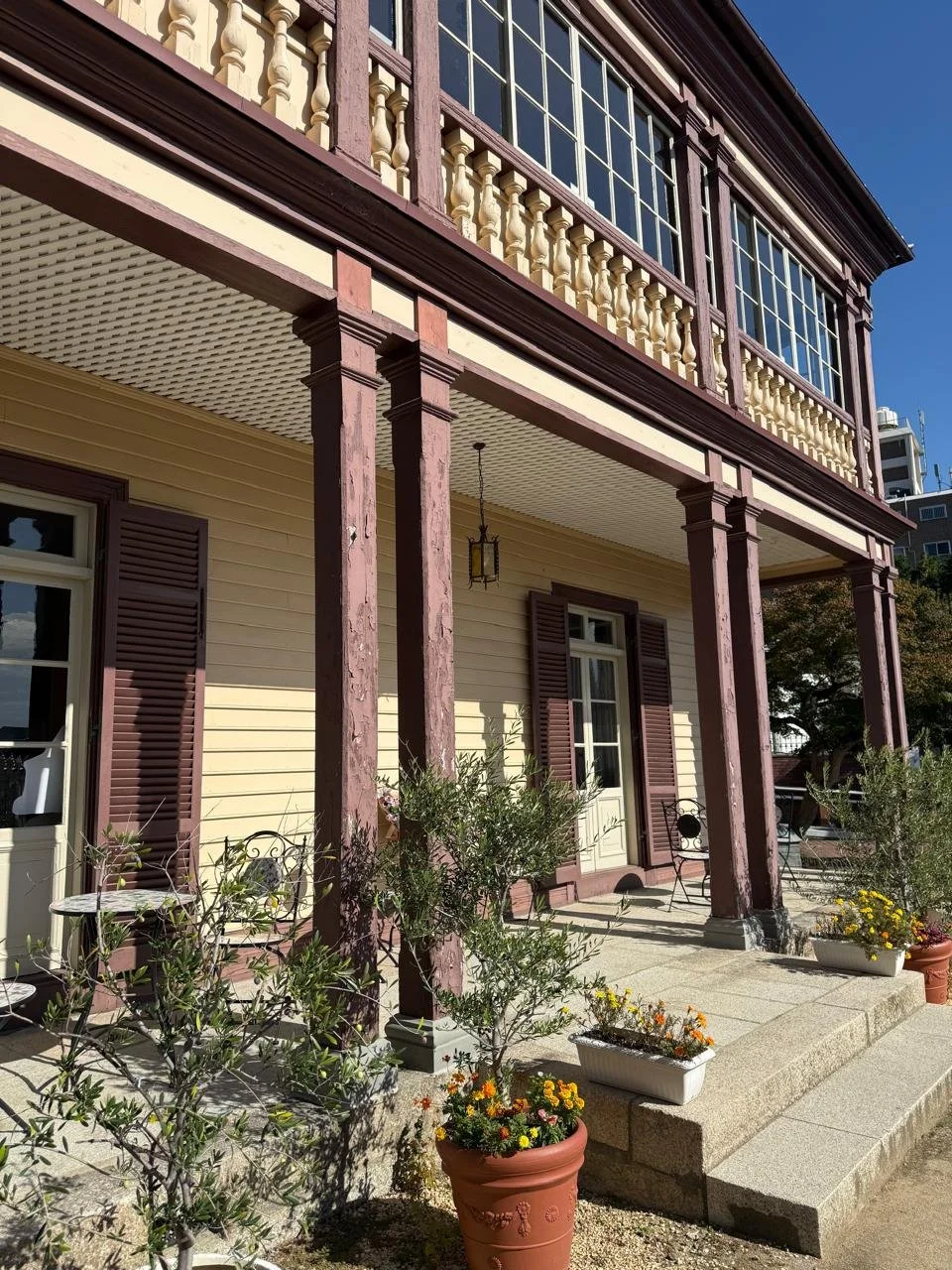
We were so grateful for the amzing weather, bright sunny skies with a few clouds and a balmy 23 degrees celsius!! Kobe is only about 33 kilometers from Osaka, so the drive was relatively short, although the freeway was a little congested in places. Our first destination was Kitano Ijinkan-gai, a beautiful historic hilltop district featuring Western-style residences, known as ijinkan, built by foreign merchants, diplomats, and entrepreneurs after Kobe opened its port to international trade in 1868. We walked uphill along a beautiful but rather narrow, winding street, making our way towards the famous Uroko House, or House of Scales. Its exterior is covered with approximately 4,000 natural stone slate tiles resembling fish scales. It was the first ijinkan to open to the public and houses an impressive collection of European antiques and porcelain. The district once had more than 200 Western- and Japanese-style buildings, many constructed on the slopes of Mount Rokko to enjoy views of the harbor and escape the summer heat. As we explored several of these historic mansions, I was struck by how familiar some of them seemed. The floor plans, staircases, and gardens reminded me so much of our old family home in Budge Budge, a suburb of Kolkata, where we spent a good part of our adolescence and commuted by car every day to South Point High School. I found myself reminiscing about those days, imagining our younger selves running up and down those staircases and enjoying the gardens. It was such an unexpected connection! Who would have thought that a neighborhood in Kobe would transport me back to my childhood in Bengal? For a few moments, I almost forgot I was in Japan. Travel has a wonderful way of bringing the past and present together, and this was one of those special moments.
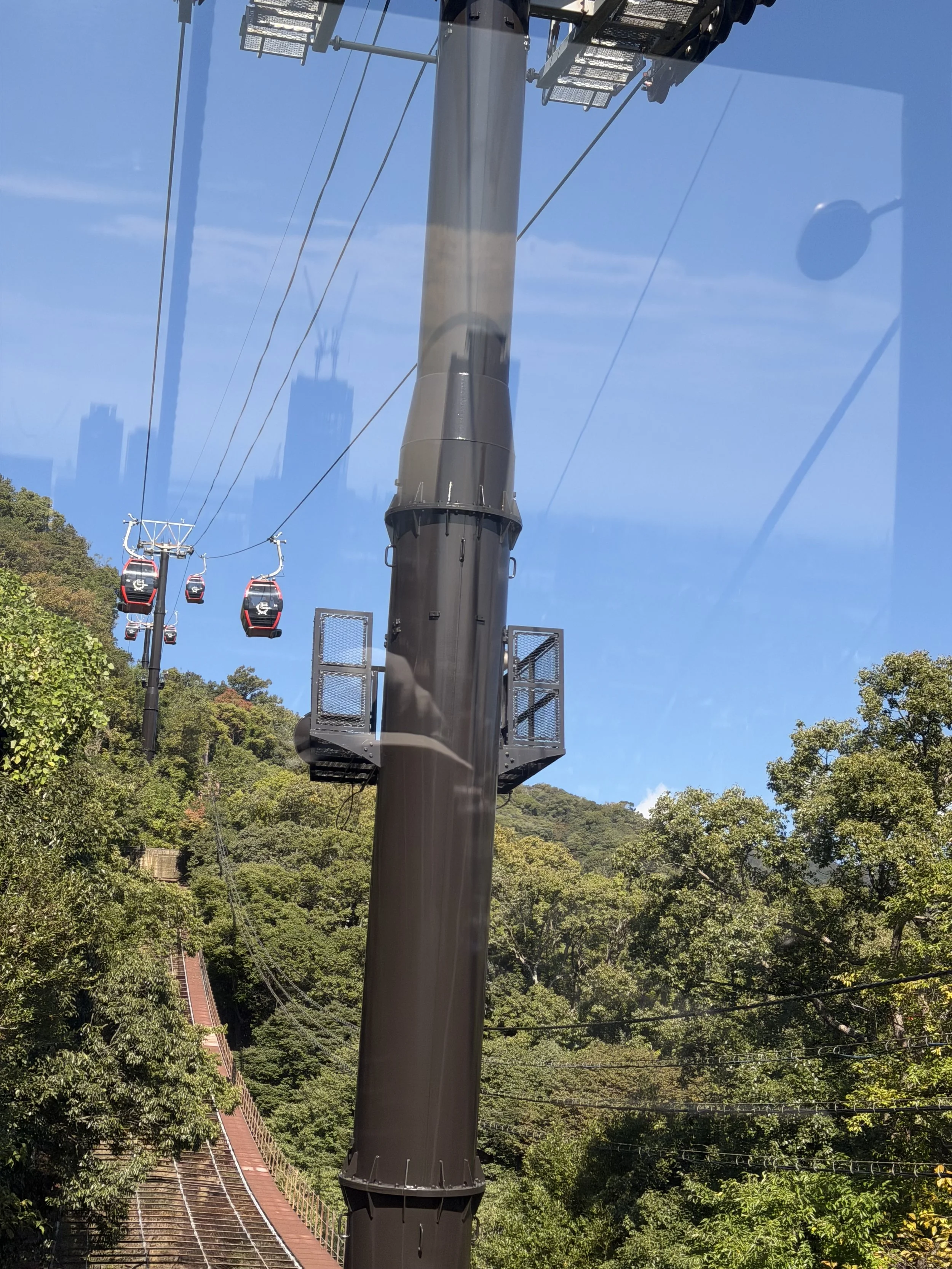
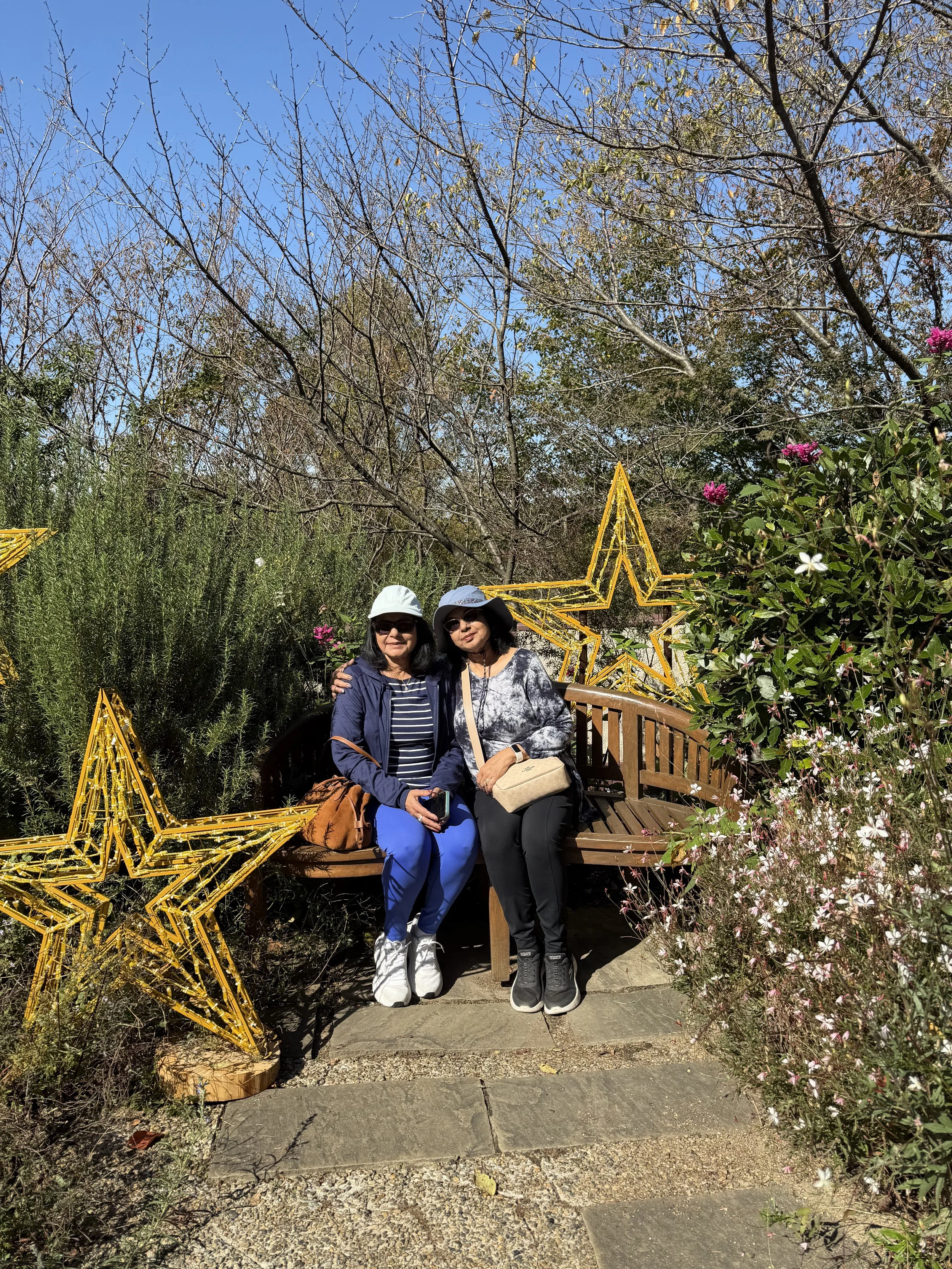
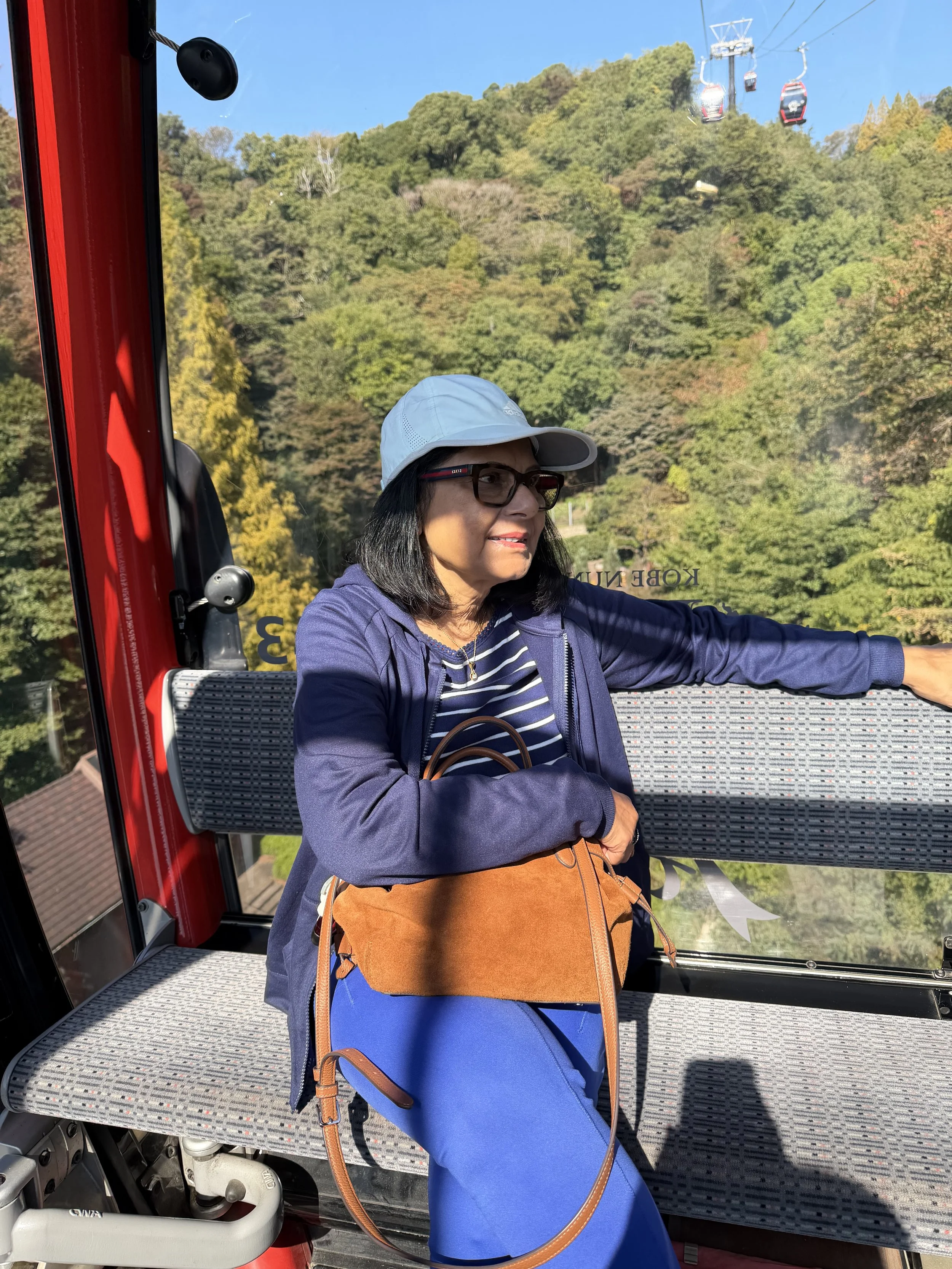
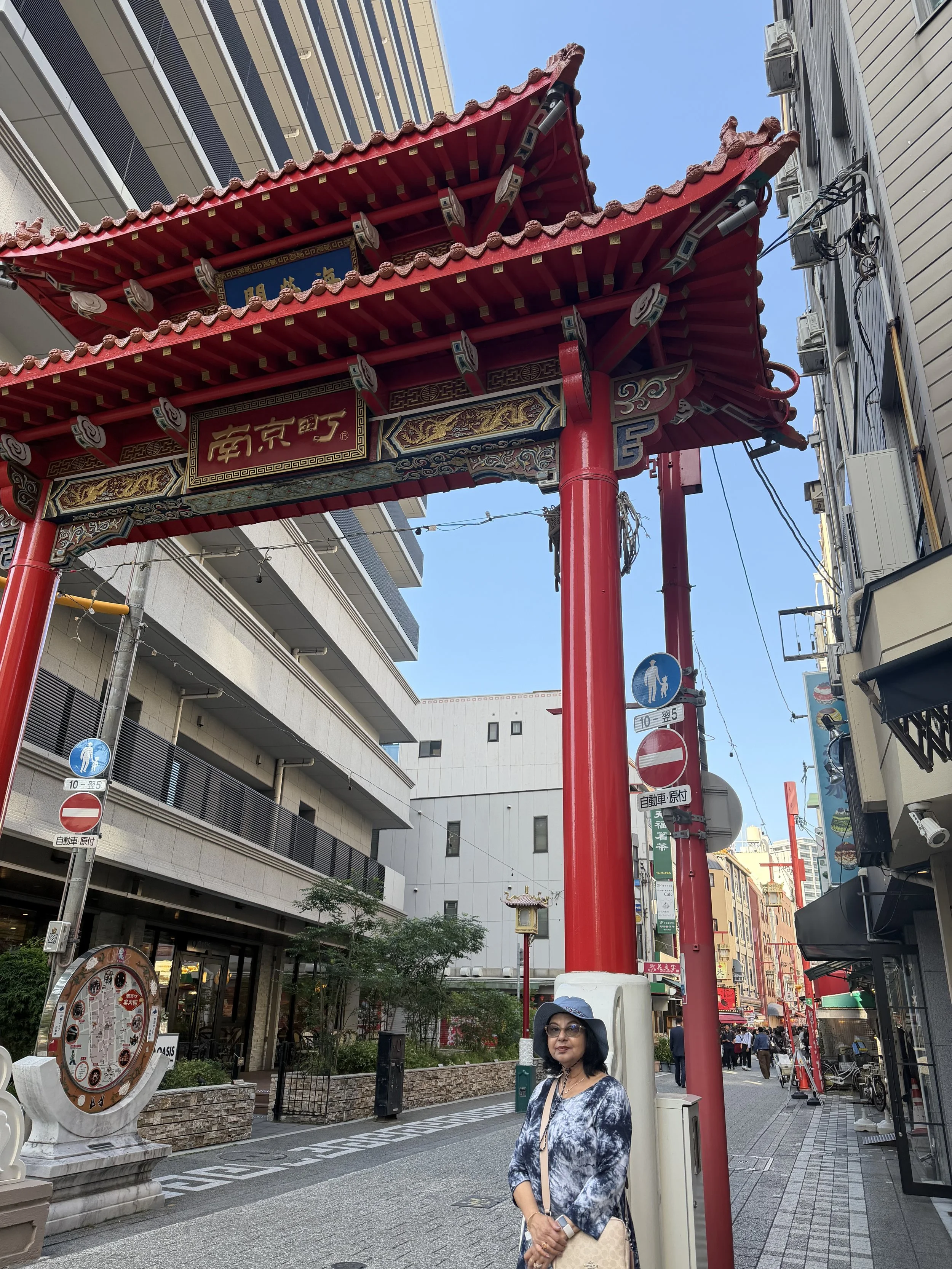
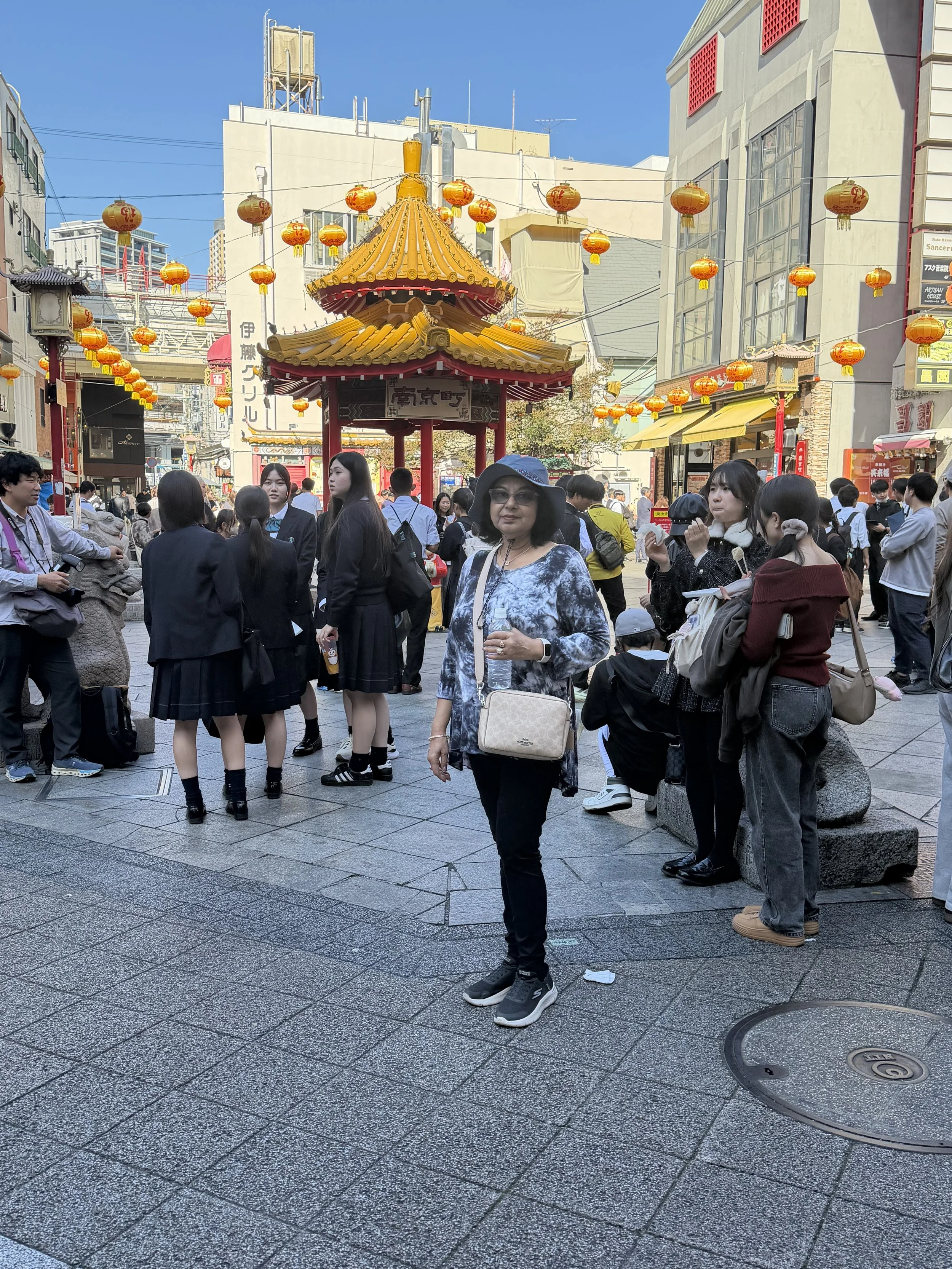
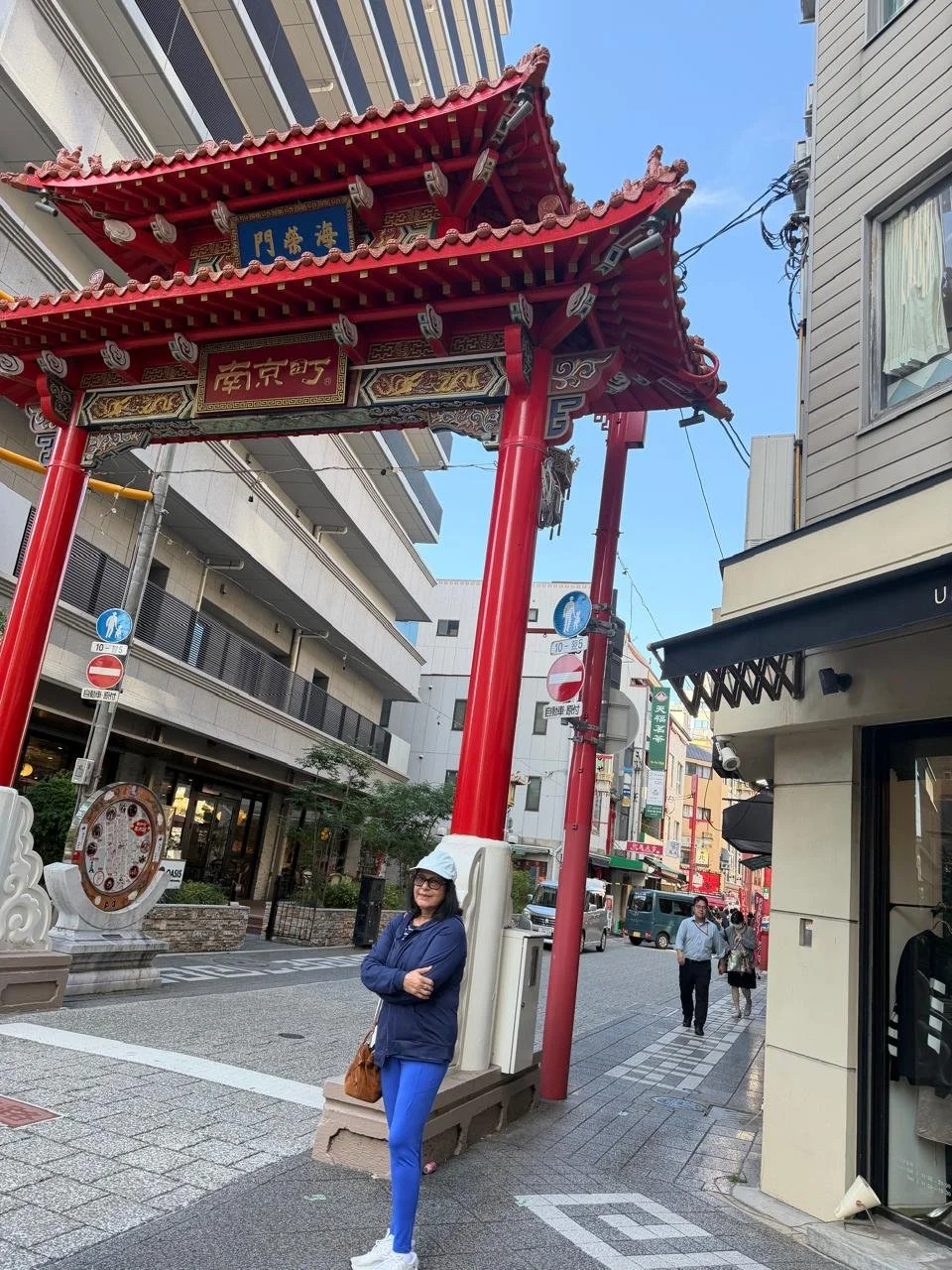
Our next adventure involved yet another gondola ride! I must say, Japan has certainly given us our money's worth in ropeways and cable cars. We took the Shin-Kobe Ropeway, a spectacular ten-minute glass gondola ride up to the Nunobiki Herb Gardens. As the gondola climbed, the views became increasingly beautiful, with Kobe's buildings, lush greenery, and the harbor gradually unfolding beneath us. I remember looking out through the glass and thinking how fortunate we were to experience such scenery. At the top, we found ourselves in a beautiful garden filled with flowers, herbs, and fragrant plants. The gentle scent of roses and herbs was absolutely delightful. We strolled along the pathways, stopping frequently to admire the colorful flower beds and take photographs. I could happily have spent the entire afternoon there! There was something wonderfully calming about the place, a welcome contrast to the busy streets and crowds we had encountered elsewhere. Eventually, we took the gondola back down, soaking in the breathtaking views all over again. Mr. Miao was waiting for us, and our next stop was Nankinmachi, Kobe's Chinatown, one of Japan's three major Chinatowns. What a change of atmosphere! The streets were bursting with vibrant colors, food stalls, restaurants, and souvenir shops. By then, we were hungry, and lunch was becoming a matter of some urgency. We picked a Chinese restaurant and enjoyed a wonderful meal. After all that walking, we certainly deserved it! With our stomachs happily full, we wandered through the shops, browsing souvenirs and enjoying the lively atmosphere. My sister, of course, spotted Turkish ice cream and couldn't resist. There was just one complication: eating or drinking while walking along Japanese streets is generally discouraged, so she had to stand in one spot to enjoy her treat. I patiently waited, took a few photographs, and watched her enjoy this little piece of heaven on earth. I couldn't help laughing at the contrast between our two personalities—I'm usually the one trying to keep our sightseeing on schedule, while my sister can happily lose track of time in a souvenir shop or over an ice cream! Keeping her shopping enthusiasm under control is practically another sightseeing activity in itself!
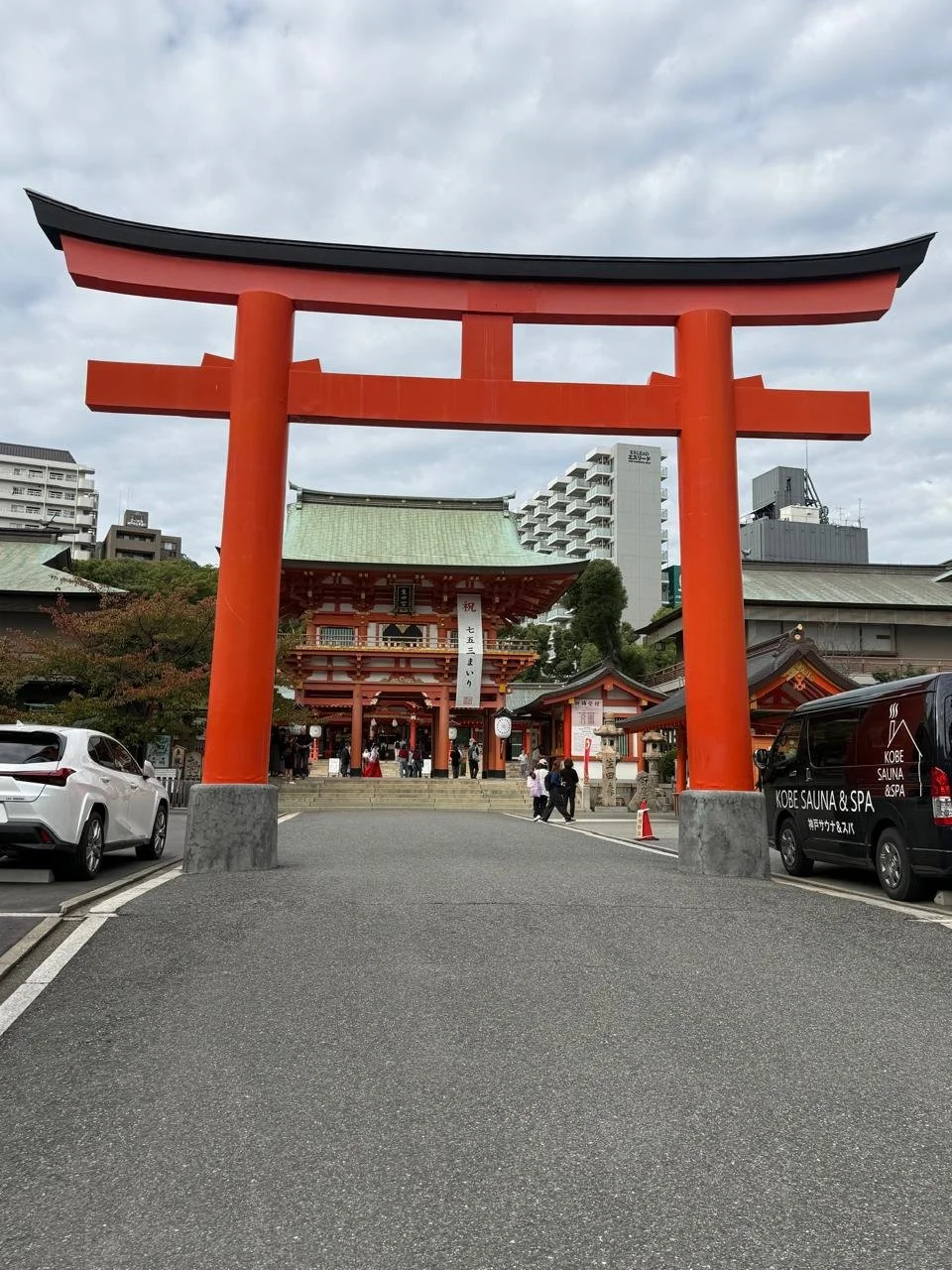
We then visited Ikuta-jinja Shrine, a beautiful vermilion-colored shrine believed to be approximately 1,800 years old and counted among Japan's oldest Shinto shrines. According to the Nihon Shoki, it was founded in the third century, traditionally dated to 201 AD, by Empress Jingū. The shrine is dedicated to Wakahirume-no-Mikoto, a peaceful aspect of the sun goddess Amaterasu, associated with weaving and textiles. Because weaving involves intertwining threads, the deity is believed to bring people together and is particularly revered for love, marriage, and relationships. Apparently, this is quite a popular destination for those seeking romantic blessings! Looking around at the many young devotees offering prayers, some dressed in beautiful kimonos, and little children looking absolutely adorable in their traditional outfits, I was quite taken by the scene. I love seeing traditional customs being preserved and passed on to younger generations. I briefly wondered what I should ask for. Love and marriage blessings were perhaps a little late in the day for me, so after some serious consideration, I decided to pray for something more ambitious—the well-being of the world, peace, and happiness for everyone. I hope the gods appreciated the broader scope of my request! By now, we were becoming quite experienced at visiting Shinto shrines. We had bowed, clapped, prayed, and offered our respects at so many places that I was beginning to wonder whether we should qualify for some sort of honorary certificate in Japanese religious etiquette!
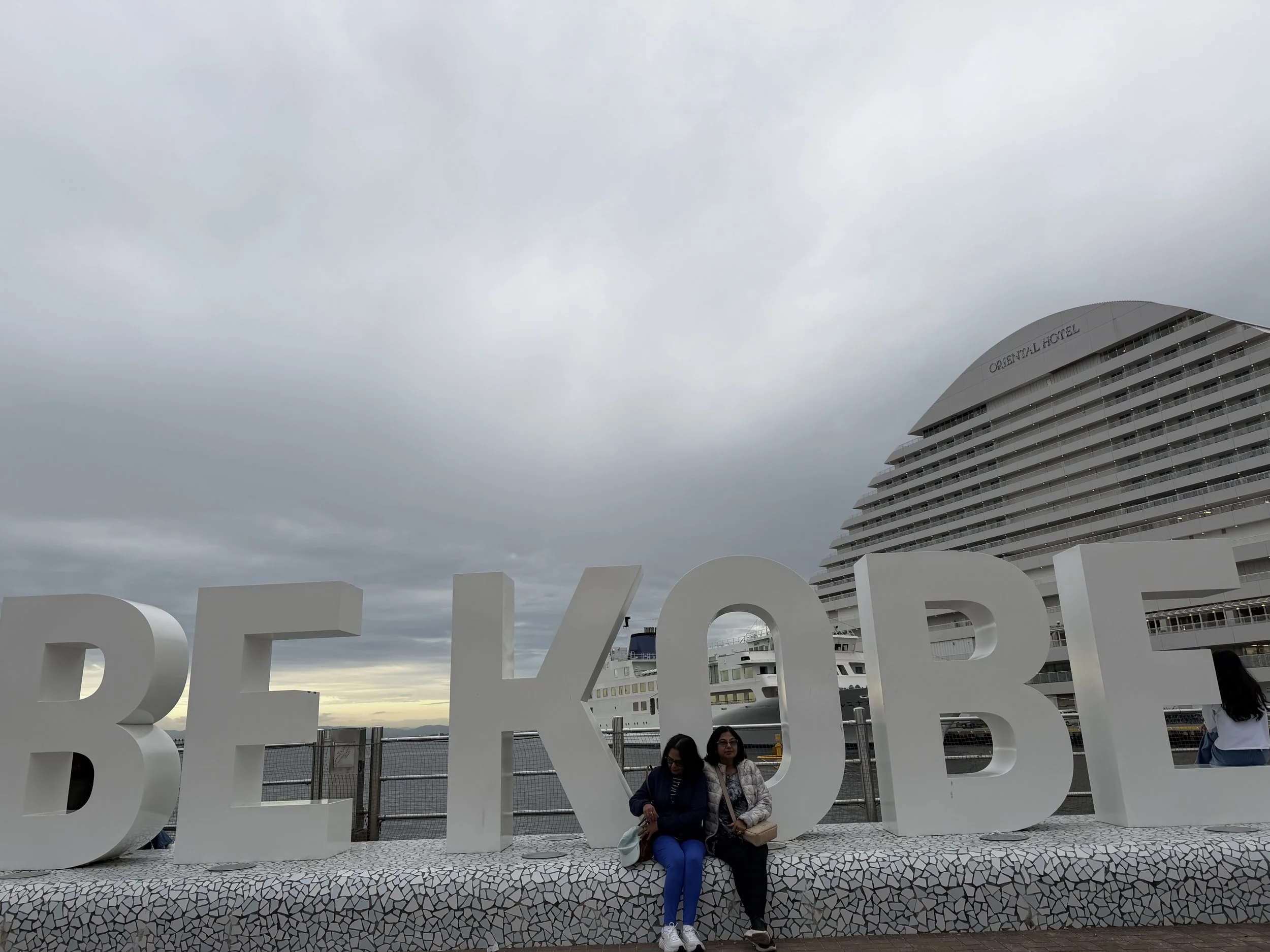
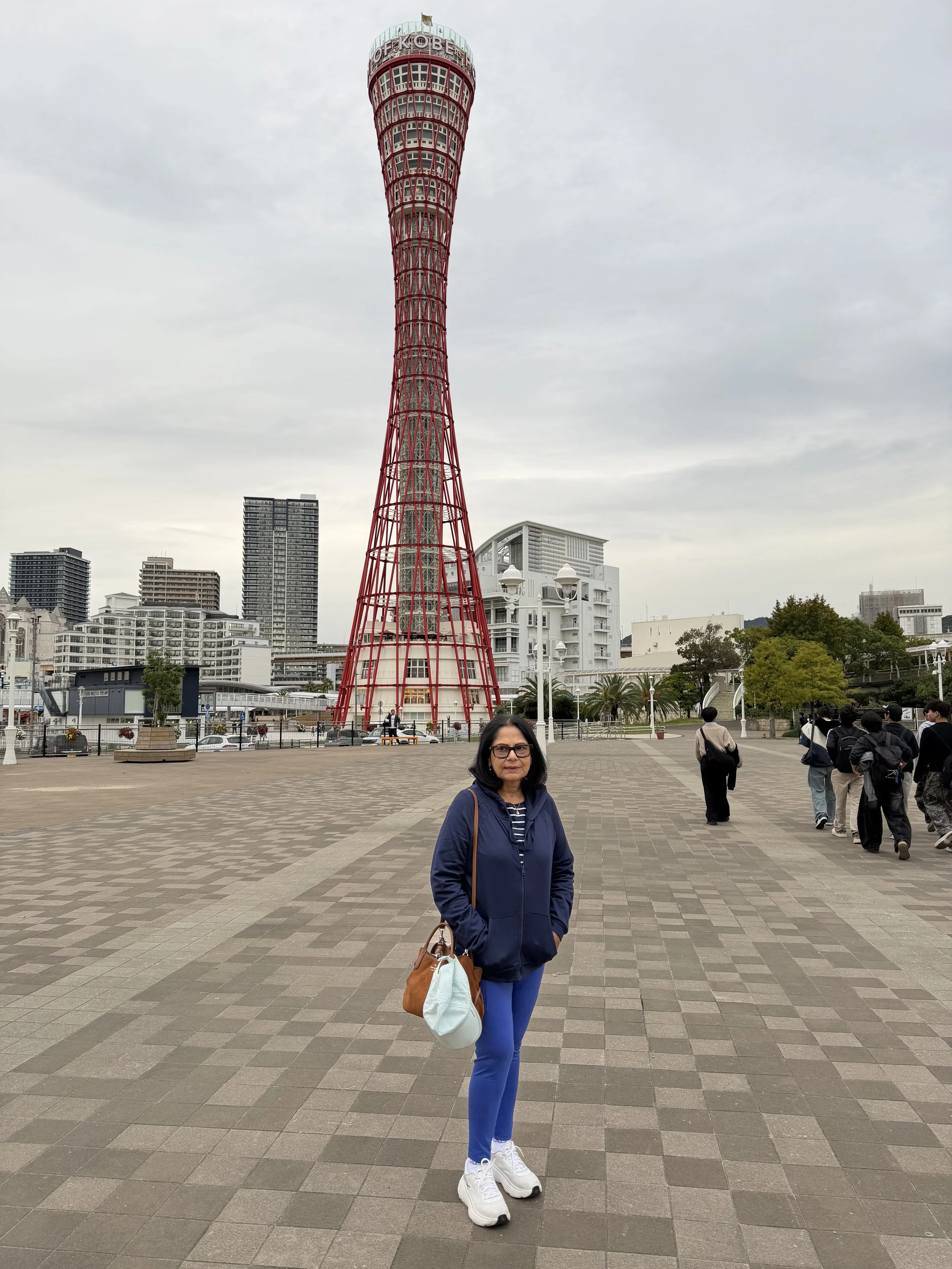
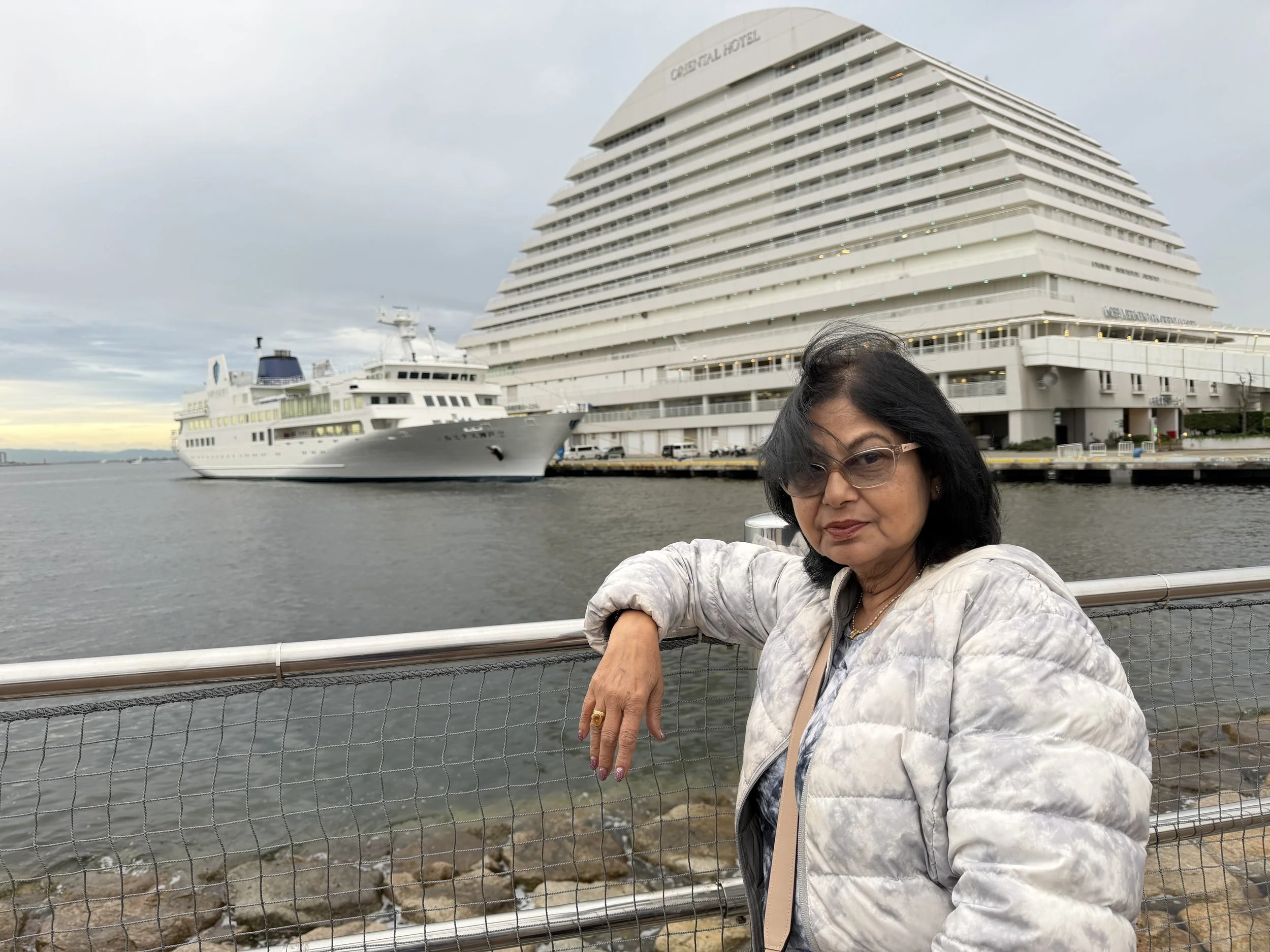
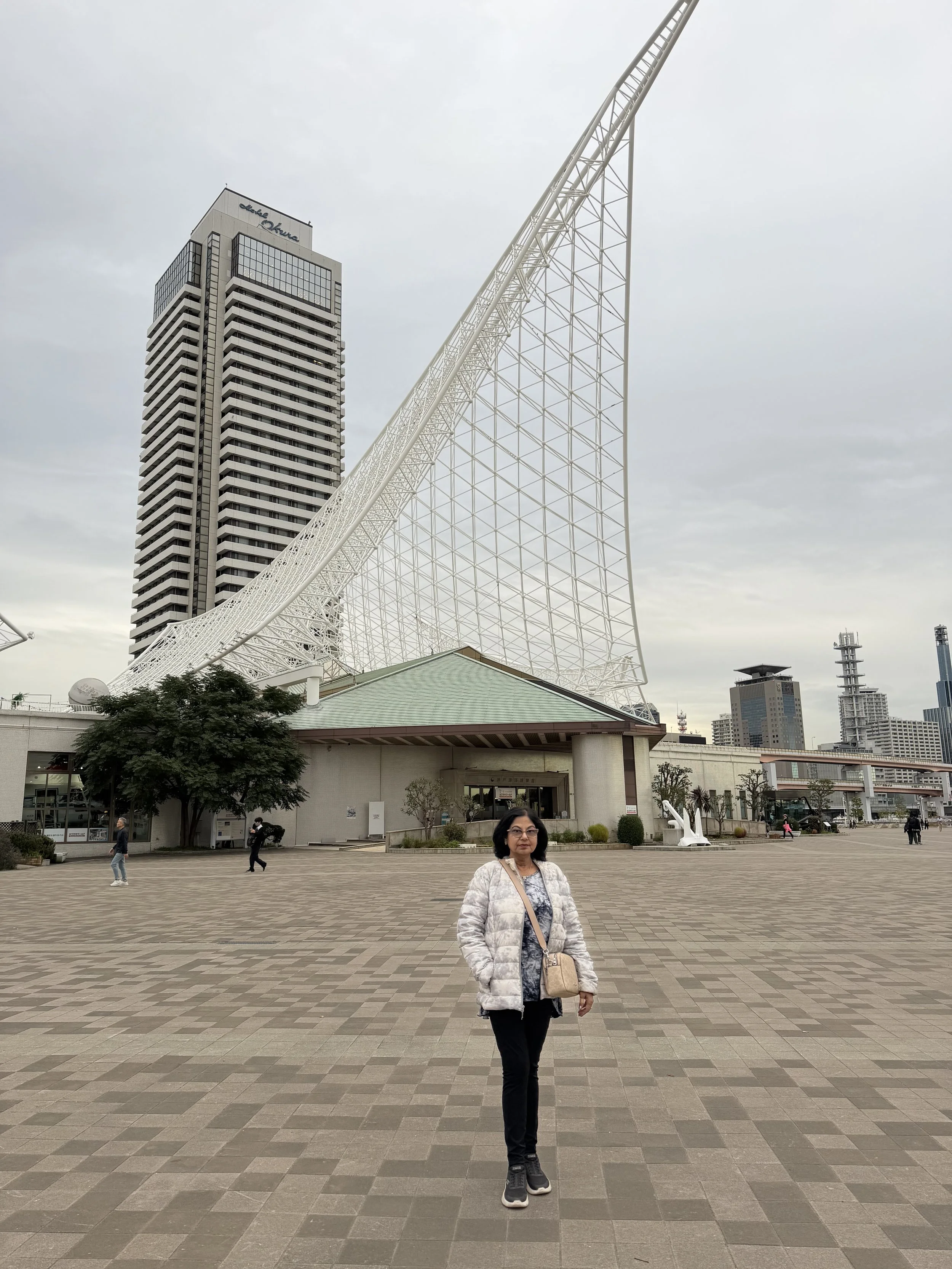
Our next adventure took us up the winding mountain roads of Mount Rokko, where Mr. Miao expertly navigated the steep and winding toll roads with hairpin bends leading to Rokko Garden Terrace. We sat back, relaxed, and enjoyed the sweeping views of Osaka Bay and Kobe Port. I particularly appreciated not having to navigate, read road signs, or figure out where we were going. For once, I could simply look out of the window and enjoy the scenery! Mr. Miao kept us entertained with fascinating historical anecdotes and local stories. Although he was from China and had been in Japan for a little over five years, he was clearly passionate about this region, and his knowledge added so much to our experience. By late afternoon, we descended towards Meriken Park and Kobe Port Tower, where we enjoyed a leisurely walk along the waterfront. Naturally, we had to pose for photographs beside the iconic BE KOBE monument. No trip is complete without photographic evidence, after all! We then visited the newly renovated Kobe Port Tower, the striking red steel landmark featuring a 360-degree observation deck and a rotating café bar. The views of the harbor, city, and surrounding mountains were spectacular, especially as the evening lights began to appear. I remember thinking what a beautiful way this was to end our day in Kobe. Unfortunately, a light drizzle began just as we were leaving, and I couldn't help wondering whether the weather gods were reminding us not to get too comfortable! We headed back to Osaka, tired but thoroughly delighted. Looking back, Kobe had given us a little bit of everything—history, architecture, beautiful gardens, delicious food, spiritual experiences, mountain scenery, and a spectacular waterfront. But what made the day particularly special was the combination of unexpected childhood memories, wonderful discoveries, and the company of a truly exceptional guide and driver. After our earlier adventures with translator apps, having someone like Mr. Miao who could share stories, answer our questions, and make us laugh was an absolute blessing. I think we had found ourselves a keeper! If only we could take him along for the rest of our trip!
Kitano Ijinkan-gai
Shin-Kobe Ropeway and Nunobiki Herb Gardens
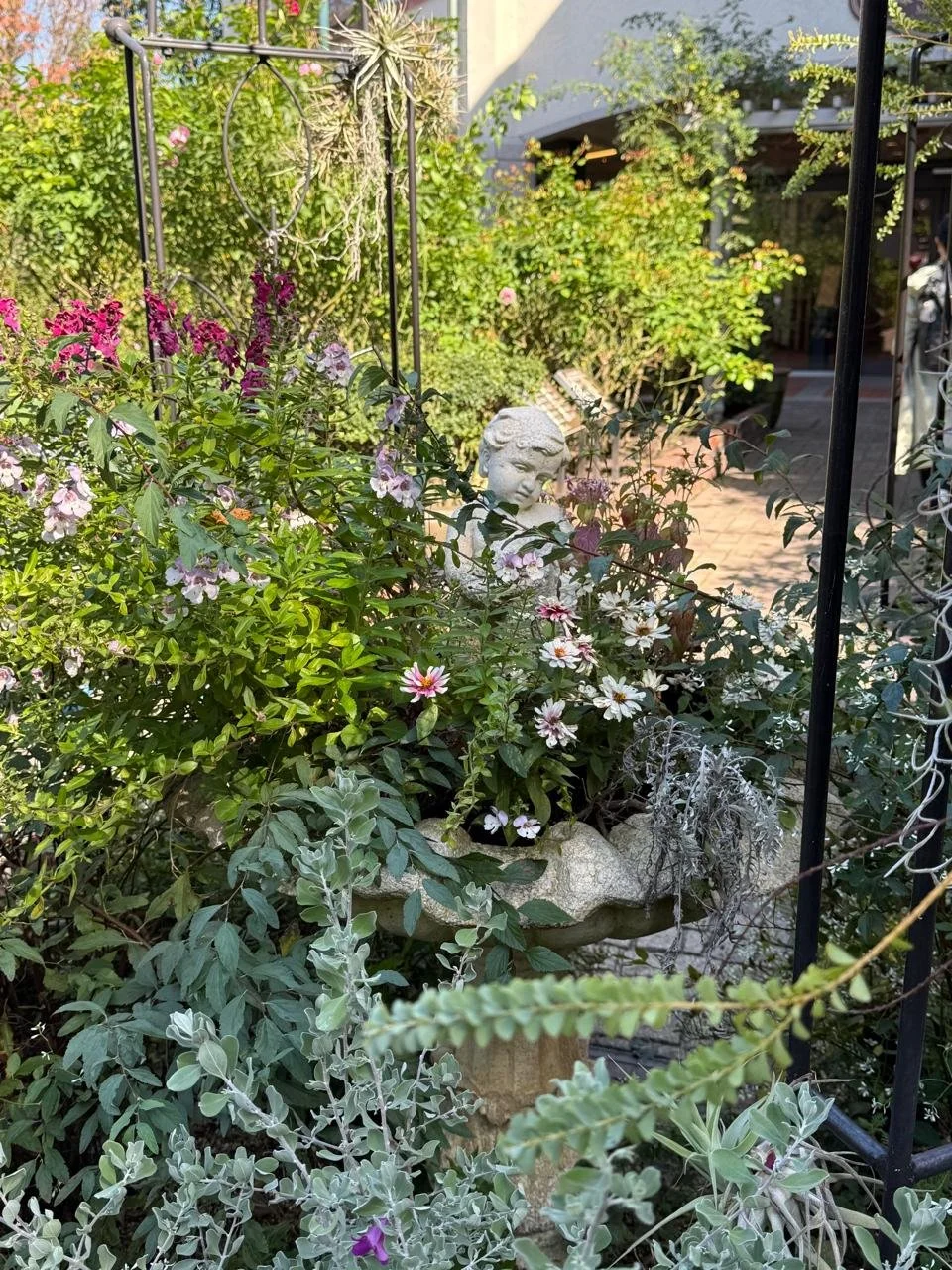
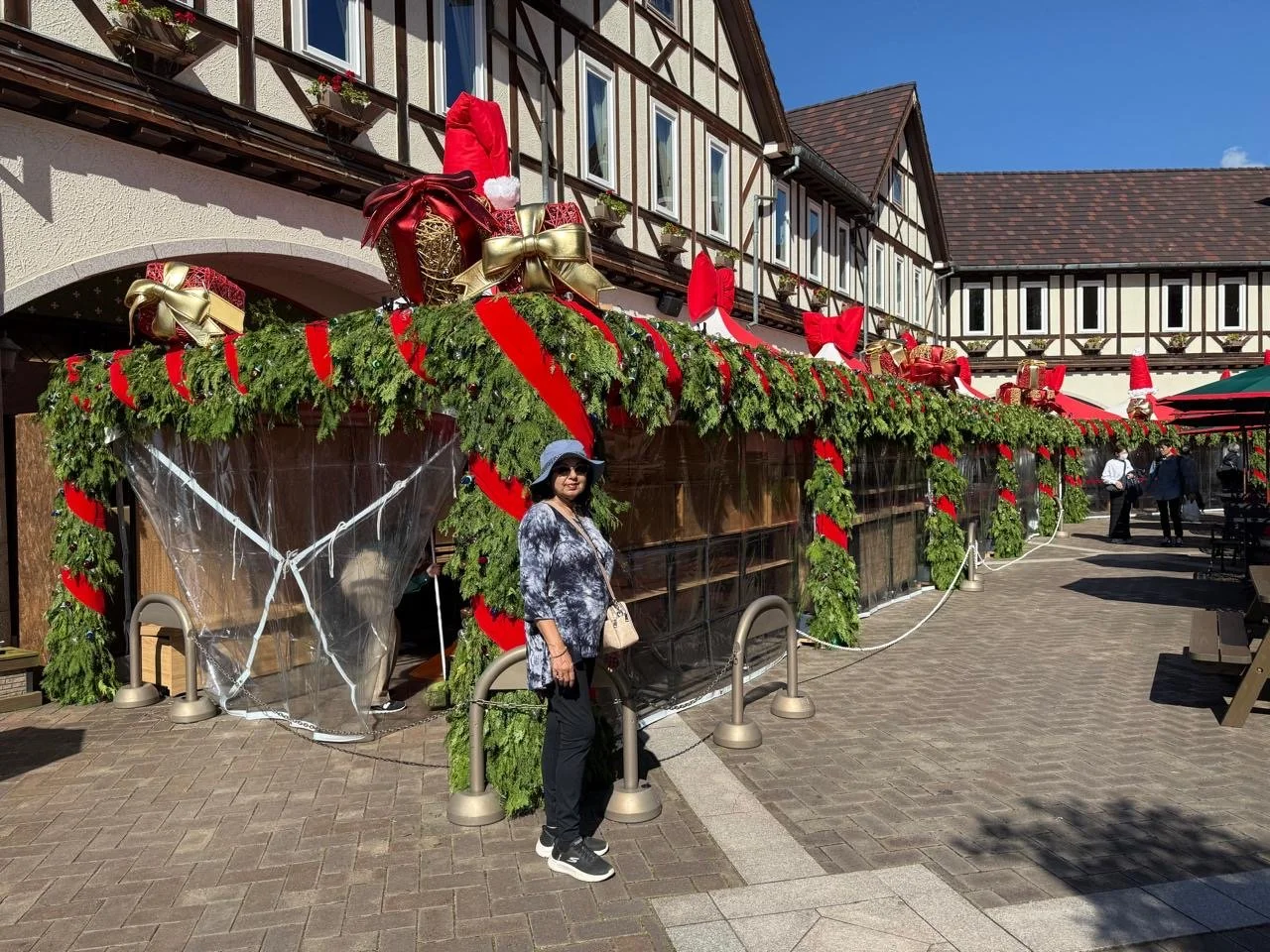
Nankinmachi (Chinatown)
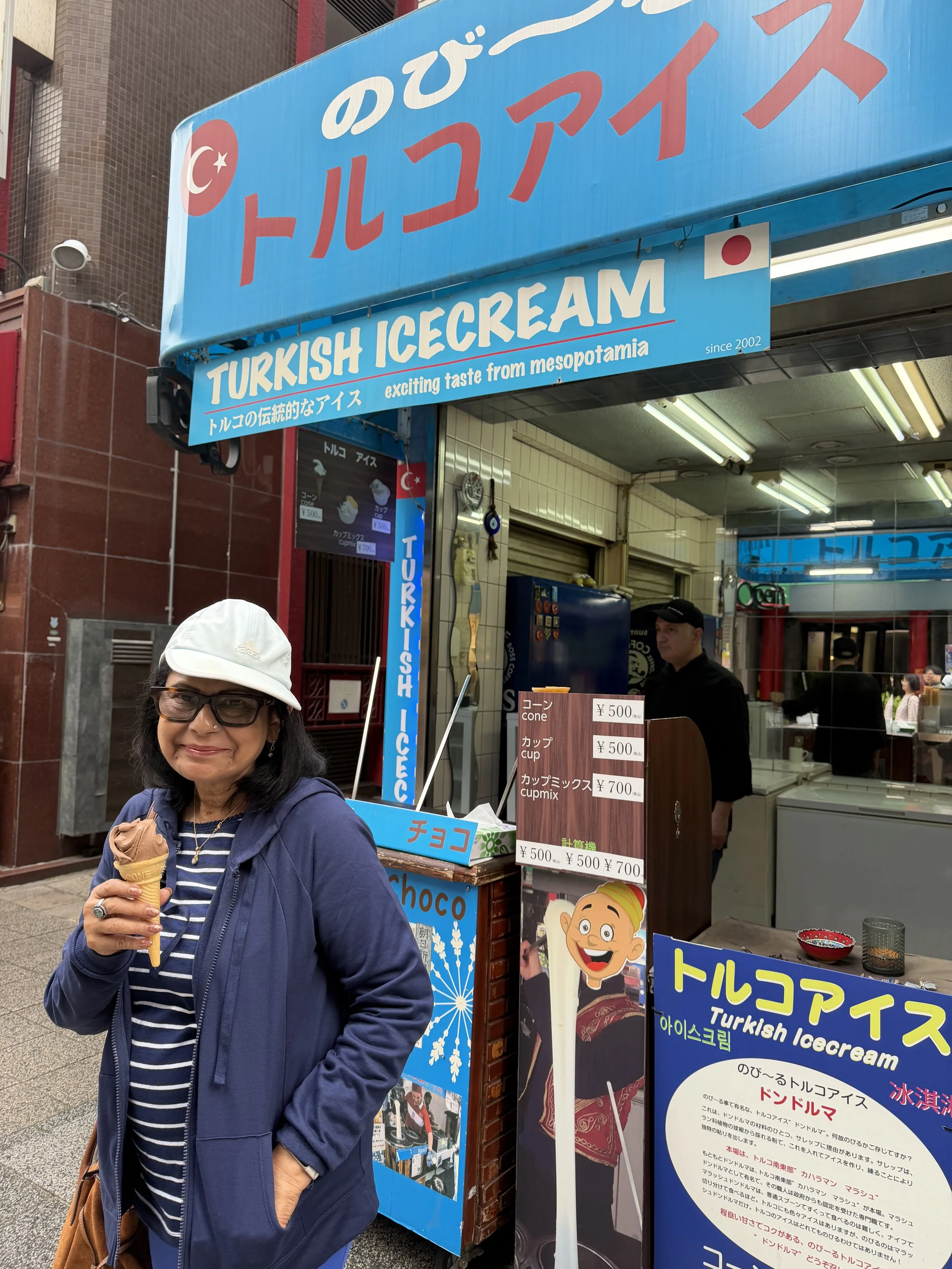
Meriken Park and Kobe Port Tower
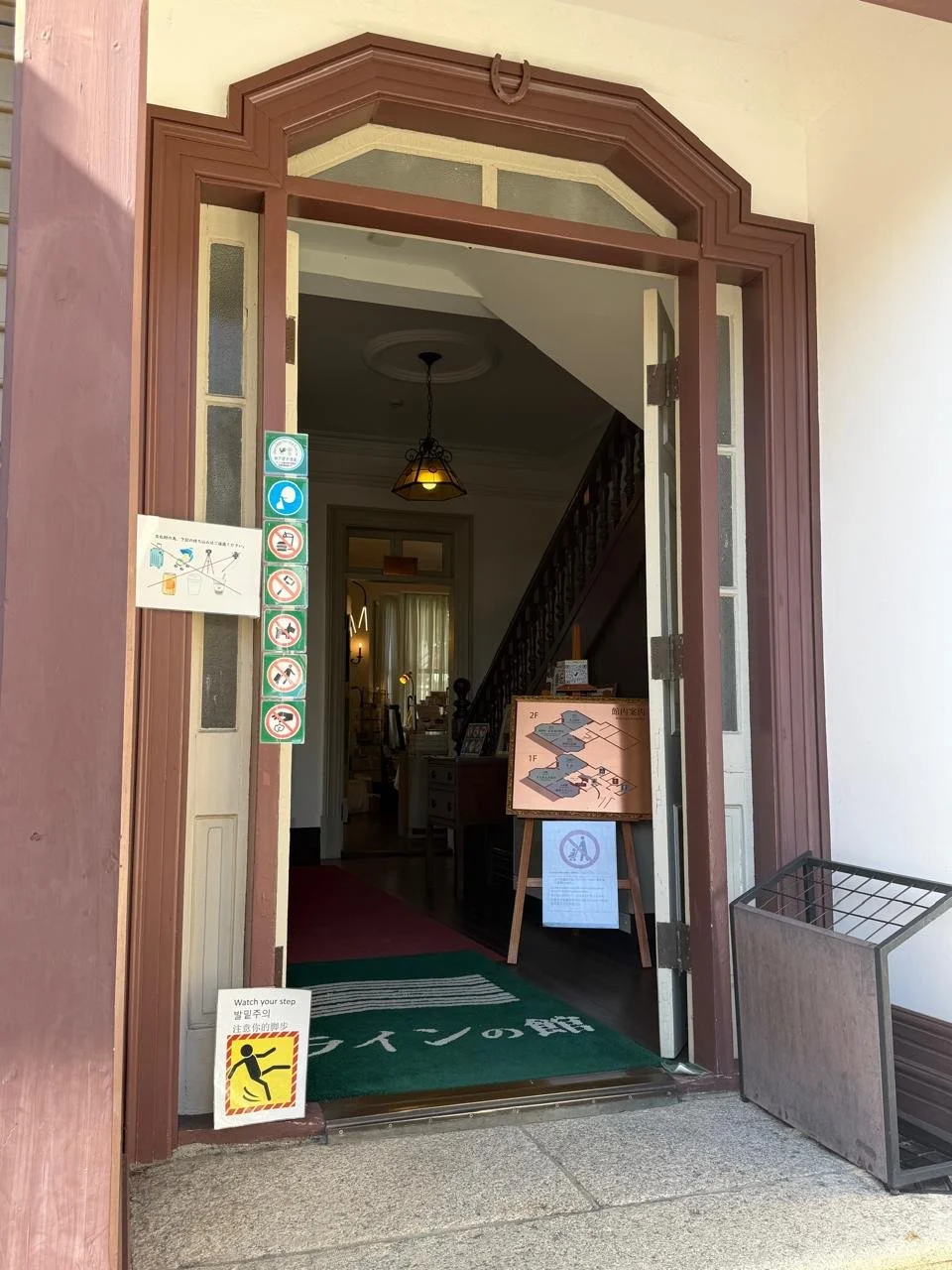
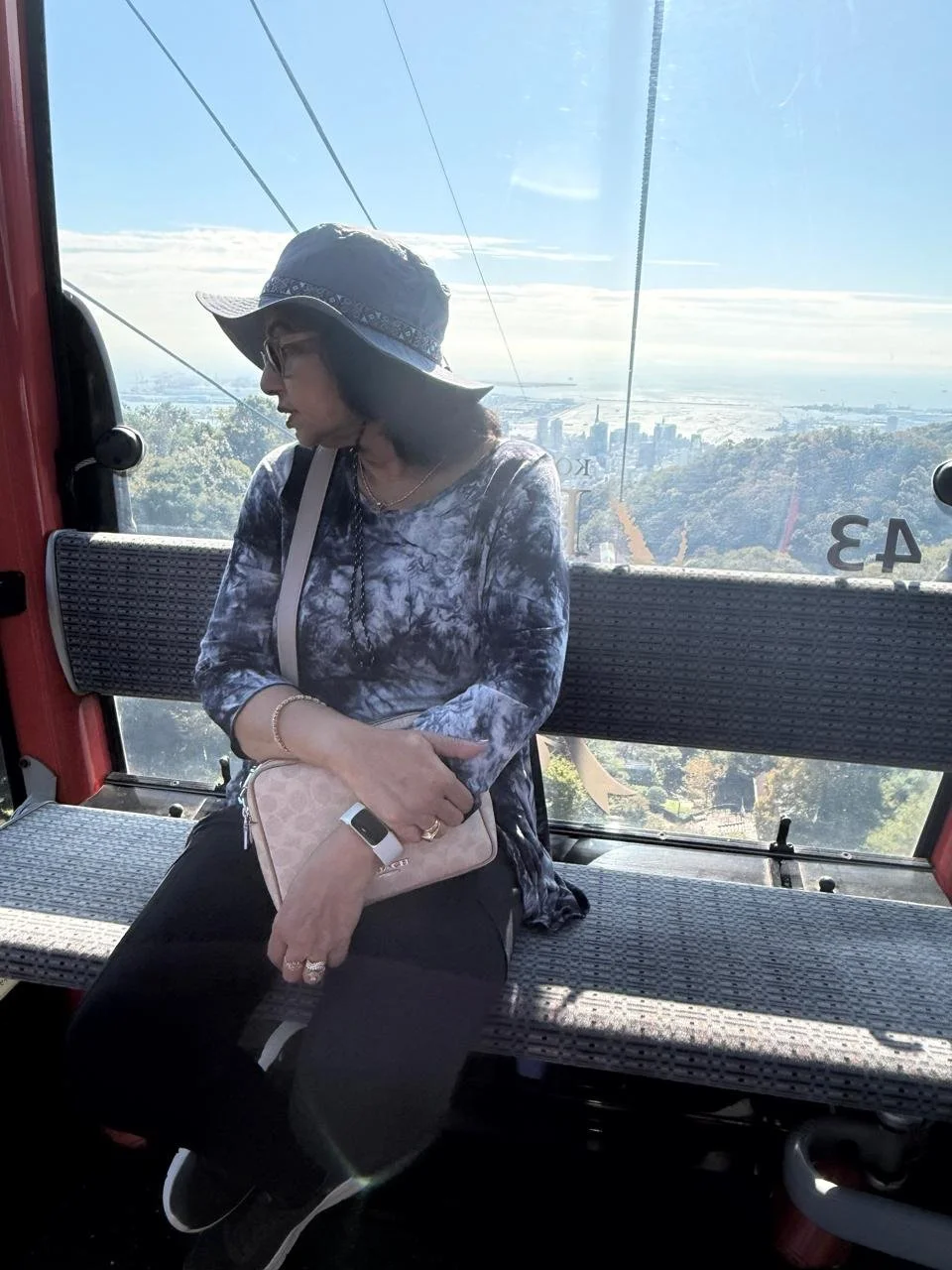
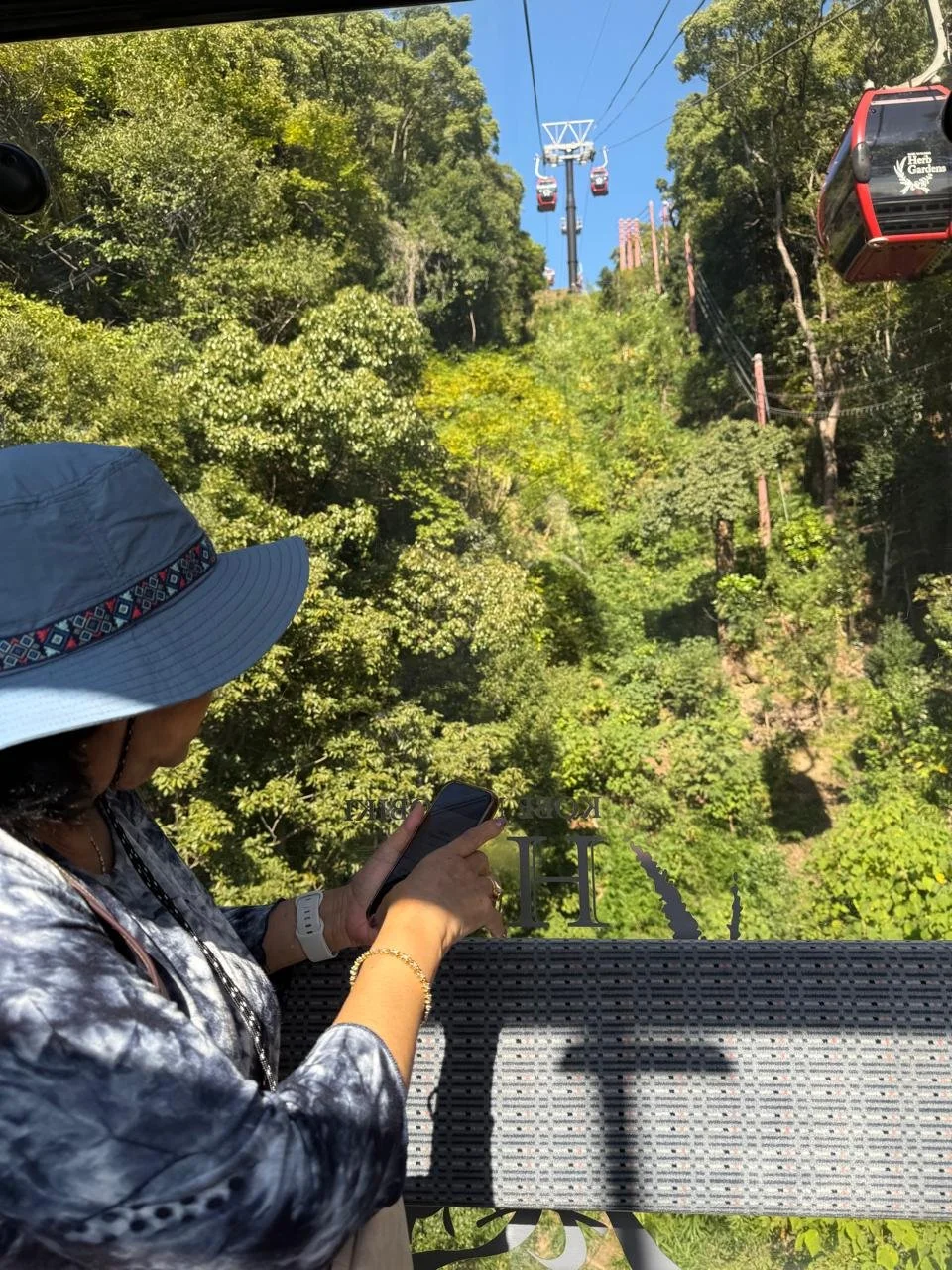
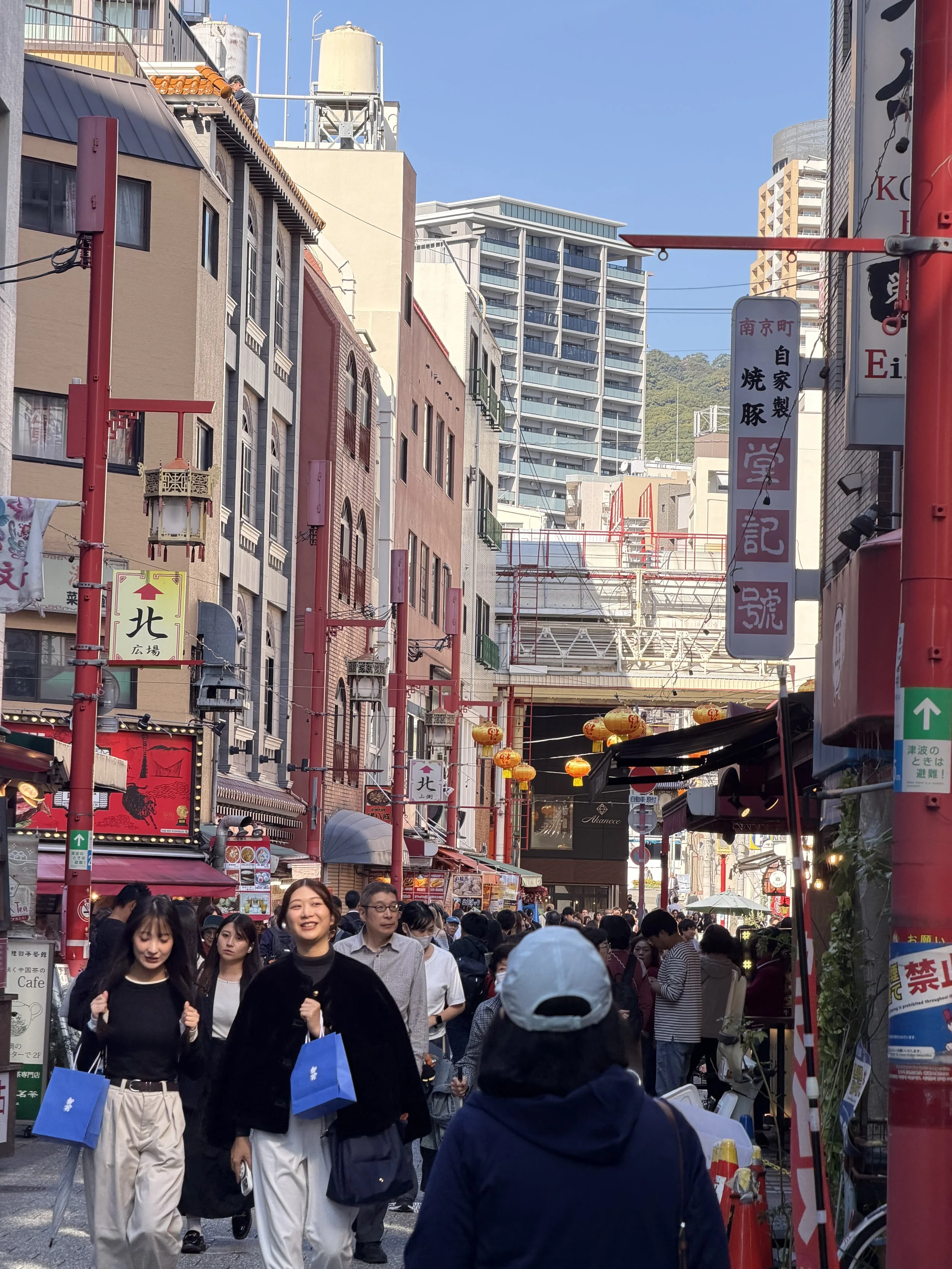
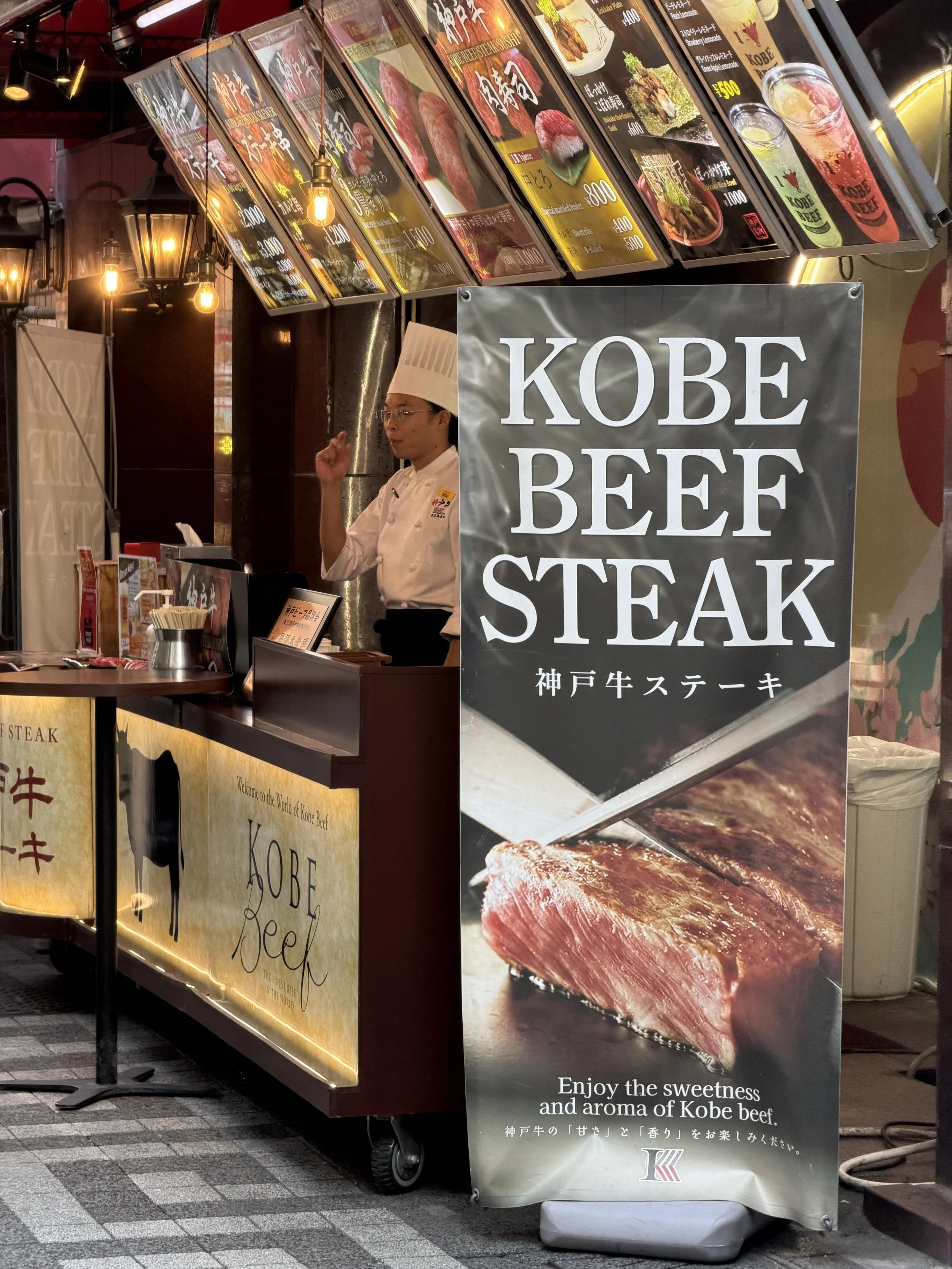
Ikuta-jinja Shrine
Kyoto: A Feast for the Eyes, the Stomach, and the Heart!
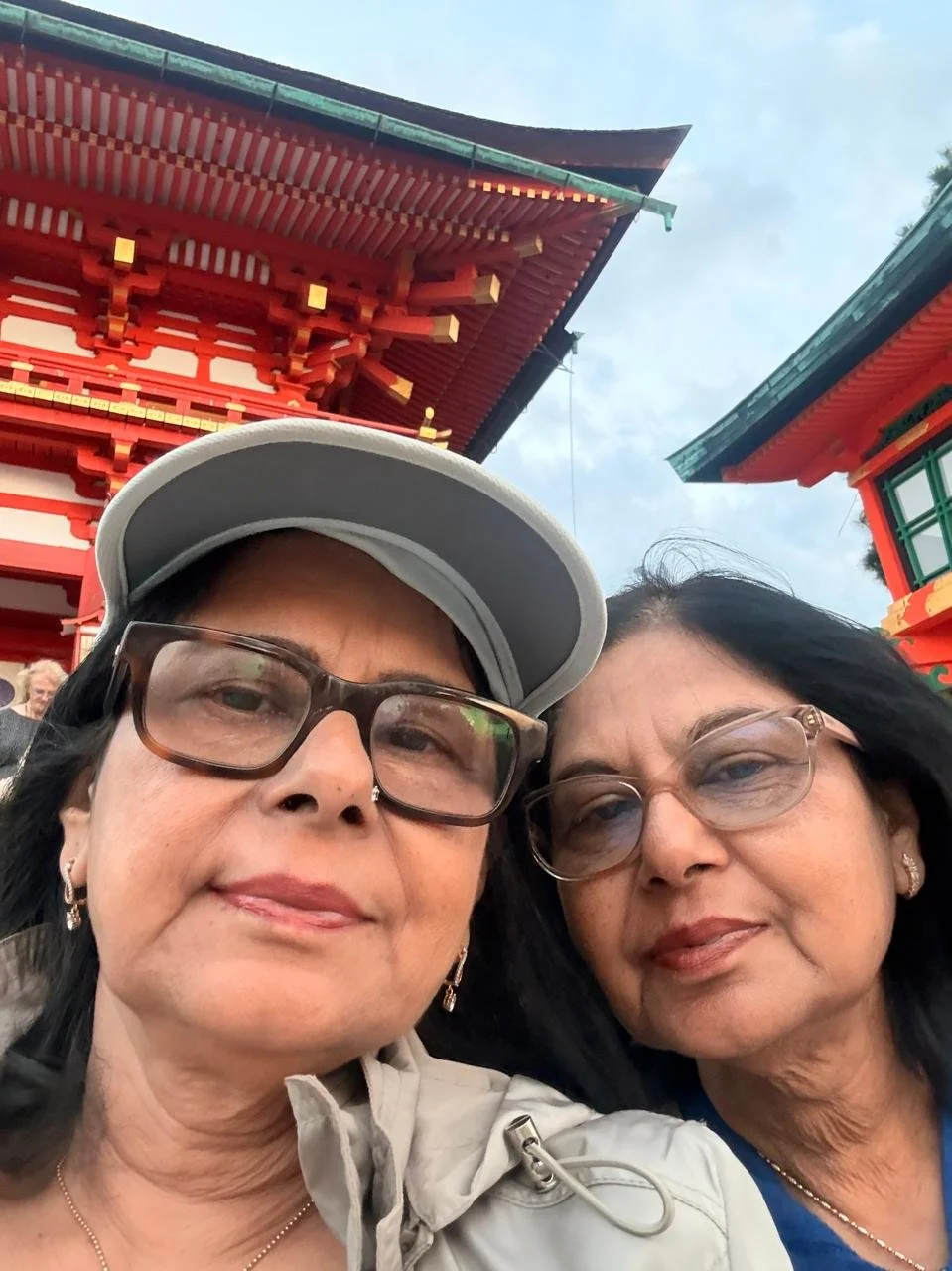
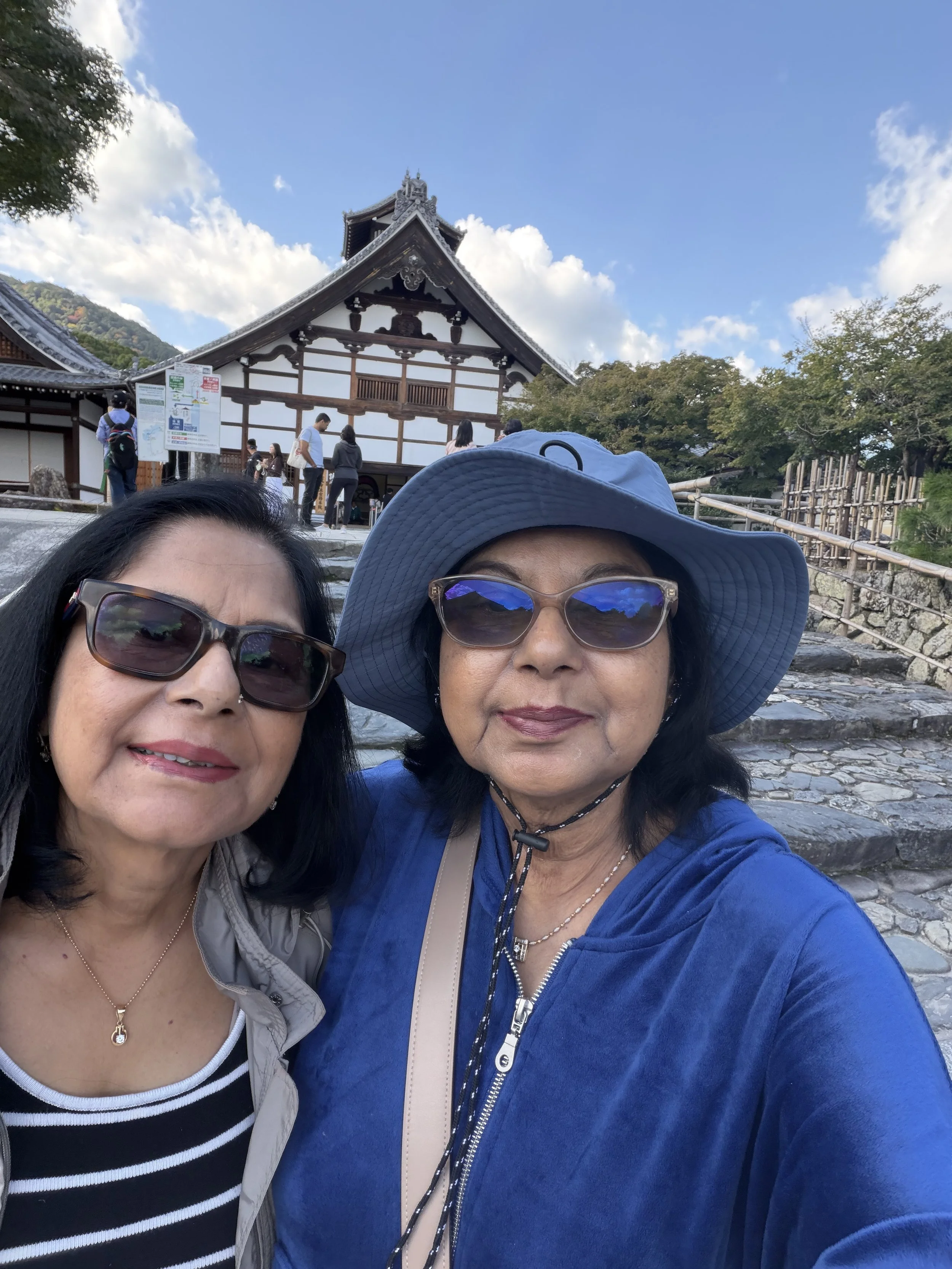
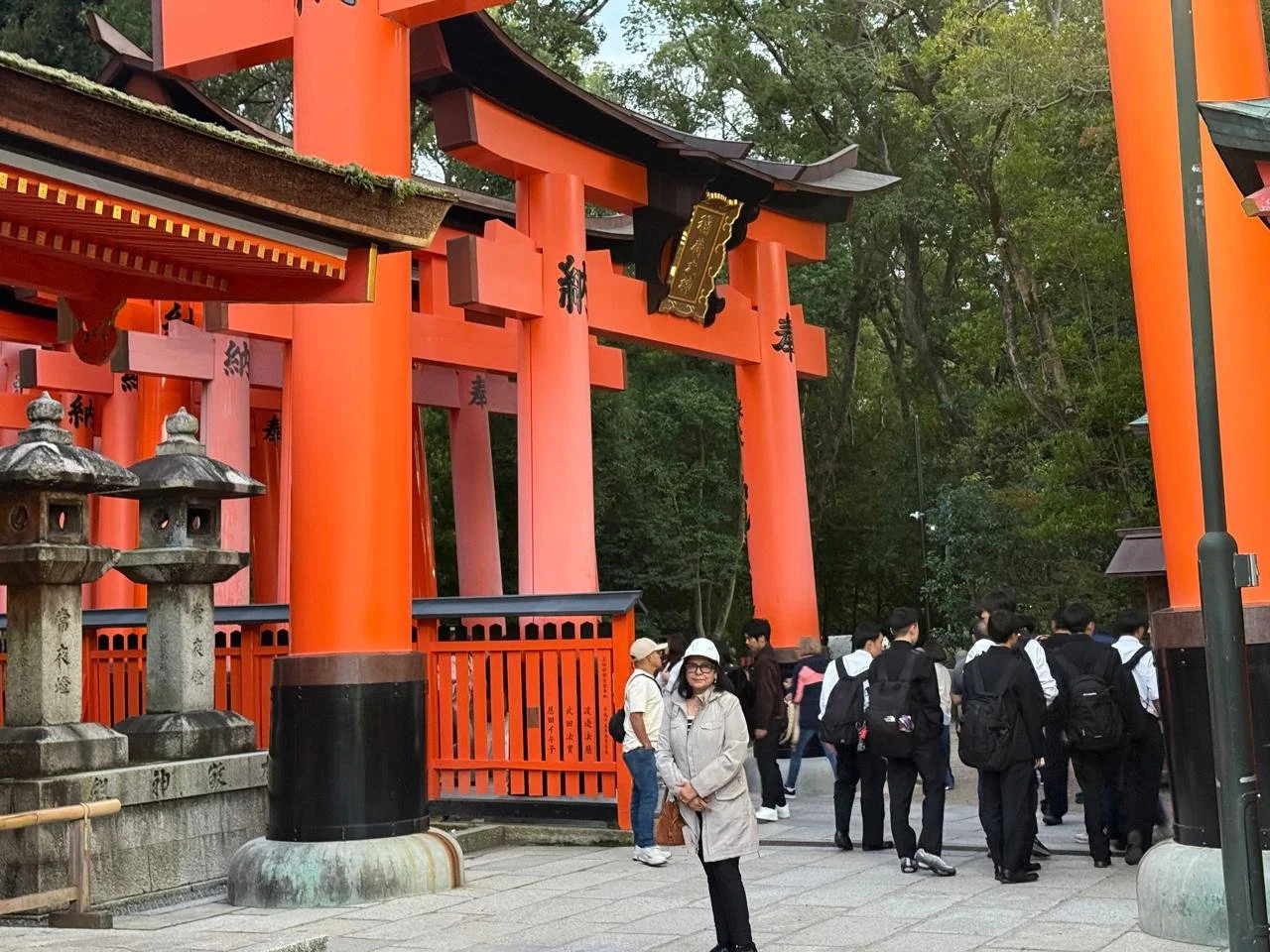
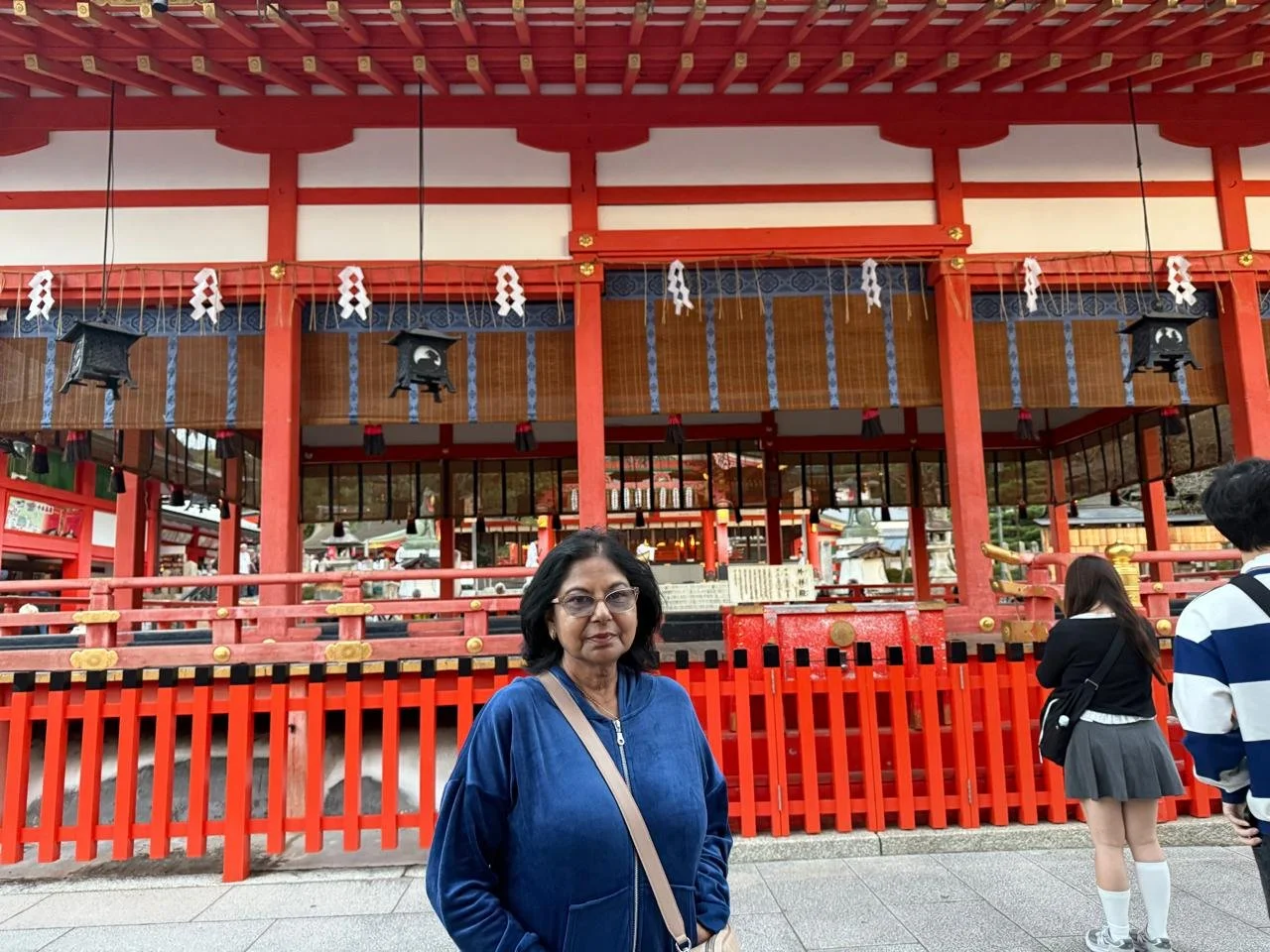
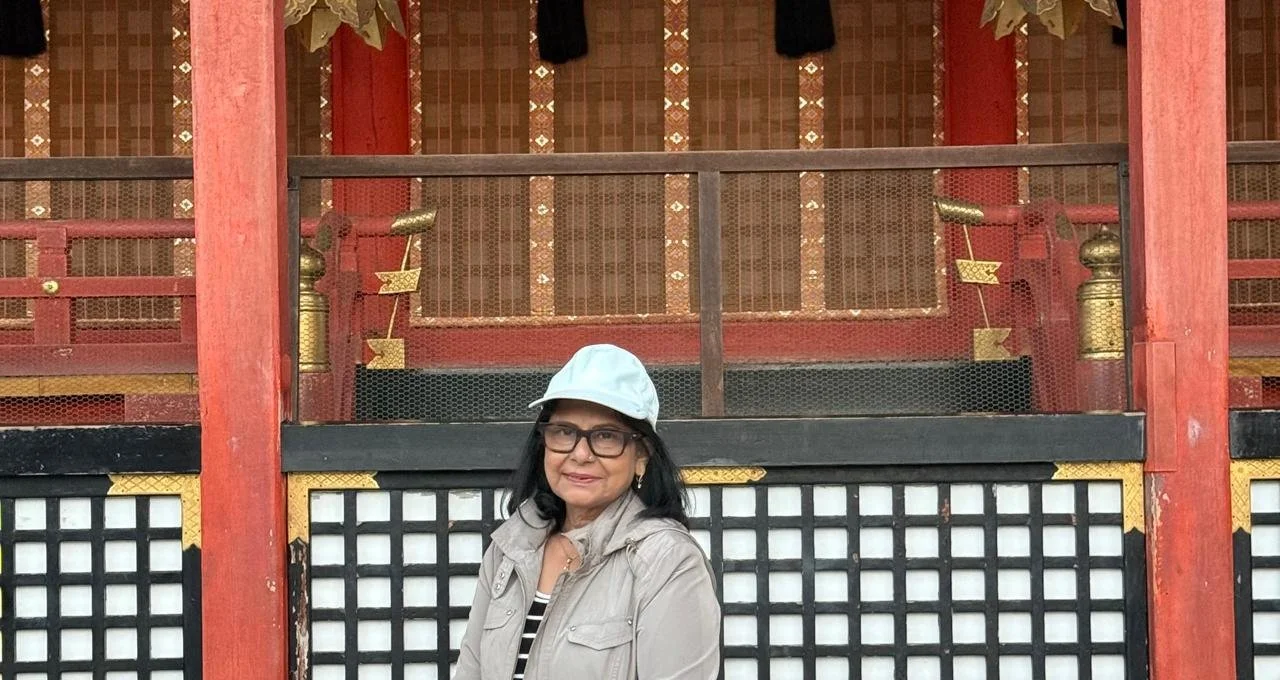
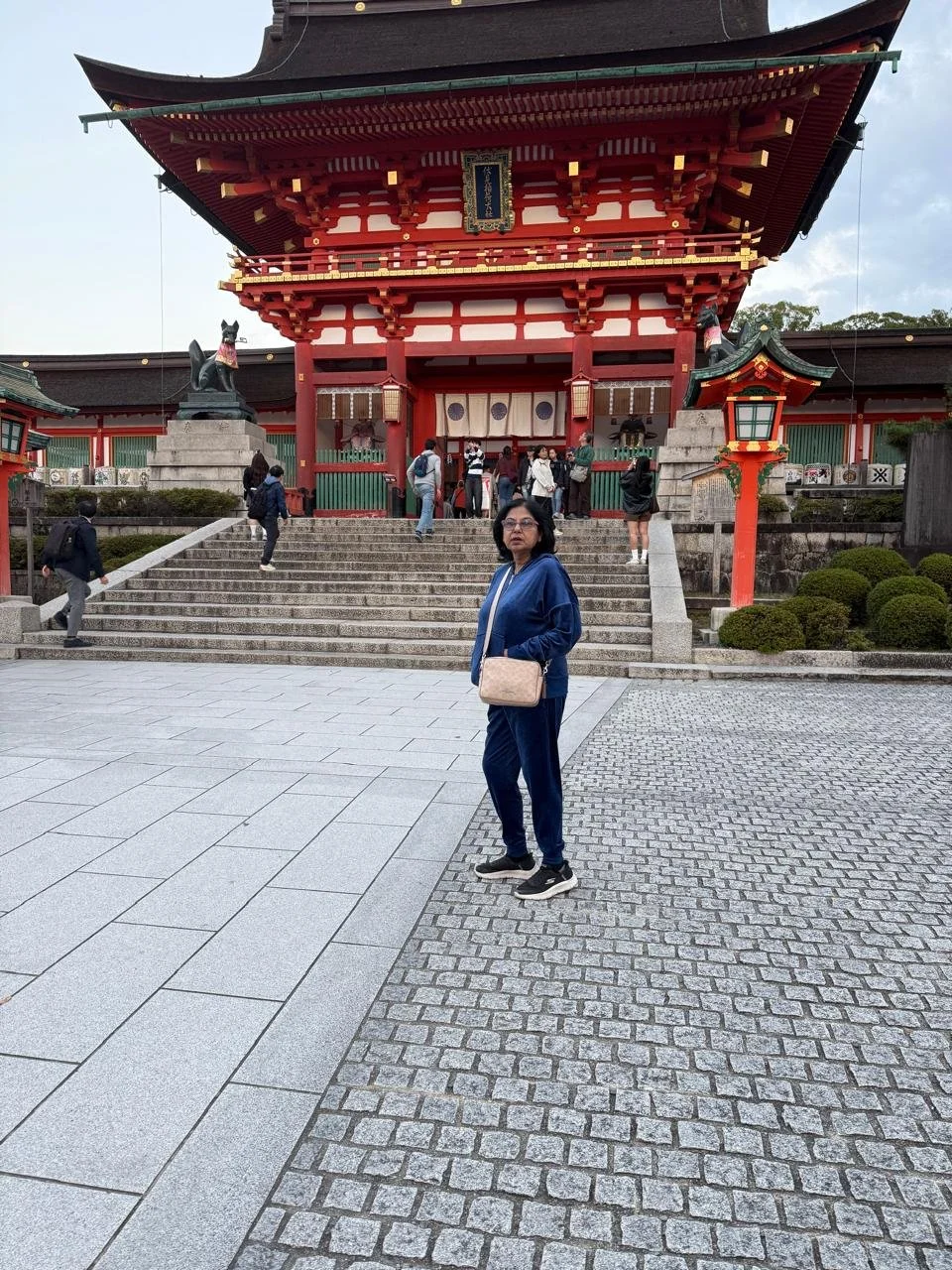
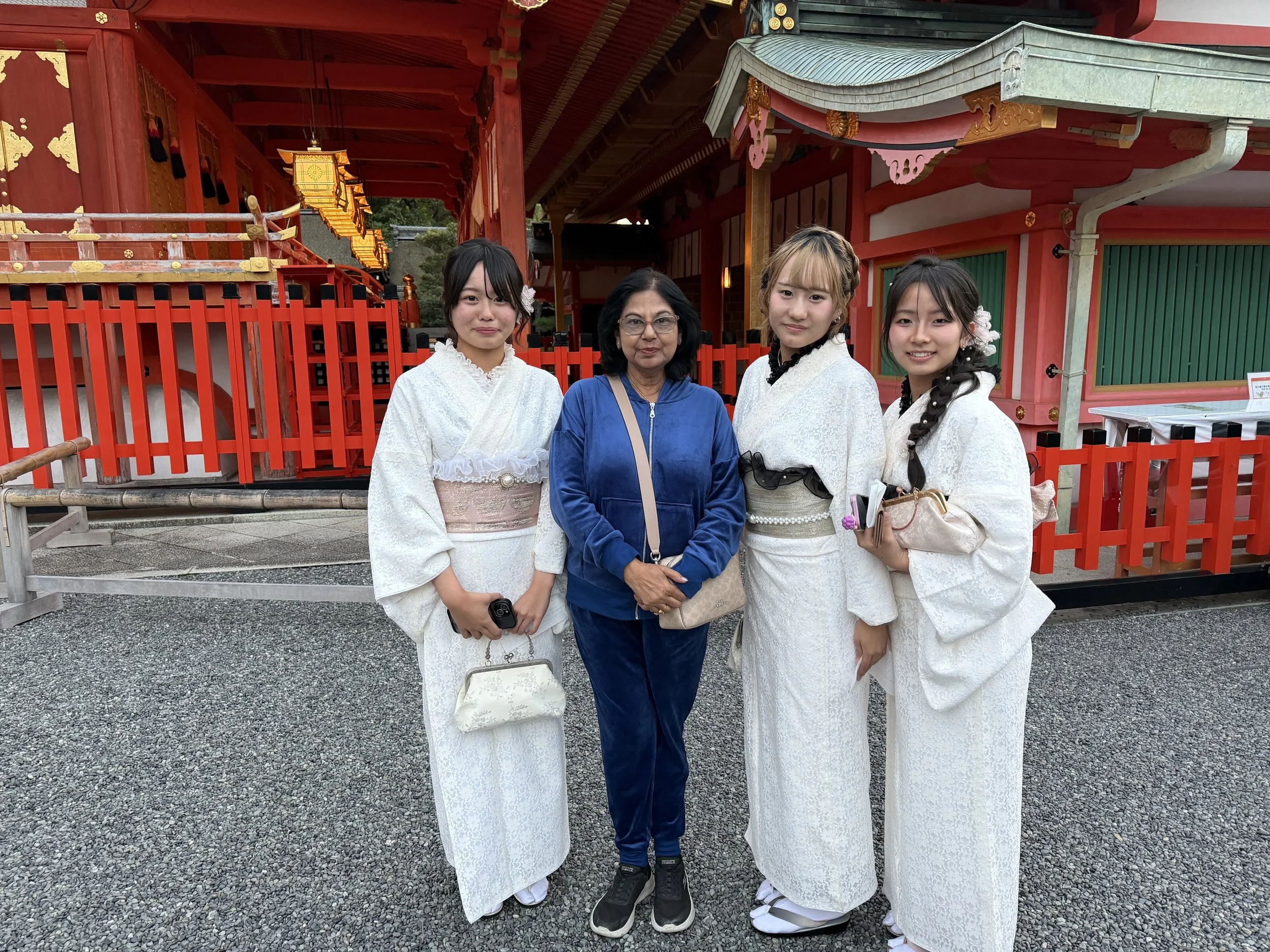
The weather gods continued to smile upon us, and we were beginning to think that our prayers were finally paying dividends! Another beautiful day, pleasant temperatures, and blue skies greeted us as we set off from Osaka for Kyoto, approximately 50 kilometers away. Our wonderful driver, Miao, picked us up and explained that our first destination, Fushimi Inari Taisha, was one of Japan's most important Shinto shrines. Founded in 711 AD at the base of Mount Inari, it is the head shrine of more than 30,000 Inari shrines throughout Japan. Dedicated to Inari Okami, the deity associated with rice, agriculture, sake, and business prosperity, the shrine is famous for its approximately 10,000 magnificent vermilion torii gates winding up the mountainside. We had decided beforehand that we were going to do some serious walking, so we were prepared with comfortable shoes, water, and plenty of enthusiasm. The famous trail, including the dense parallel rows of Senbon Torii (literally, a thousand torii gates), winds through the mountain, passing smaller shrines, stone monuments, and scenic viewpoints. The gates are donated by individuals and businesses seeking blessings and prosperity, with the donors' names and dates inscribed on the backs. Walking through these seemingly endless rows of brilliant orange-red gates was quite an experience. The effect was almost magical, with the sunlight filtering through the gates and creating beautiful patterns along the pathway. We followed a roughly four-kilometer circular trail, which took us about two hours. There were smaller shrines tucked away along the route, and we stopped frequently to admire them and observe devotees offering prayers. I was particularly fascinated by the people dressed in traditional Japanese attire. Some were making their way up the steep steps in traditional Japanese footwear, looking perfectly comfortable and graceful. How on earth do they manage that? My sister and I were wearing our best walking shoes and still found ourselves negotiating some of the steep inclines with considerable effort! I couldn't help wondering whether those traditional shoes came with some secret Japanese engineering that we hadn't been told about. By now, we had become quite accomplished at Shinto rituals—bowing, clapping, offering prayers, and generally looking as though we knew exactly what we were doing. After visiting so many shrines, we were practically ready for an honorary diploma in Shinto etiquette! We also took a moment to pray for good health, happiness, and prosperity. Given the number of shrines we had visited, I hoped our requests were receiving some serious consideration!
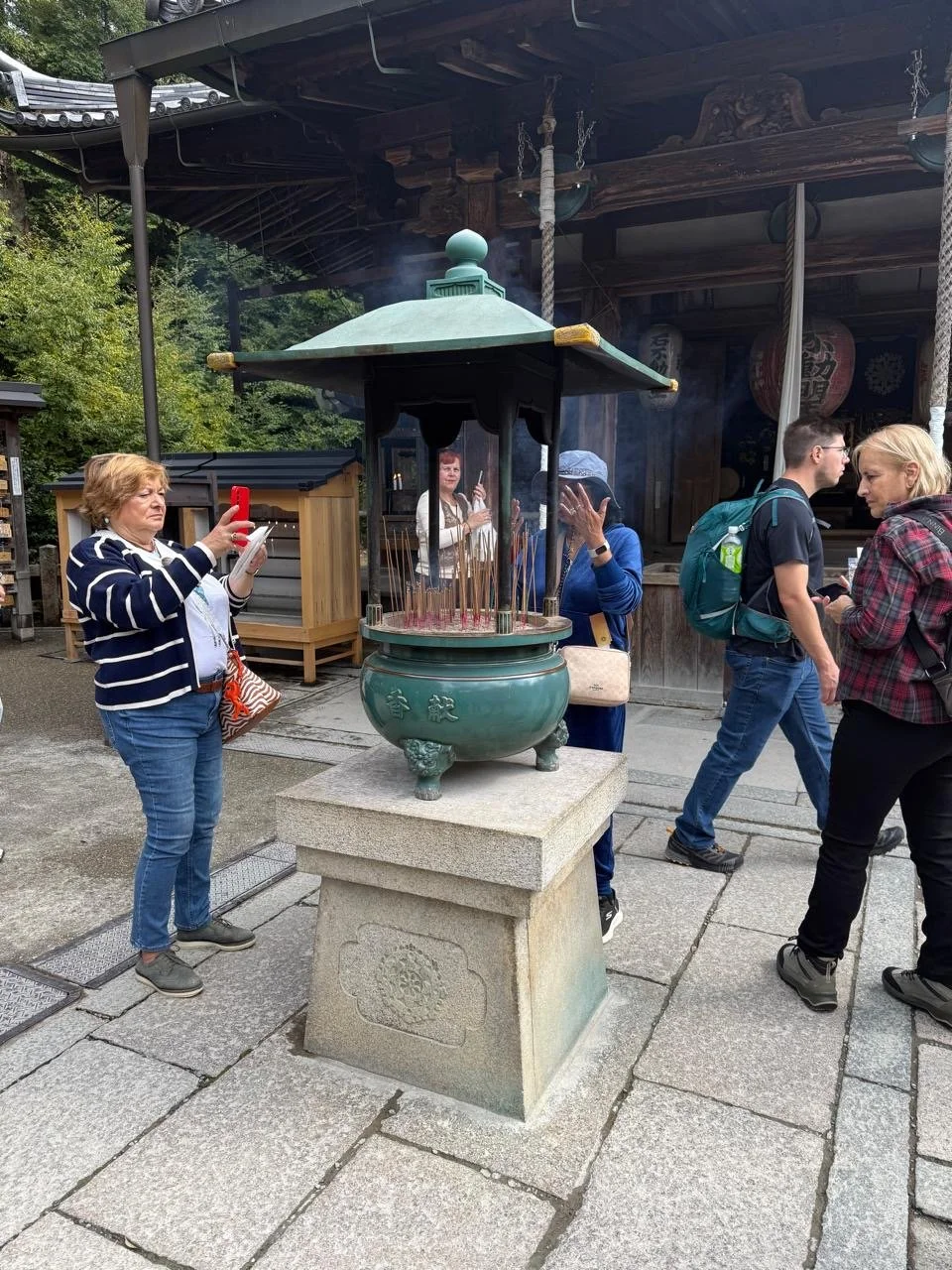
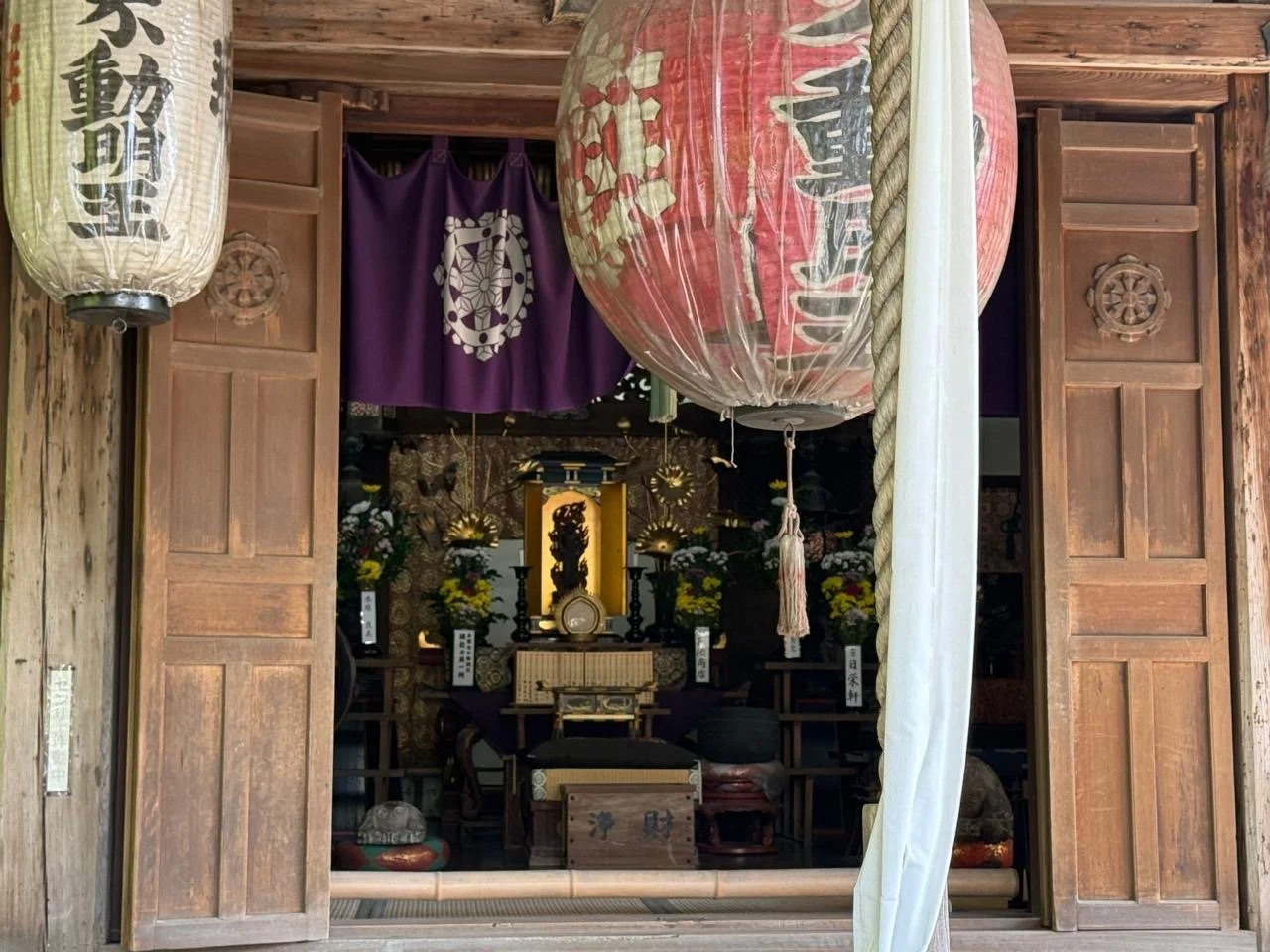
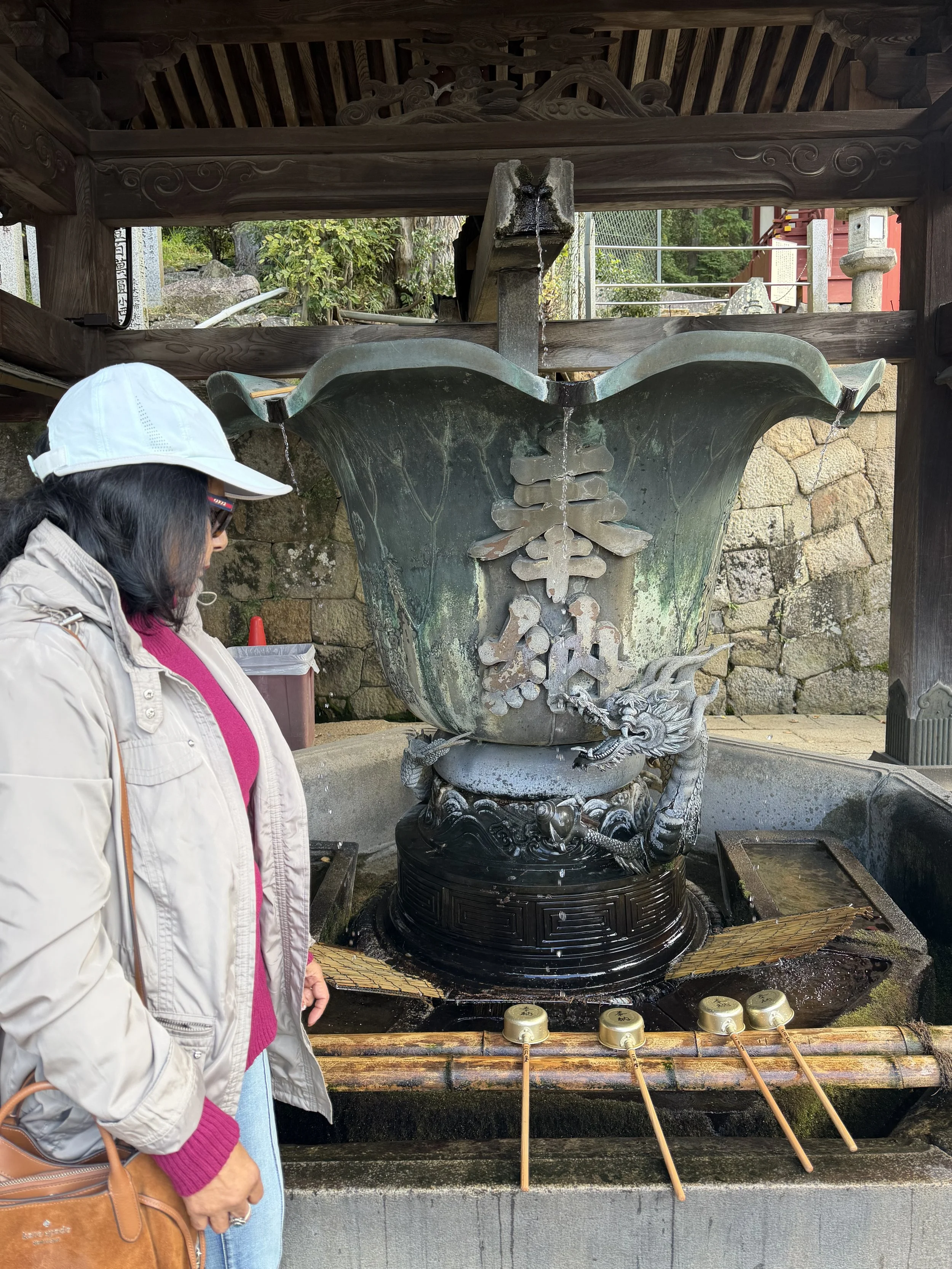
Our next stop was Kiyomizu-dera, an ancient Buddhist temple whose name translates to "Pure Water Temple." Located on the slopes of Mount Otowa in eastern Kyoto, its origins date back to 778 AD, when a Buddhist monk discovered a pure spring flowing down the mountain. The temple has an extraordinary history, having been destroyed by fires and civil wars nine times over the centuries, including major destruction in 1063 and 1469. It was designated a UNESCO World Heritage Site in 1994 as part of the Historic Monuments of Ancient Kyoto. One of the most impressive features is its magnificent three-story pagoda, standing approximately 31 meters high and originally built in 1632. But the real showstopper is the Kiyomizu Stage, a spectacular wooden veranda extending 13 meters out from the Main Hall over the hillside. What makes this architectural marvel even more remarkable is that it was constructed entirely without a single metal nail! I found myself wondering how the Japanese craftsmen managed such extraordinary engineering centuries ago, without computers, modern machinery, or an army of contractors. The stage offers breathtaking views of the surrounding hills and Kyoto, and I could have stood there admiring the scenery for ages. Another highlight was the sacred Otowa Waterfall, where the spring water flows into three separate streams. Visitors drink from these streams, traditionally seeking blessings for health, longevity, academic success, or a fortunate love life. Naturally, we joined the queue! I chose to pray for good health, which seemed like the most sensible investment at this stage of our sightseeing marathon. The water was wonderfully cool and refreshing, and we thoroughly enjoyed the experience. We had spent quite a bit of time exploring the temple grounds, climbing steps, admiring the architecture, and taking photographs. By the time we returned to the car, we were feeling decidedly warm and ready for a little air conditioning. I was beginning to suspect that our Japanese holiday was turning into an elaborate fitness program disguised as sightseeing!
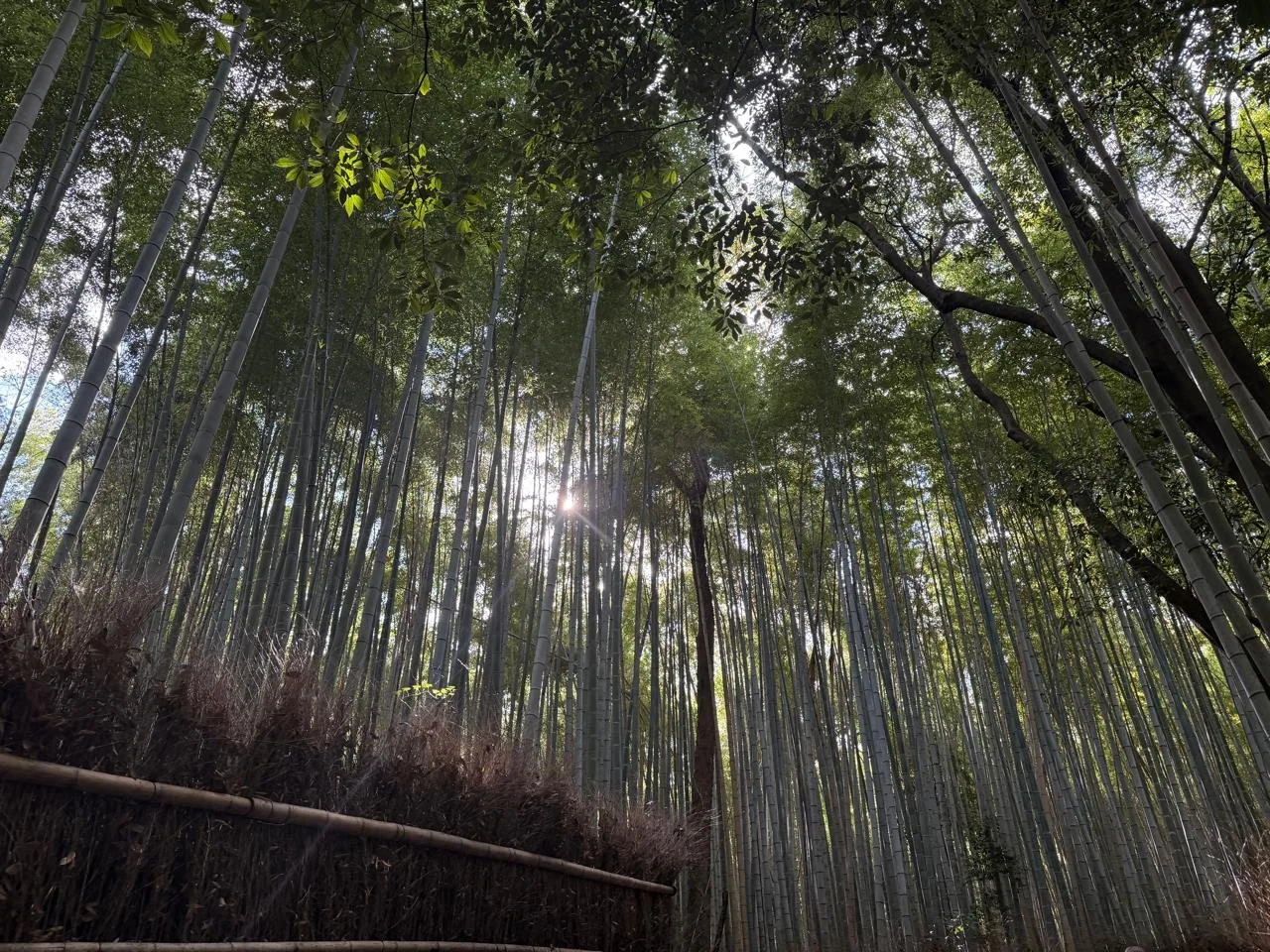
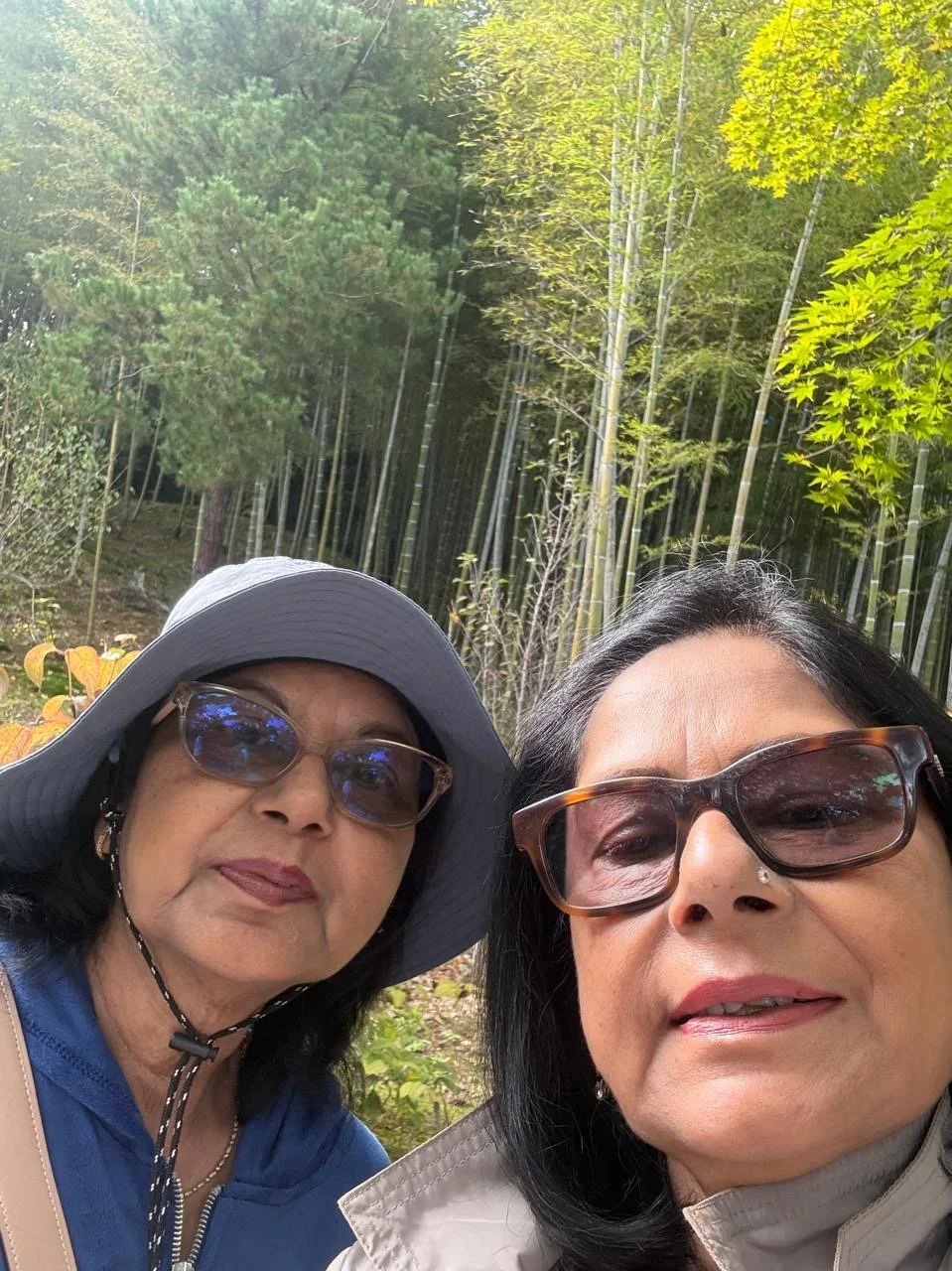
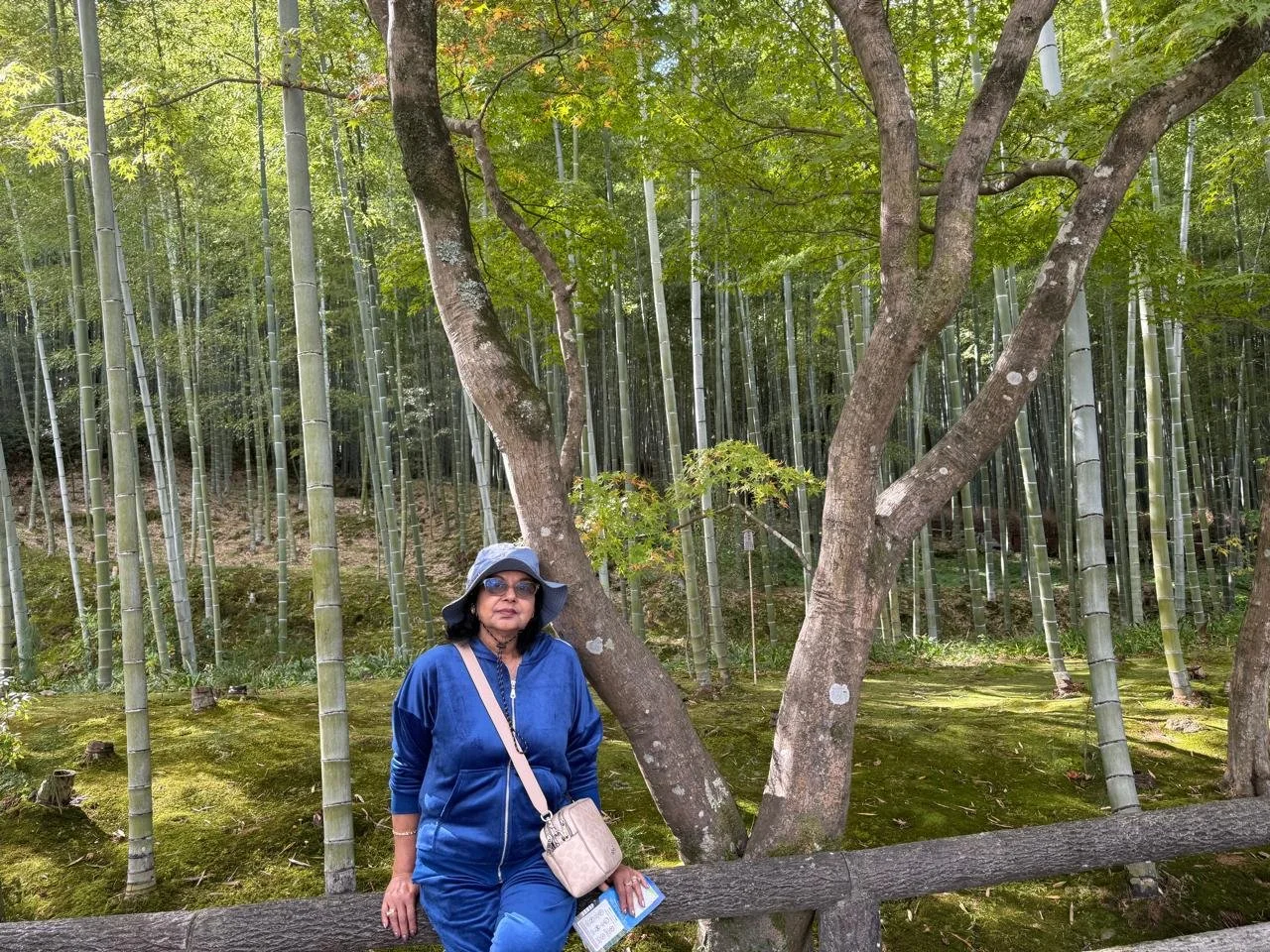
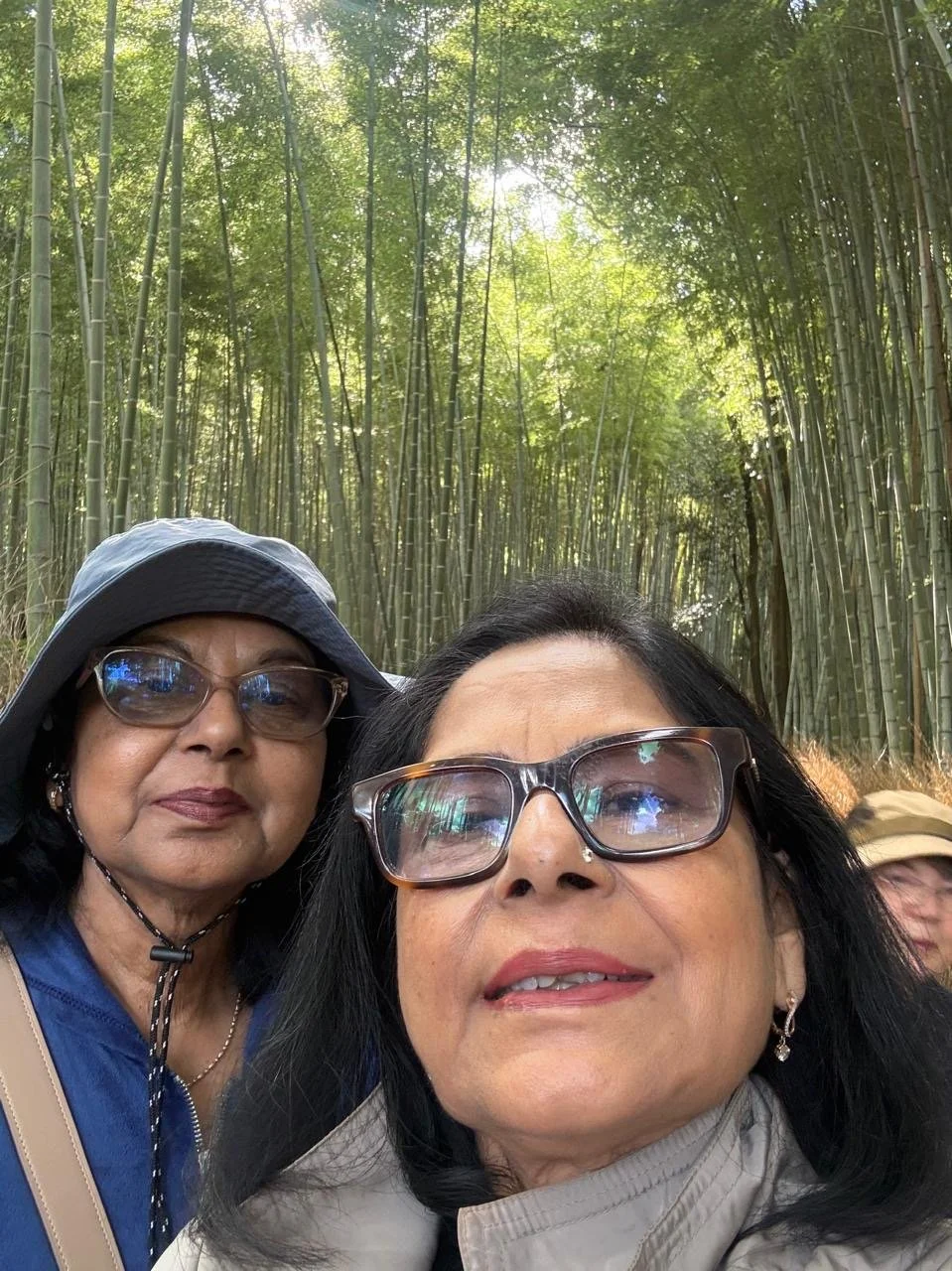
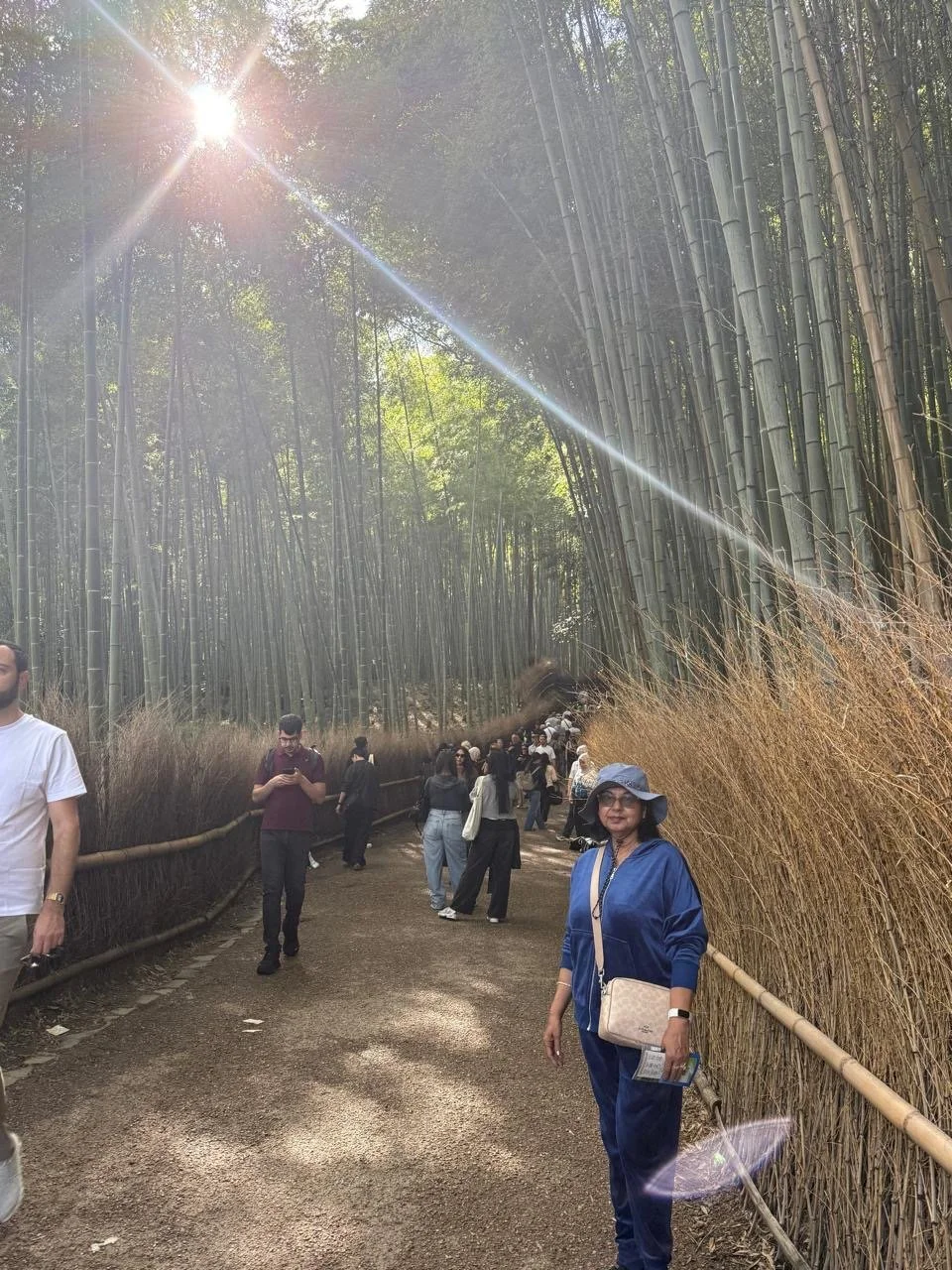
Next, Miao drove us to the Arashiyama Bamboo Grove, on the western outskirts of Kyoto, near Tenryu-ji Temple and the famous Togetsukyo Bridge. What a beautiful sight! Towering bamboo stalks rose high above us, forming a lush green canopy that made the entire pathway feel almost otherworldly. The light filtering through the bamboo was lovely, and the gentle rustling of the leaves added to the peaceful atmosphere. There were smaller trails branching off the main walkway, and we wandered around, enjoying the scenery and taking photographs. We also spotted traditional hand-pulled rickshaws, with their colorful canopies and smartly dressed pullers taking visitors around the grove. I was fascinated by them and immediately regretted not taking a photograph. Another missed photographic opportunity! Just outside the grove, there was a railway crossing. A JR train came through, and traffic on both sides stopped to allow it to pass. I immediately whisked out my camera to capture the moment.
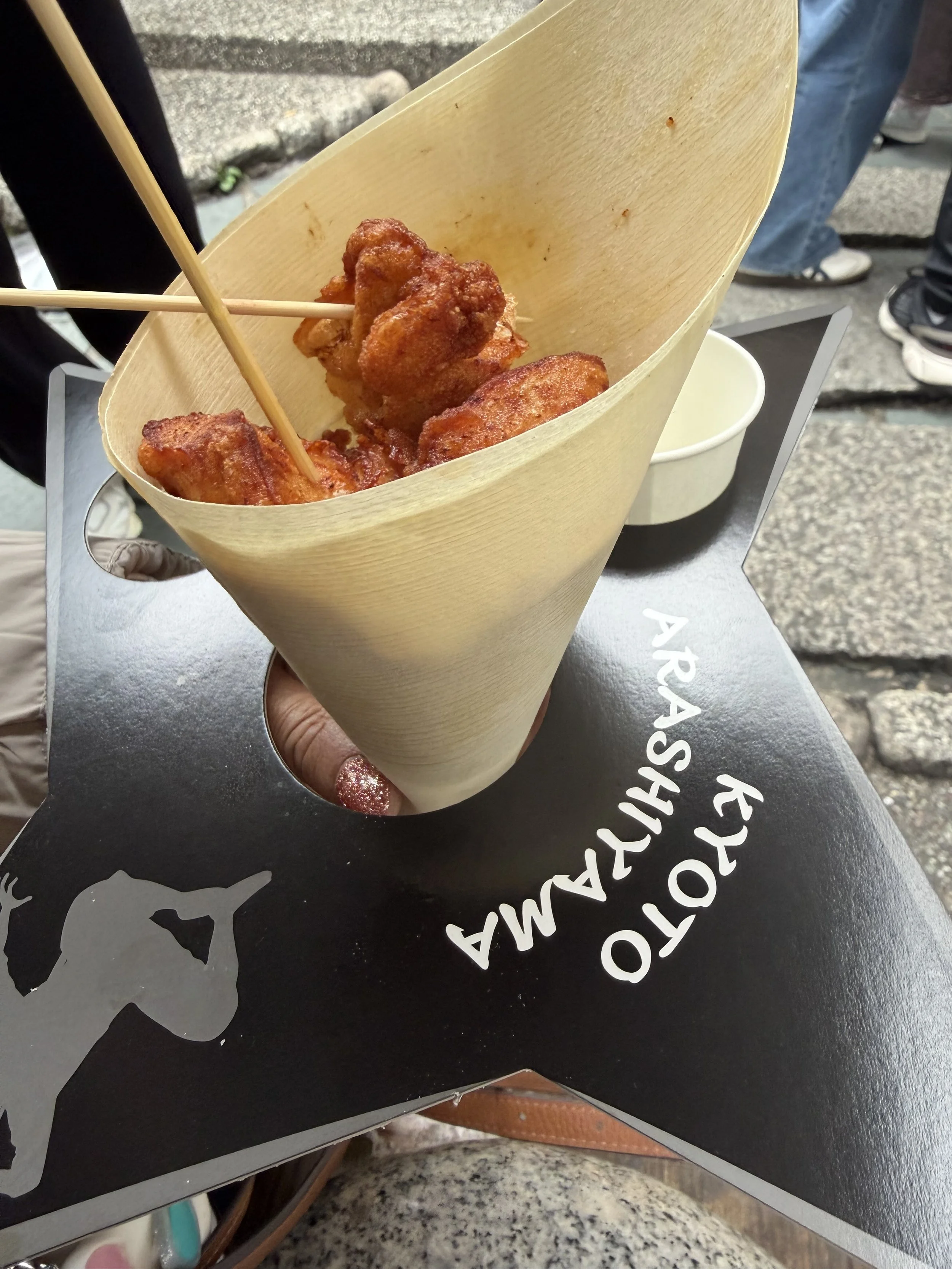
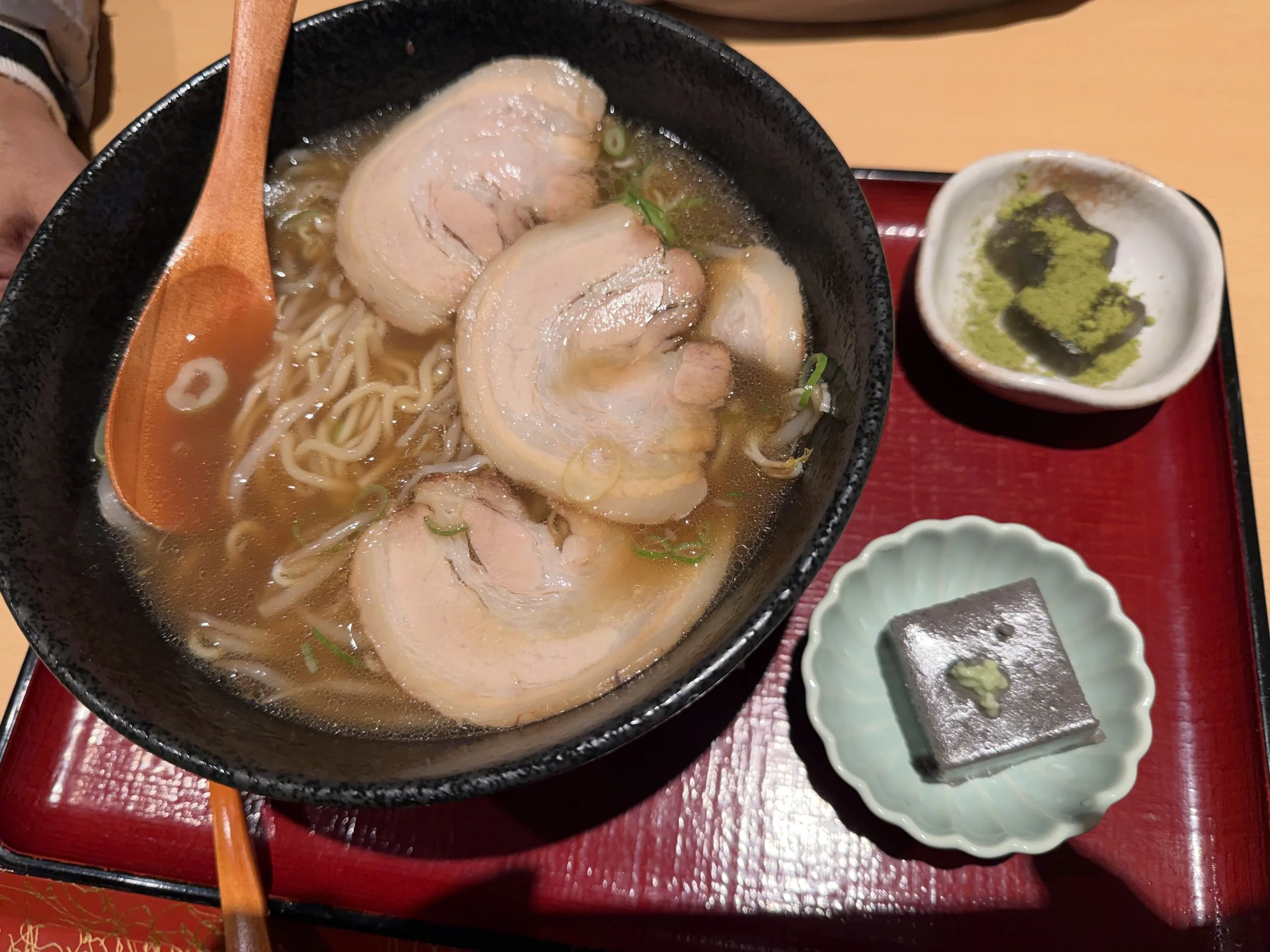
All that walking through the bamboo had worked up quite an appetite, and our stomachs were making their opinions known. We started with some delicious, crispy fried chicken from a roadside stall. Oh, it was wonderful! We then found a lovely restaurant where we tucked into steaming bowls of Japanese udon and ramen. After a day of temples, mountains, and endless walking, those hot bowls of noodles tasted absolutely heavenly. There is something particularly satisfying about a good meal after you've earned it with several thousand steps!
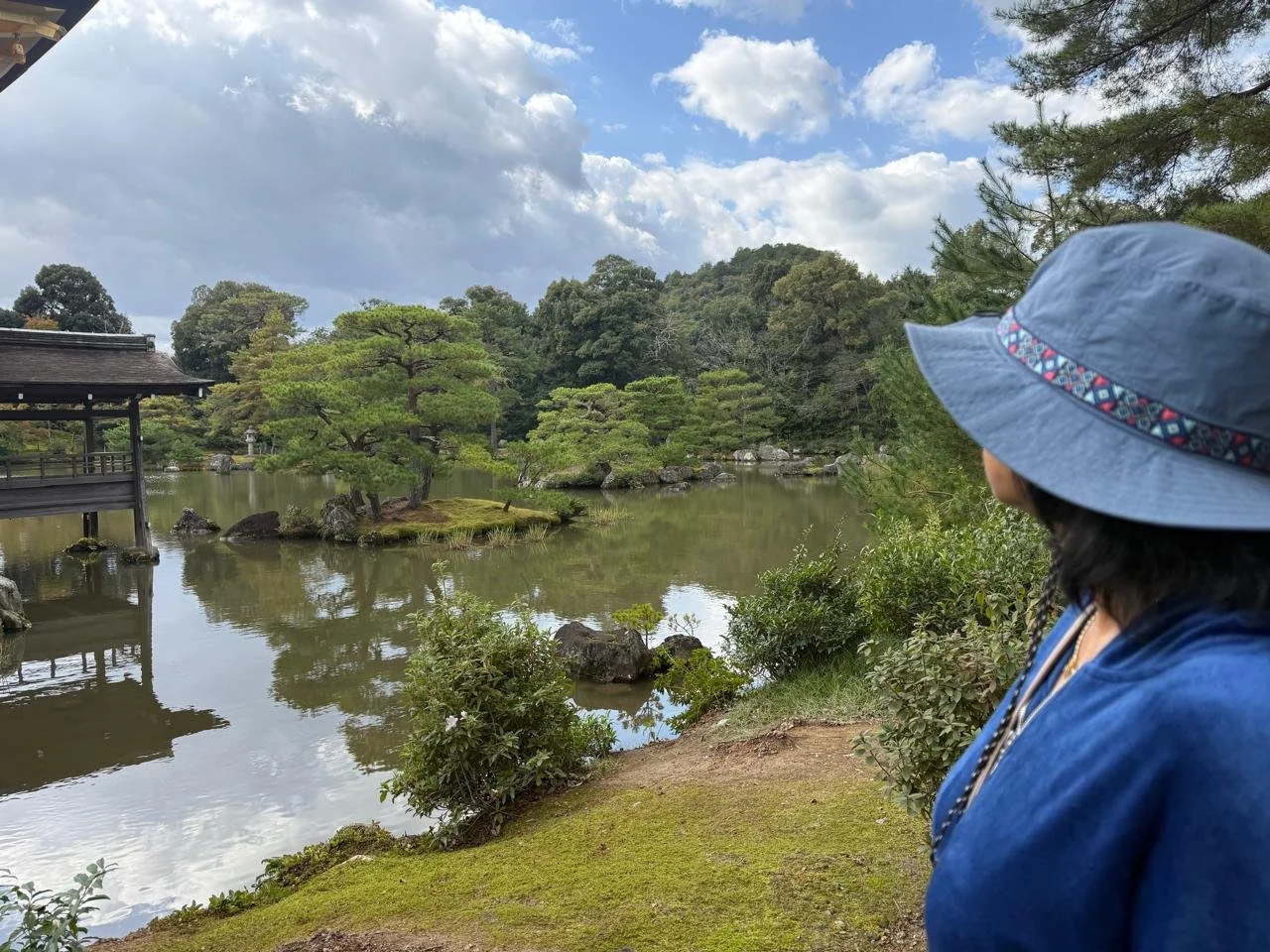
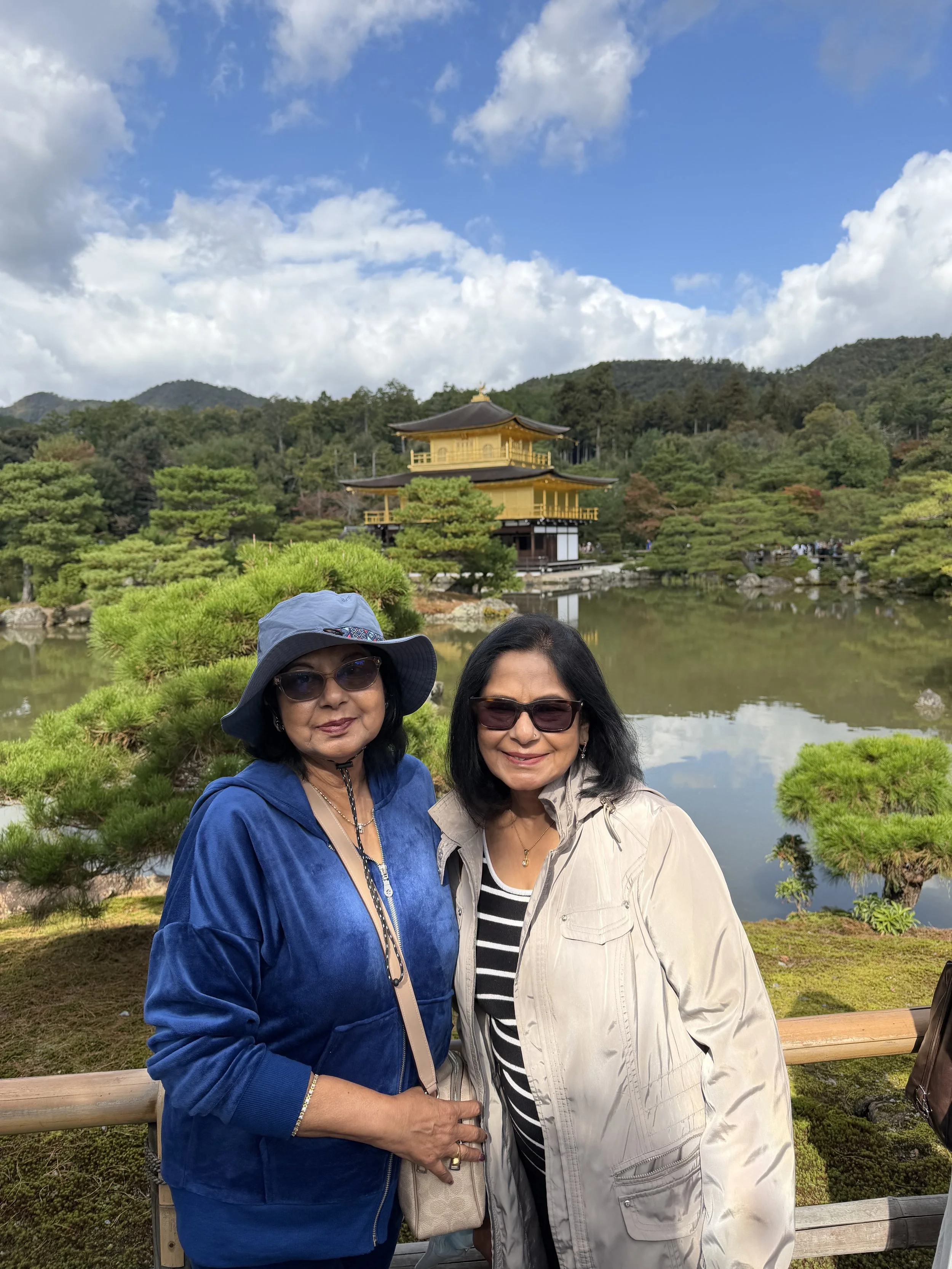
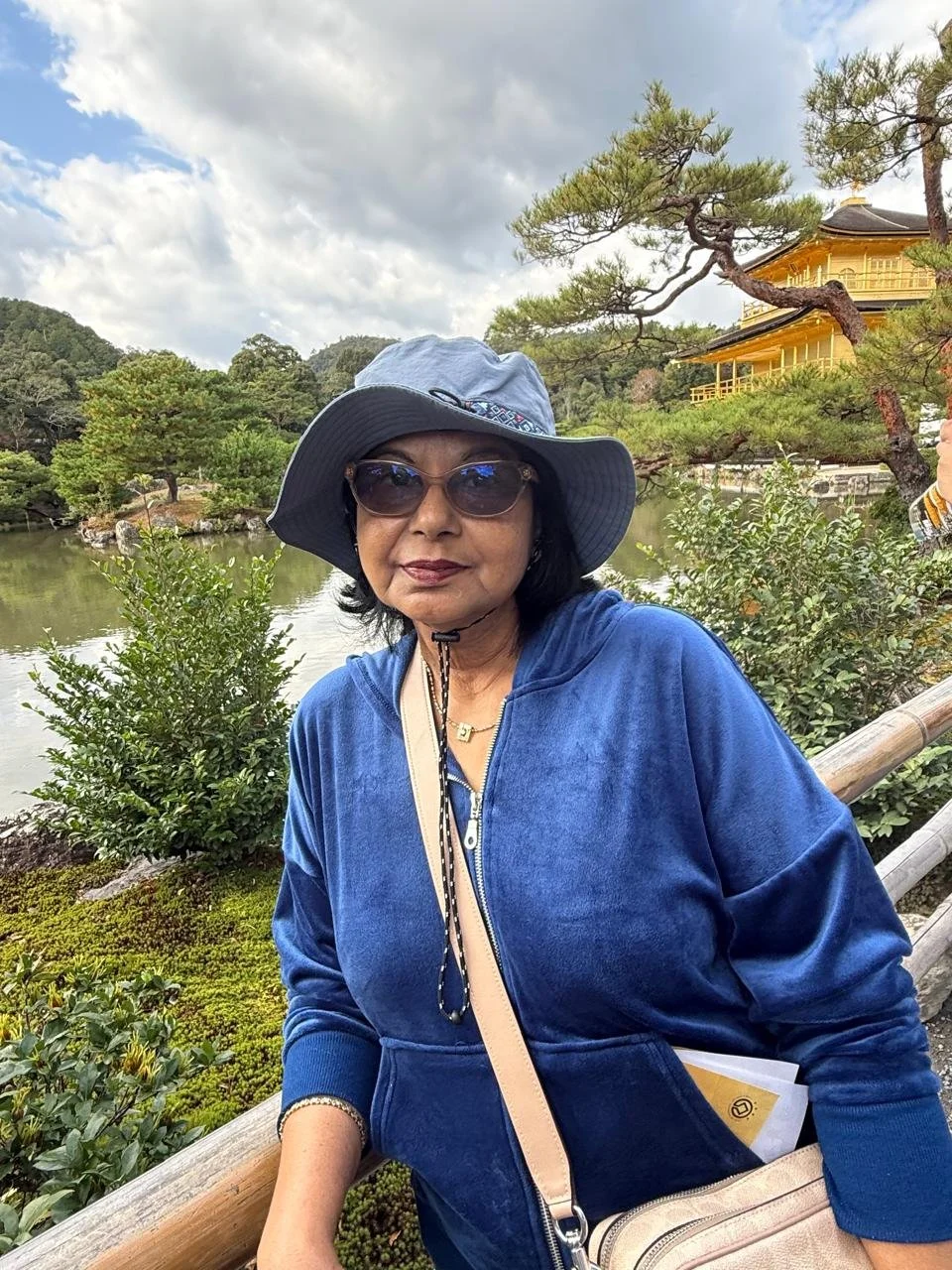
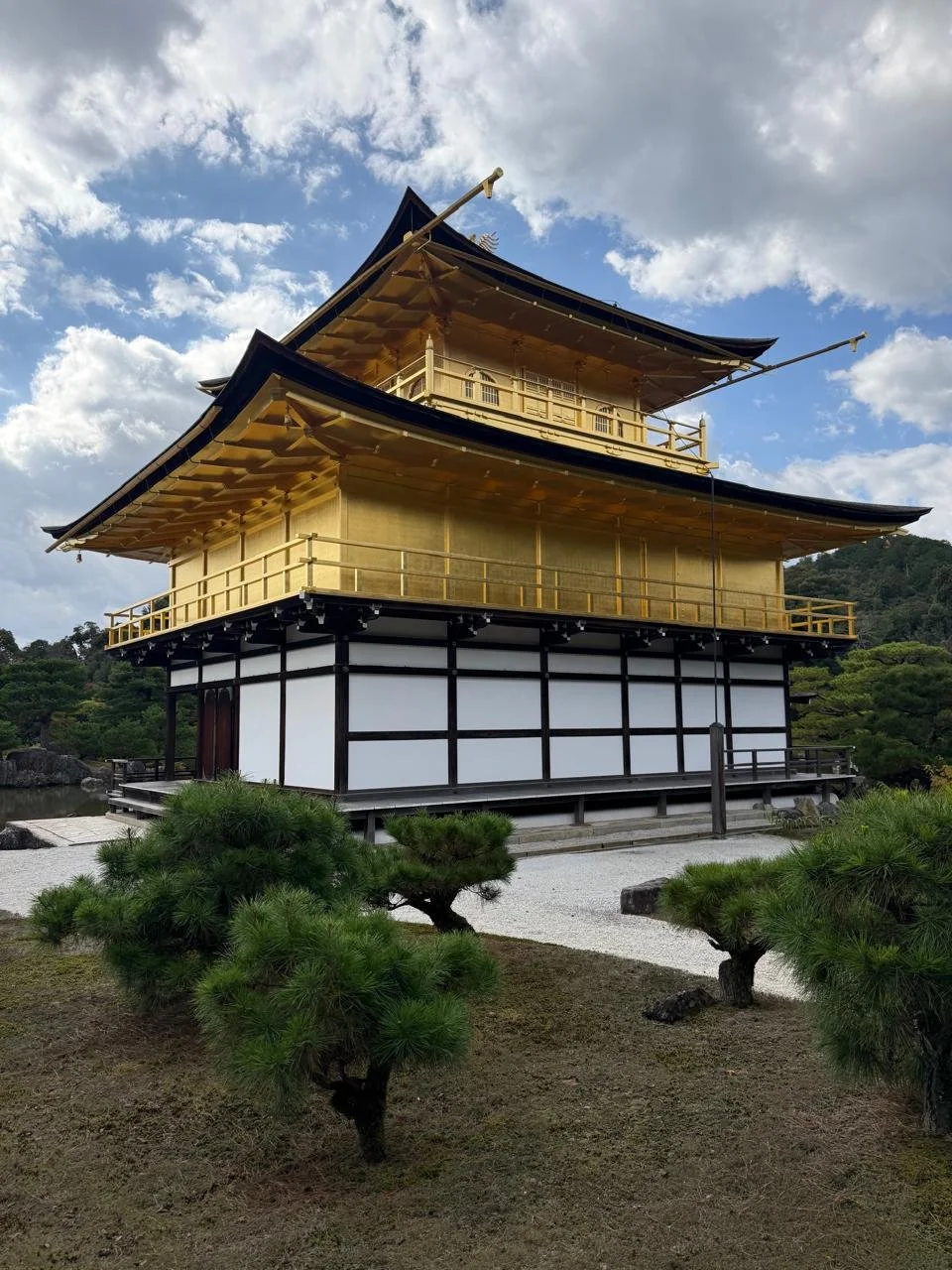
Our final major destination was Kinkaku-ji, the Golden Pavilion, in northern Kyoto. And what a spectacular way to end the day! This magnificent Zen Buddhist temple was originally the retirement villa of Shogun Ashikaga Yoshimitsu, who purchased the property in 1397 and transformed it into an elaborate residence. Following his death in 1408, his son converted the estate into a Rinzai Zen Buddhist temple, as Yoshimitsu had wished. The upper two floors of the three-story pavilion are completely covered in gold leaf, making it one of the most striking architectural sights in Japan. As we walked along the landscaped pathways leading to the temple, we were absolutely mesmerized. The pavilion sits beside a beautiful reflecting pond, surrounded by carefully manicured shrubs, trees, and gardens. Its golden exterior shimmered in the afternoon light, creating a picture-perfect reflection in the water. I found myself stopping repeatedly to take photographs, although no camera can quite capture the beauty of the place. It was simply breathtaking! We also learned that the original pavilion was deliberately set on fire by a young monk in 1950 and was subsequently reconstructed in 1955. The upper floors received fresh gold leaf in 1987, and the temple became part of Kyoto's UNESCO World Heritage listing in 1994. Standing there, admiring this extraordinary structure, I couldn't help thinking about the craftsmanship, history, and painstaking restoration that went into preserving it. After all the shrines, temples, and historical landmarks we had visited, this was truly a memorable finale. By now, our feet were staging a full-scale rebellion, but the beauty of the Golden Pavilion made every step worthwhile.
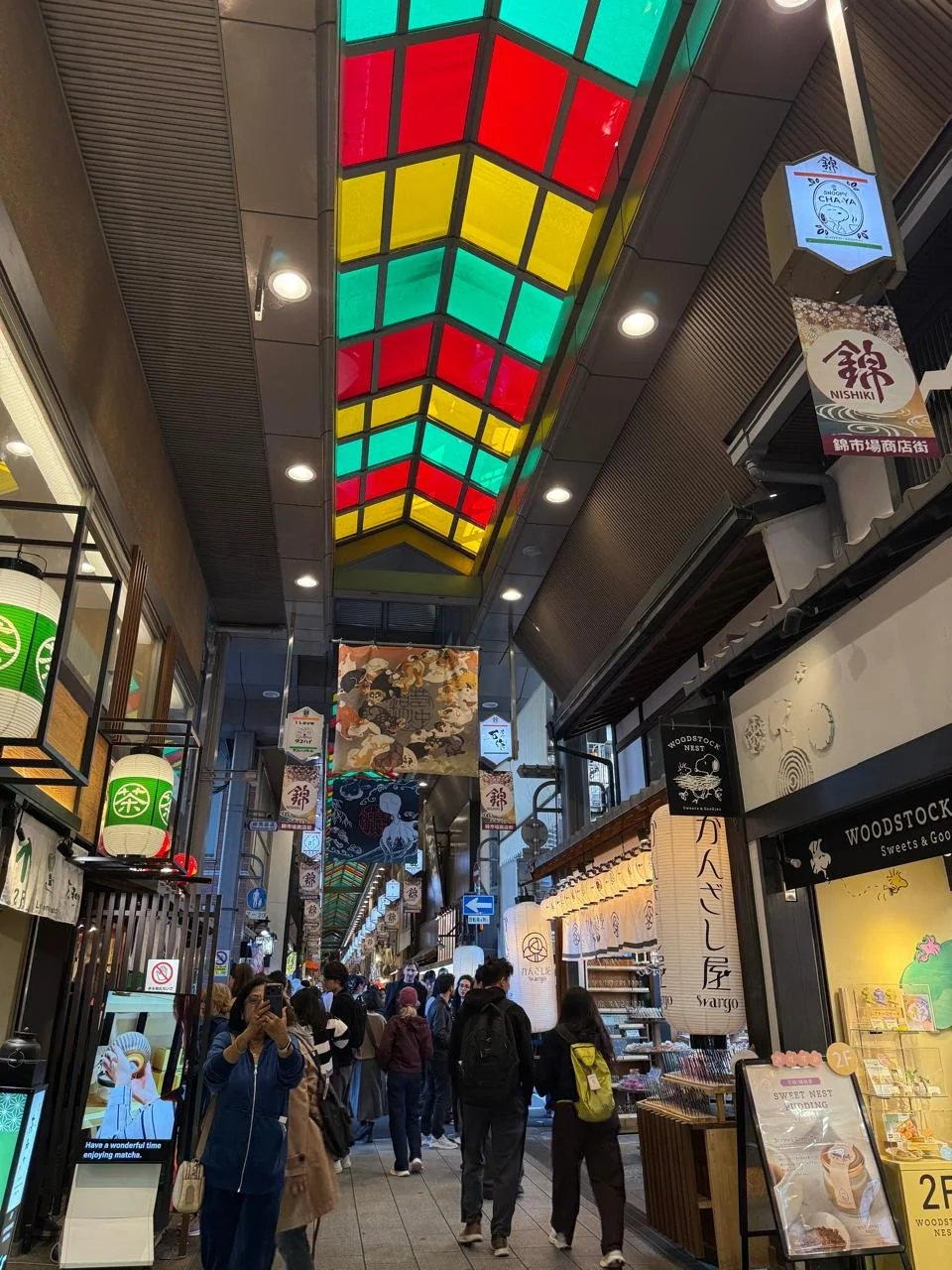
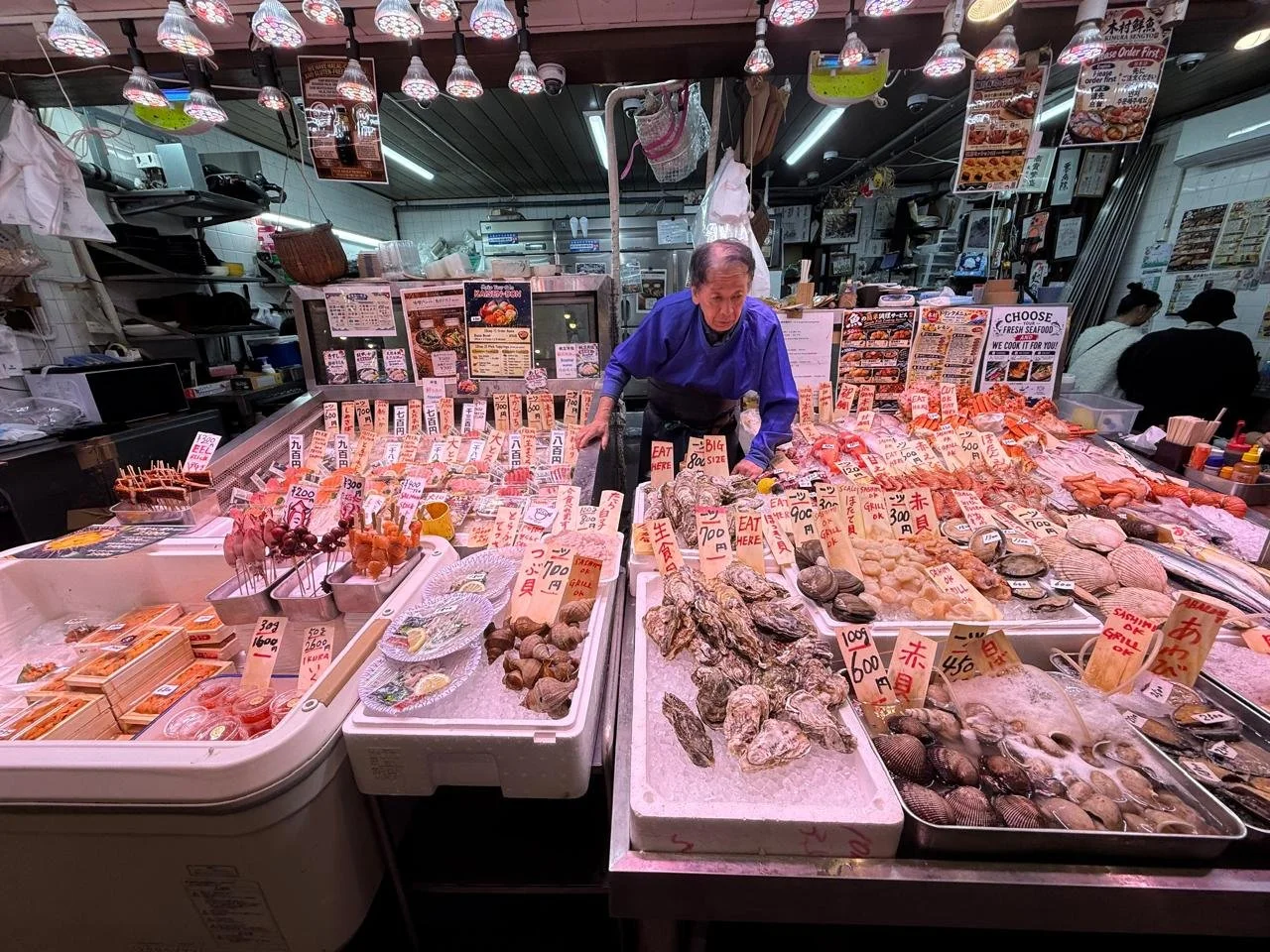
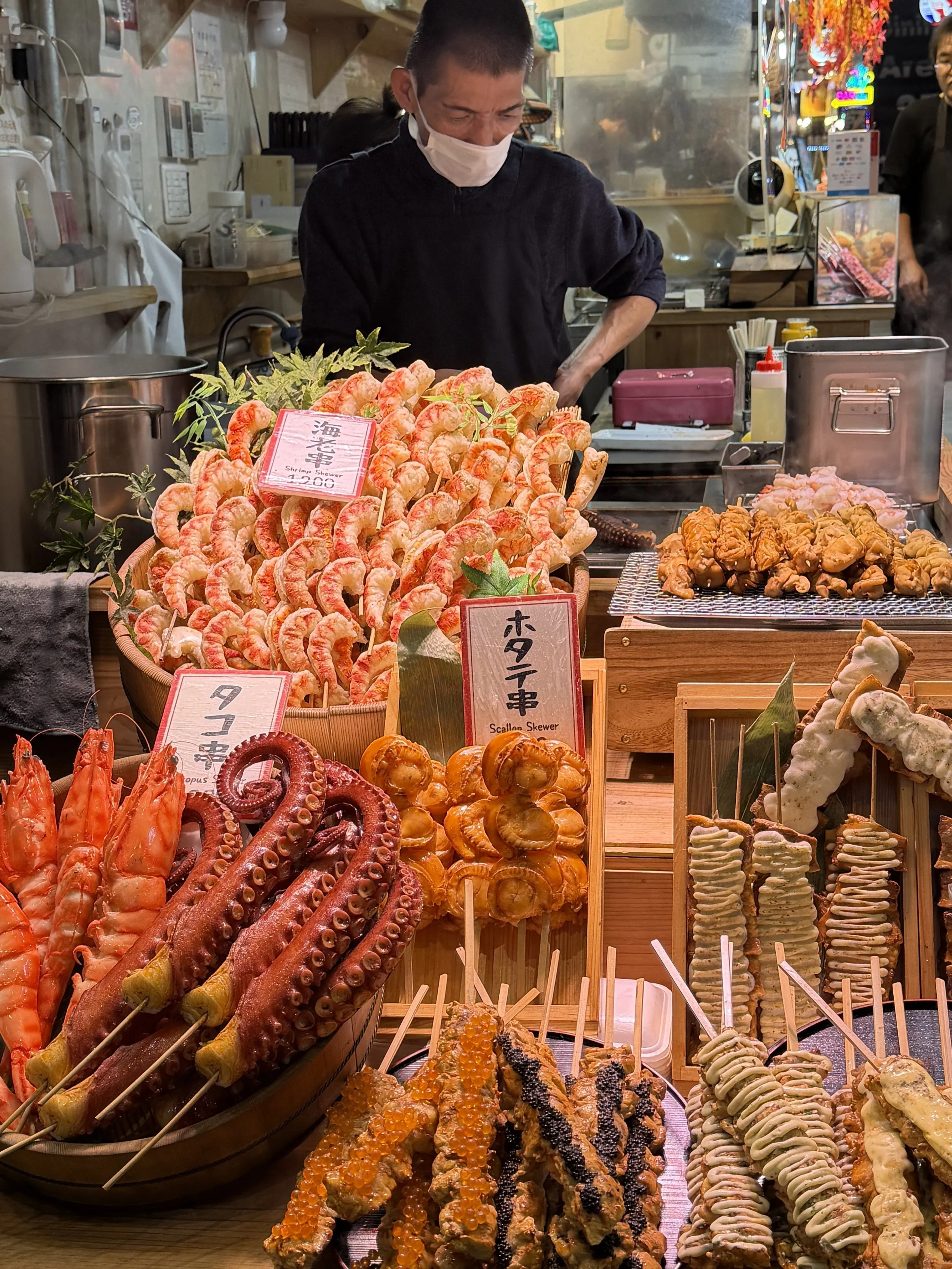
Our last stop for the day was Nishiki Market, a narrow, five-block shopping street affectionately known as “Kyoto’s Kitchen.” With more than 100 stalls offering local street food, fresh produce, seafood, and all kinds of delicacies, it was a feast for the eyes. Our stomachs, however, were still quite full from the day’s culinary adventures, so we contented ourselves with wandering through the market, admiring the tempting displays rather than sampling everything in sight!
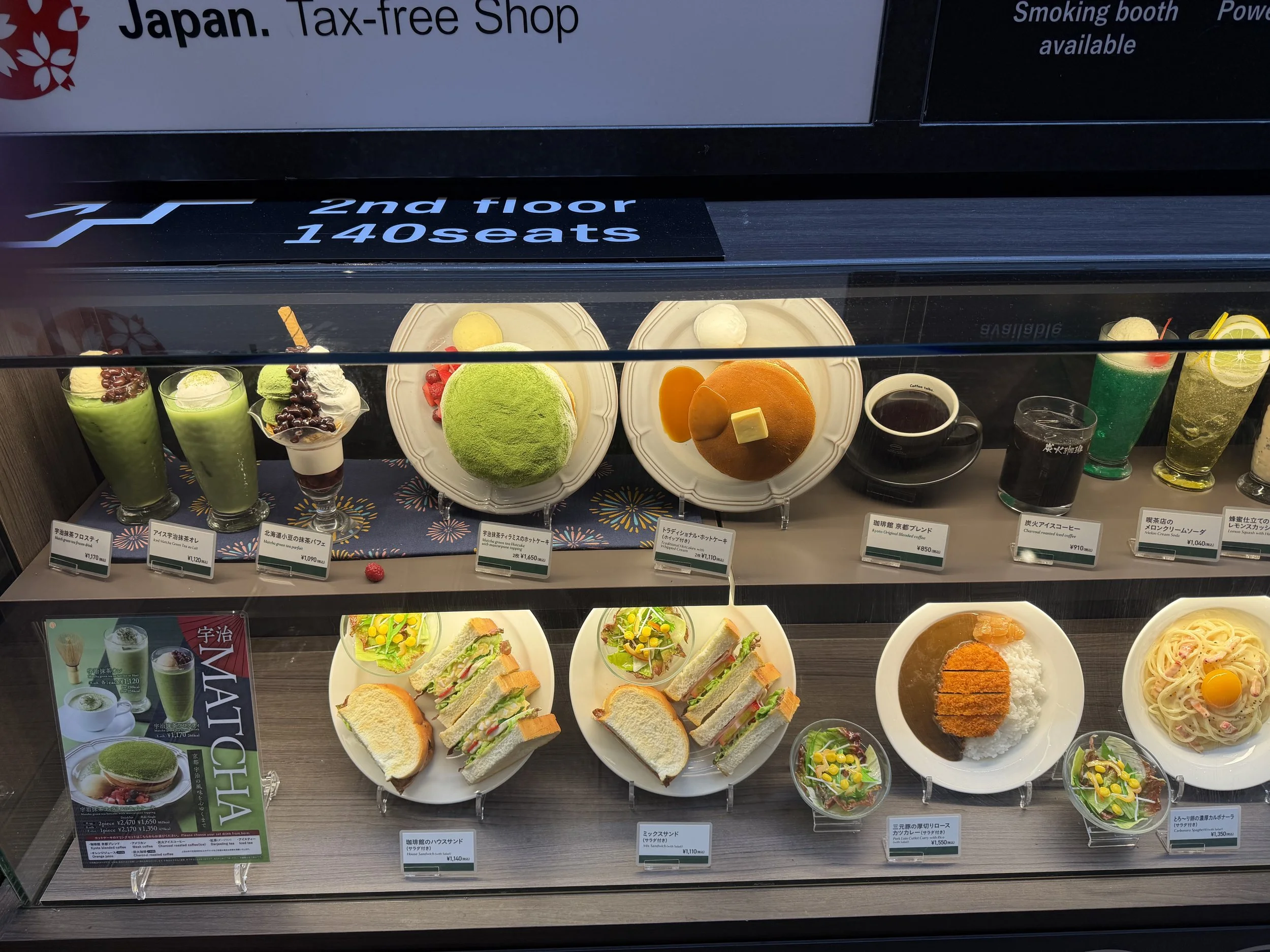
One thing we consistently noticed throughout Japan was the extraordinary attention given to the presentation of food. Whether it was a simple packaged meal at a 7-Eleven or Lawson convenience store, an elegant dish in a fancy restaurant, or a snack at a street-food stall, everything looked beautifully arranged, inviting, and absolutely mouthwatering. Even the most ordinary food seemed to receive the royal treatment!
We were chatting with Mr. Miao, asking whether he could recommend a good sushi and sashimi restaurant near our hotel where we could pick up something for dinner. He suggested something rather unexpected—a supermarket! So, off we went, and what a delightful discovery it turned out to be. The fresh vegetables and fruit were wonderful (the grapes were practically twice the size of the ones we get in the United States!), and the packaged sushi and sashimi were exceptionally fresh and delicious. Who knew a supermarket could turn out to be such a culinary destination?
As I approached the checkout counter, I suddenly noticed Mr. Miao arriving with two packets of sashimi and two cups of milk pudding. He insisted that these were little gifts from him. We protested, of course, saying that we couldn't possibly accept them, but he was having none of it! After some back-and-forth, we finally compromised and accepted one packet of sashimi and one pudding. It was such a thoughtful gesture, and one that touched us deeply.
I had already given him a generous tip of 10,000 yen because he had been exceptionally kind and helpful, anticipating our needs and looking after us so well during our tours of Kobe and Kyoto. But our conversations with him had also given us a glimpse into the person behind the excellent tour guide. He had shared that he was an only child, raised by a single mother who still lived in China. Unable to bring her to live with him in Japan, he had decided to pursue engineering courses and move to Germany, hoping eventually to create a life where he could take care of her. His devotion to his mother touched my heart, perhaps especially because I had been a single mother myself. I could understand the sacrifices a parent makes for a child, and I admired his determination to give his mother the best life he could. His kindness, thoughtfulness, and sense of responsibility spoke volumes about his character.
When Mr. Miao dropped us off at the hotel that evening, we thanked him profusely for everything he had done for us. He thanked us just as warmly. It was one of those lovely encounters that make travel so memorable—not just the temples, gardens, markets, and beautiful sights, but the people we meet along the way. We felt truly fortunate to have had him as our guide. And with one more day ahead, including our much-anticipated visit to Nara, we were confident that our final day in the Osaka-Kyoto region would be just as wonderful as the days before it. Japan had been generous with its sights, its food, and, most importantly, its people!
Kinkaku-ji, the Golden Pavilion
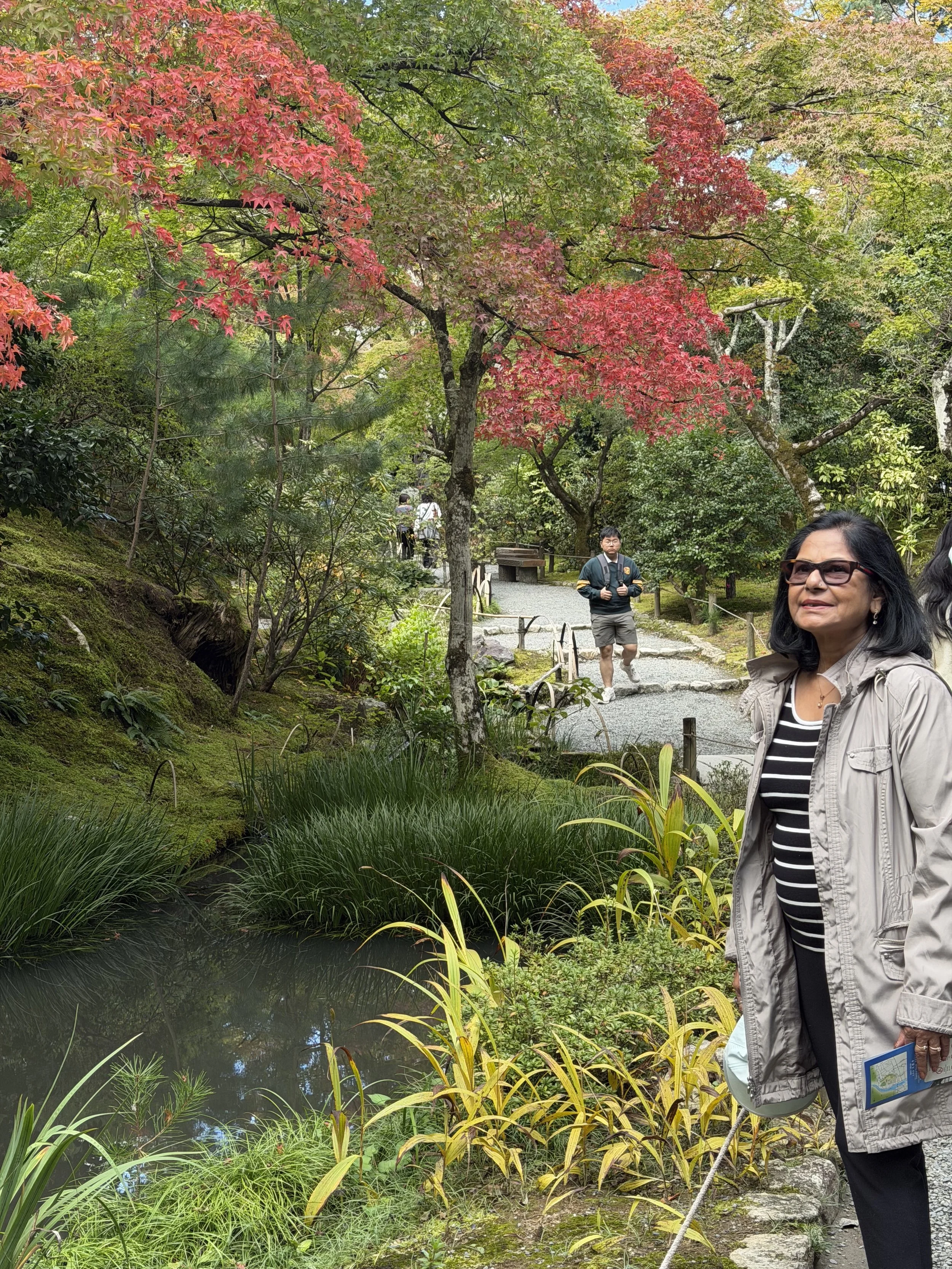
Fushimi Inari Taisha
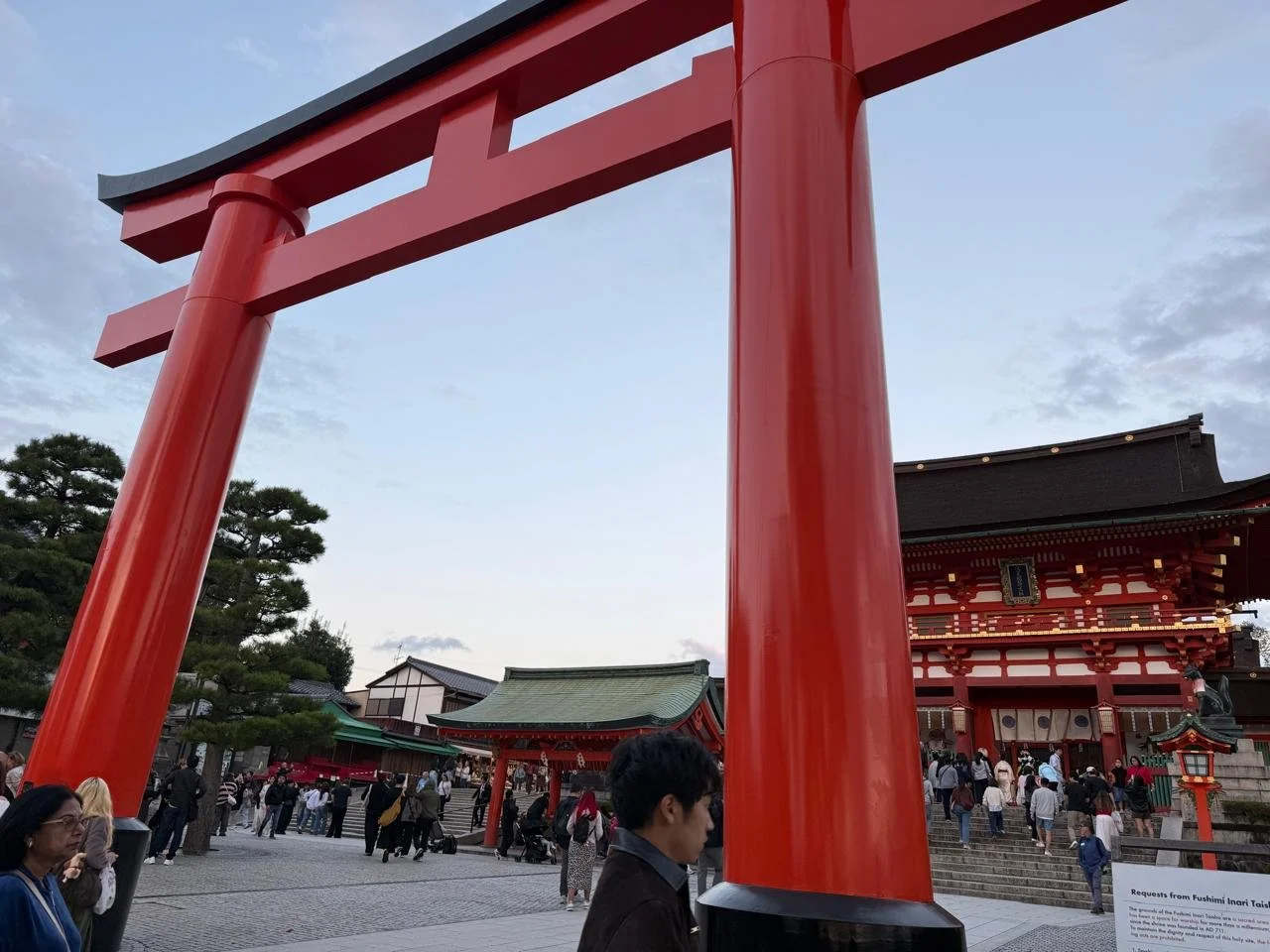
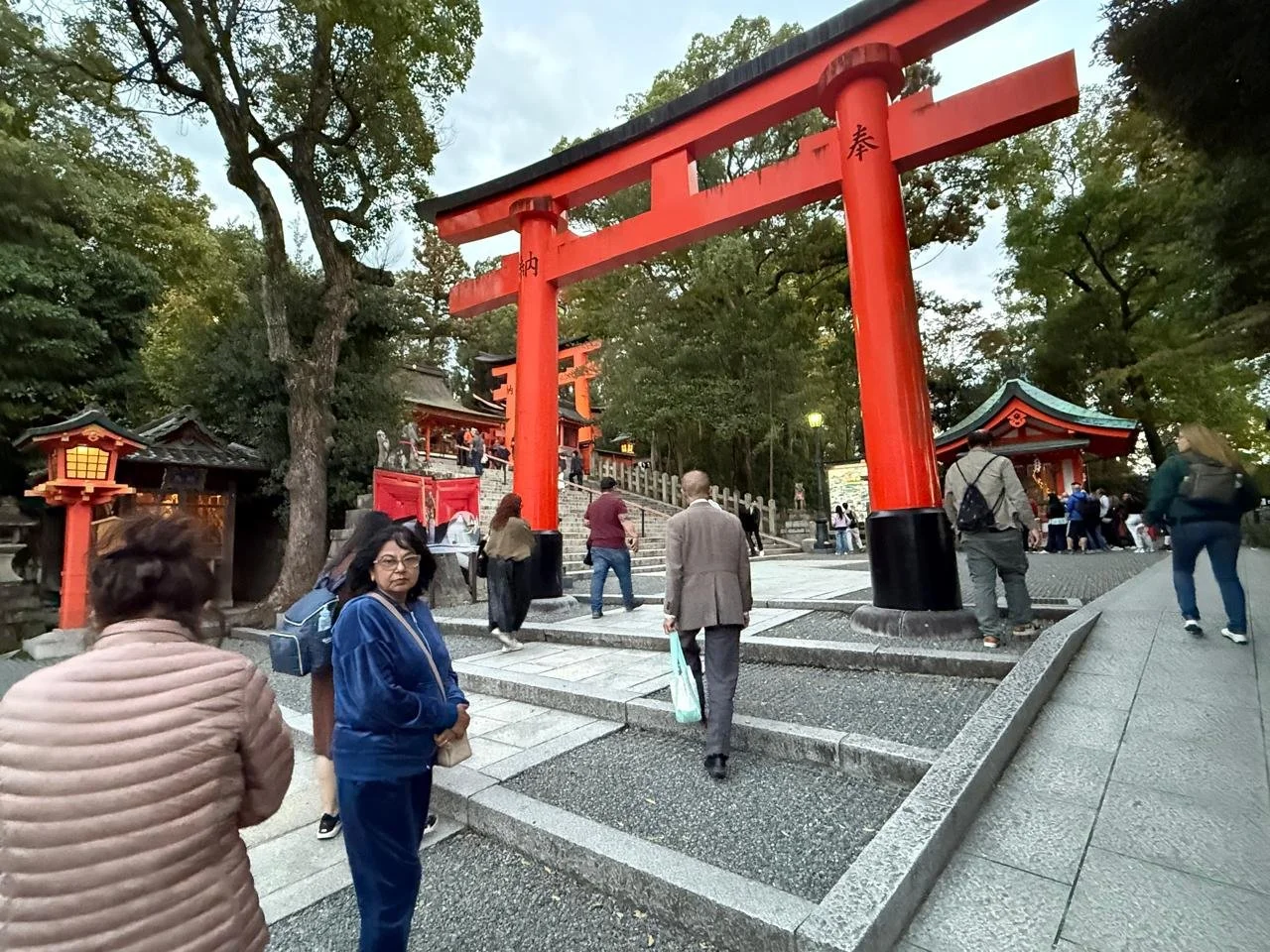
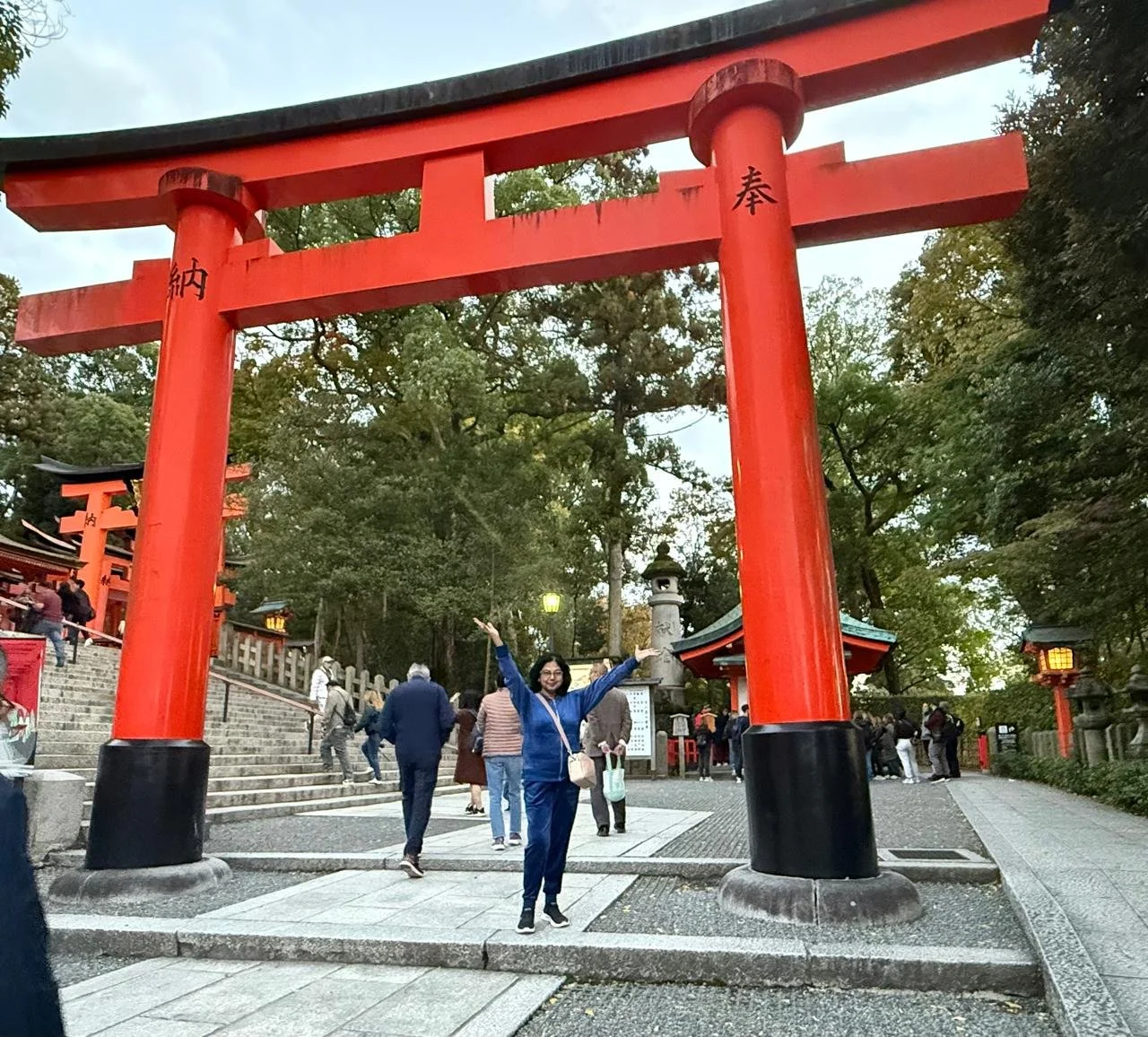
Kiyomizu-dera
Our Delicious Lunch!
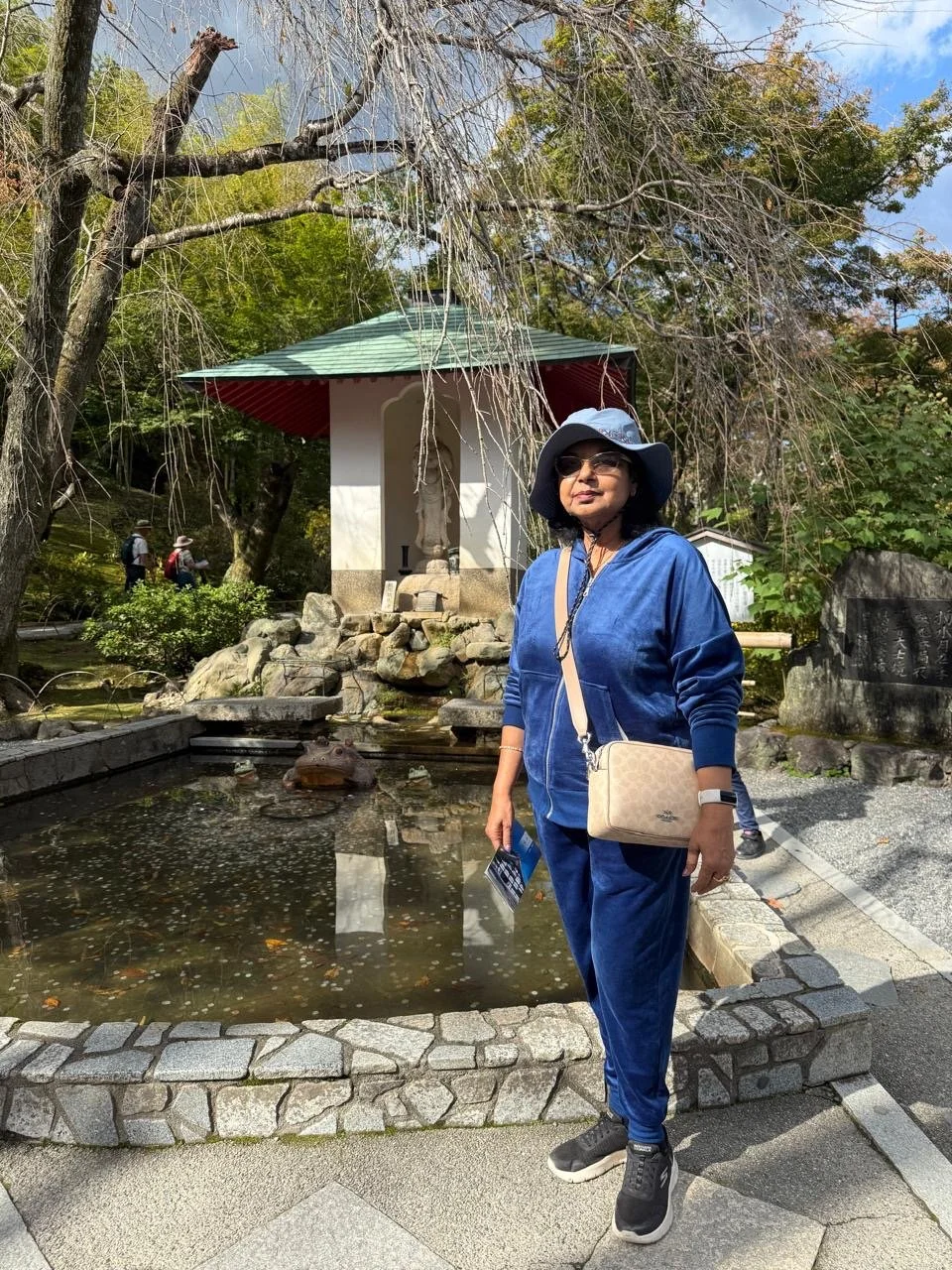
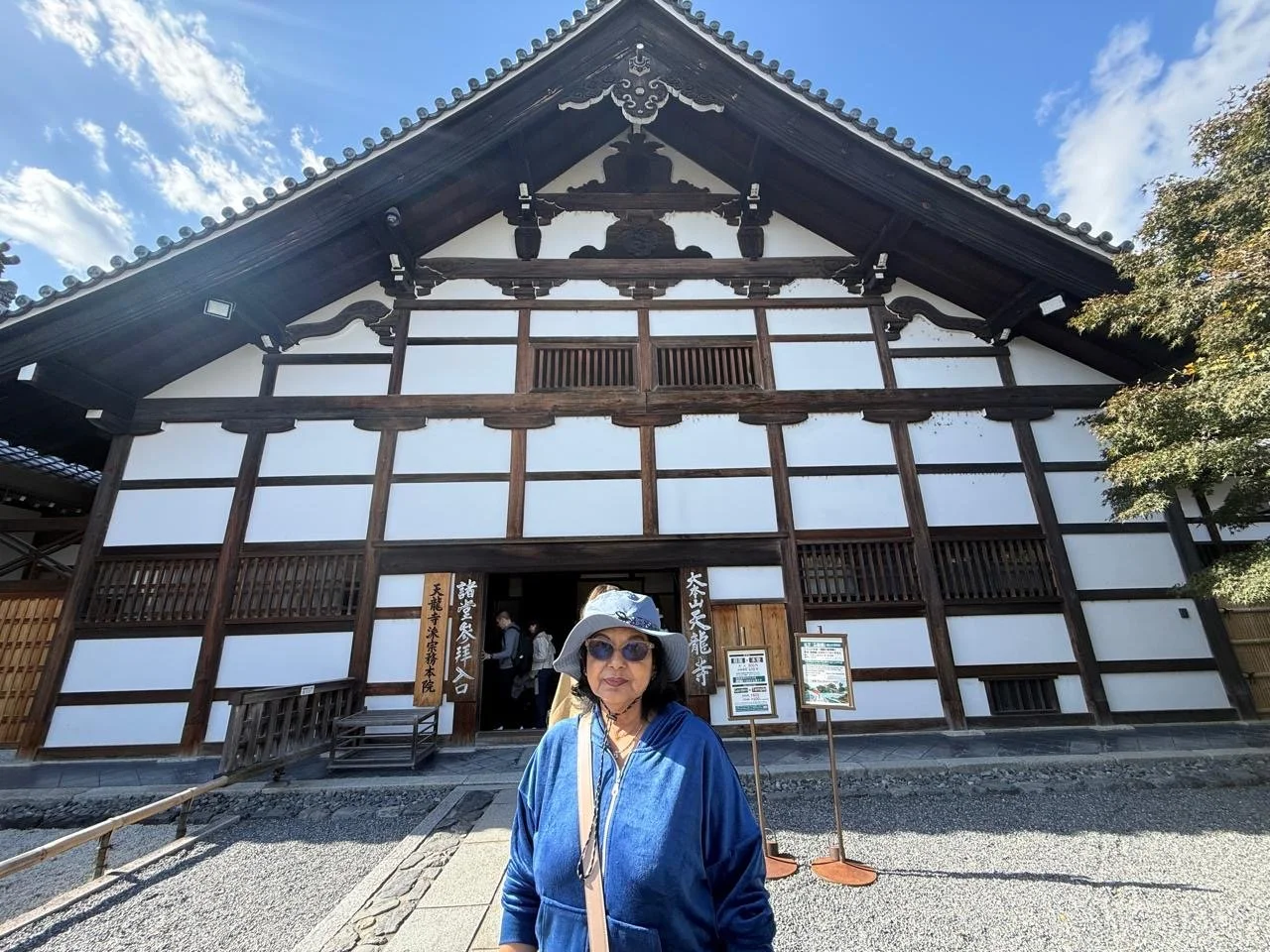
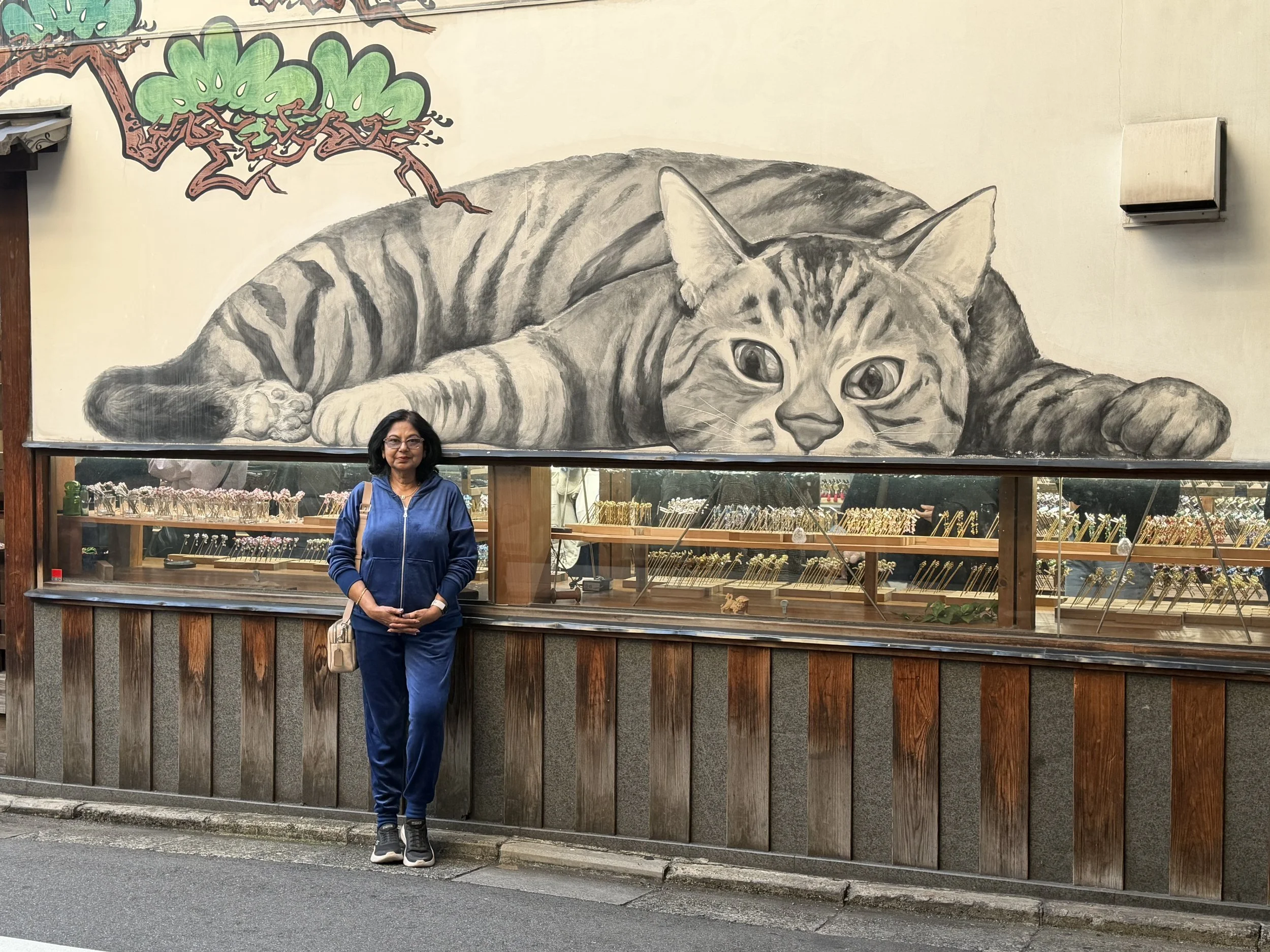
Arashiyama Bamboo Grove
Nishiki Market
Nara: Sacred Deer, a Giant Buddha, and a Fond Farewell to Mr. Miao
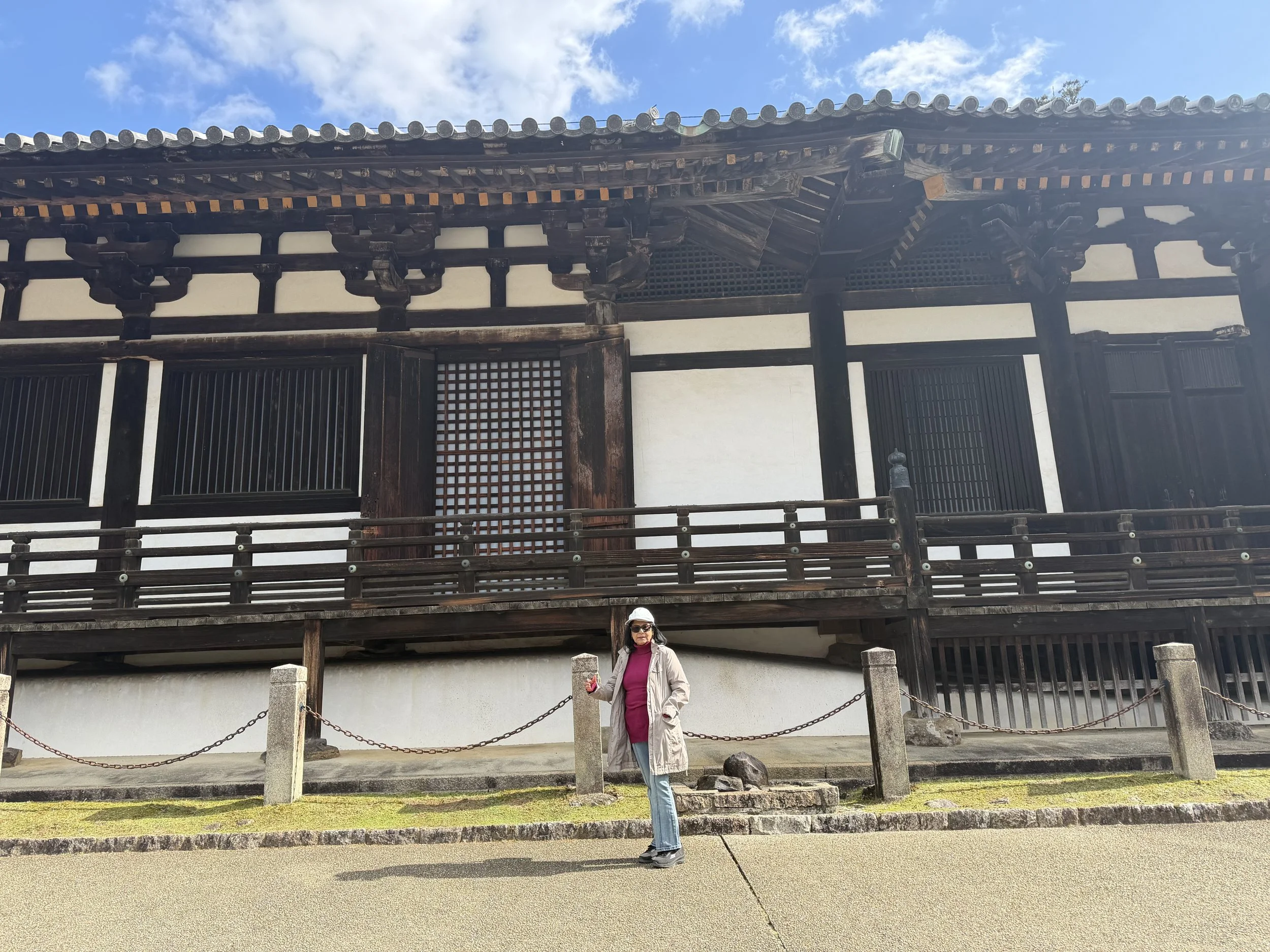
Our last day in Osaka had arrived, and a visit to Nara was on the agenda. Right on time, our wonderful Mr. Miao arrived to whisk us away for the approximately 40-kilometre drive, which took about an hour. Nara Park, our destination, is a sprawling 502-hectare public park in the heart of Nara, established in 1880 and famous for its historic temples and more than 1,700 free-roaming sika deer. Nara itself holds a special place in Japanese history, having served as Japan's first permanent capital, known as Heijō-kyō, from 710 to 784 AD. According to Shinto legend, a deity arrived in Nara riding a white deer, and ever since, these beautiful creatures have been regarded as divine messengers. Today, they enjoy National Natural Treasure status—and, judging by their behavior, they are also very much aware of their celebrity status! Visitors can purchase special deer crackers, and some of the deer have learned to bow politely before receiving a treat. Of course, this is Japan, where even the deer have impeccable manners! The moment we entered the park, we were surrounded by these adorable animals. They were completely unafraid of people, happily approaching us in search of food and allowing us to pet them. I particularly enjoyed stroking them, admiring their beautiful eyes and those rather moist little snouts. They were so charming that it was tempting to forget that we had come to see temples at all!
Our first stop was Tōdai-ji Temple, accompanied, naturally, by our four-legged companions. Founded in the eighth century, Tōdai-ji is a UNESCO World Heritage Site and one of Japan's most important Buddhist temple complexes. Its origins date back to 728 AD, when Emperor Shōmu established a small temple to pray for the soul of his young son, Crown Prince Motoi. Later, amid devastating natural disasters, famines, and epidemics, the emperor sought to unite and protect the country through Buddhism. In 743 AD, he ordered the construction of an enormous bronze statue of Vairocana Buddha, now known as the Great Buddha or Daibutsu. The statue was completed in 749 AD, and its grand consecration ceremony took place in 752 AD. The Great Buddha Hall, or Daibutsuden, is itself an architectural marvel. The present structure, rebuilt in the eighteenth century, is still one of the largest wooden buildings in the world, measuring approximately 57 meters across. As we entered, we were simply overwhelmed by the scale and magnificence of the place. The seated bronze Buddha, nearly 15 meters tall, was absolutely colossal. One cannot help but wonder how people managed to create such an extraordinary work of art more than a thousand years ago! We stood gazing at the intricate carvings and the two magnificent, towering Niō guardian statues, each about eight meters tall. Dating from the thirteenth century, these National Treasures were both terrifying and magnificent. Their fierce expressions seemed quite capable of keeping any unwelcome visitors at bay! We walked around the Great Buddha, observing visitors sitting quietly across from it, gazing at the statue almost in a trance. And really, who could blame them? There was something deeply moving and awe-inspiring about the sight.
After nearly three hours exploring Nara Park and Tōdai-ji, our feet were beginning to remind us that sightseeing is not quite the same as sitting comfortably in a car! We decided to skip Kasuga Taisha Shrine, famous for its thousands of stone and bronze lanterns, and instead head to Mount Wakakusayama, the grass-covered mountain behind Nara Park. Standing about 350 metres high, it offers wonderful, unobstructed views over Nara City. The slopes are lined with cherry trees, which, unfortunately, were not in bloom during our visit. One could only imagine how spectacular the landscape must look in spring. We began the climb, feeling reasonably optimistic about our physical abilities—perhaps a little too optimistic! After about 15–20 minutes of walking up a fairly steep trail, we reached a plateau halfway up the mountain, where the views were already beautiful. The summit would have required another 20–30 minutes of climbing. After three hours of walking around the park, we decided that we had earned the right to admire the mountain without conquering it! We turned back, quite content with our achievement. As the sun began to set, the golden light over the grassy slopes and the city below made for a beautiful end to our Nara adventure.
There was, however, one small disappointment. We had hoped to explore the Naramachi District, with its winding traditional lanes, local sake, and charming handicraft shops. My sister was particularly keen to pick up a few souvenirs, but with the afternoon slipping away and traffic beginning to build as office workers headed home, we had to abandon that plan and return to Osaka. I felt terribly sorry for her, of course—being the kind-hearted and compassionate sister that I am! I am sure she would agree that I deserve a medal for my sympathy, even if I couldn't produce the souvenirs! Still, the sunset from Mount Wakakusayama was a lovely consolation, and we ended the day feeling grateful for everything we had experienced.
But there was another farewell awaiting us. The following morning, we would be leaving for Hiroshima by Shinkansen, and we knew we would dearly miss Mr. Miao. Over our days together in Kobe and Kyoto, and now Nara, he had become much more than just our driver and guide. His kindness, warmth, patience, and genuine concern for the two old ladies in his care had made our experience so special. We took a photograph with him as a keepsake, and there were heartfelt wishes on both sides that we might meet again someday. He repeatedly encouraged us to contact him if we visited China next year, and we certainly intend to do so! I also hope to keep in touch and follow his journey as he works towards fulfilling his dreams, especially his wish to care for his mother. We wished him nothing but happiness and success. It was a bittersweet goodbye, but what a wonderful person to have crossed paths with on our travels! We returned to the hotel, packed our bags, and retired for the night with a mixture of happy memories and curiosity about the next destination. Hiroshima awaited us—a city whose history is deeply moving and whose story, we felt, was essential to understanding Japan. Our Japanese adventure was far from over!
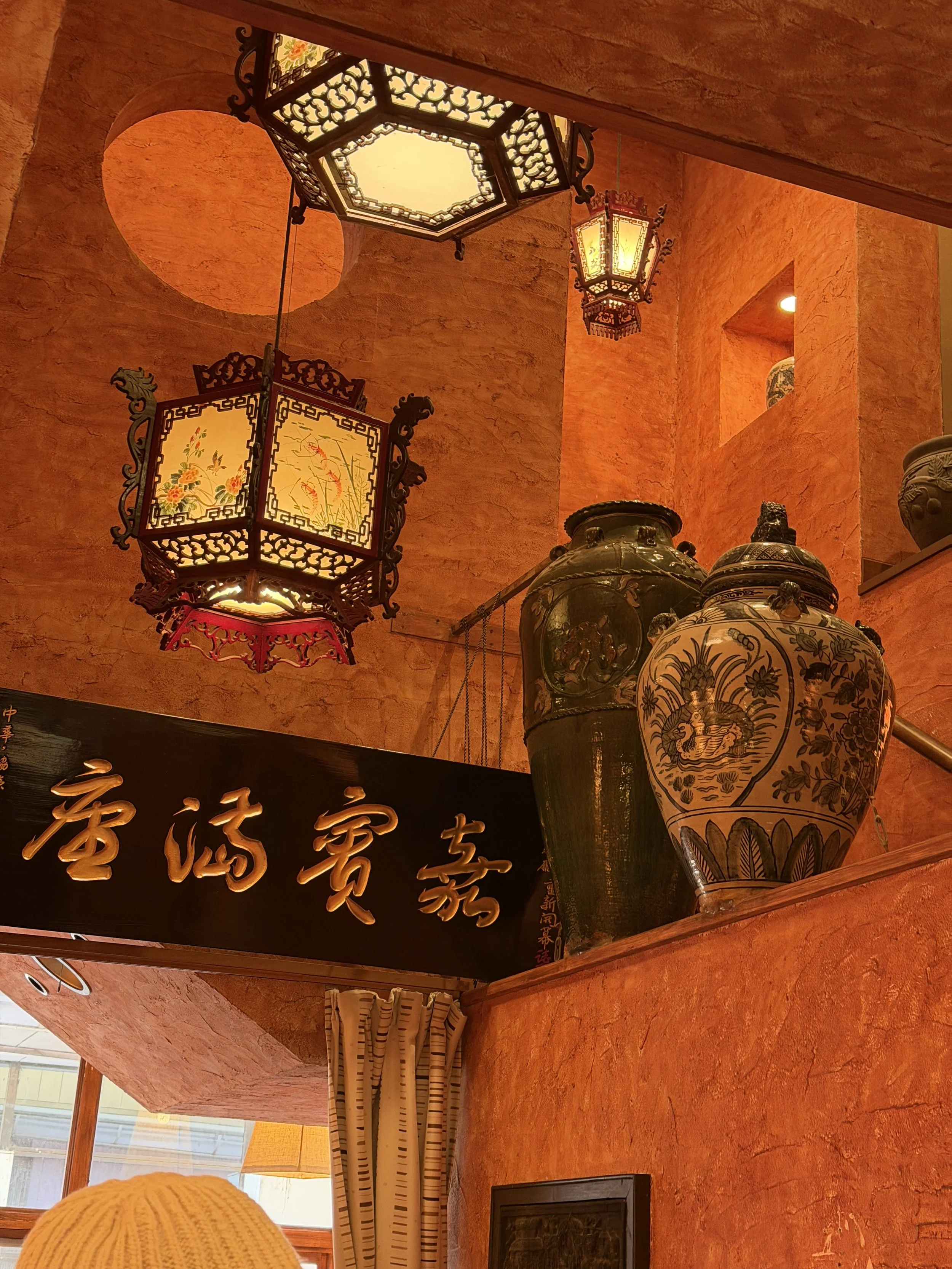
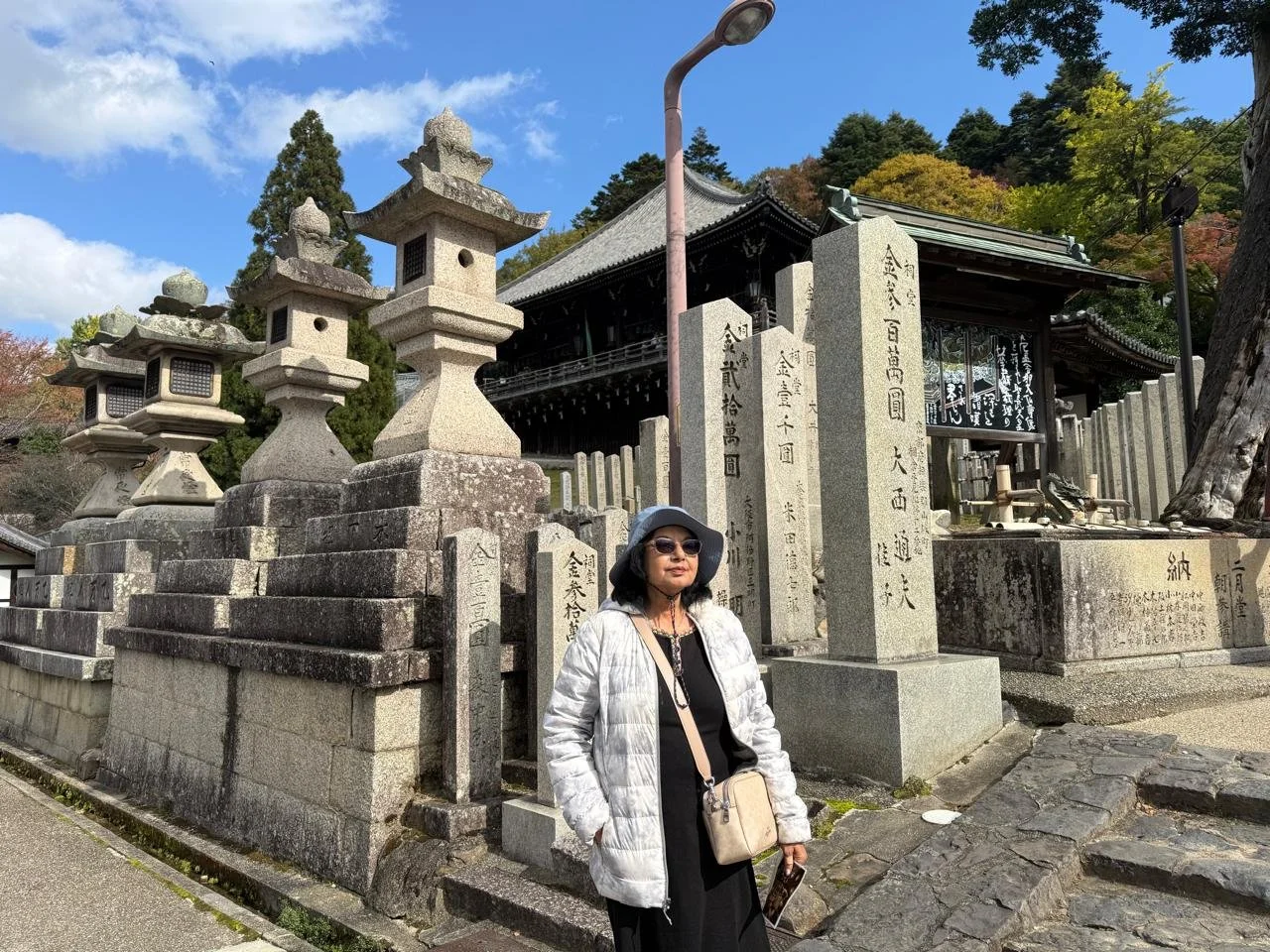
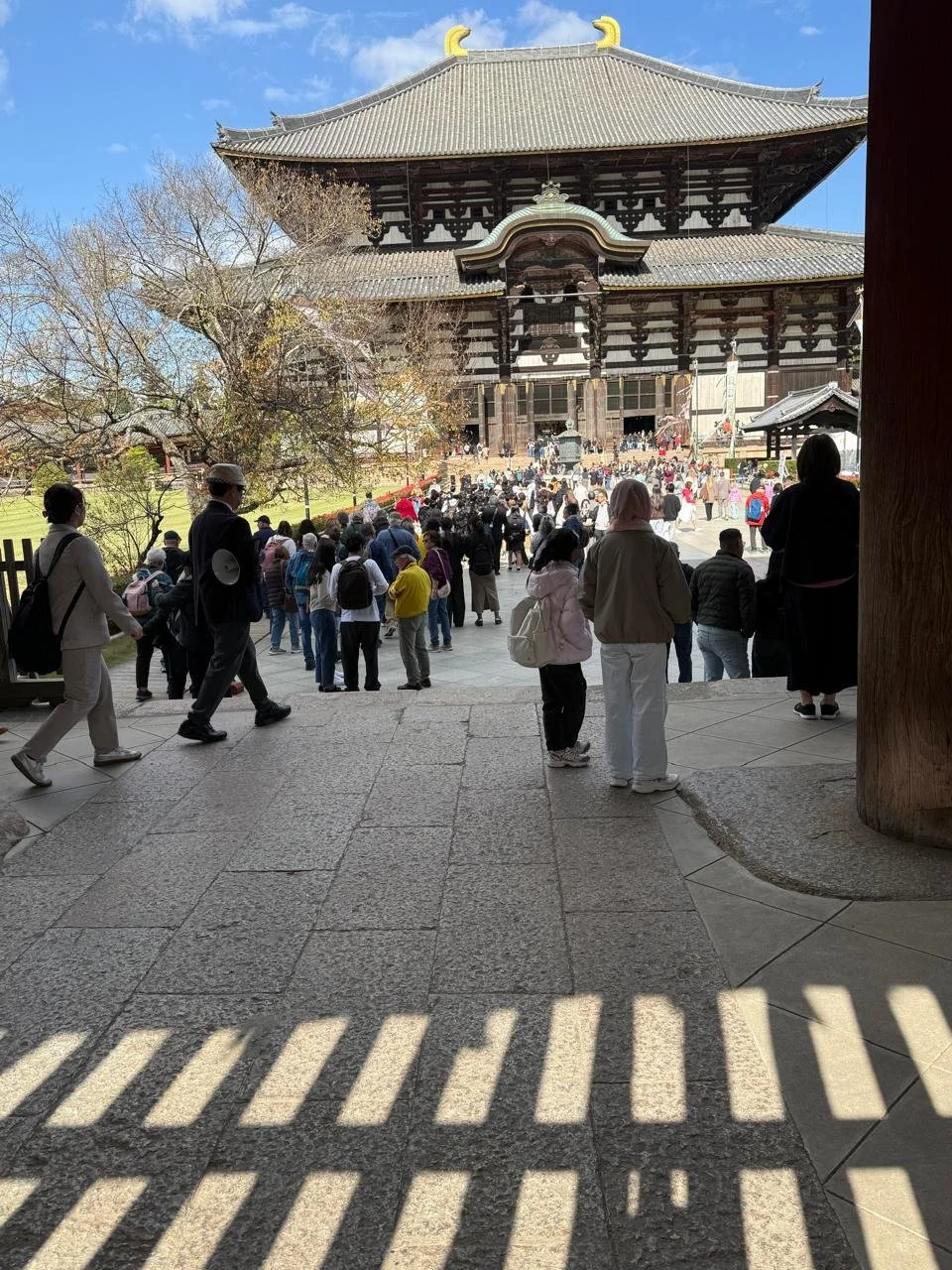
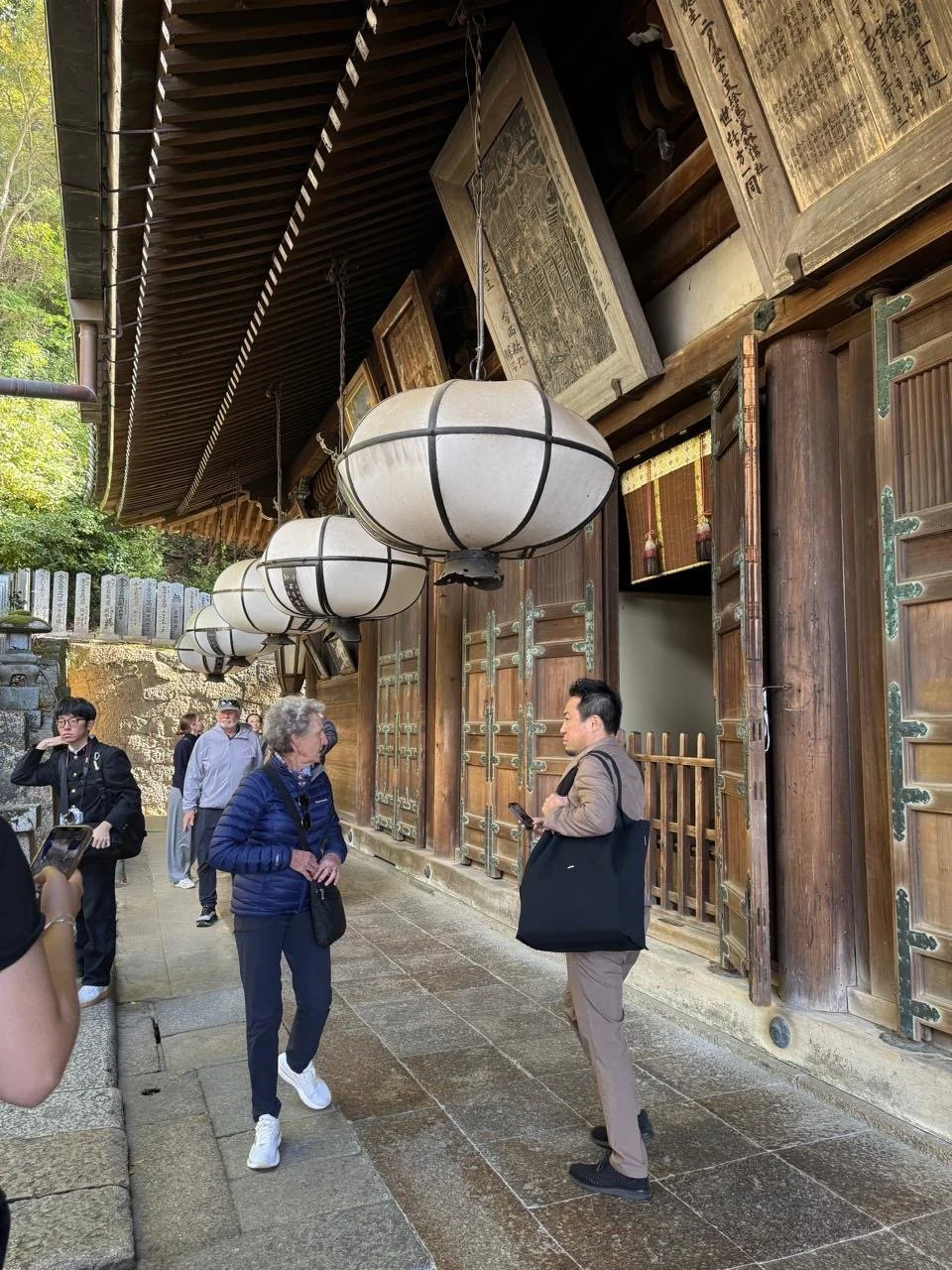
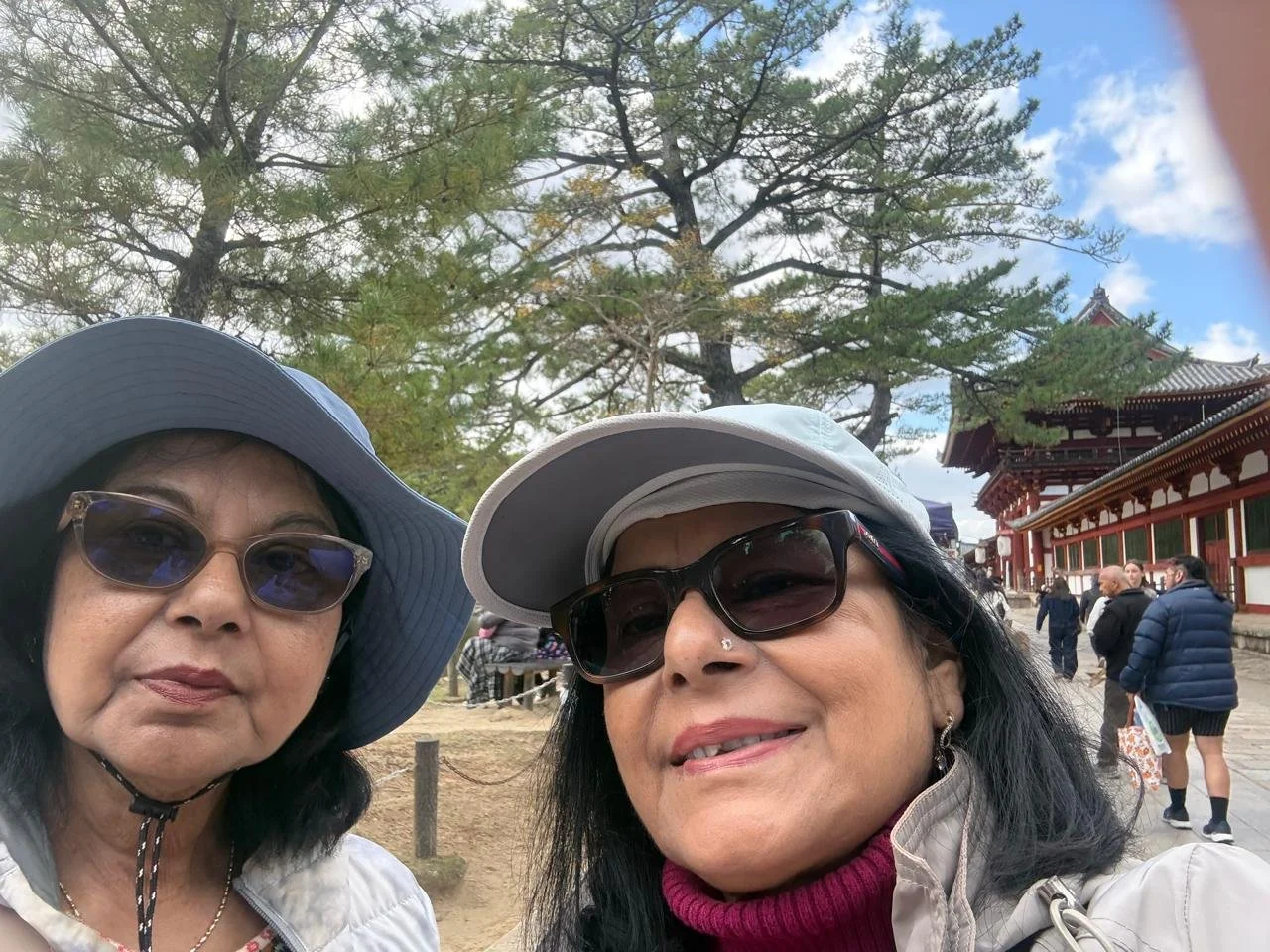
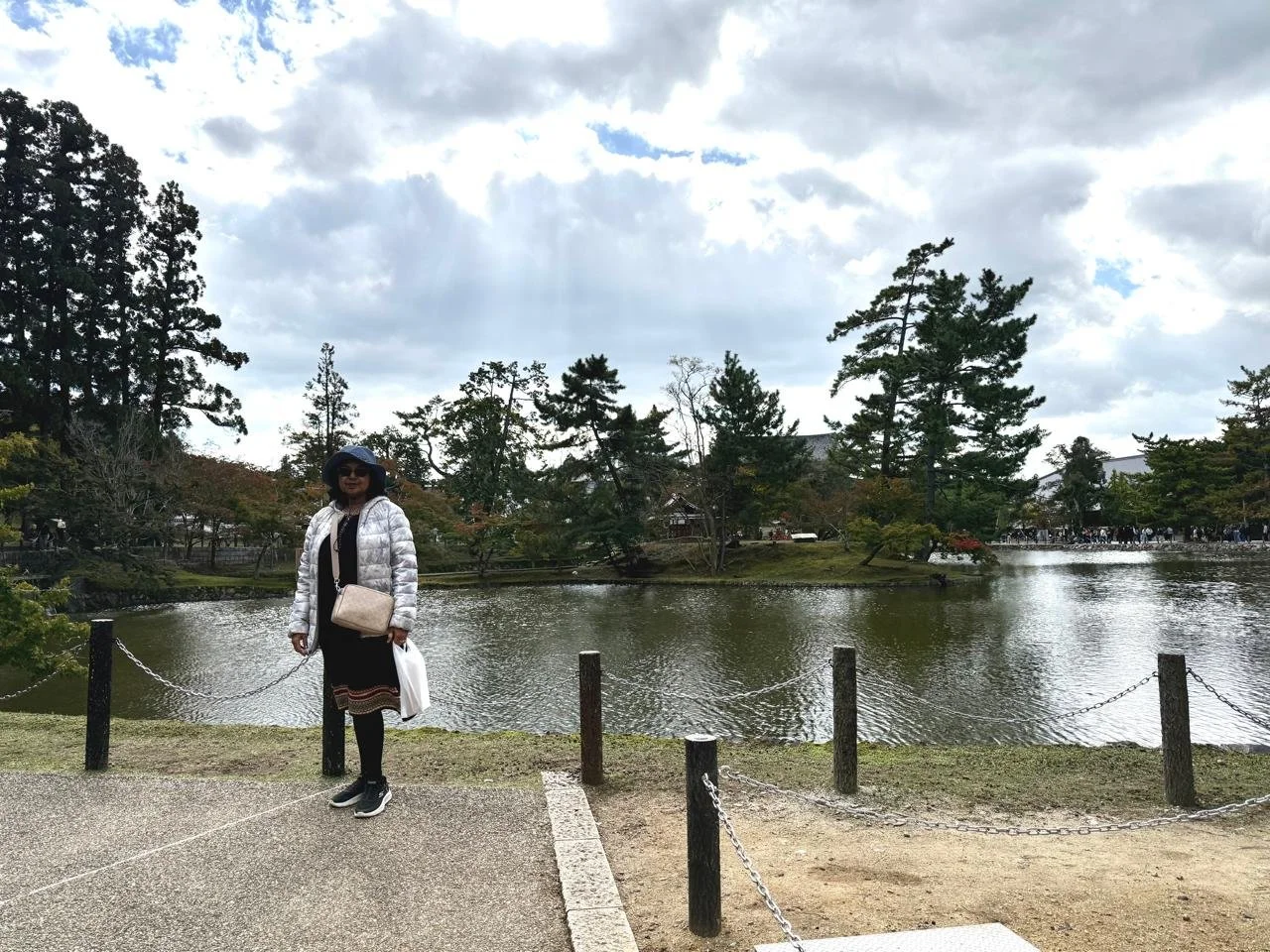
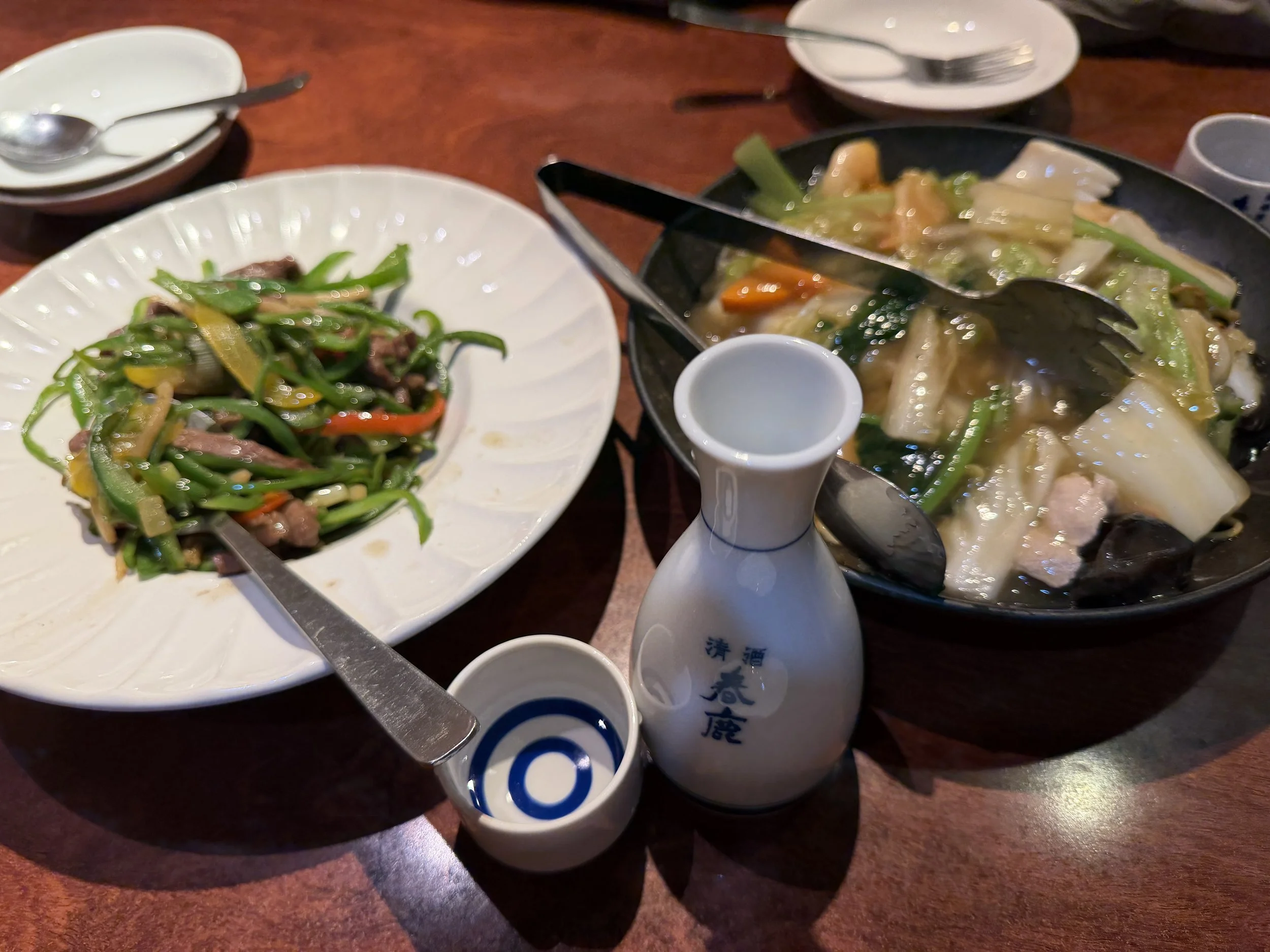
Excellent!
Sashimi from the Supermarket
Mount Wakakusayama
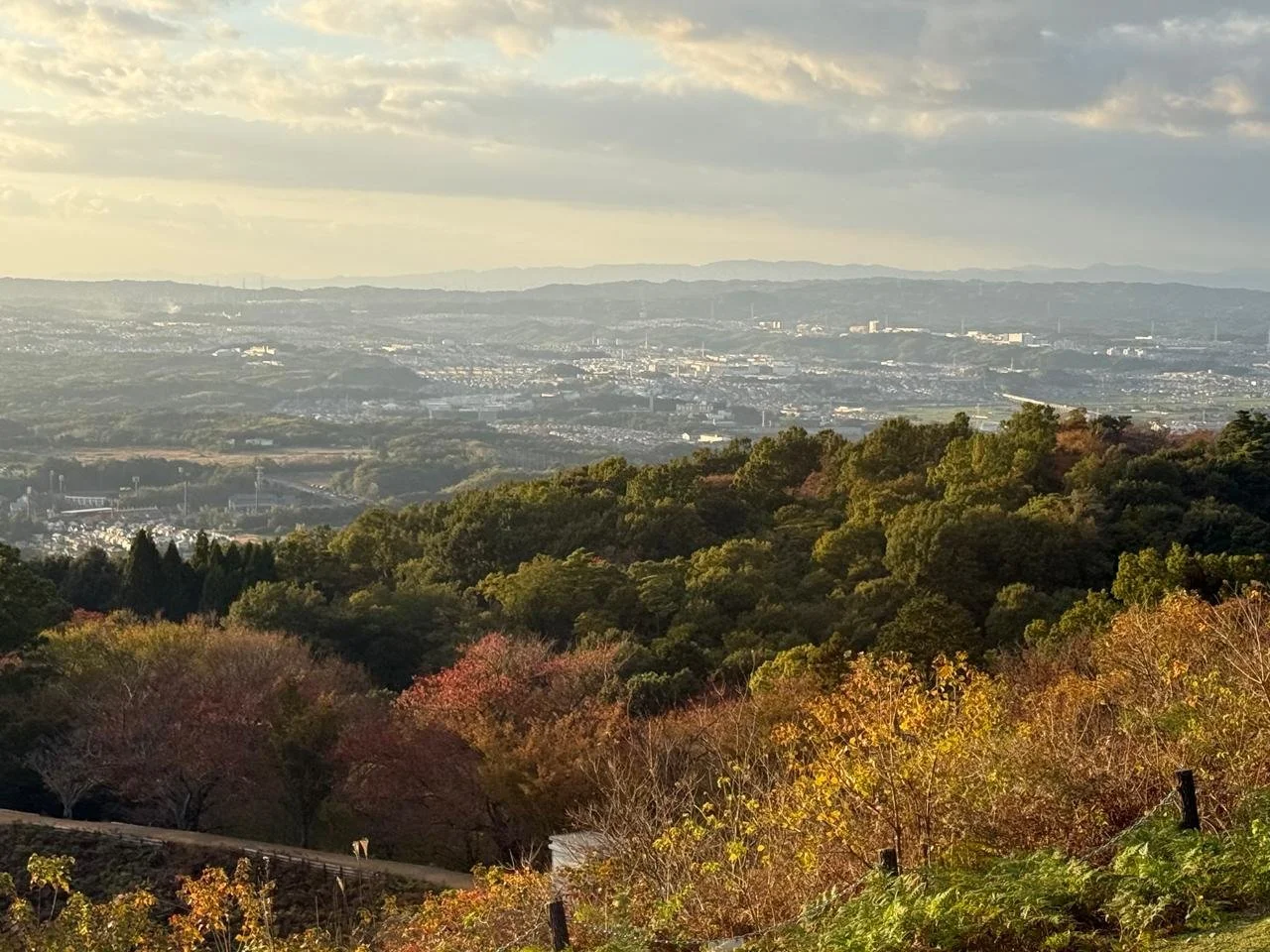
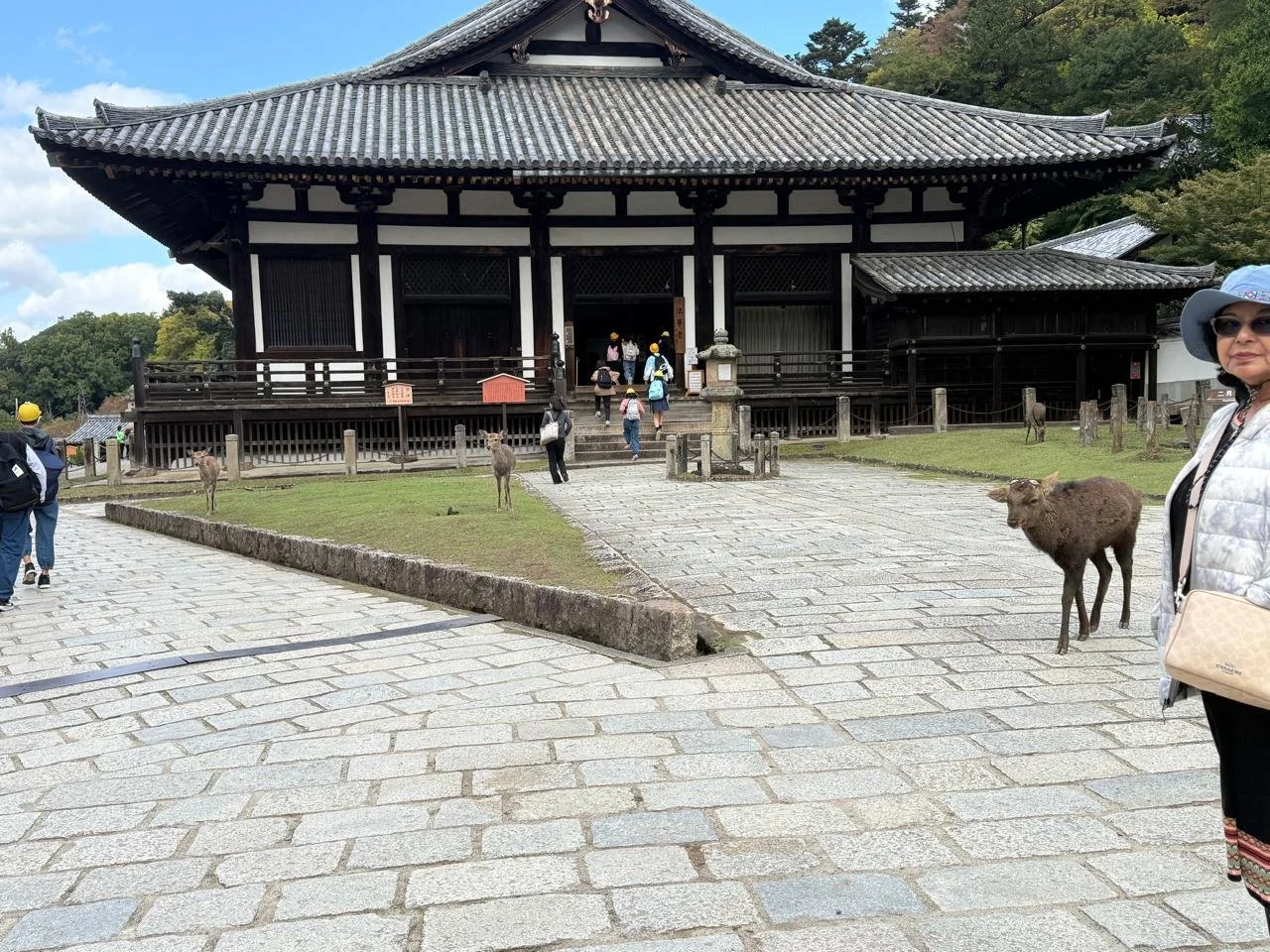
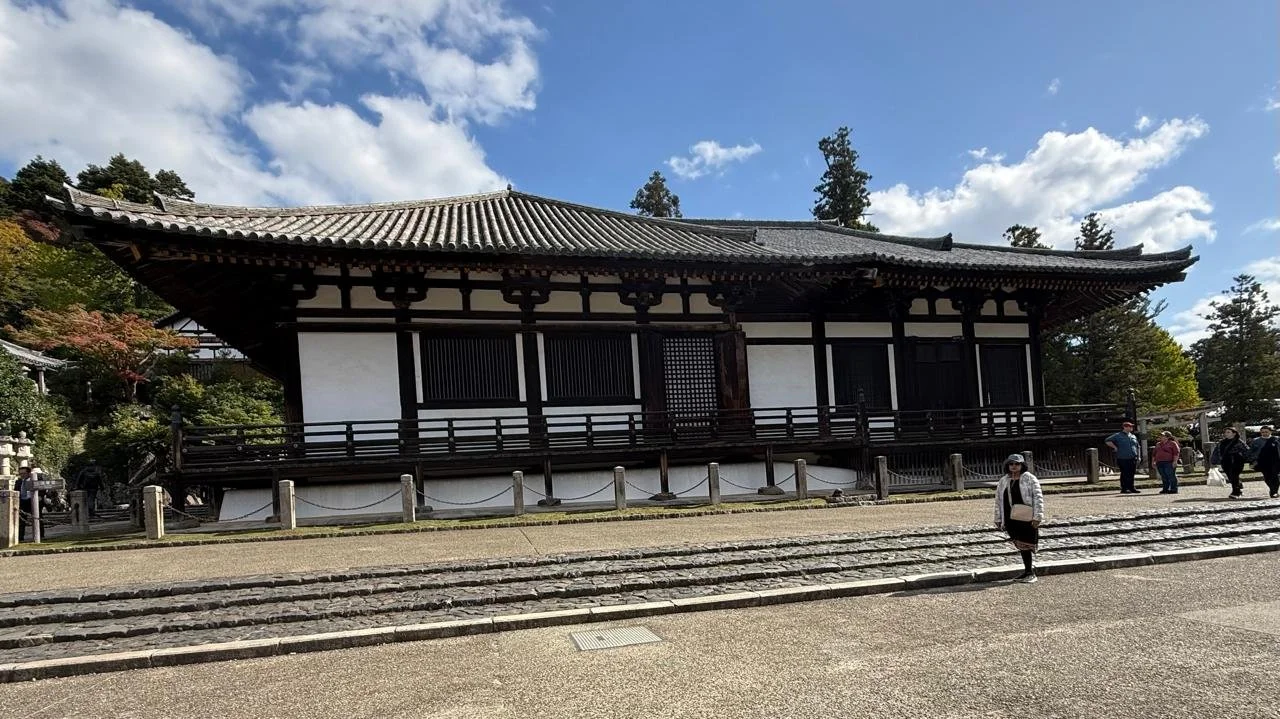
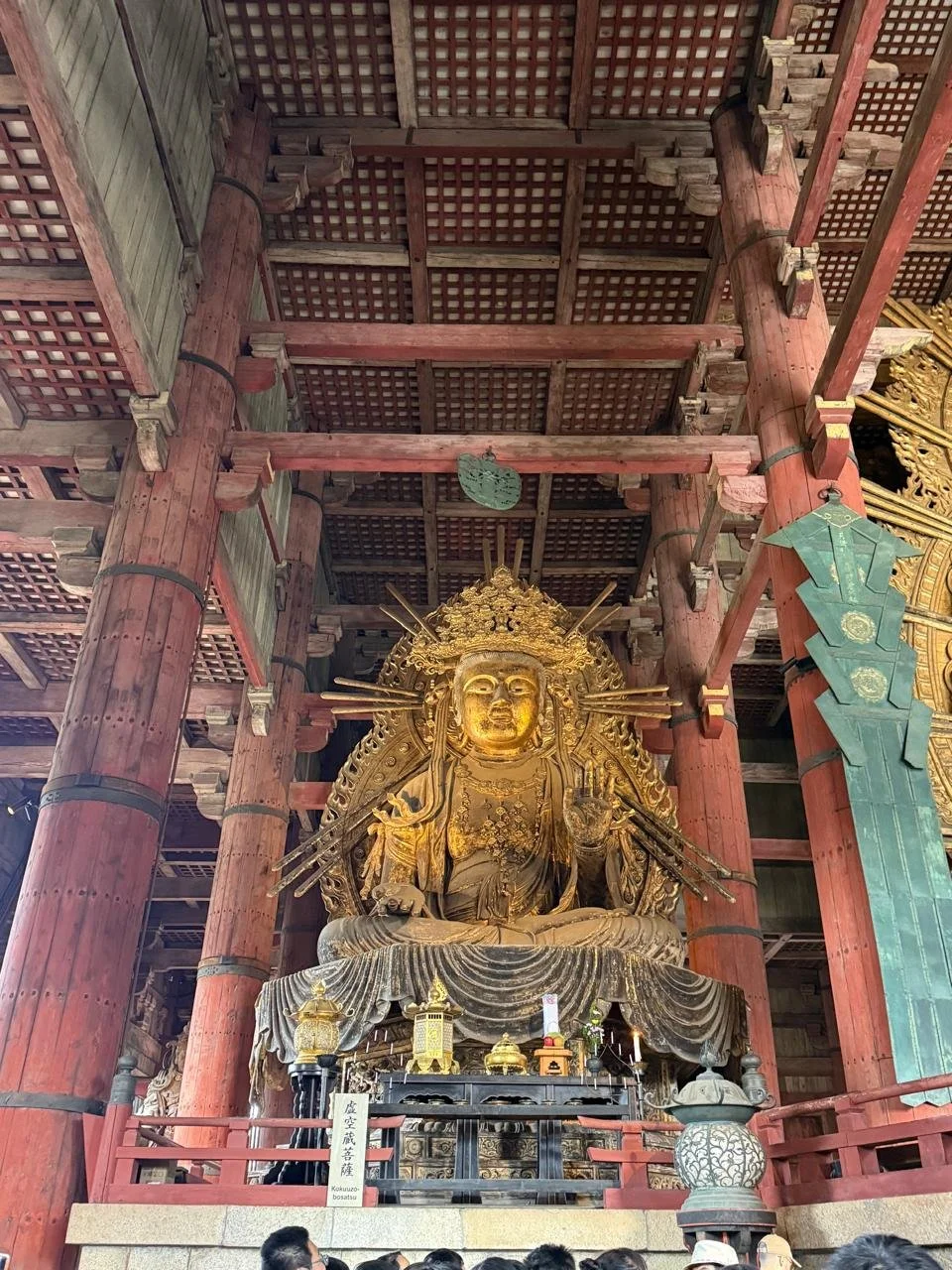
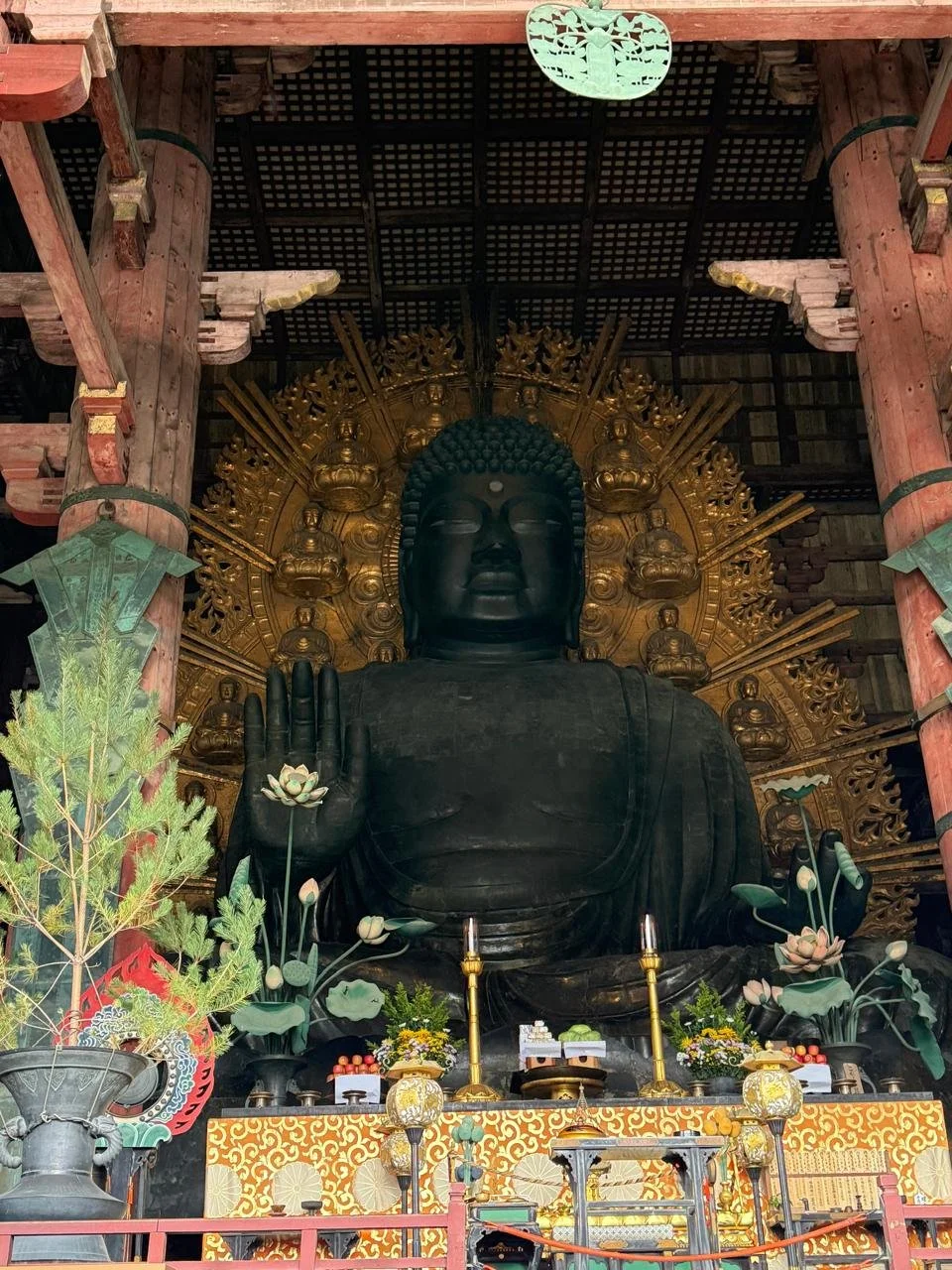
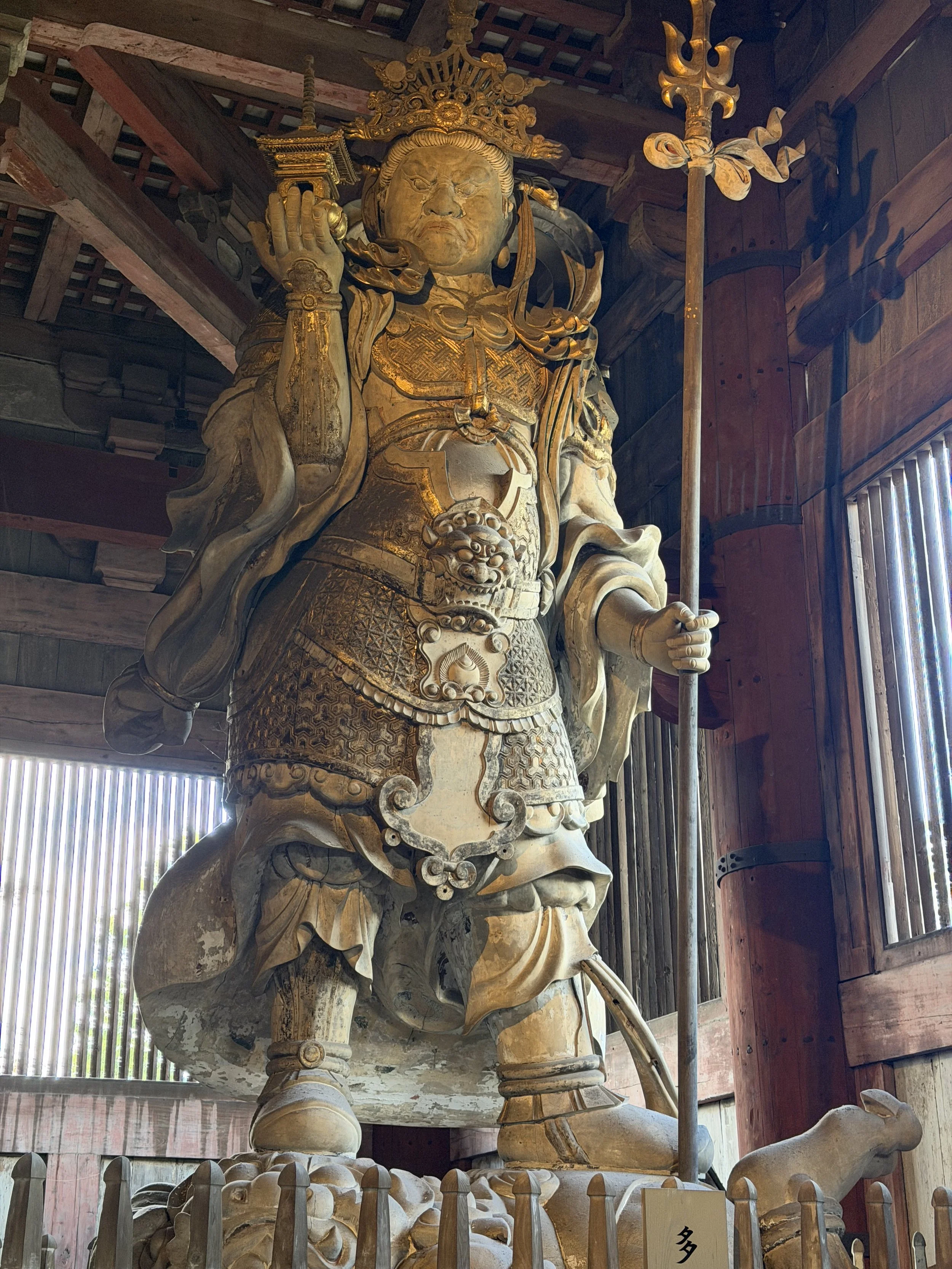
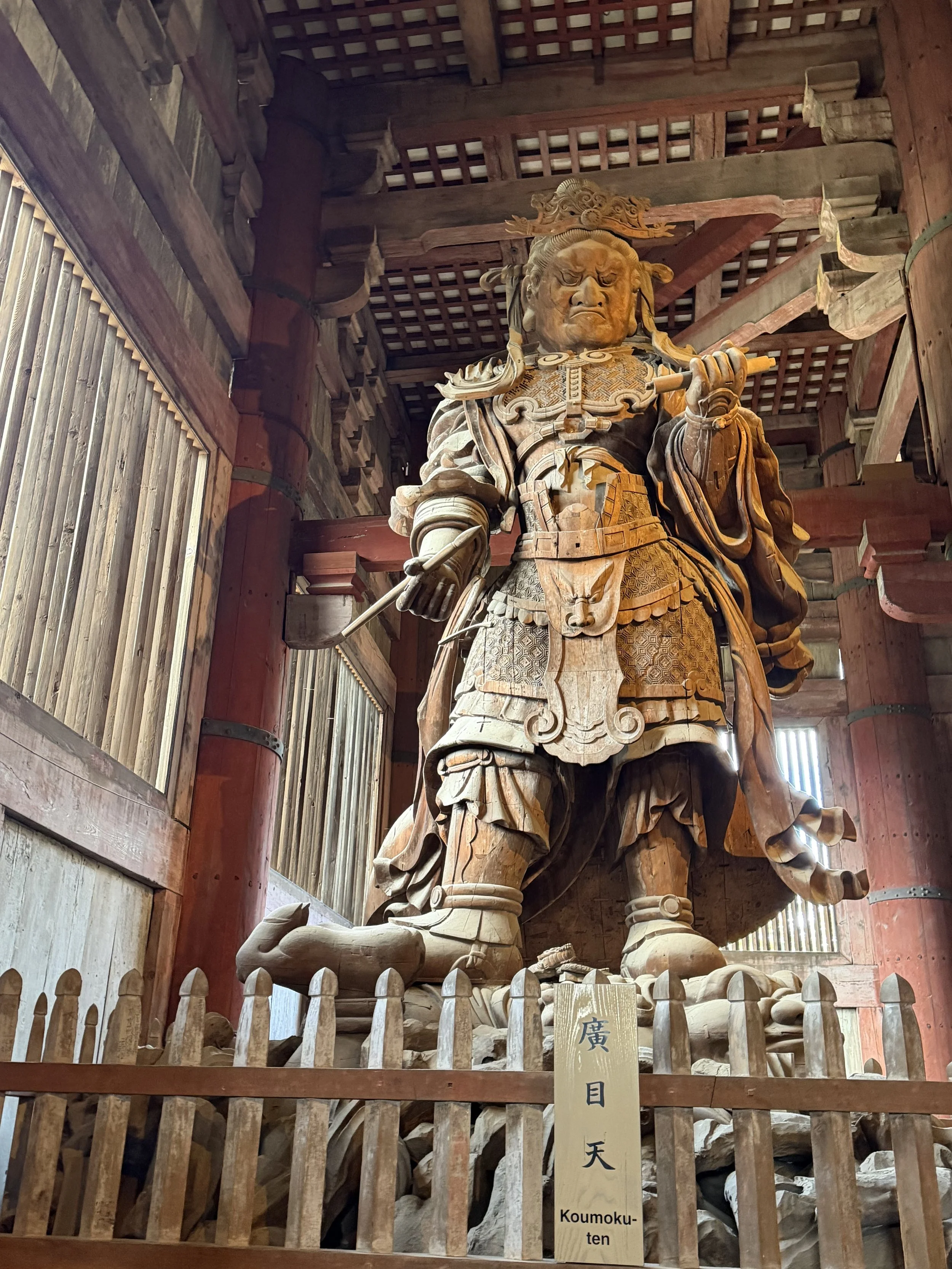
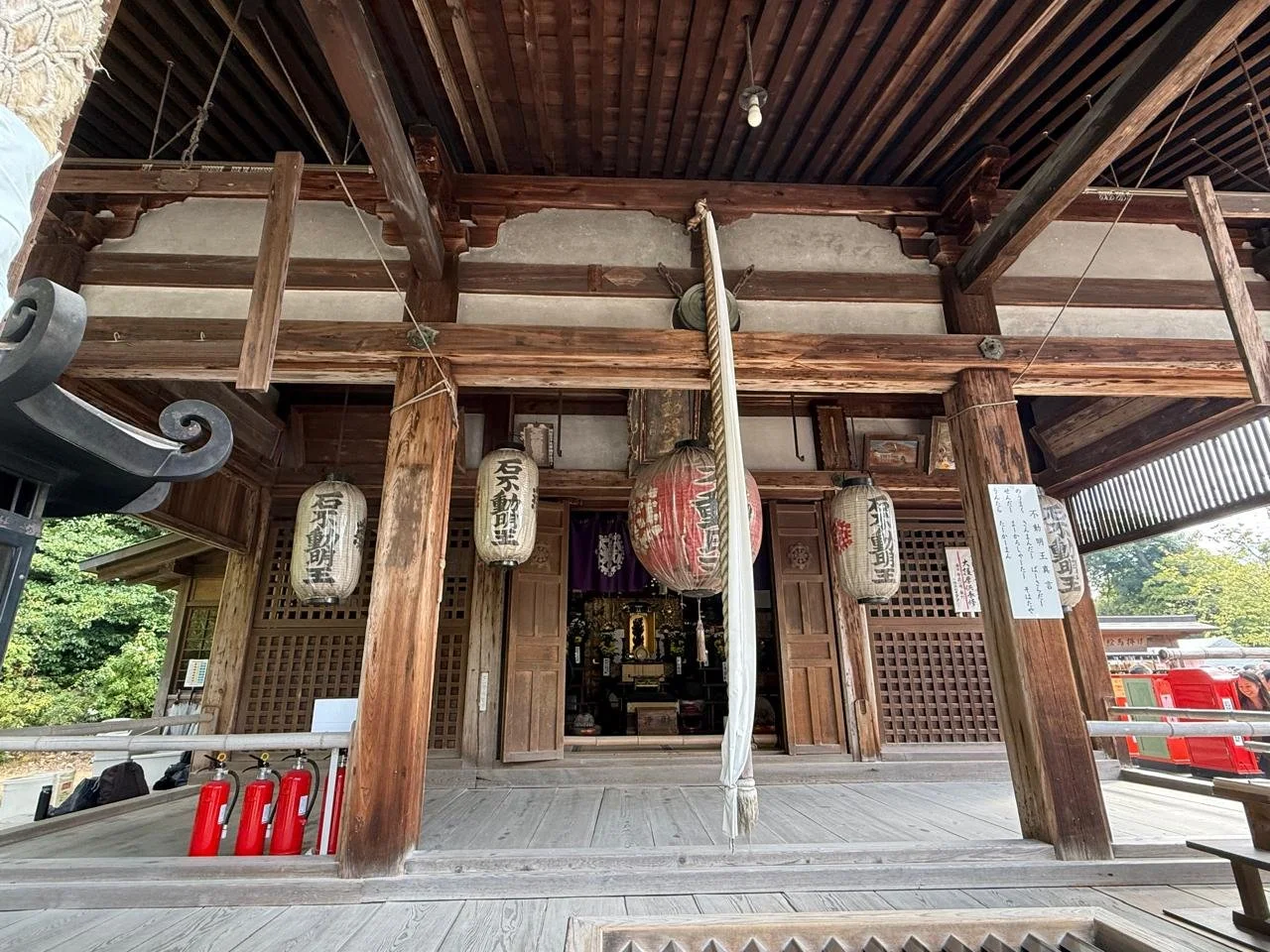
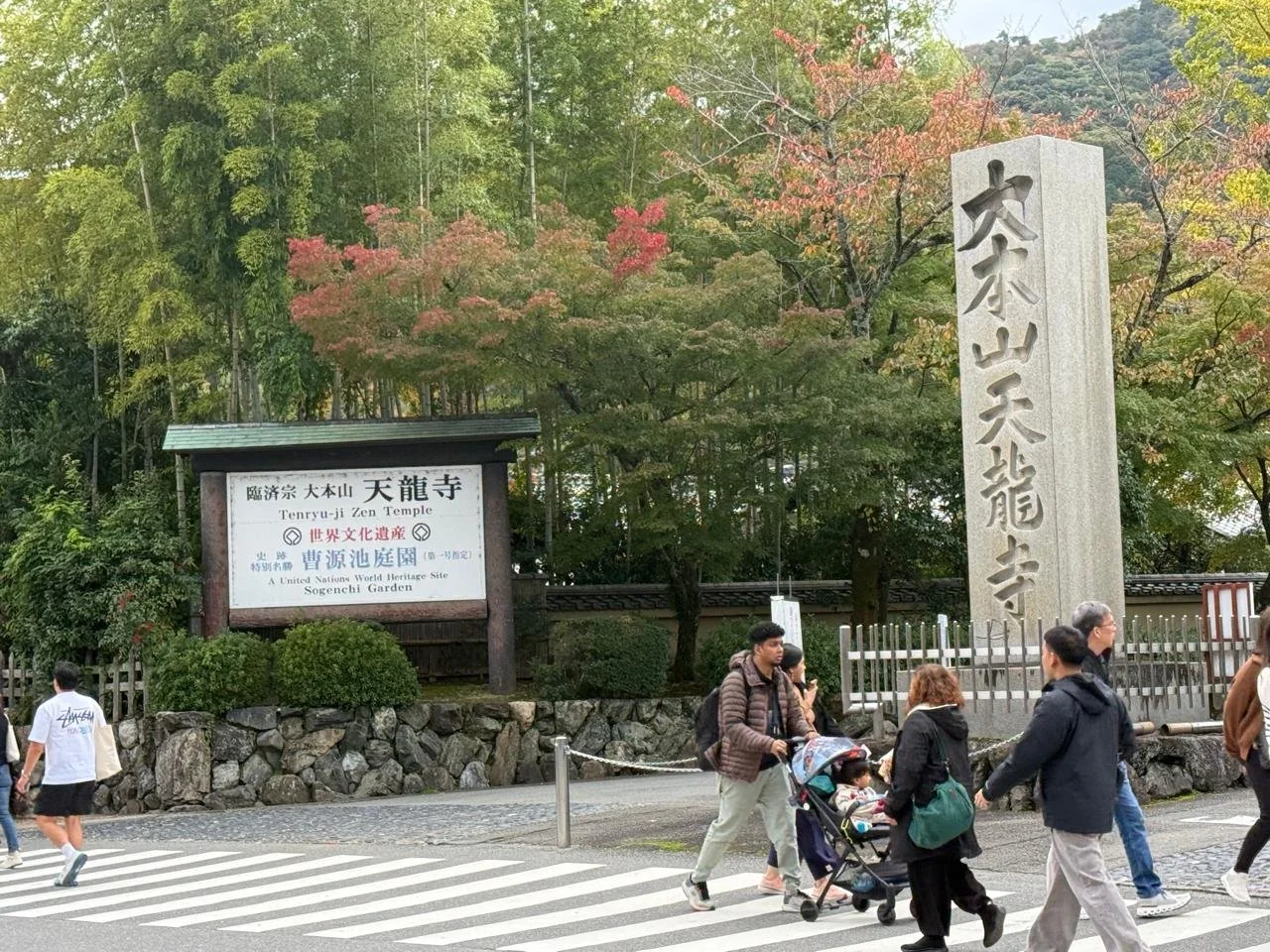
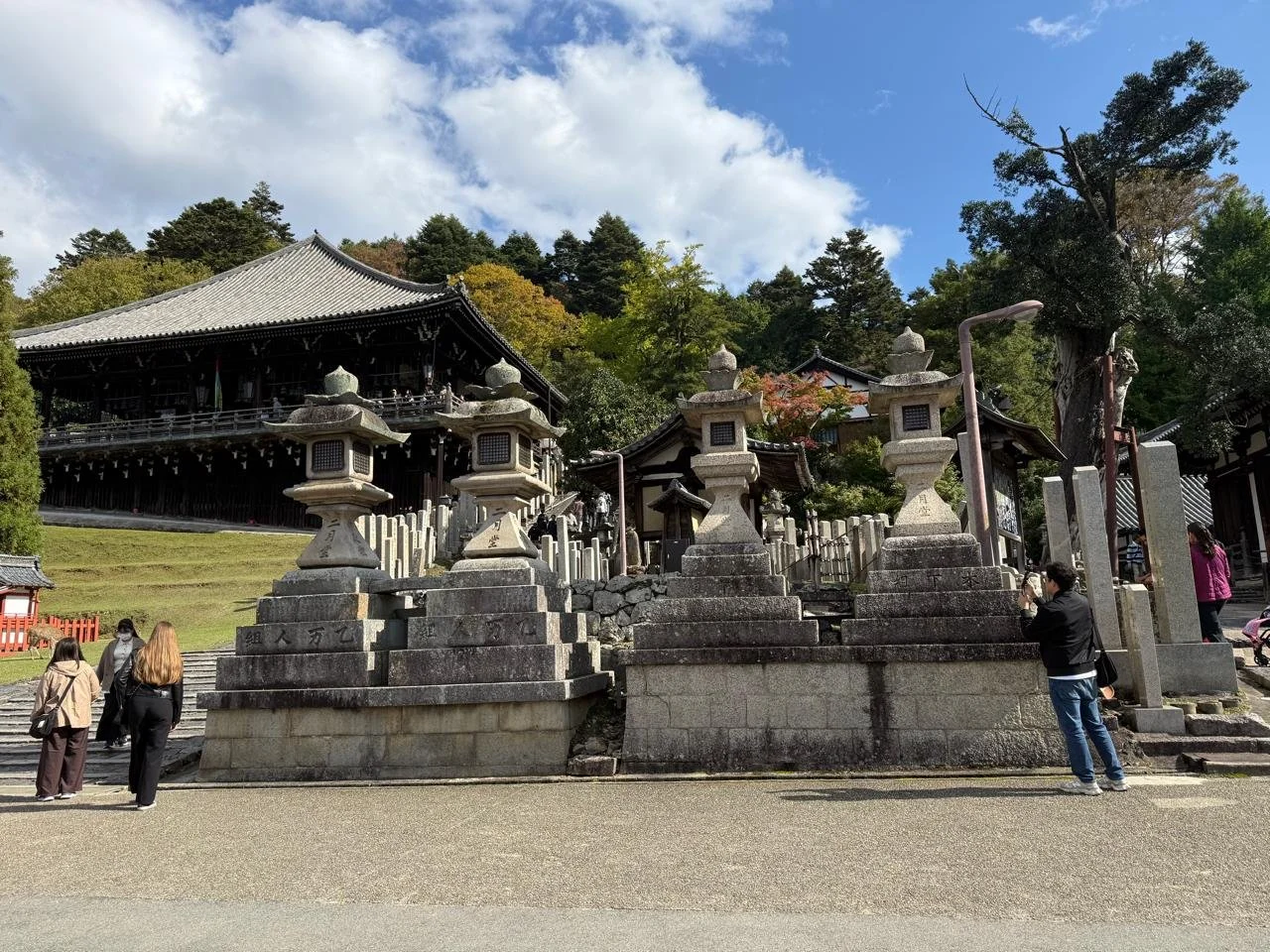
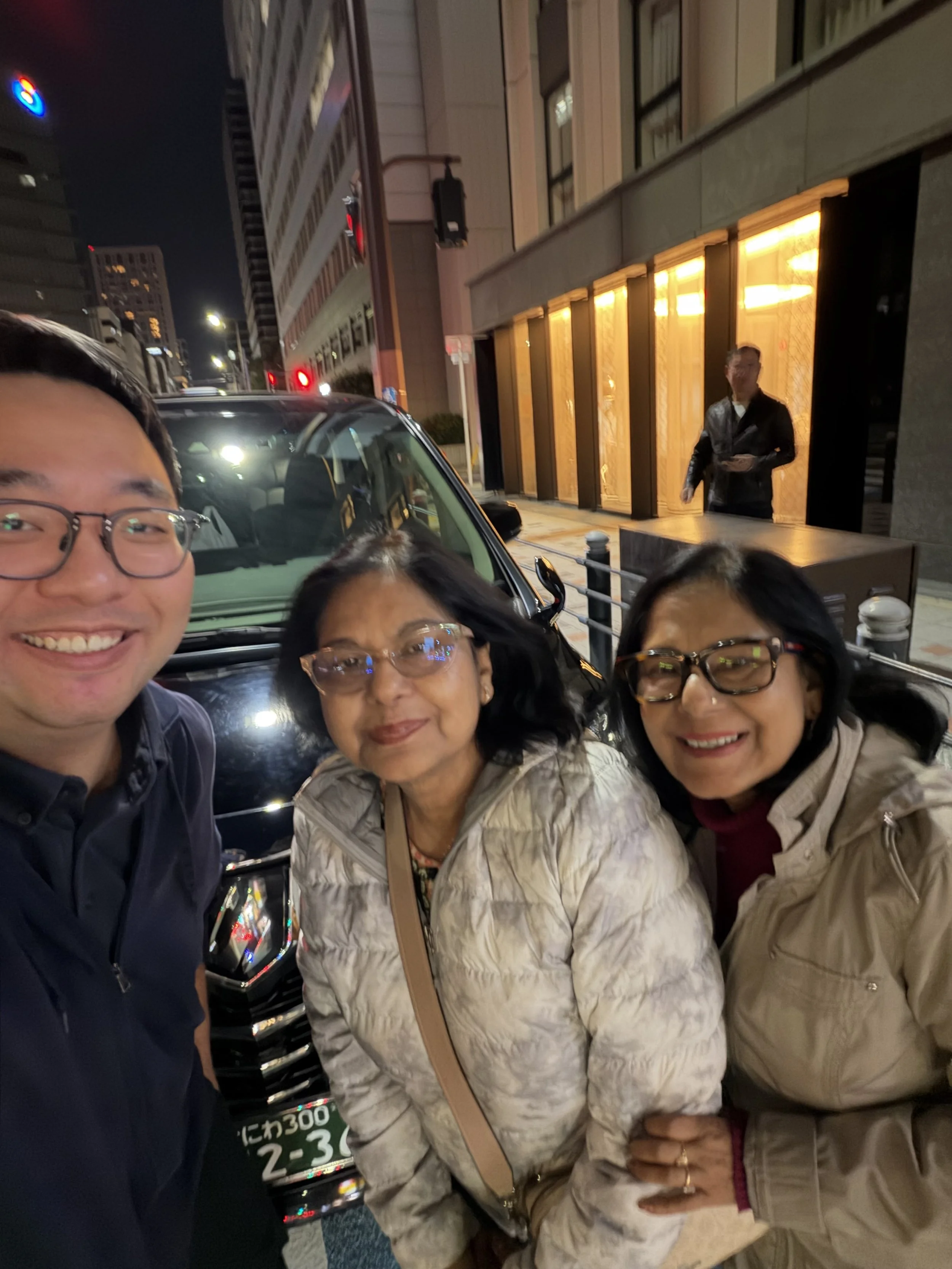
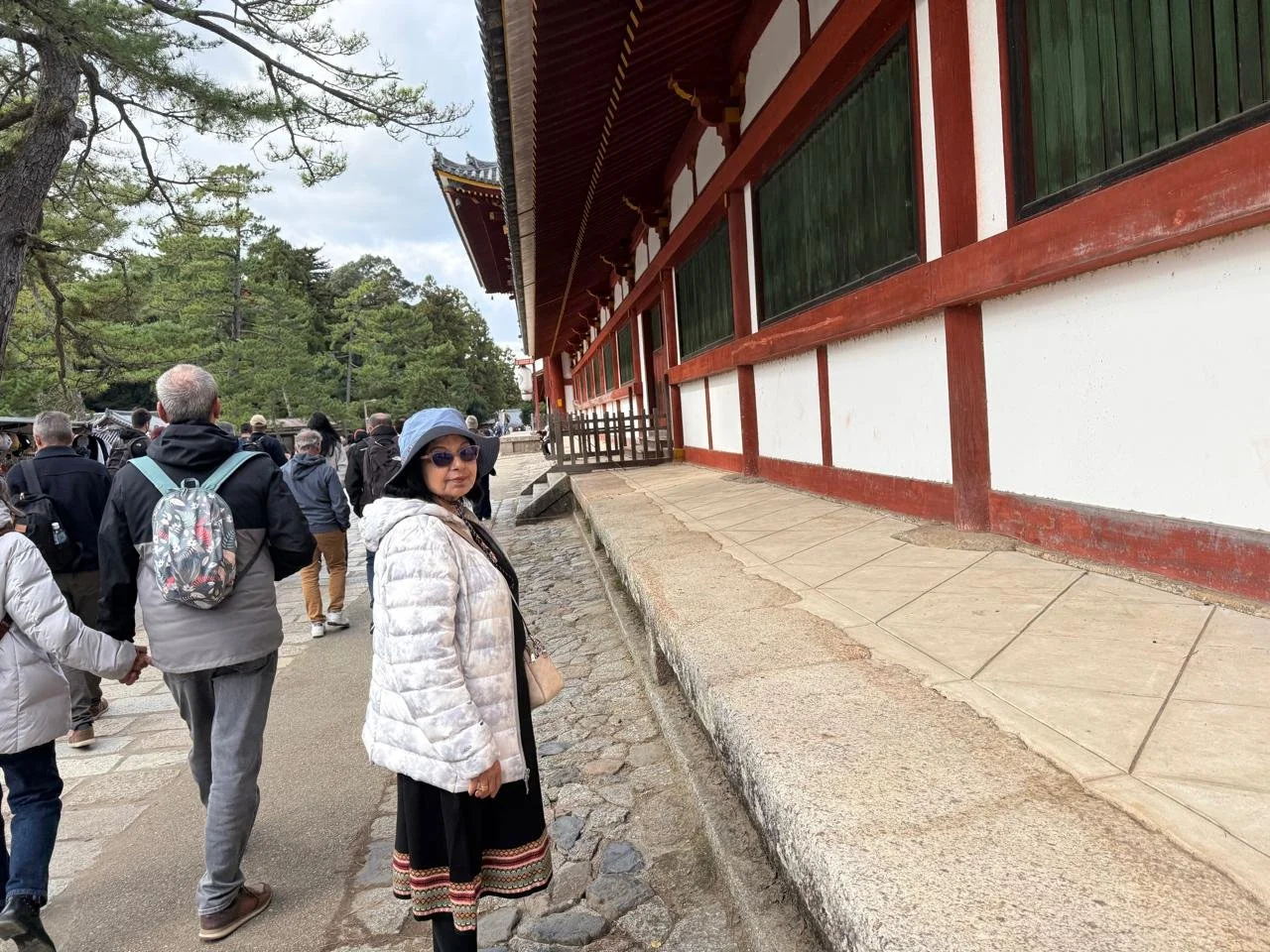
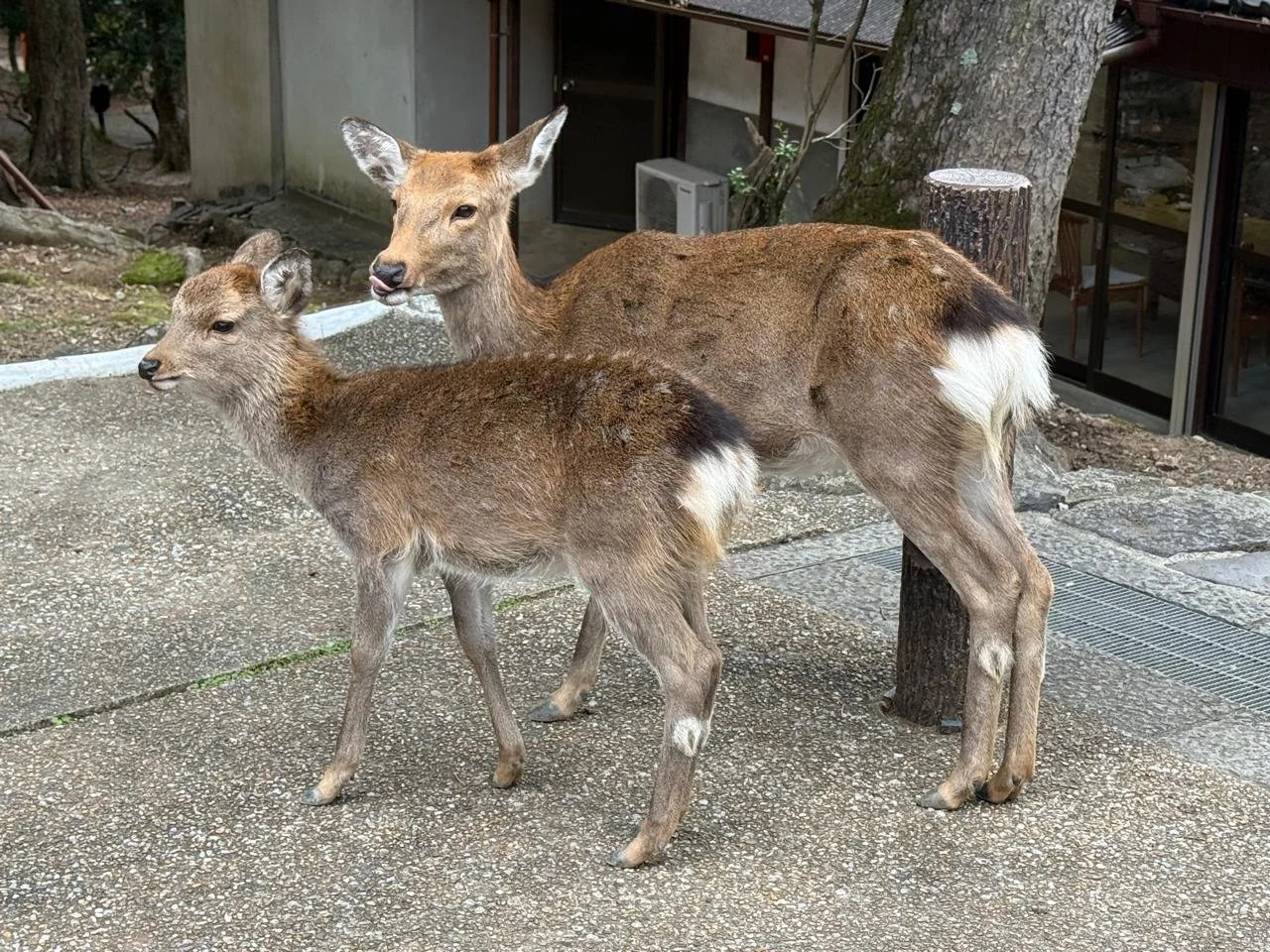
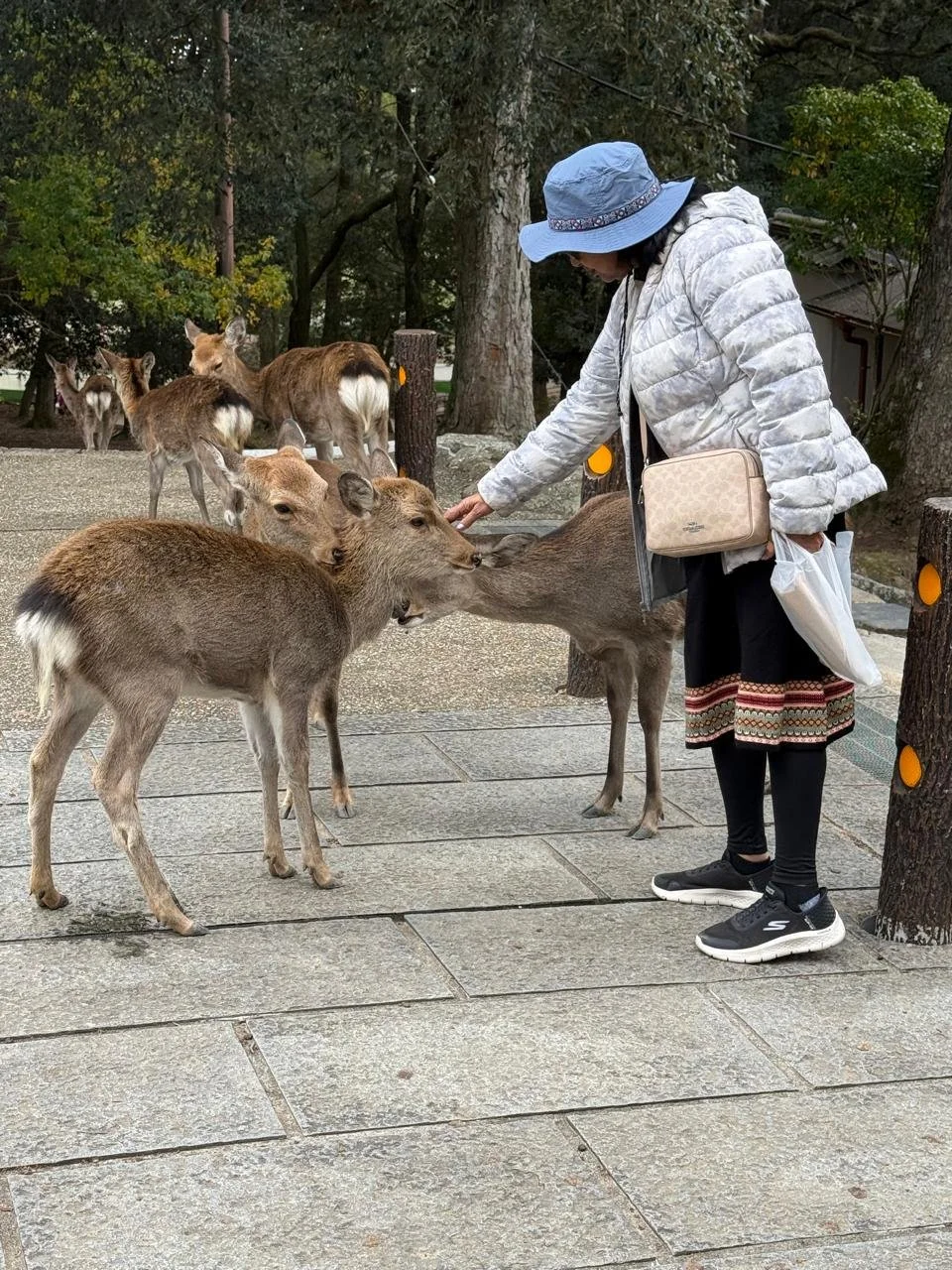
Todai-ji Temple
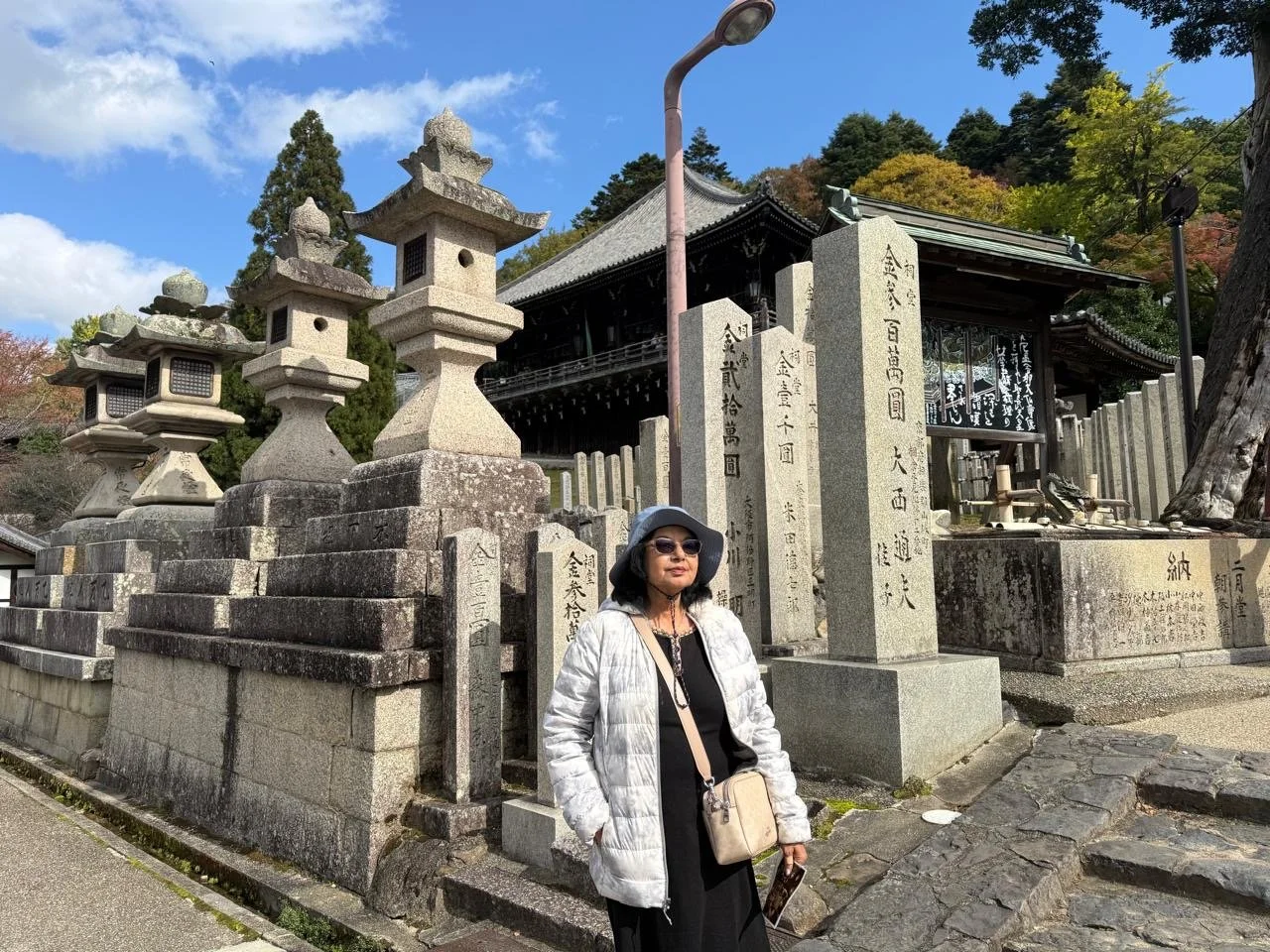
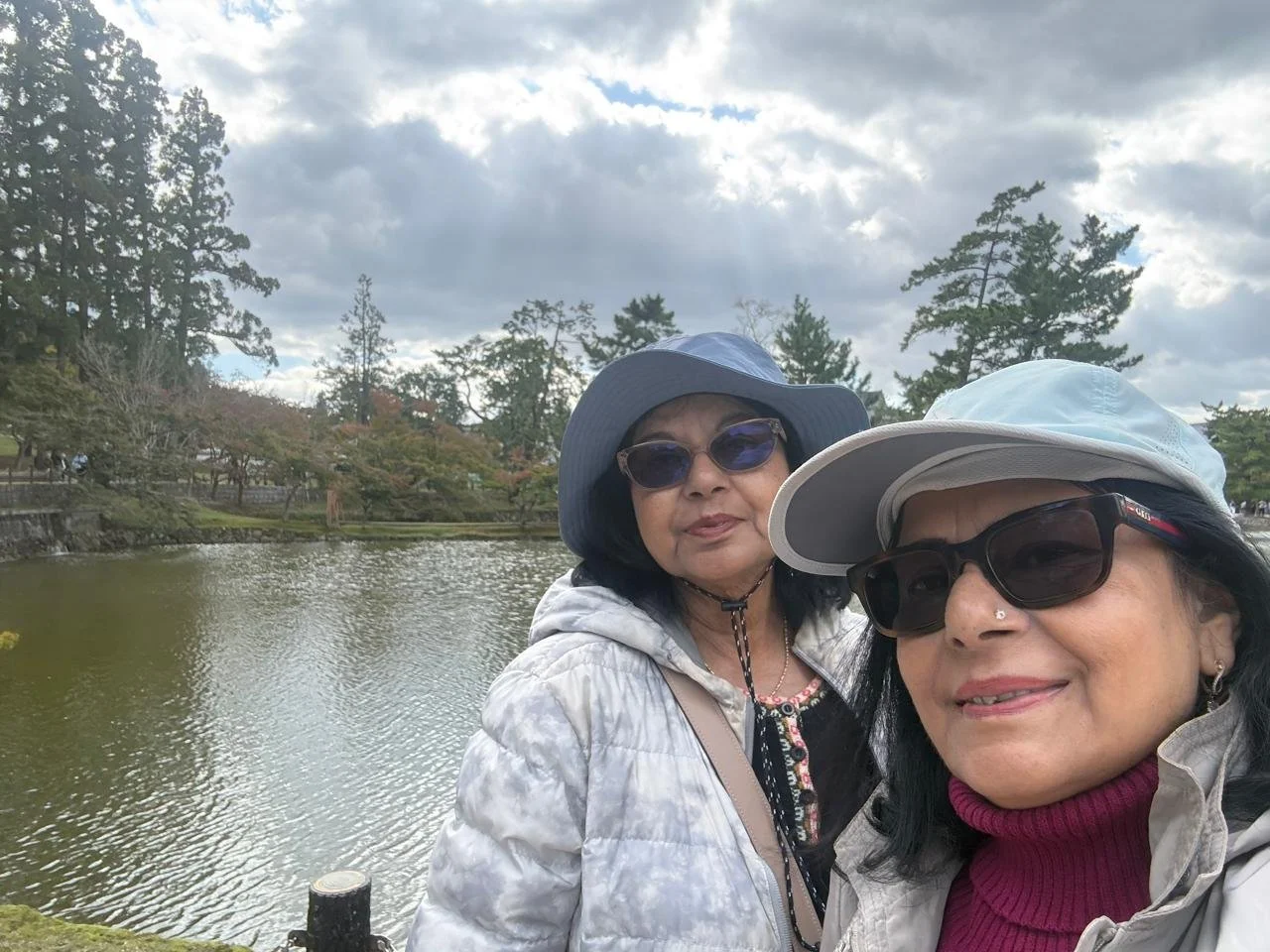
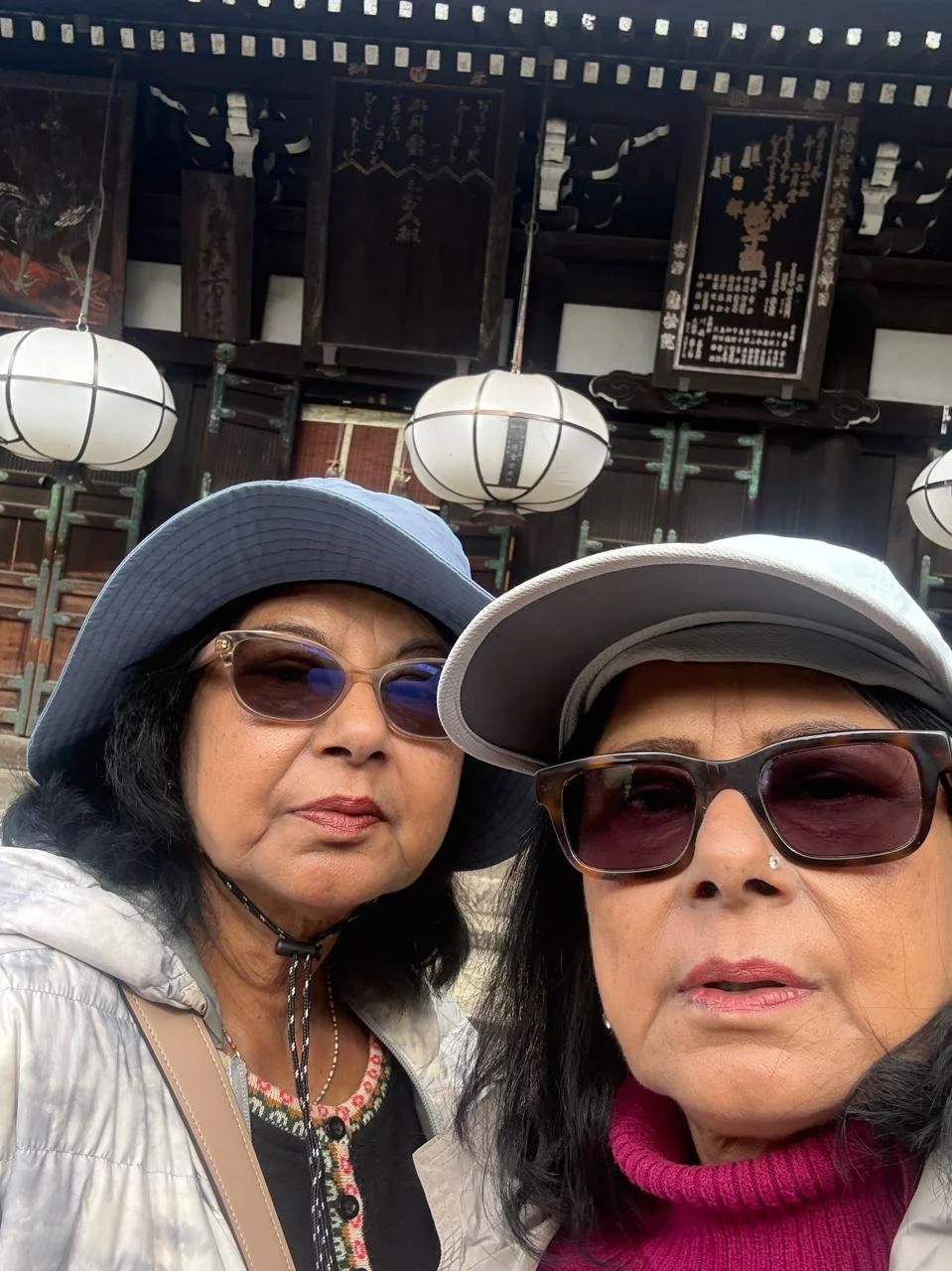
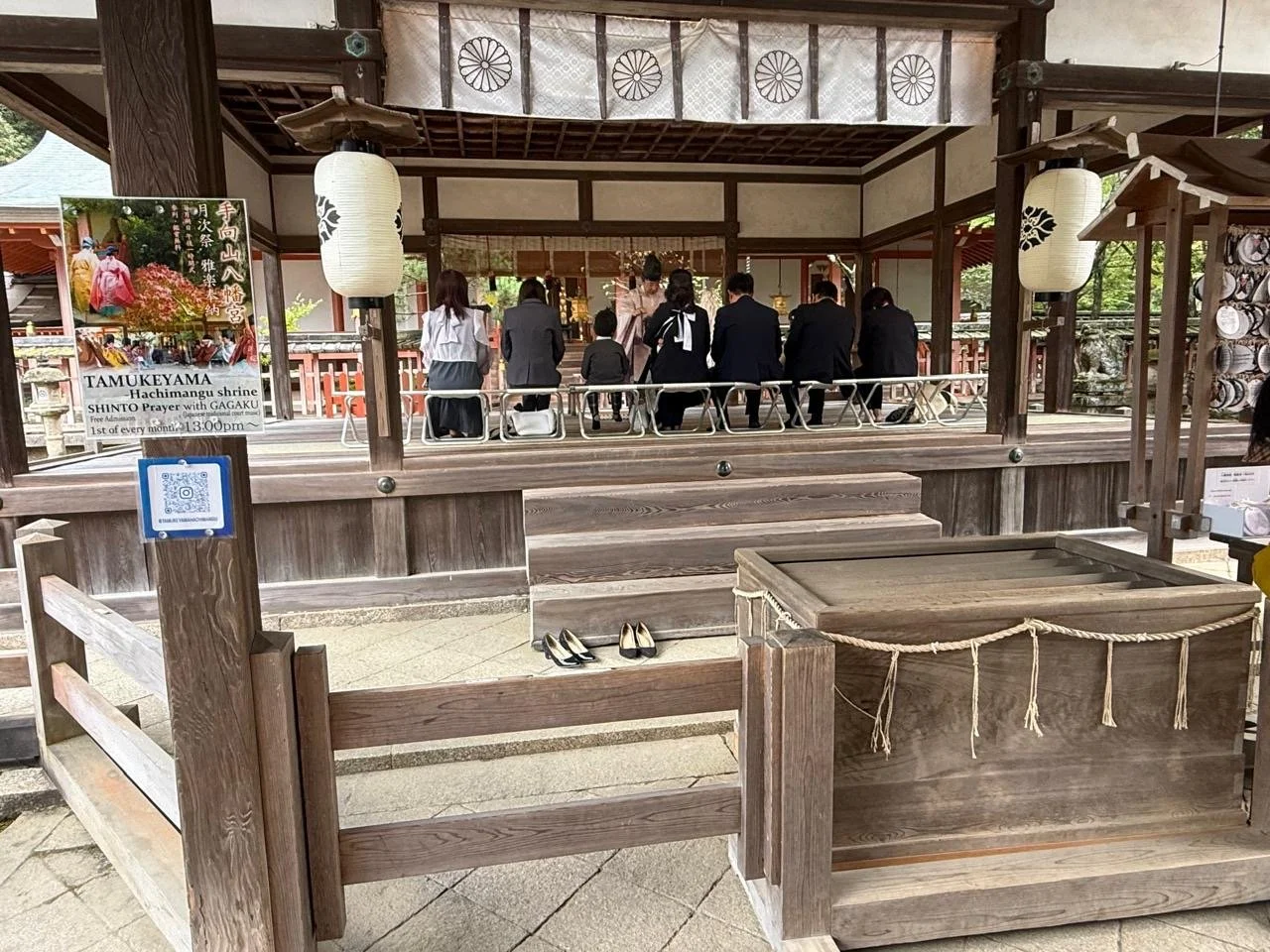
The Great Buddha Hall Daibutsuden
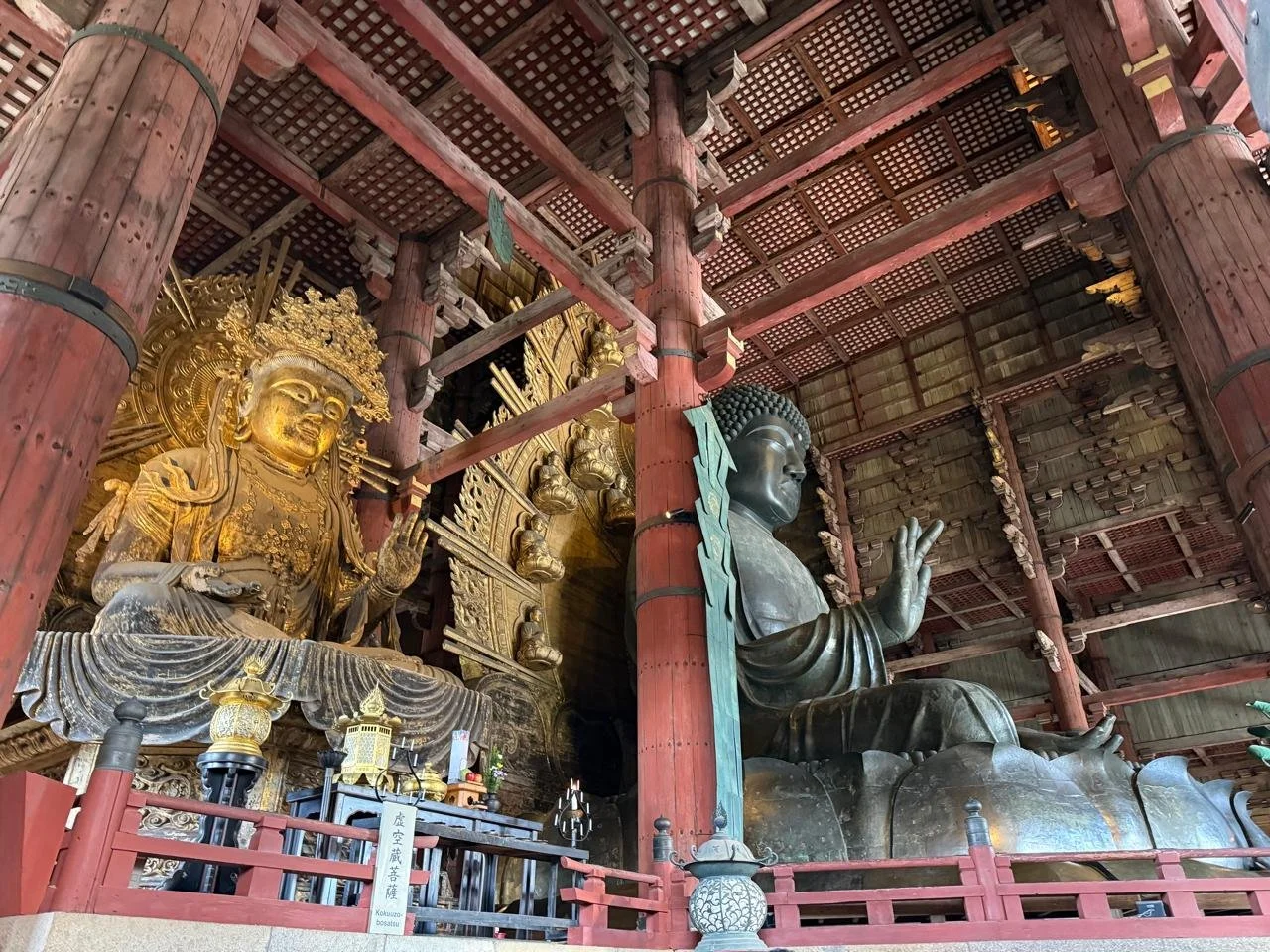
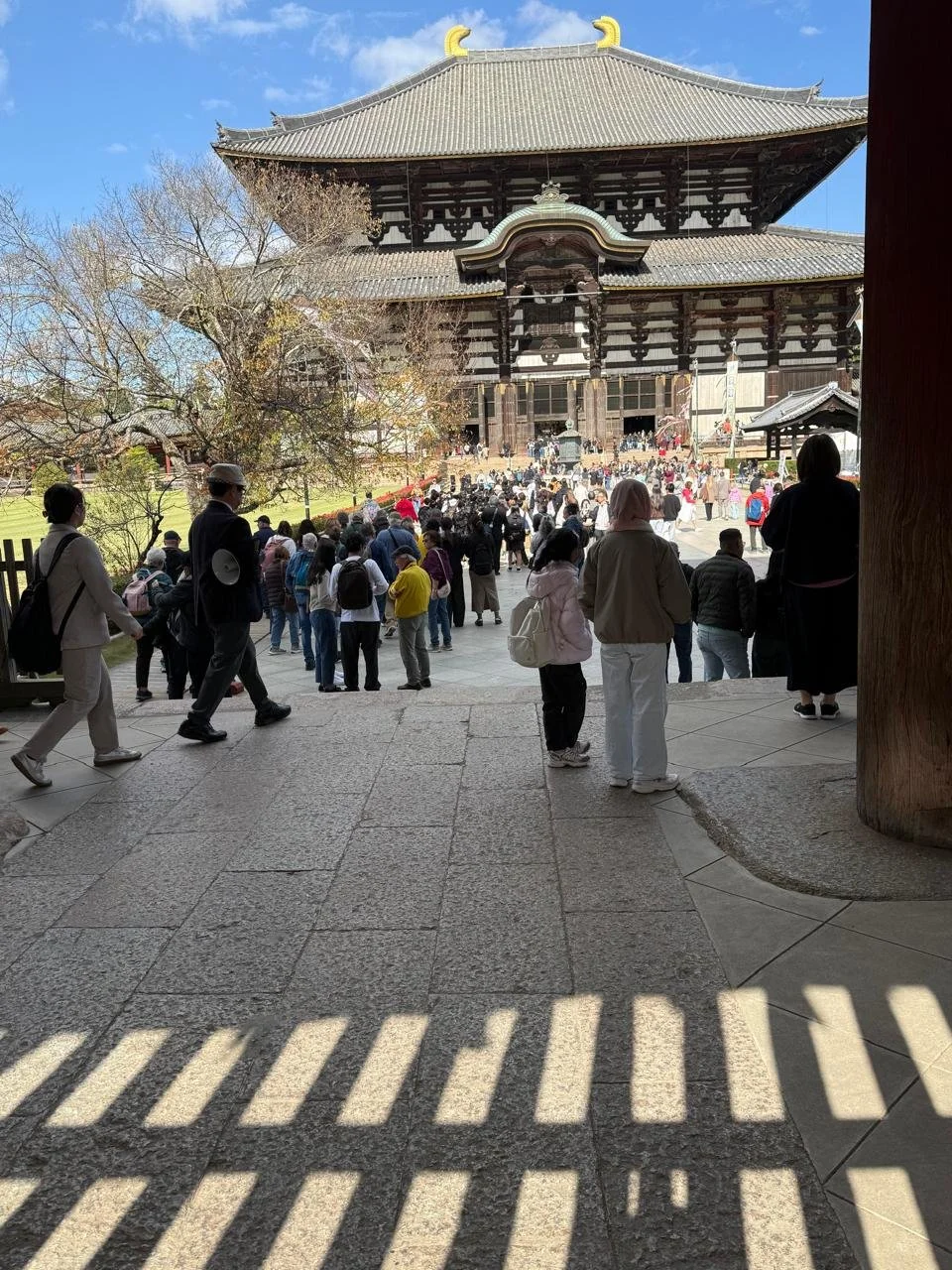
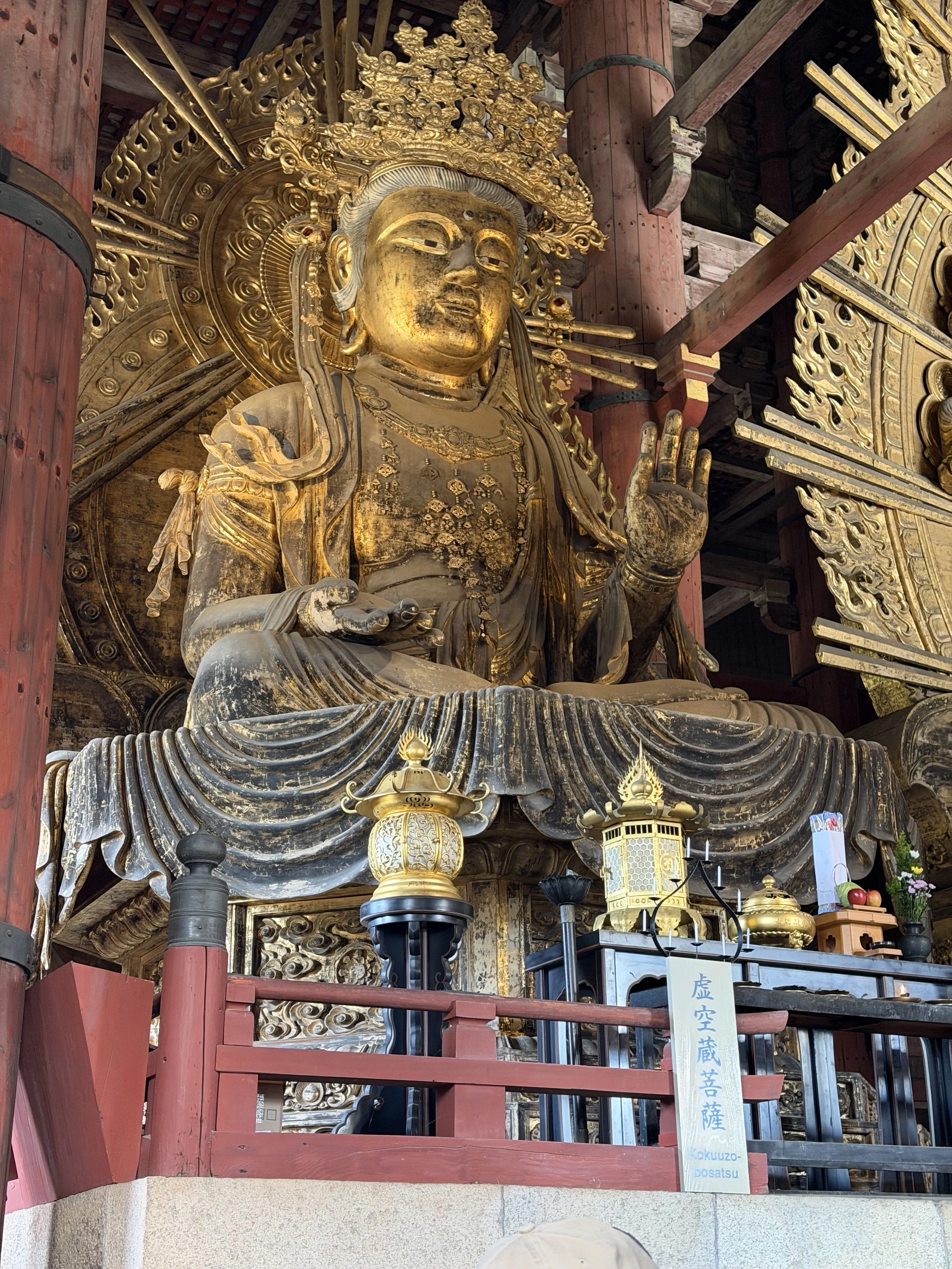
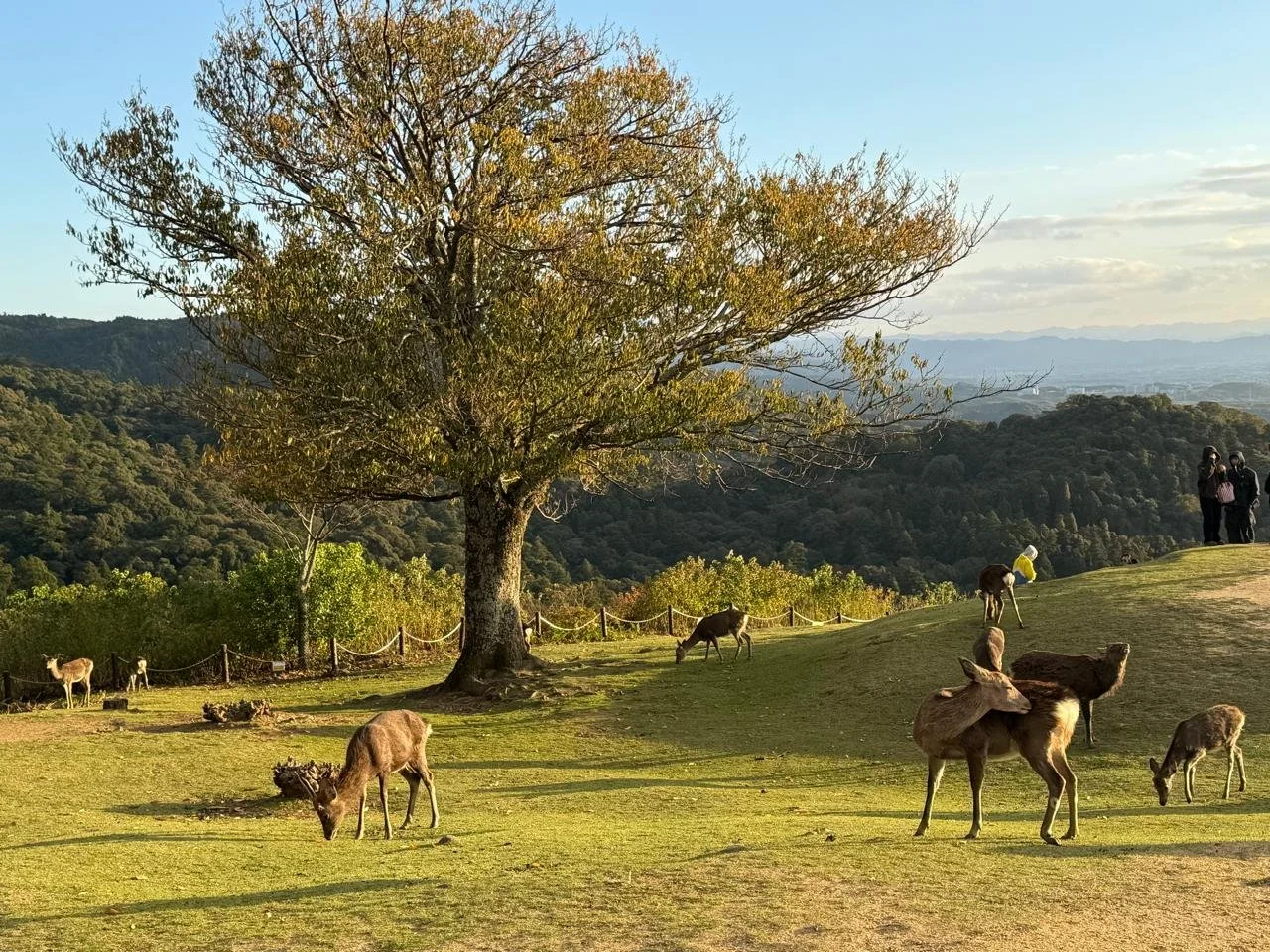
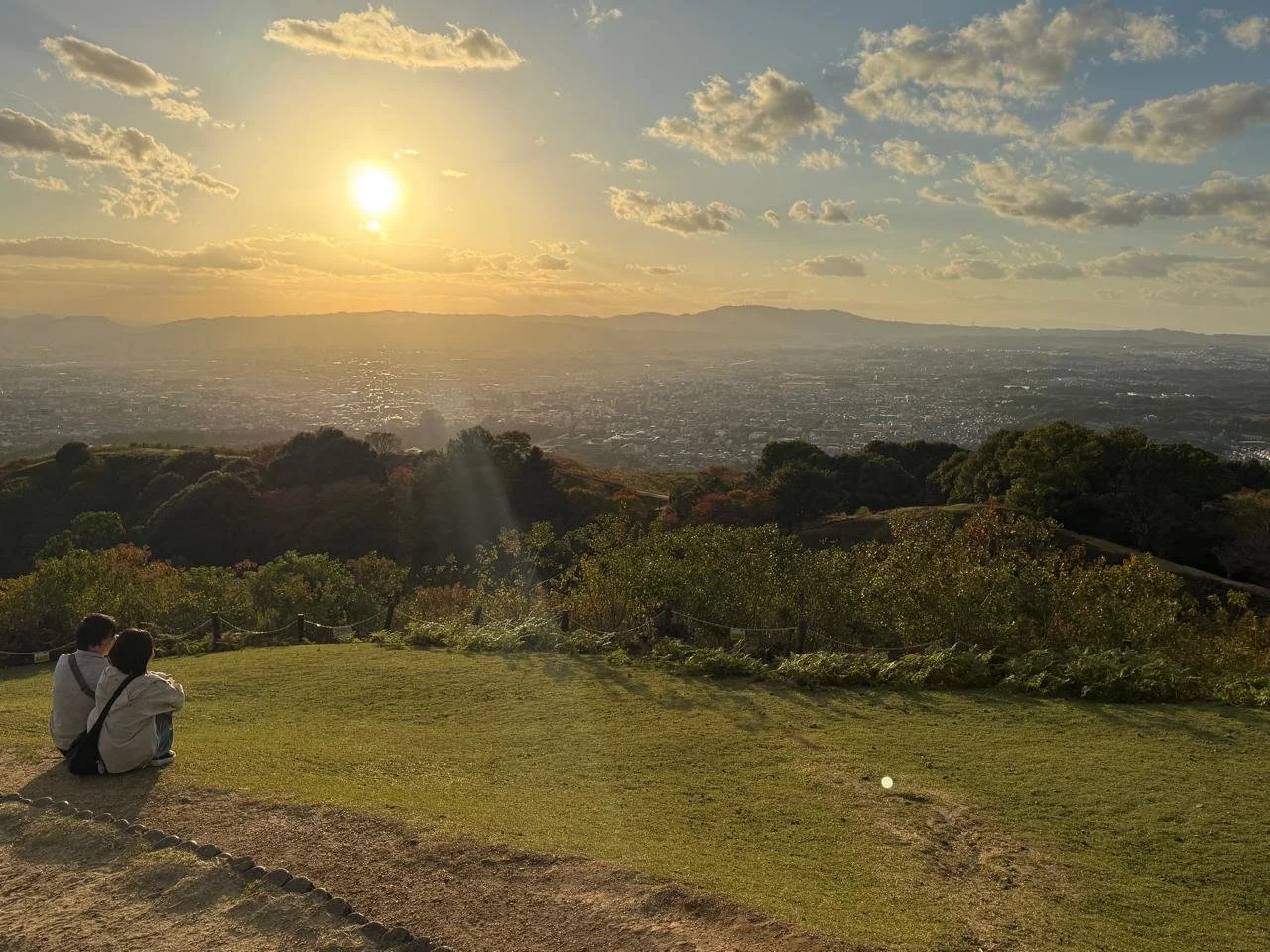
A Fond Farewell
A Delectable Meal with Sake!